DOGE Year-End Review: Did Musk's Hundred-Day Reform Work?

marsbitPublished on 2025-12-31Last updated on 2025-12-31

Abstract

DOGE Year-End Review: Did Musk's 100-Day Reform Work? The DOGE (Department of Government Efficiency) initiative, led by Elon Musk and Vivek Ramaswamy, aimed to cut bureaucratic waste, reduce regulations, and save $2 trillion to balance the federal budget. Despite ambitious goals, Musk resigned after just 130 days, and DOGE was dissolved by November—10 months into an 18-month plan. DOGE achieved a 9% reduction in federal employees (271,000 jobs cut) and claimed $21.4–25 billion in savings through contract terminations and program closures. However, total federal spending increased from $6.75–7.135 trillion in 2024 to $7.01–7.6 trillion in 2025, a 4–6% rise. Mandatory spending (e.g., Social Security, Medicare) and interest on debt—unaffected by administrative cuts—drove this growth. Independent analyses suggested actual savings were as low as $3 billion, with potential future tax losses from weakened IRS enforcement offsetting gains. Post-Musk, DOGE’s influence waned, and service disruptions emerged. The reform highlighted the fundamental mismatch between corporate efficiency models and government operations, where statutory spending and systemic inertia limit top-down restructuring. The experiment underscored that government cannot be run like a business, as efficiency must balance fairness, stability, and public trust.

Federal employees were successfully reduced by 271,000, a decrease of 9%, setting the largest peacetime layoff record. However, at the same time, total federal expenditures did not decrease but instead increased, soaring from $6.75-7.135 trillion in 2024 to $7.01-7.6 trillion, a net increase of $248-480 billion. This phenomenon of "losing weight but gaining mass" is the core contradiction of the DOGE (Department of Government Efficiency) reform.

This "external advisor" agency, initially led by Elon Musk and Vivek Ramaswamy, promised to use commercial means to dismantle government bureaucracy, cut redundant regulations, reduce wasteful spending, and ultimately save $2 trillion to balance the federal budget. This ambitious plan was expected to last until July 2026, giving them 18 months to transform the government. However, reality proved far harsher than expected: Musk resigned hastily in May, serving only a 130-day term as a special government employee; by November, DOGE quietly dissolved, a full 8 months before the original term was set to end.

This was not an unfinished reform, but a complete abandonment. From launch to disappearance, DOGE's actual lifespan was only about 10 months. When the savings target was clearly unattainable, legal challenges ensued, and disputes with Trump became public, Musk chose to return to his business empire, leaving behind a crumbling agency and a host of unanswered questions. This rapid fall from ambition to disillusionment exposed not only missteps in reform strategy but also the essential, difficult-to-cross chasm between corporate logic and government operations.

I. The Grand Vision vs. The Harsh Reality: A Complete Divergence

DOGE's reform vision was full of Silicon Valley-style idealism. They planned to use lean management principles to terminate hundreds of billions of dollars in inefficient contracts, close redundant facilities, reduce the federal workforce from about 3.015 million to a leaner size, and replace some bureaucratic functions with AI and automation tools. This methodology has proven successful time and again in the business world—why couldn't it be used to transform the government?
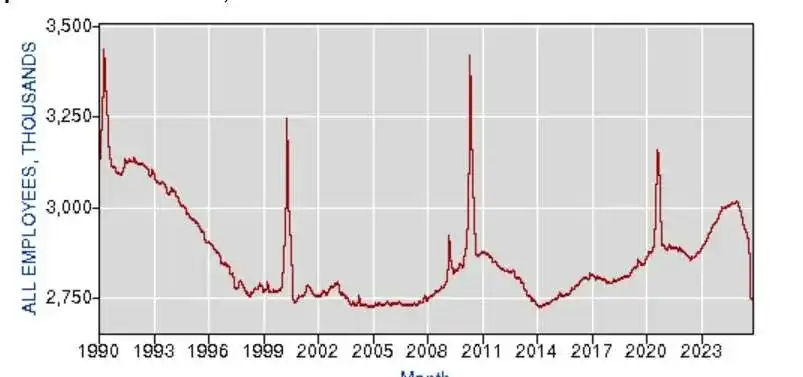
Chart: Federal Employee Count Since 1990

In January 2025, Musk joined DOGE as a special government employee, with a term set for 130 days. In Silicon Valley, 130 days is enough to launch a product prototype, complete a round of financing, or even turn around a startup's fate. In the initial months, DOGE demonstrated dazzling execution. From January to November, federal employees decreased from 3.015 million to 2.744 million, a net reduction of 271,000 positions. This was not only the largest peacetime federal layoff since WWII, but the speed of execution was also staggering. Specific actions included terminating a $290 million refugee facility contract at the Department of Health and Human Services, $190 million in IT redundancy spending at the Treasury Department, and closing hundreds of inefficient agencies and programs, cumulatively undertaking over 29,000 reduction actions. DOGE claimed these measures saved approximately $21.4-25 billion, primarily concentrated in non-defense federal mandatory spending, which decreased by 22.4% year-on-year.
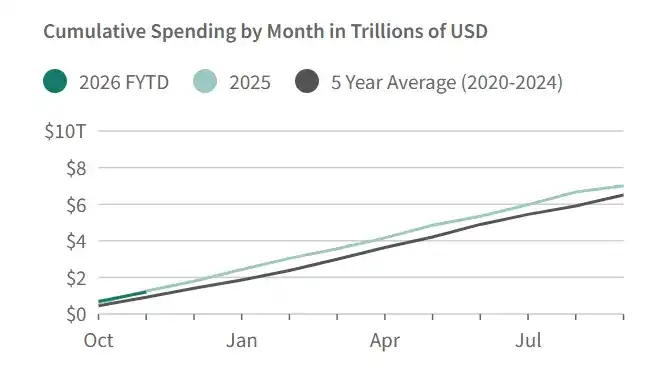
Chart: Cumulative Federal Government Expenditure

But the data on the spending side told a completely different story. Overall federal expenditure rose from about $6.75-7.135 trillion in 2024 to about $7.01-7.6 trillion in 2025, an increase of 4%-6%. Spending in just the first 11 months reached $7.6 trillion, $248 billion more than the same period the previous year. More ironically, some independent analyses suggested that DOGE's claimed savings figures might be severely inflated, with verifiable savings potentially only in the tens of billions, even as low as $3 billion. Due to the weakening of IRS enforcement capabilities, this could lead to at least $350 billion in lost tax revenue over the next decade, making the net effect of the so-called "savings" close to zero or even negative.

Resistance from reality soon became apparent. Federal spending continued to climb; mandatory spending like Social Security, Medicare, and interest on the national debt was completely unaffected by administrative layoffs. By May, multiple pressures converged. Musk's relationship with Trump began to deteriorate, with public disputes between the two. Legal challenges followed, questioning DOGE's authority and procedural legality. Tesla's business was also calling him back—stock price fluctuations, production issues, market competition, all requiring the CEO's attention. Most crucially, the $2 trillion savings target was clearly an impossible mission; staying on a project doomed to fail held no benefit for Musk's personal brand. As soon as his 130-day term ended, Musk announced his return to private enterprise. He did not apply for an extension, did not ask for more resources, but chose a clean break. This decision itself was the loudest admission: transforming the government with business methods was far more difficult than he had thought.

II. The Struggles of the Headless Horseman: Decline from May to November
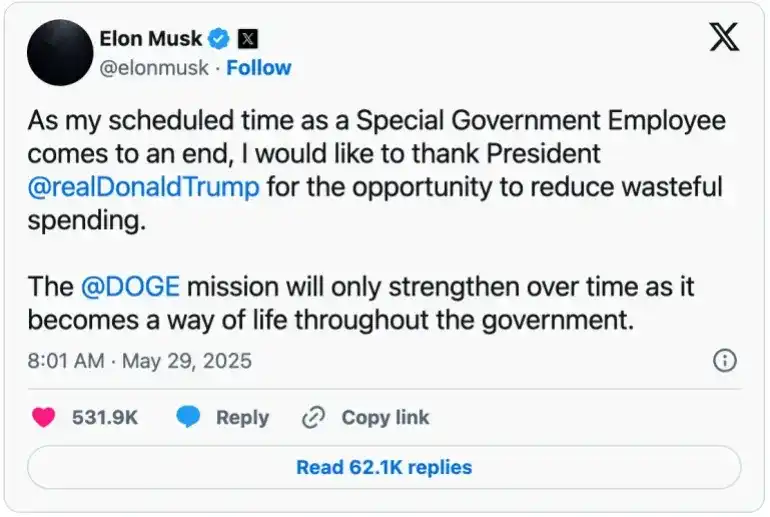
After Musk's departure, DOGE tried to prove it could continue. The White House signaled that the "DOGE spirit" would be integrated into the government's daily operations, becoming part of the "government lifestyle." Some former DOGE employees were embedded in various federal agencies to continue pushing layoffs and cost cuts. Ramaswamy was still nominally leading the agency, trying to maintain the reform momentum.

But DOGE without Musk was like a rocket without an engine; inertia could only last so long. Without the star founder's halo, the agency's attention rapidly declined. Without Musk's direct communication channel with Trump, DOGE's influence within the government was greatly diminished. More importantly, the limitations of the reform became increasingly apparent—those large expenditure items that truly required Congressional legislation to change were utterly beyond DOGE's reach.

During this period, DOGE's achievements became harder to define. Although some layoff actions continued, spending data kept rising. Reports of service disruptions began to increase. Social Security applications were delayed, regulatory gaps appeared, and key positions were left unfilled due to over-cutting. Criticism grew louder: in the name of optimizing efficiency, DOGE was undermining the government's basic operational capacity. Legal challenges also accumulated, questioning whether many of DOGE's actions exceeded executive authority.

By November, several authoritative media outlets began reporting a fact: DOGE had quietly disbanded. Reuters, TIME, CNN, Newsweek, and others used terms like "disbanded," "quietly shut down," and "no longer exists" to describe the agency's fate. There was no formal dissolution announcement, no press conference; DOGE simply vanished from public view. Its charter, originally meant to last until July 2026, was terminated early, with many functions transferred to the Office of Personnel Management or other常规 agencies.

This silent end perhaps speaks volumes more than any failure. Not even a decent farewell, because admitting failure itself was an embarrassment. DOGE went from a revolutionary agency promising to change the government to a brief interlude everyone wanted to forget as quickly as possible.

III. The Underlying Logic of "Reducing Staff Without Saving Money"

1. The Impenetrable Wall of Mandatory Spending
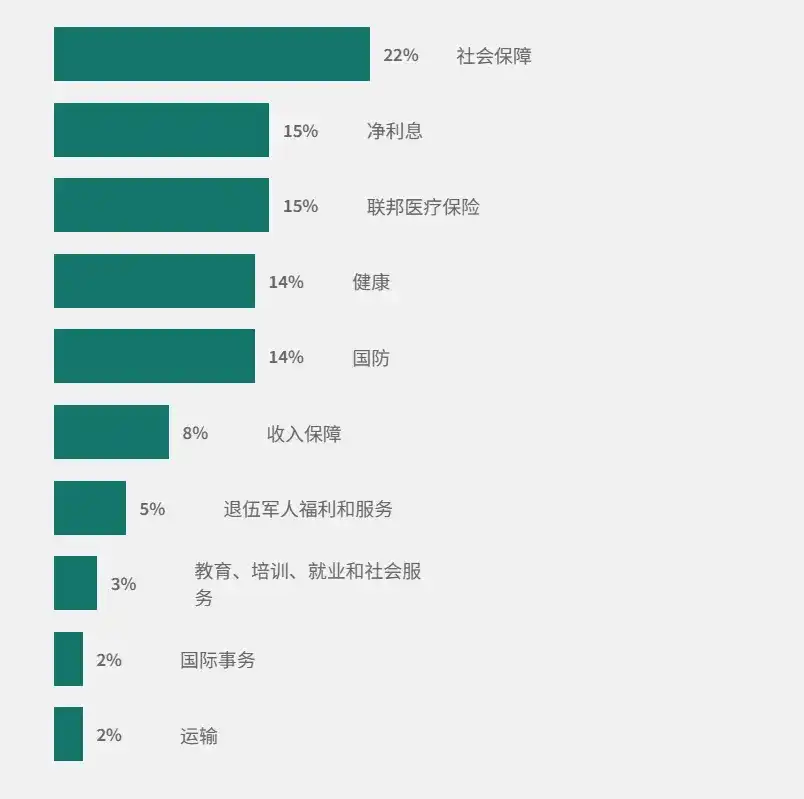
The most fundamental difference between the government fiscal system and a corporation is that over 70% of federal spending is on mandatory programs. These expenditures grow automatically as mandated by law, influenced by demographics, economic cycles, and interest rate fluctuations, completely unaffected by administrative layoffs. The 2025 data clearly shows this rigidity: benefit spending like Social Security and Medicare increased by about $168 billion, driven mainly by an aging population and inflation adjustments; national debt interest costs soared by $71 billion, with the debt scale already expanded to $36-38.3 trillion, making interest expenditure even exceed the defense budget, becoming the federal government's largest single expense.

These rigid expenditures directly offset all of DOGE's savings efforts. No matter how many administrative staff were cut, Social Security payments still had to be made according to statutory formulas, Medicare subsidies still had to be paid based on enrollment, and national debt interest had to be paid on time to maintain national credit. As an executive agency, DOGE could not unilaterally modify benefit programs authorized by Congress, meaning the effort was confined to the "periphery" from the start, unable to touch the "core" of expenditures.

At a deeper level, this rigidity stems from constitutional and legislative frameworks. The government is not a profit-seeking enterprise but a public institution承担ing the function of a social safety net. When a 65-year-old applies for Social Security, the government cannot refuse payment for "cost optimization." This is the essential difference between government and business, and the fundamental reason corporate thinking hit a wall here.

2. The "Offsetting" of Inter-Departmental Spending

DOGE did achieve some results in the discretionary spending area. They terminated 5,200 projects and hundreds of billions of dollars in contracts in departments like Health and Human Services, Education, and the Agency for International Development, saving about $37 billion. But these savings were quickly吞噬ed by growth in other departments. Defense spending increased due to geopolitical tensions, infrastructure investment膨胀ed due to the Trump administration's priorities, and the spillover effects of mandatory spending further pushed up the overall budget.

The result was "local slimming, global expansion." This is similar to the "savings transfer" phenomenon common in corporate mergers and acquisitions—costs cut in one department often reappear in another form elsewhere. But the government lacks the flexible adjustment mechanisms of a company and cannot reconfigure resources as quickly. The 2025 spending growth also included emergency response (increased natural disaster funds) and inflation adjustments (CPI rose about 3%-4%), these external factors further amplified the "offsetting" effect.

Specific data shows that DOGE's savings accounted for only 0.3%-0.5% of total spending, far insufficient to reverse the overall trend. In 2025, mandatory spending increased by $221 billion, discretionary spending increased by $80 billion, and net interest costs increased by $71 billion. When you save a few billion in one pocket but pull out hundreds of billions from three others, the so-called "efficiency improvement" becomes a numbers game.

3. The Cost Inertia and Transition Friction of Agency Operations

Layoffs are never a zero-cost operation, especially in the government system. Implementing the DOGE reform itself generated huge expenses: severance pay, paid leave, rehiring costs after wrongful termination, totaling an estimated $135 billion. This figure already far exceeds many of the "savings" projects claimed by DOGE. More hidden costs came from productivity losses and service disruptions.

The operation of government agencies highly relies on institutional memory and human networks. When large numbers of experienced employees left, Social Security applications began to delay, regulatory gaps appeared, and policy implementation efficiency actually decreased. Although AI and automation were held in high hopes, these tools are far from mature enough to completely replace human judgment. Algorithmic governance might be efficient, but it also brings new problems like data privacy leaks and algorithmic bias. In the process of transitioning from a "public service apparatus" to a "data-driven terminal," the government is losing something difficult to quantify but crucial—legitimacy, social cohesion, and public trust.

A more practical problem is the increase in overtime pay for remaining employees and rising contract outsourcing costs. The government outsourced work previously done internally to private contractors, often at a higher price. In the long run, large-scale brain drain could create a "knowledge gap," affecting policy continuity and professional capacity accumulation.

Conclusion: Who Lost? Reflecting on the Cost and Boundaries of Reform

In this collision of ideals and reality, who ultimately lost? Perhaps first the idealistic reformers, who underestimated the complexity of government operations and mistakenly thought business logic could be directly transplanted into the public sector. Taxpayers might benefit from partial savings in the short term, but face the risk of service cuts and quality decline in the long run. Beneficiaries of public services, especially groups relying on Social Security and Medicare, might suffer from service disruptions and reduced efficiency.

The deeper loser might be the entire system's sustainability and democratic legitimacy. When the government is "optimized" like a business, those values that cannot be measured by numbers—fairness, stability, social cohesion—are quietly being eroded. Opinion polls showed DOGE's approval rating hovering around 40%, reflecting public recognition of efficiency gains coexisting with concerns about service disruptions.

But this collision was not entirely meaningless. If DOGE can push Congress to take action and truly touch core issues like welfare reform and debt control, it could still become a historical turning point. The key is to recognize that the government is not a business; efficiency needs to be balanced with fairness, sustainability, and democratic principles. A business can sacrifice everything for profit, but the government must保留 the last line of defense for society's most vulnerable groups. This is the most important lesson corporate thinking needs to learn, and the most profound insight left to us by this激烈 collision.

Data for this report was compiled and edited by WolfDAO. Please contact us if you have any questions for updates;

Author: Nikka / WolfDAO ( X : @10xWolfdao )

Related Questions

QWhat was the main contradiction in the DOGE reform efforts as described in the article?

AThe main contradiction was that while the DOGE successfully reduced the federal workforce by 271,000 employees (a 9% cut), the total federal spending actually increased by $248-480 billion, from $6.75-7.135 trillion to $7.01-7.6 trillion. This 'slimming down but gaining weight' phenomenon highlighted the core failure of the reform.

QWhy did Elon Musk leave the DOGE after only 130 days?

AElon Musk left due to multiple converging pressures: a deteriorating relationship with Trump, mounting legal challenges questioning DOGE's authority, the need to return to his business empire (Tesla) to address stock volatility and production issues, and the realization that the $2 trillion savings goal was an impossible task that could damage his personal brand.

QWhat happened to the DOGE after Elon Musk's departure?

AAfter Musk left, the DOGE attempted to continue but quickly lost influence and momentum. It was described as losing its engine. It was eventually quietly disbanded in November, about 10 months after its start and 8 months before its original end date, with many of its functions transferred to other agencies like the Office of Personnel Management.

QAccording to the article, what are the fundamental reasons why corporate logic failed within the government?

ACorporate logic failed due to three fundamental reasons: 1) The 'impregnable wall' of mandatory spending (over 70% of the budget) on programs like Social Security and Medicare, which is required by law and unaffected by administrative cuts. 2) The 'see-saw effect' of spending, where savings in one department were swallowed by increases in others like defense and infrastructure. 3) The high cost inertia and transition friction of the reforms themselves, including severance pay, productivity loss, and the inability of AI to fully replace human judgment.

QWhat were some of the hidden costs and negative consequences of the DOGE's workforce reductions?

AHidden costs included an estimated $135 billion in implementation costs (severance, paid leave, rehiring after wrongful termination). Negative consequences included service disruptions (delays in Social Security applications), regulatory vacuums, loss of institutional memory, increased overtime pay for remaining staff, higher costs from outsourcing to contractors, and a long-term 'knowledge gap' affecting policy continuity.

Related Reads

Trading

Spot
Futures

Hot Articles

Що таке POO DOGE

Poo Doge: Інноваційний гравець у світі криптовалют Вступ У швидко змінюваному ландшафті криптовалют та технології блокчейн нові проекти постійно з'являються, щоб привернути увагу інвесторів та технологічних ентузіастів. Одним із таких проектів є Poo Doge ($POO DOGE), запущений у 2022 році як унікальна пропозиція в екосистемі Web3. Діючи на платформі Dogechain, Poo Doge зайняв свою нішу як децентралізований інструмент, що має на меті покращити спосіб управління цифровими активами користувачів. Ця стаття досліджує основні аспекти Poo Doge, розглядаючи його цілі, функціональність, творців та унікальні характеристики, які вирізняють його на переповненому ринку. Що таке Poo Doge? Poo Doge — це децентралізована криптовалюта, розроблена спеціально для екосистеми Dogechain. Використовуючи Ethereum Virtual Machine (EVM), він функціонує як універсальний і зручний трекер портфелю. Основною метою цього проекту є надання користувачам можливості ефективно контролювати та управляти декількома токенами в рамках Dogechain. Як децентралізована валюта, Poo Doge відрізняється своїм акцентом на безпеці та простоті в управлінні активами. Користувачі можуть відстежувати свої інвестиції та управляти портфелями токенів без ускладнень, часто пов'язаних з традиційними криптоплатформами. Цей користувацький підхід до управління активами є неперевершеним, особливо в унікальному контексті Dogechain, який забезпечує легковаге, управлінське середовище. Хто є творцем Poo Doge? Інформація про конкретних осіб або команду, відповідальних за створення Poo Doge, залишається невідомою. У галузі, де прозорість часто хвалиться як основна цінність, відсутність публічних деталей стосовно творця може викликати запитання серед потенційних користувачів та інвесторів. Проте ця анонімність не зменшує цілей проекту та передбачуваного впливу в просторі Web3. Хто є інвесторами Poo Doge? Наразі немає публічно доступної інформації стосовно конкретних інвесторів або інвестиційних організацій, які підтримують проект Poo Doge. Ця відсутність може вказувати на те, що проект або фінансується власними силами, або ще не привернув уваги більших інвестиційних структур, зазвичай пов’язаних із більш розгорнутими криптоініціативами. Хоча відсутність впізнаваного фінансування може викликати скепсис, не є незвичним для нових проектів, особливо тих, що зосереджені на децентралізованих технологіях, спочатку функціонувати без помітної підтримки установ. Оскільки Poo Doge продовжує розвиватися та розширювати свою базу користувачів, подальша інтеграція з потенційними інвесторами може відбутися. Як працює Poo Doge? Poo Doge працює на принципах децентралізації, використовуючи Dogechain (EVM) для надання остаточного рішення з відстеження портфелів. Ось ключові аспекти роботи проекту: Децентралізована платформа Створення на децентралізованій основі означає, що Poo Doge спроектовано так, щоб усунути центральні точки відмови, що часто є ризиком у традиційних банківських і фінансових системах. Ця децентралізація не лише підвищує безпеку, але й сприяє прозорості, оскільки всі транзакції можуть бути підтверджені на блокчейні. Відстеження портфелів Видатною особливістю Poo Doge є його роль трекера портфелю, перший у своєму роді на оригінальному мем-коіні блокчейн Dogechain. Цей інноваційний підхід дозволяє користувачам ефективно управляти своїми інвестиціями через різні токени. Користувачі можуть отримувати інформацію про свої активи, коливання цін та історичні показники, тим самим приймаючи більш обґрунтовані інвестиційні рішення. Сумісність з EVM Poo Doge використовує можливості Ethereum Virtual Machine, що дозволяє безперешкодно інтегруватися та взаємодіяти з іншими блокчейнами, сумісними з EVM. Ця технічна здатність є критично важливою в взаємопов’язаній криптоекосистемі, що дозволяє Poo Doge забезпечувати вдосконалені функції, полегшувати крос-чейн транзакції та залучати ширшу базу користувачів. Хронологія Poo Doge Щоб краще зрозуміти еволюцію Poo Doge в ландшафті криптовалют, ось коротка хронологія, яка підкреслює значні віхи в його історії: 2022: Poo Doge ($POO DOGE) був офіційно запущено, зробивши свій вхід у ринок криптовалют. Розвиток у 2022 році: Проект зосередився на побудові та оптимізації своїх операцій у середовищі Dogechain, зосереджуючи увагу на своїй основній функції як трекера портфелю. Постачання токенів: Було встановлено загальне постачання 1,000,000,000,000 токенів, хоча зазначено, що наразі жодних токенів у обігу немає, що вказує на те, що проект, можливо, все ще на початковій стадії розвитку. Унікальні функції Poo Doge відрізняється від інших проектів у кількох важливих аспектах: Перевага першого гравця: Як перший трекер портфелю на Dogechain, Poo Doge займає унікальну позицію, яка може залучити ранніх користувачів та покращити її ринкові позиції. Орієнтованість на користувача: Проект підкреслює простоту та зручність для користувачів, гарантуючи, що навіть ті, хто може не мати глибоких знань про блокчейн, можуть ефективно управляти своїми цифровими активами. Децентралізований та безпечний: Працюючи в межах децентралізованої платформи, користувачі можуть насолоджуватися підвищеною безпекою та упевненістю в тому, що їхні портфелі захищені від потенційних зламів, які можуть торкнутися централізованих платформ. Користувацький підхід: Залучення громадськості та зворотний зв'язок грають ключову роль у розвитку Poo Doge, що може призвести до створення продукту, який ближче відповідатиме потребам користувачів. Висновок Poo Doge ($POO DOGE) є захоплюючим розвитком у ландшафті Web3 та криптовалют. Незважаючи на значні прогалини в публічно доступній інформації про його творців та інвесторів, інноваційний підхід проекту до децентралізованих фінансів та управління активами має значний потенціал. Зосередженість на користувацькому досвіді та піонерський концепт трекера портфелю на Dogechain забезпечують його здатність привертати увагу, коли він продовжує розвиватися. Якщо ландшафт криптовалют зростає та зріє, ініціативи такі як Poo Doge підкреслюють постійний зсув у бік децентралізації та наділення користувачів правами у фінансах, прокладаючи шлях до нової ери управління цифровими активами.

243 Total ViewsPublished 2024.04.05Updated 2024.12.03

Як купити DOGE

Ласкаво просимо до HTX.com! Ми зробили покупку Dogecoin (DOGE) простою та зручною. Дотримуйтесь нашої покрокової інструкції, щоб розпочати свою криптовалютну подорож.Крок 1: Створіть обліковий запис на HTXВикористовуйте свою електронну пошту або номер телефону, щоб зареєструвати обліковий запис на HTX безплатно. Пройдіть безпроблемну реєстрацію й отримайте доступ до всіх функцій.ЗареєструватисьКрок 2: Перейдіть до розділу Купити крипту і виберіть спосіб оплатиКредитна/дебетова картка: використовуйте вашу картку Visa або Mastercard, щоб миттєво купити Dogecoin (DOGE).Баланс: використовуйте кошти з балансу вашого рахунку HTX для безперешкодної торгівлі.Треті особи: ми додали популярні способи оплати, такі як Google Pay та Apple Pay, щоб підвищити зручність.P2P: Торгуйте безпосередньо з іншими користувачами на HTX.Позабіржова торгівля (OTC): ми пропонуємо індивідуальні послуги та конкурентні обмінні курси для трейдерів.Крок 3: Зберігайте свої Dogecoin (DOGE)Після придбання Dogecoin (DOGE) збережіть його у своєму обліковому записі на HTX. Крім того, ви можете відправити його в інше місце за допомогою блокчейн-переказу або використовувати його для торгівлі іншими криптовалютами.Крок 4: Торгівля Dogecoin (DOGE)Легко торгуйте Dogecoin (DOGE) на спотовому ринку HTX. Просто увійдіть до свого облікового запису, виберіть торгову пару, укладайте угоди та спостерігайте за ними в режимі реального часу. Ми пропонуємо зручний досвід як для початківців, так і для досвідчених трейдерів.

931 Total ViewsPublished 2024.12.11Updated 2025.03.21

Що таке DOGE M

Doge Matrix ($doge m): Нова порода криптовалюти, що керується спільнотою Вступ У постійно змінюваному ландшафті криптовалюти нові проекти постійно з'являються, кожен з яких прагне привернути увагу інвесторів та ентузіастів. Одним з останніх учасників цього домену є Doge Matrix, представлений тикером $doge m. Цей проект привернув увагу завдяки своїм корінням у популярній культурі мемів навколо Dogecoin, закріплюючи своє місце в просторі web3. Ця стаття має на меті надати всебічний аналіз Doge Matrix, охоплюючи його огляд, творця, інвесторів, функціональність, хронологію та помітні аспекти. Що таке Doge Matrix ($doge m)? Doge Matrix — це проект криптовалюти, що керується спільнотою, який, здається, будує на широкій привабливості Dogecoin, цифрової валюти, відомої своїм маскотом Shiba Inu та мем-походженням. Хоча загальні цілі Doge Matrix не є детально визначеними, він характеризується зобов'язанням залучати участь та підтримку спільноти. На відміну від традиційних криптовалют, які часто підкреслюють корисність або внутрішню цінність через підлягаючі технології, Doge Matrix позиціонує себе в просторі, що охоплює культурне явище криптовалют, особливо приваблюючи тих, хто резонує з етикою активів на основі мемів. Спираючись на сильні сторони спільноти Dogecoin, Doge Matrix працює як частина більш широкої екосистеми, запрошуючи участь та залучення користувачів, які поділяють інтерес до криптовалюти та цифрового простору. Хто є творцем Doge Matrix ($doge m)? Особистість творця Doge Matrix залишається невідомою. Ця відсутність прозорості не є рідкісним явищем у сфері криптовалют, де деякі проекти запускаються без розкриття ідентичностей своїх засновників. Відсутність інформації про засновницьку команду може викликати питання серед потенційних інвесторів щодо відповідальності та напрямку проекту. Хто є інвесторами Doge Matrix ($doge m)? На даний момент немає публічно доступної інформації про інвесторів або інвестиційні фонди, які підтримують Doge Matrix. Проект, здається, покладається переважно на підтримку спільноти, а не на інституційні інвестиції. Ця модель узгоджується з природою ініціативи, що керується спільнотою, сприяючи середовищу, де напрям проекту формується його учасниками, а не диктується вибраними фінансовими спонсорами. Як працює Doge Matrix ($doge m)? Специфіка операційних механізмів Doge Matrix є дещо розмитою, відображаючи ширшу тенденцію проектів у просторі мем-коінів, де інноваційні функціональності не завжди чітко сформульовані. Проте Doge Matrix, здається, розроблений для того, щоб використовувати існуючу екосистему криптовалют, заохочуючи участь користувачів, одночасно використовуючи знайомі культурні посилання, пов'язані з Dogecoin. Його потенційно унікальні характеристики походять від взаємодій у спільноті, а не від технологічних досягнень, підкреслюючи спільний досвід та співпрацю серед власників токенів. Хоча точні інновації не були чітко окреслені, проект, здається, створює простір, де члени спільноти можуть взаємодіяти, ділитися ідеями та просувати потенціал проекту вперед. Хронологія Doge Matrix ($doge m) Розглядаючи хронологію проекту, можна виявити помітні події, які визначили його шлях до цього часу: 25 листопада 2024: Doge Matrix досяг свого історичного максимуму, що стало значною віхою в його ранній історії. 1 січня 2025: Навпаки, Doge Matrix досяг свого історичного мінімуму, ілюструючи волатильність, яка часто асоціюється з криптовалютами, особливо на ранніх етапах життєвого циклу проекту. Триває: Проект продовжує активно торгуватися та підтримуватися своєю спільнотою, хоча конкретні майбутні віхи або цілі ще не були розкриті. Ключові моменти про Doge Matrix ($doge m) Орієнтація на спільноту У центрі Doge Matrix лежить зобов'язання до залучення спільноти. Проект процвітає на основі співпраці та спільних цілей серед своїх учасників, підкреслюючи важливість колективних зусиль. На відміну від централізованих проектів, які часто мають визначену структуру керівництва, Doge Matrix наразі демонструє більш гнучкий підхід до управління, де голос кожного члена спільноти має значення. Волатильність Ринок криптовалют відомий своєю волатильністю, і Doge Matrix не є винятком. Його історія цін відображає значні коливання між високими та низькими значеннями, що є типовим для багатьох нових криптовалют, але підкреслює ризики, пов'язані з інвестиціями в нові токени. Відсутність детальної інформації Однією з найпомітніших рис Doge Matrix є брак детальної інформації щодо його технологічних основ та операційних механізмів. Ця невизначеність вимагає від потенційних інвесторів провести ретельну перевірку перед залученням до проекту. Висновок Підсумовуючи, Doge Matrix ($doge m) ілюструє нову хвилю проектів криптовалюти, які сильно покладаються на залучення спільноти та культурну значущість. Хоча йому бракує певних специфікацій — таких як чітке керівництво, визначені цілі та детальна функціональність — проект зміг викликати інтерес у криптоспільноті, використовуючи вже встановлену привабливість культури мемів. Як і з будь-якими інвестиціями в сфері криптовалют, розуміння вроджених ризиків і проведення всебічного дослідження є важливими для потенційних учасників. Doge Matrix слугує нагадуванням про динамічну, іноді непередбачувану природу криптоіндустрії, що відзначається постійною еволюцією та ентузіазмом щодо ініціатив, що керуються спільнотою.

214 Total ViewsPublished 2025.02.03Updated 2025.02.03

Discussions

Welcome to the HTX Community. Here, you can stay informed about the latest platform developments and gain access to professional market insights. Users' opinions on the price of DOGE (DOGE) are presented below.

活动图片