Hong Kong to Issue First Stablecoin Licences in Early 2025

TheNewsCrypto2026-01-21 tarihinde yayınlandı2026-01-21 tarihinde güncellendi

Özet

Hong Kong is set to issue its first batch of stablecoin licences in the first quarter of 2025, as part of its strategy to become a regional hub for digital assets. Financial Secretary Paul Chan announced the plan at the World Economic Forum in Davos, emphasizing the city’s responsible and sustainable approach to crypto regulation. The licensing regime, introduced last year, imposes strict requirements on stablecoin issuers, including rules on reserve backing, governance, and risk management. This initiative is part of a broader effort to build a comprehensive digital asset ecosystem, which also includes licensed trading platforms and tokenised financial products. Hong Kong has already licensed 11 virtual asset trading platforms, including OSL and HashKey, and is advancing in tokenisation through initiatives like Project Ensemble. Meanwhile, regulators are developing additional proposals for licensing crypto-related services, though concerns have been raised about potential compliance costs affecting traditional asset managers.

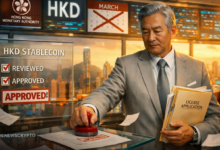
Hong Kong is getting ready to issue its first batch of stablecoin issuer licences in Q1 of 2025, accelerating its efforts to place itself as a regional hub for digital assets at a time of increasing global competition.

The Financial Secretary of Hong Kong, Paul Chan, spoke at the World Economic Forum in Davos about how the approach of the city towards crypto regulation is responsible and sustainable, as revealed by the South China Morning Post.

The financial secretary committed that the starting round of stablecoin licences is anticipated to be allowed in the near future. Chan established stablecoins as a segment of a wider push to make a complete digital asset ecosystem in Hong Kong, bridging regulated stablecoin issuance, licensed trading platforms and tokenised financial products.

He characterised digital finance as a strategic growth pillar as the city looks to maintain its status as a global financial centre. The stablecoin licensing regime passed last year describes strict requirements for fiat-referenced stablecoin issuers.

These comprise rules on reserve backing, redemption rights, governance, and risk management, showing the focus of regulators on financial stability and consumer protection after volatility in global crypto markets.

The Other Works By the Country

The stablecoin plans of the company stand beside a so far active framework for crypto trading platforms. As per the rules imposed by the Securities and Futures Commission, 11 virtual asset trading platforms have got licences to date.

Approved operators comprise OSL, HashKey and Bullish, as per the public disclosures of the regulator. After trading in stablecoins, Hong Kong is also delving deeper into tokenisation.

Last year, in November, the Hong Kong Monetary Authority rolled out a pilot under Project Ensemble to test actual-value transactions leveraging tokenised deposits and digital assets, comprising major banks and asset managers.

Meanwhile, regulators are working on additional proposals that would roll out new licensing regimes for crypto asset dealing, advisory, and management services. At the start of this week, the Hong Kong Securities and Futures Professionals Association alerted that tighter virtual asset management regulations could put off traditional asset managers by increasing compliance costs and decelerating institutional participation.

Highlighted Crypto News Today:

Binance has Announced Listing Ripple’s Stablecoin, RLUSD

TagsHong KongLicenseStablecoin

İlgili Sorular

QWhen is Hong Kong planning to issue its first batch of stablecoin licences?

AIn Q1 of 2025.

QWho is the Financial Secretary of Hong Kong and where did he discuss the city's crypto regulation approach?

APaul Chan, and he spoke about it at the World Economic Forum in Davos.

QWhat are some of the key requirements for stablecoin issuers under Hong Kong's new licensing regime?

AThe requirements include rules on reserve backing, redemption rights, governance, and risk management.

QName two licensed virtual asset trading platforms in Hong Kong mentioned in the article.

AOSL and HashKey.

QWhat is the name of the project launched by the Hong Kong Monetary Authority to test tokenised transactions?

AProject Ensemble.

İlgili Okumalar

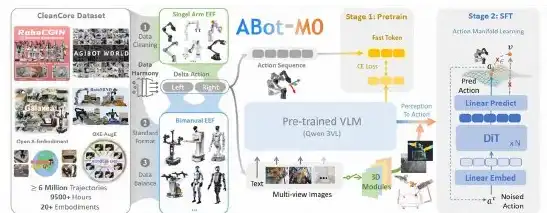
Embodied Intelligence Breakthrough: Amap Fully Open-Sources Universal Robot Base Model ABot-M0

Embodied Intelligence Breakthrough: AutoNavi Open-Sources Universal Robot Base Model ABot-M0 AutoNavi has announced the full open-source release of ABot-M0, the world's first unified architecture-based embodied manipulation base model. This model is designed to enable "one general brain to adapt to multiple forms of robots," aiming to break down barriers between heterogeneous hardware and accelerate the adoption of embodied intelligence in industrial and household settings. ABot-M0 demonstrated exceptional performance in industry tests, achieving a task success rate of 80.5% on the Libero-Plus benchmark—a nearly 30% improvement over the previous benchmark, Pi0. It also set new state-of-the-art records on benchmarks like Libero and RoboCasa. The open-source release addresses long-standing challenges in the field, such as data isolation and deployment difficulties, by providing resources across three key dimensions: - **Data:** The UniACT dataset, the largest of its kind, with over 6 million real operation trajectories and full data pipeline tools. - **Algorithm:** The model architecture and training framework, featuring innovative components like Action Manifold Learning (AML) and a dual-stream perception architecture. - **Model:** End-to-end pre-trained models and a complete toolchain for out-of-the-box deployment, significantly lowering the barrier to adaptation. According to AutoNavi's ABot-M0 technical lead, this open-source initiative aims to build a bridge between academic research and industrial application, enabling robots of various forms to possess a smart, reliable, and universal "brain."

marsbit24 dk önce

Embodied Intelligence Breakthrough: Amap Fully Open-Sources Universal Robot Base Model ABot-M0

marsbit24 dk önce

Will Middle Management Be Replaced by AI? What Will the Future Company Structure Look Like

The article explores whether AI will eliminate middle management and reshape future corporate structures. It traces the historical evolution of organizations—from Roman military units to modern corporations—showing how hierarchical systems emerged to manage information flow under the constraint of limited "span of control." Middle management, matrix structures, and bureaucratic systems were all solutions to coordination challenges in information-scarce environments. AI, however, challenges this foundational premise. By enabling real-time modeling, understanding, and distribution of information, AI could replace human-centric coordination mechanisms. Examples like the AI firm "Moon Dark Side" illustrate radical experiments: no departments, titles, or traditional KPIs, with co-founders directly managing large teams and AI agents handling tasks from data processing to code generation. Block (founded by Jack Dorsey) is presented as a case study in building an "intelligent company." This model relies on two core components: a "company world model" (a real-time understanding of internal operations via digital traces) and a "customer world model" (built from real behavioral data, especially financial transactions). An intelligence layer uses these models to dynamically combine capabilities (e.g., payments, lending) to serve customers proactively, without pre-defined product roadmaps. In this structure, traditional roles shift. Middle managers are replaced by a system that handles coordination, while humans focus on individual contributions (ICs), direct responsibility (DRIs), or player-coach roles. The organization becomes flatter, faster, and more adaptive. The article concludes that AI is not just a tool for efficiency but a transformative force that could redefine organizational design, moving companies from human-led hierarchies to system-driven intelligence.

marsbit32 dk önce

Will Middle Management Be Replaced by AI? What Will the Future Company Structure Look Like

marsbit32 dk önce

İşlemler

Spot
Futures
活动图片