Original Author: Lawyer Zhao Xuan
Recently, I noticed two interesting Web3 news stories and would like to share some thoughts.
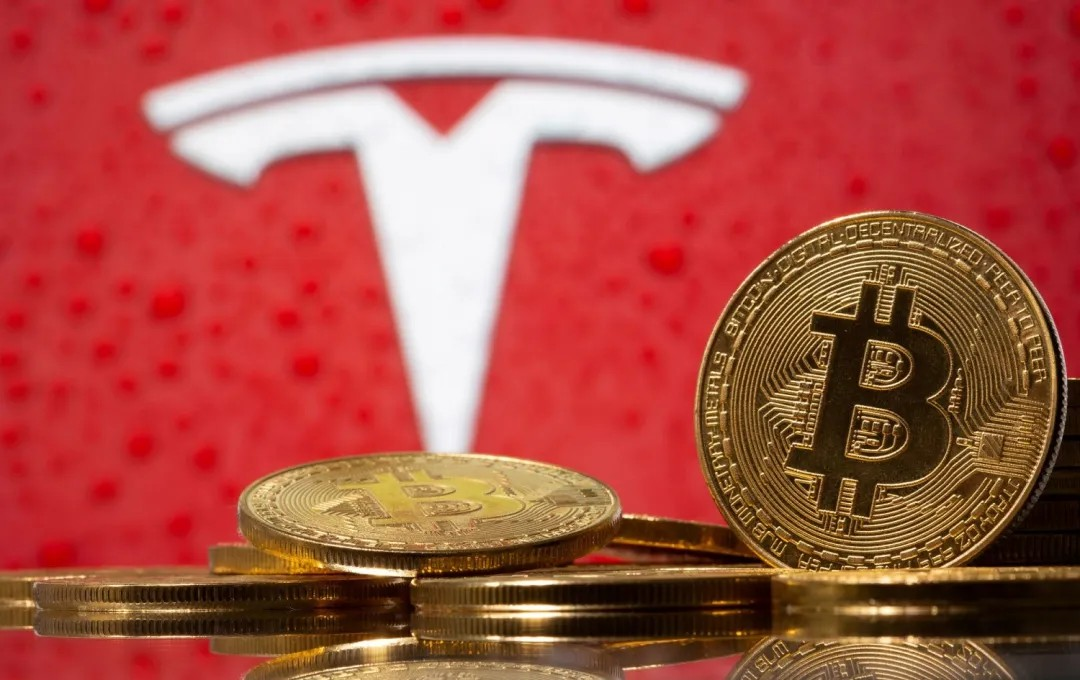
First, Binance quietly launched Tesla (TSLA) related products—not RWA (Real World Assets) but Perpetual contracts.
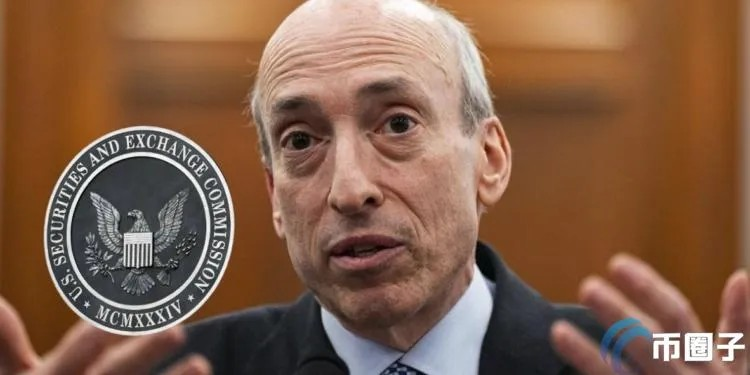
Second, U.S. Securities and Exchange Commission (SEC) Chairman Paul Atkins recently made consecutive public statements, suggesting that the U.S. financial market might fully migrate on-chain within two years.
(Image Source: Binance Community)
These two news stories are intrinsically connected, relating to the next direction of global asset liquidity, involving both economic issues and some interesting legal questions.
First, Binance's Attempt: From "Forcing Through" to "Stealth"
This is not Binance's first attempt at Tesla.
Looking back to 2021, Binance once high-profile launched "stock tokens," attempting to peg 1:1 to physical stocks, allowing users to hold shares on-chain and receive dividends. However, this product faced strong opposition from regulatory agencies in Germany, the UK, and others for涉嫌非法发行证券 (suspected illegal securities issuance), and was eventually taken down.
At that time, Binance's strategy was to "force through"—directly移植股权到链上 (transplanting equity onto the chain)—but underestimated the power of traditional financial rules. Now, its approach has shifted to "stealth."
The Tesla perpetual contract launched in 2026 no longer挂钩股份所有权 (pegs to stock ownership); it only tracks price fluctuations. It does not promise dividends but offers pure price speculation. Users are not buying Tesla equity but engaging in a纯粹的价格博弈 (pure price game).
From "buying ownership" to "buying volatility," this shift appears to be a concession but is actually a迂回探索 (circuitous exploration) by the crypto giant into the equity trading market within the existing legal framework.
On-Chain Tesla: Buying a "Bet" or "Goods"?
Many friends trading Tesla on Binance might wonder if on-chain Tesla is equivalent to U.S. stock Tesla. To answer this, the legal boundaries must be clarified:
- Perpetual Contract (Perp): Buying a "bet". You are purchasing a contract, speculating on the price. The logic is simple, the liquidity of the purchased标的 (underlying) is extremely high, but the legal attribute is a "derivative." Once the platform faces清算风险 (liquidation risk), you have no physical assets to recover.
- RWA (Tokenized Assets): Buying "goods". For every Token on the chain, there is a gold brick or a share of stock in the vault. Its core is "确权" (rights confirmation). This involves complex cross-border legal adaptation, asset custody, and physical asset穿透 (traceability).
For now, in the short term, Perpetual contracts will attract speculative heat; but in the long run, U.S. stock RWA is the ultimate solution for reshaping global financial liquidity.
Endorsement by Giants: SEC Chairman Paul Atkins' Two-Year Plan
If Binance's move is a民间抢跑 (civilian false start), then the regulatory authorities' formal statements are the正规军入场 (entry of the正规军 regular army).
Current U.S. Securities and Exchange Commission Chairman Paul Atkins publicly spoke on formal occasions in December 2025 and January this year: the U.S. financial market might fully migrate on-chain within two years.
Please note this timeline: two years. In his "Project Crypto" blueprint, blockchain is no longer the regulator's adversary but the underlying operating system for improving transparency and achieving T+0 settlement.
Currently,大宗资产 (bulk assets) like gold and silver have achieved mature on-chain ownership trading (RWA). The on-chain migration of U.S. stocks is no longer a technical issue of "whether it can be done" but a procedural issue of "when to move." And procedural issues, with the specific路线 (route) already drawn, are merely details that need妥善安排 (proper arrangement) at the compliance level.
Exploration of Dispute Resolution Clauses
Against the backdrop of traditional finance being continuously重构 (restructured) by Web3 technology, massive capital inflows, and尚未明晰的规则 (rules not yet clear), another key issue I focus on is:
Once a dispute occurs, how can we achieve efficient and fair resolution?
On-chain transactions have the characteristic of "settlement is finality," while链上投融资 (on-chain investment and financing) often involve legal rules from multiple jurisdictions. If disputes such as违约 (default) or协议漏洞 (protocol vulnerabilities) occur, traditional court litigation often gets bogged down in prolonged jurisdictional disputes.
Compared to resorting to courts事后 (after the fact),事先约定可靠的仲裁管辖 (agreeing on reliable arbitration jurisdiction in advance) has become an industry consensus. Recently, my team and I have held multiple in-depth exchanges with professionals from major arbitration institutions like the Singapore International Arbitration Centre (SIAC) and the Shanghai International Arbitration Centre (SHIAC), exploring how to combine the resolution of large on-chain disputes with the fairness and strong enforceability of international commercial arbitration.
We look forward to further dialogue with more arbitration experts domestically and internationally. In an era of increasingly cross-border asset flows, we urgently need to establish a compliant arbitration path that both deeply understands the underlying technical logic and gains recognition from mainstream legal jurisdictions.
Conclusion
What exactly has Web3 brought us?
Although the industry occasionally faces regulatory tightening and growing pains, I始终相信 (always believe) that the core of Web3 is freedom. It will inevitably重构整个金融体系 (restructure the entire financial system). The only uncertainty is how long this process will take—whether it will be two years as predicted by the SEC or slightly longer.
On-chain freedom means assets are no longer bound by physical borders and ordinary people can share the红利 (dividends) of global liquidity. The解放 (liberation) of global asset liquidity is already a clearly foreseeable future and a key battlefield that our generation of legal professionals should躬亲入局 (personally engage in).
——Deconstructing the SEC's "Two-Year On-Chain" Vision: Towards the Path of Web3 Freedom, Promoting the Further Liberation of Global Asset Flows.