Trump's Financial Disclosure Teaches You the Most Underrated Tax Optimization Strategy

Foresight NewsPublished on 2026-07-03Last updated on 2026-07-03

Abstract

Forbes article analyzes tax optimization strategies based on Trump's recent financial disclosures, highlighting his crypto holdings. Key insights reveal that holding appreciated assets like his $50M+ Bitcoin and multi-million dollar Ethereum allows indefinite deferral of capital gains taxes under U.S. law. Taxable events only occur upon disposal (sale, trade, spend). Conversely, certain activities create immediate tax liability. Trump reported ~$510,808 in staking rewards and ~$45,932 in USDC interest, both treated as ordinary income taxed in the year received. The IRS views staking rewards as income at fair market value upon receipt. Other reported income includes $635M in memecoin royalties, NFT licensing fees (ordinary income), and $236.25M from token/equity sales (capital gains). Long-term holdings qualify for lower capital gains rates. The article concludes that the simplest, most overlooked tax strategy is straightforward: hold assets without selling to defer taxes on unrealized gains indefinitely. This principle applies to all crypto investors regardless of portfolio size.


Author: Forbes

Translated by: AididiaoJP, Foresight News


The U.S. federal government recently released Donald Trump's financial disclosure documents, detailing how one of America's top cryptocurrency holders holds tens of millions of dollars in digital assets without facing immediate massive tax bills. The core principle of this strategy applies to every crypto investor, regardless of portfolio size: unless sold, taxes are typically not owed.


Holding Appreciating Assets Indefinitely Defers Capital Gains Tax


The disclosure shows Trump holds a cold wallet Bitcoin position worth over $50 million, with no reported income associated with it. This substantial appreciation falls under the IRS definition of 'unrealized gains'—paper value increases not yet realized through sale. Under current U.S. tax law, a taxable event is triggered only upon 'disposition' of the asset (such as sale, trade, or spending). Simply holding an asset, even if its value surges by millions, does not create a tax liability. This deferral can continue indefinitely until the asset is sold or otherwise disposed of.


Similarly, his Ethereum (ETH) holdings, valued between $5 million and $25 million, are also stored in a cold wallet; additionally, there are 15.75 billion WLFI governance tokens worth over $50 million. These positions were not accompanied by income reports. The asset value appears on the balance sheet, but as long as it's not sold, there's no taxable event and thus no tax bill.


Staking Rewards and Interest Income Must Be Reported and Taxed in the Year Received


Not all holdings enjoy deferral. Trump reported $510,808 in income from Coinbase validator rewards, compensation earned by helping validate transactions on the Ethereum network through staking. The IRS treats staking rewards as ordinary income, taxed in the year received at the fair market value of the tokens when they are credited, regardless of whether the tokens are later sold.


Currently, there is controversy among some investors regarding the treatment of staking rewards: an aggressive approach is to wait until sale to report gains, rather than counting the full value as income upon receipt. The IRS has not issued definitive guidance for all scenarios, but its 2023 Revenue Ruling 2023-14 regarding Proof-of-Stake (PoS) mining rewards leans towards recognition upon receipt. Most tax professionals adopt this conservative reporting approach. The disclosure document does not specify which method was used here.


Furthermore, the disclosure shows Trump holds USDC (a U.S. dollar-pegged stablecoin) valued between $5 million and $25 million, earning $45,932 in interest. Stablecoin prices typically hover near $1, rarely generating capital gains or losses, but interest income is ordinary income, treated the same as bank interest, and is fully taxable in the year received.


Royalties, Token Sales, and Licensing Fees Taxed as Ordinary Income


The disclosure also includes two entries beyond passive holding. CIC Digital LLC reported $635 million in royalties from 'Celebration Coins' (Trump meme coins) and licensing fees related to NFTs. This income is classified as ordinary income under tax law, taxed at the same rates as wages, not the preferential long-term capital gains rates available for assets held over a year. Income is recognized and taxed upon receipt.


The crypto project World Liberty Financial, associated with Trump, shows $236.25 million in token sale proceeds and $65.625 million in equity sale proceeds. Selling tokens is a taxable event, similar to selling stock. Gains or losses are calculated as the difference between the sale price and the cost basis (the original purchase or investment amount). Depending on the holding period, short-term or long-term capital gains tax rates may apply.


The Simplest Yet Most Overlooked Crypto Tax Optimization Strategy


Ultimately, what this disclosure reveals is not complex offshore structures or aggressive tax avoidance schemes, but the sole reason the largest positions in the portfolio incur no current tax: they have not been sold.


Every crypto investor can use this same deferral mechanism. Whether assets are held in a wallet or on an exchange, as long as they appreciate in value without being sold, no taxable event is triggered.

Related Questions

QAccording to the article, what is the core principle for crypto investors to defer capital gains tax, as illustrated by Trump's financial disclosures?

AThe core principle is that holding an appreciating asset without selling it allows for indefinite deferral of capital gains tax. Under U.S. tax law, a taxable event is only triggered upon 'disposition' (like selling, trading, or spending), not from unrealized gains.

QWhat types of crypto-related income does the article state are treated as ordinary income and taxed in the year they are received, similar to wages?

AThe article states that staking rewards (like Trump's Coinbase validator rewards), interest income (like from stablecoin holdings), royalties, licensing fees from NFT projects, and revenue from token sales are all generally treated as ordinary income and taxed in the year they are received.

QWhat is the key difference, according to the article, in how the IRS treats the holding of a Bitcoin wallet versus receiving staking rewards?

AHolding a Bitcoin wallet with unrealized gains does not trigger a tax event until the asset is sold. In contrast, staking rewards are considered ordinary income and are taxed based on their fair market value at the time they are received, regardless of whether the tokens are later sold.

QBased on the financial disclosure discussed, what simple tax optimization strategy does the article conclude is most underutilized by crypto investors?

AThe article concludes that the simplest and most underutilized tax optimization strategy is the intentional deferral of taxes by simply not selling appreciating crypto assets. This allows investors to avoid triggering a taxable event and defer capital gains taxes indefinitely.

QHow are proceeds from the sale of a token, like those reported by World Liberty Financial, taxed according to the article?

AProceeds from the sale of a token are a taxable event. The capital gain or loss is calculated as the difference between the sale price and the cost basis (the original purchase/investment amount). The tax rate applied depends on whether it's a short-term or long-term capital gain, based on the holding period.

Related Reads

Korean Companies That Learned to Hoard Coins from MicroStrategy: From Bull Market to Delisting?

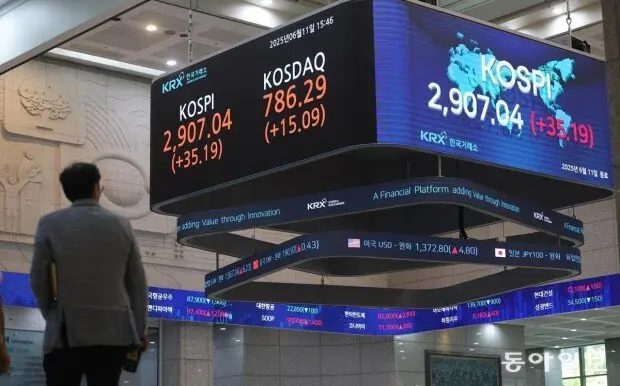
South Korean companies that adopted the “Digital Asset Treasury” (DAT) strategy—issuing shares to buy and hold Bitcoin, inspired by MicroStrategy—now face delisting risks on the KOSDAQ market. New regulations effective July 1, 2026, tightened listing maintenance rules, notably raising the minimum market capitalization threshold from 150 billion KRW to 200 billion KRW (about $1.3 million), with a further increase to 300 billion KRW scheduled for January 2027. Companies failing to meet both the share price and market cap requirements for specified periods risk being designated for delisting, with fewer options for financial engineering like stock splits to artificially boost prices. The downturn in cryptocurrency prices has severely impacted these firms. Bitcoin, which peaked above $120,000 in mid-2025, has fallen below $60,000, forcing DAT companies to report large valuation losses. Compounding this, the KOSDAQ index has dropped about 10% year-to-date, while the main KOSPI index surged nearly 95%, diverting investor interest away from smaller-cap stocks. Examples like BitPlanet (holding 300 BTC) and Parataxis Ethereum currently hover just above the new market cap limits, but face heightened scrutiny and potential delisting starting in 2027. Industry analysts warn that the combination of weak crypto markets, a struggling KOSDAQ, and stricter regulations creates a significant survival challenge for these companies, highlighting the risks of business models overly reliant on volatile digital asset prices.

链捕手4m ago

Korean Companies That Learned to Hoard Coins from MicroStrategy: From Bull Market to Delisting?

链捕手4m ago

Countdown to the CLARITY Act: 25 Days Left—What Will Happen to the Crypto Market if It Fails to Pass Before the August Recess?

"The CLARITY Act, a key US crypto market structure bill, faces a tight deadline with only 25 working days left before the Senate's August 10 recess. The bill aims to clarify SEC/CFTC jurisdiction and establish a non-security path for decentralized tokens. Despite passing the House in 2025 and a Senate committee in May 2026, final negotiations have stalled over ethics and law enforcement provisions, jeopardizing the 60 Senate votes needed. If the bill fails to pass before the recess, its chances in 2026 drop significantly, with prediction markets giving only a 40% probability. Analyst Galaxy Digital has lowered its 2026 passage odds to 50%. Failure would likely lead to continued 'slow bleeding' in crypto markets, as seen in June's record $4.5 billion net outflow from US Bitcoin ETFs. XRP, which stands to gain permanent commodity status from the bill, could lose its 'regulatory premium.' Bitcoin and Ethereum, already classified as commodities via a joint agency interpretation, would face less direct impact but broader regulatory uncertainty would persist, delaying institutional capital and DeFi innovation. The path forward includes: 1) Passage before August (a major catalyst), 2) Delay to 2027 (extending market uncertainty), or 3) Failure, requiring the bill to be reintroduced in the next Congress. While delay is a setback, the bill's progress indicates the US is closer than ever to resolving crypto regulatory ambiguity."

marsbit38m ago

Countdown to the CLARITY Act: 25 Days Left—What Will Happen to the Crypto Market if It Fails to Pass Before the August Recess?

marsbit38m ago

Trading

Spot
活动图片