Axblade Set for Global Debut at Consensus Hong Kong 2026

TheNewsCryptoPublished on 2026-02-07Last updated on 2026-02-07

Abstract

Axblade is a high-performance hybrid finance protocol designed to unify real-world assets (RWA) and on-chain liquidity into a single compliant financial system. It addresses the fragmentation between speculative on-chain activity and stable real-world value by transforming traditional assets into composable financial primitives. Built for scalability and compliance, Axblade supports high-throughput on-chain activity with integrated protocol-level compliance, enabling verifiable data without unnecessary exposure. Its long-term vision is to serve as foundational infrastructure for decentralized finance, bridging off-chain value with on-chain liquidity. Axblade will make its global debut at Consensus Hong Kong 2026 on February 11-12, where the team will engage with builders, partners, and institutions interested in on-chain finance and RWA collaboration.

Axblade is a high-performance, Hybrid finance protocol built for the open economy. The protocol is designed to unify real-world assets and on-chain liquidity within a single, compliant financial system, enabling capital to be issued, composed, and deployed natively on-chain with settlement-grade reliability.

At its core, Axblade aims to address one of the fundamental limitations of today’s on-chain finance: the fragmentation between speculative on-chain activity and stable, real-world value. By bringing real-world assets into a programmable on-chain environment, Axblade transforms traditionally static assets into composable financial primitives, allowing capital to flow more efficiently across use cases while remaining transparent and verifiable.

Axblade is built with performance, scalability, and compliance in mind. Its architecture supports high-throughput on-chain activity while integrating compliance at the protocol level, enabling data to be verifiable without unnecessary exposure. This approach is intended to support global participation and cross-border finance, while meeting the structural requirements of real-world asset integration.

The protocol’s long-term vision is to serve as foundational infrastructure for on-chain finance—bridging off-chain value and on-chain liquidity, and providing a scalable base layer for the next phase of decentralized financial systems.

Axblade at Consensus Hong Kong 2026

Axblade will be present at Consensus Hong Kong 2026, taking place on February 11 –12, marking the project’s first official appearance at an international Web3 conference. The team will be on-site throughout the event to engage with the ecosystem and introduce Axblade’s approach to building compliant, high-performance on-chain financial infrastructure.

Conversations and Collaboration

During Consensus Hong Kong, the Axblade team welcomes conversations with builders, partners, institutions, and ecosystem participants interested in on-chain finance, real-world assets, and long-term infrastructure collaboration.

About Axblade

Axblade is a High-Performance, Hybrid Finance Protocol built for the open economy. It unifies real-world assets and on-chain liquidity into a single, compliant financial system, enabling capital to be issued, traded, and composed with settlement-grade reliability. Axblade aims to bring off-chain value on-chain while providing a scalable foundation for compliant, cross-border finance.

Disclaimer: TheNewsCrypto does not endorse any content on this page. The content depicted in this Press Release does not represent any investment advice. TheNewsCrypto recommends our readers to make decisions based on their own research. TheNewsCrypto is not accountable for any damage or loss related to content, products, or services stated in this Press Release.

TagsAxbladePress Release

Related Questions

QWhat is Axblade and what is its primary purpose?

AAxblade is a high-performance, hybrid finance protocol built for the open economy. Its primary purpose is to unify real-world assets (RWAs) and on-chain liquidity within a single, compliant financial system, enabling capital to be issued, composed, and deployed natively on-chain.

QWhat fundamental limitation of on-chain finance does Axblade aim to solve?

AAxblade aims to address the fragmentation between speculative on-chain activity and stable, real-world value. It transforms traditionally static real-world assets into composable financial primitives to allow for more efficient capital flow.

QWhen and where will Axblade make its global debut?

AAxblade will make its global debut at the Consensus Hong Kong 2026 conference, which is taking place on February 11-12, 2026.

QWhat are the key architectural focuses of the Axblade protocol?

AAxblade is built with performance, scalability, and compliance in mind. Its architecture supports high-throughput on-chain activity while integrating compliance at the protocol level to enable verifiable data without unnecessary exposure.

QWho is the Axblade team hoping to connect with at the Consensus Hong Kong event?

AThe Axblade team welcomes conversations with builders, partners, institutions, and ecosystem participants who are interested in on-chain finance, real-world assets, and long-term infrastructure collaboration.

Related Reads

A Crayfish Ignites the Tech World: Is Humanity Ready to 'Flip the Table'?

The article titled "A Little Lobster Ignites the Tech World: Is Humanity Ready to 'Flip the Table'?" discusses the rapid rise and implications of OpenClaw, an open-source AI agent that has quickly gained popularity in the tech community. Developed by an independent retiree, Peter Steinberger, OpenClaw allows users to run a functional AI assistant on low-end hardware like an old Mac mini or smartphone. It has attracted significant attention for enabling tasks such as scheduling, stock trading, podcast production, and SEO optimization, making the vision of a personal "Jarvis" seemingly attainable. However, the excitement is tempered by practical challenges and risks. Despite its accessibility, installation can be complex and time-consuming, excluding non-technical users. More critically, OpenClaw’s high-level permissions pose security threats, including potential file deletion, unauthorized financial transactions, and vulnerability to malicious attacks. Over 1,000 OpenClaw instances and 8,000 vulnerable plugins have already been exposed, amplifying these risks. Experts note that while OpenClaw isn’t a technological breakthrough, it represents a milestone in AI agents' ability to perform complex, continuous tasks autonomously. Its open-source nature fosters innovation but also heightensates security and privacy concerns. The piece highlights emerging risks, such as AI agents evolving in social environments like Moltbook (an AI-only forum) and the blurred lines of accountability when things go wrong. Recommendations for users include limiting sensitive data, cautiously managing permissions, and recognizing the tool’s experimental stage. For enterprises, professional oversight and secure alternatives are advised. Ultimately, OpenClaw signals rapid progress in AI, pushing the boundaries of what’s possible while urging the development of robust safety measures, including "endogenous security" and the capacity to "flip the table" in crises. The next few years are seen as critical for determining the future of general AI.

marsbit35m ago

A Crayfish Ignites the Tech World: Is Humanity Ready to 'Flip the Table'?

marsbit35m ago

How Does HashKey Build Institutional-Grade On-Chain Financial Infrastructure?

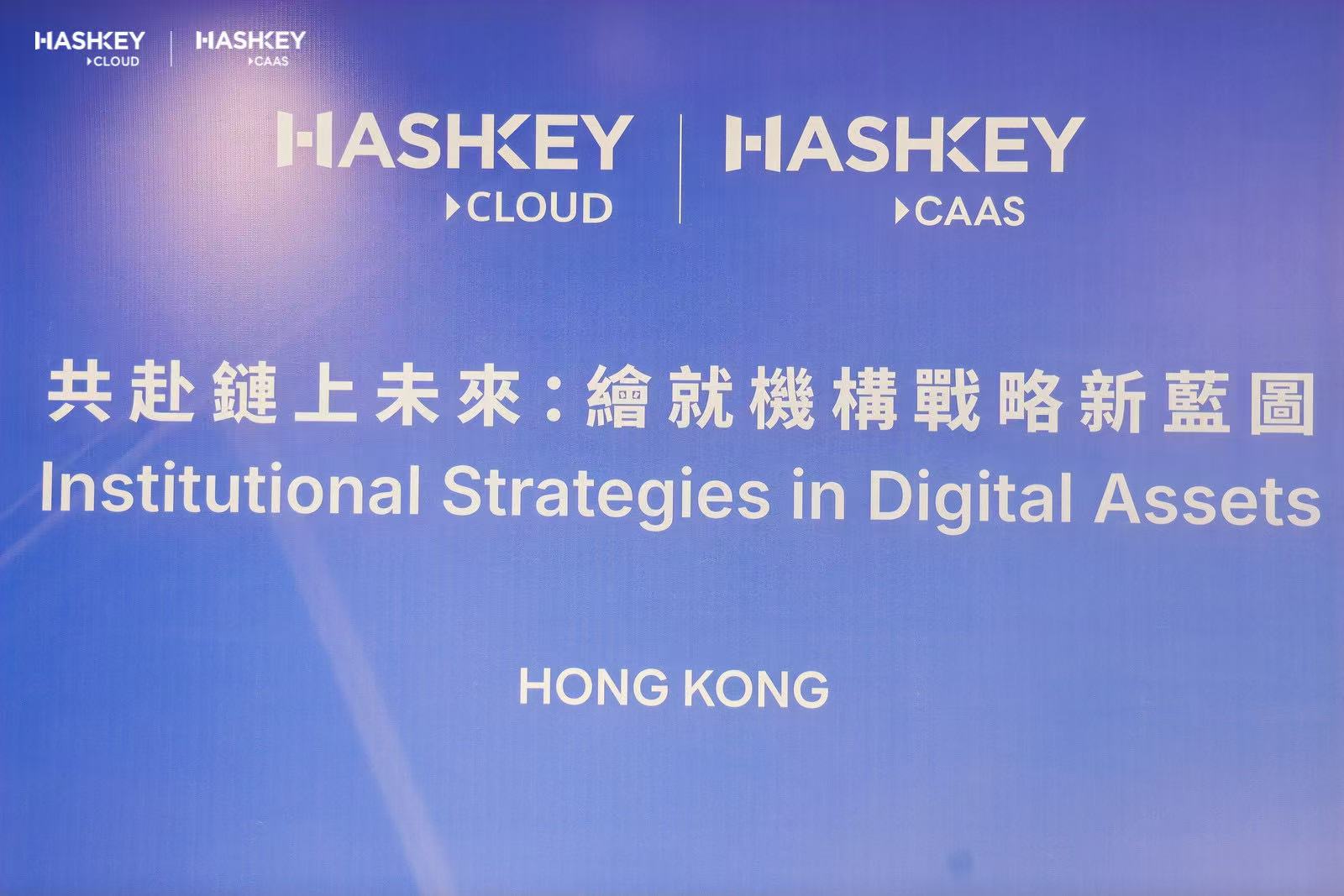
In a recent "Charting a New Institutional Strategy" event held ahead of Consensus, HashKey Cloud and HashKey CaaS introduced a comprehensive on-chain financial infrastructure solution tailored for institutional clients. The event highlighted the growing demand for secure, efficient, and regulatory-compliant services as institutions enter the crypto ecosystem. Leo, CEO of HashKey’s On-Chain Business Group, expressed optimism about the industry’s compliance-driven future, emphasizing Web3’s potential as transparent and secure financial infrastructure, particularly in regions with less developed financial systems. HashKey Cloud, represented by Product Lead Shen Jun, showcased its institutional-grade staking and yield services, operating under a non-custodial model to enable secure asset tokenization and yield generation. The platform supports multi-chain services and offers insurance-backed staking solutions. HashKey CaaS, introduced by Business Development Manager Yu Yi, provides end-to-end services including asset tokenization, staking for ETFs and digital assets, on-chain transactions, and risk management. It aims to bridge traditional finance with crypto through compliant, globally-trusted infrastructure. The event also featured roundtables with participants from firms like Victory Securities, Zodia Custody, WisdomTree, Ether.fi, Lido, and others, discussing the integration of traditional finance with on-chain yields, new earning opportunities with ETH and BTC, and the tokenization of precious metals as part of the expanding RWA (Real-World Asset) ecosystem. HashKey’s strategic shift from a compliant exchange to an institutional on-chain infrastructure provider underscores its commitment to driving the convergence of traditional and digital asset finance in Hong Kong and globally.

marsbit58m ago

How Does HashKey Build Institutional-Grade On-Chain Financial Infrastructure?

marsbit58m ago

Trading

Spot
Futures
活动图片