Unbelievable! Cosmos Publishes High-Risk Patch Without Prior Notice, Hackers 'Empty' Project Treasuries First

marsbitPublished on 2026-08-25Last updated on 2026-08-25

Abstract

A series of preventable security attacks recently struck multiple Cosmos ecosystem blockchains—including MANTRA, TAC, KiiChain, and Nesa—all built using the Cosmos EVM module. Attackers drained protocol treasury wallets and dumped the stolen tokens, causing assets like KII, TAC, and NES to plunge over 90% within hours. The root cause was a critical security vulnerability. On August 19, Cosmos Labs publicly released version v0.7.2 on GitHub, containing an urgent security patch. However, they failed to privately notify or coordinate with the dependent project teams beforehand, leaving the exploit details openly accessible. This allowed malicious actors to study and execute attacks before most teams could respond. Affected projects like KiiChain criticized Cosmos Labs for bundling the critical fix with unrelated updates and not treating it with the necessary urgency, such as recommending chains to pause operations. The exploit combined three upstream flaws in the Cosmos EVM module, affecting any chain with vesting accounts enabled. Despite some teams, like MANTRA, identifying the issue early, attacks continued for days. Nesa’s token crashed 94% before the team halted its chain. Cosmos Labs eventually issued a belated response, advising chains to pause, but widespread criticism highlighted a severe failure in vulnerability disclosure, patch coordination, and ecosystem communication. This incident underscores deep flaws in Cosmos's security auditing, cross-chain coordination, ...

Author: Gu Yu, ChainCatcher

Over the past few days, the Cosmos ecosystem experienced an avoidable "security disaster." Blockchains like MANTRA, TAC, KiiChain, and Nesa, which utilize the Cosmos EVM module, were successively attacked. Protocol reserve tokens from the treasury wallets on each chain were stolen in bulk by hackers and quickly dumped, causing tokens like KII, TAC, and NES to plummet by over 90% within hours, resulting in heavy losses for numerous token holders.

Initially, the market did not notice the common factor behind this series of incidents—that they all involved Cosmos-based blockchains. After all, hacker attacks in the crypto market have become commonplace. However, it wasn't until yesterday that the market realized this series of incidents all originated from the v0.7.2 upgrade code released by Cosmos Labs on GitHub on August 19th.
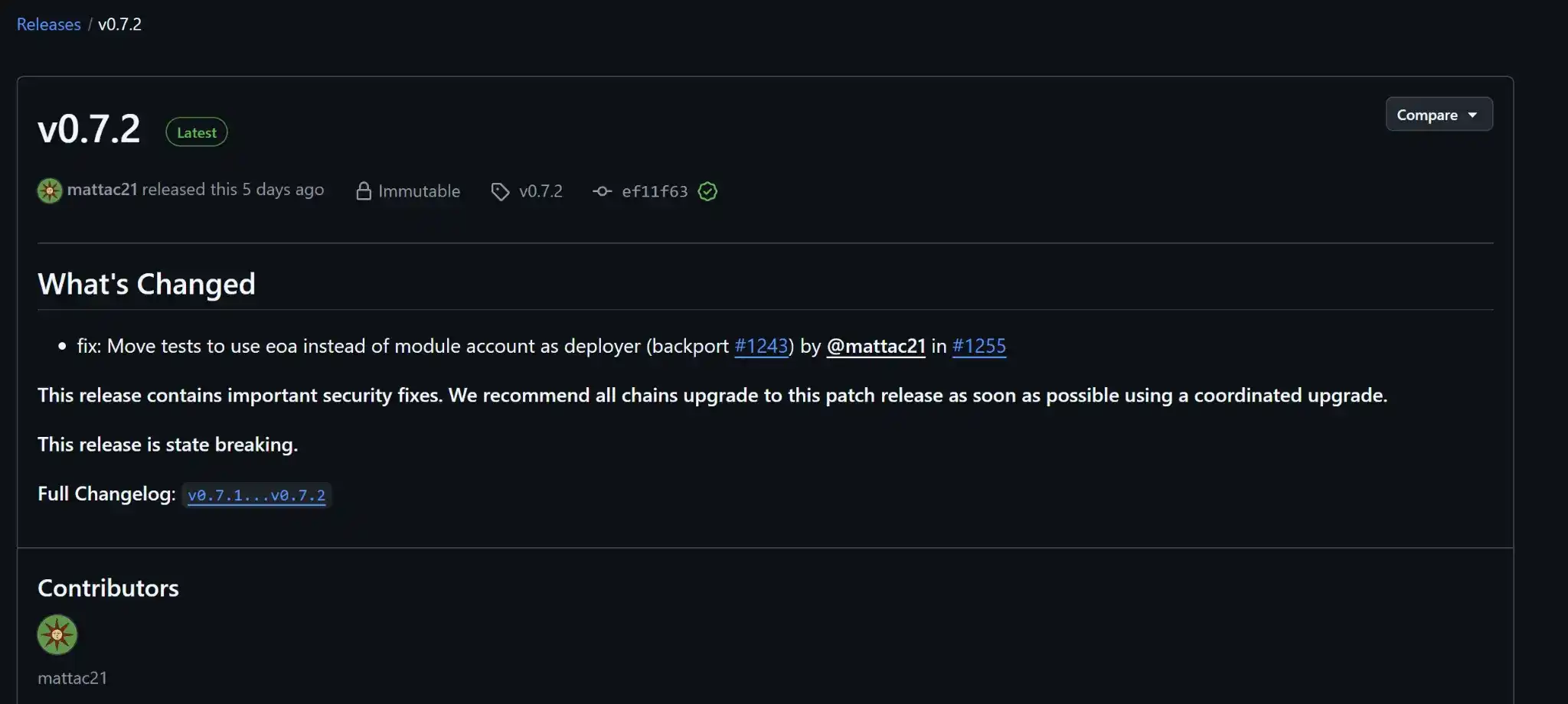
On that GitHub page, Cosmos Labs wrote: "This release contains important security fixes. We recommend all chains upgrade to this patched version as soon as possible using a coordinated upgrade. This release is disruptive." The urgency in the wording reflects the severity of the vulnerability.

However, Cosmos Labs' actions were perplexing: they made the security patch completely public but did not simultaneously send any private warnings or mandatory upgrade notifications to the project teams relying on this module. This was akin to hanging the key to the treasury in a public square with a sign saying "Please take it quickly," giving malicious actors ample time to study and execute attacks.

"If attackers can read GitHub, downstream teams need something better than GitHub. Vulnerabilities will always happen. The measure of enterprise infrastructure is everything after the vulnerability occurs: who is exposed, who gets warned, who gets the patch, and whether customers or attackers move first. We need the full post-mortem from Cosmos Labs. But there's no sugarcoating this: the coordination failure was severe," said developer @justde.

KiiChain, which was attacked, also posted directly criticizing Cosmos Labs for its irresponsible behavior, stating that this incident "could have been avoided."

KiiChain stated that when Cosmos Labs made the announcement on Friday, they bundled the fix with a batch of previously handled unrelated issues. At that time, they did not treat it as an extremely urgent matter, like a severe vulnerability that could lead to permanent loss of funds. They also did not recommend pausing all chains.

KiiChain also revealed the specific attack principle of the vulnerability. The attack requires the simultaneous presence of three upstream defects in the Cosmos EVM module to be effective: an underflow occurring when writing delegated balances back to EVM during staking precompilation, along with two other yet-to-be-disclosed vulnerabilities. KiiChain's specific code did not participate in this attack. All Cosmos EVM chains with vested accounts enabled share the same risk.

More lamentably, such attacks continued as late as the evening of the 24th. The Nesa project team immediately issued an announcement and took measures to halt the blockchain. "We have detected malicious activity exploiting the Cosmos EVM vulnerability on L1 and are taking steps to contain the impact. We have acted swiftly and will bring services back online after applying software fixes and further remediation measures to ensure safe operations."
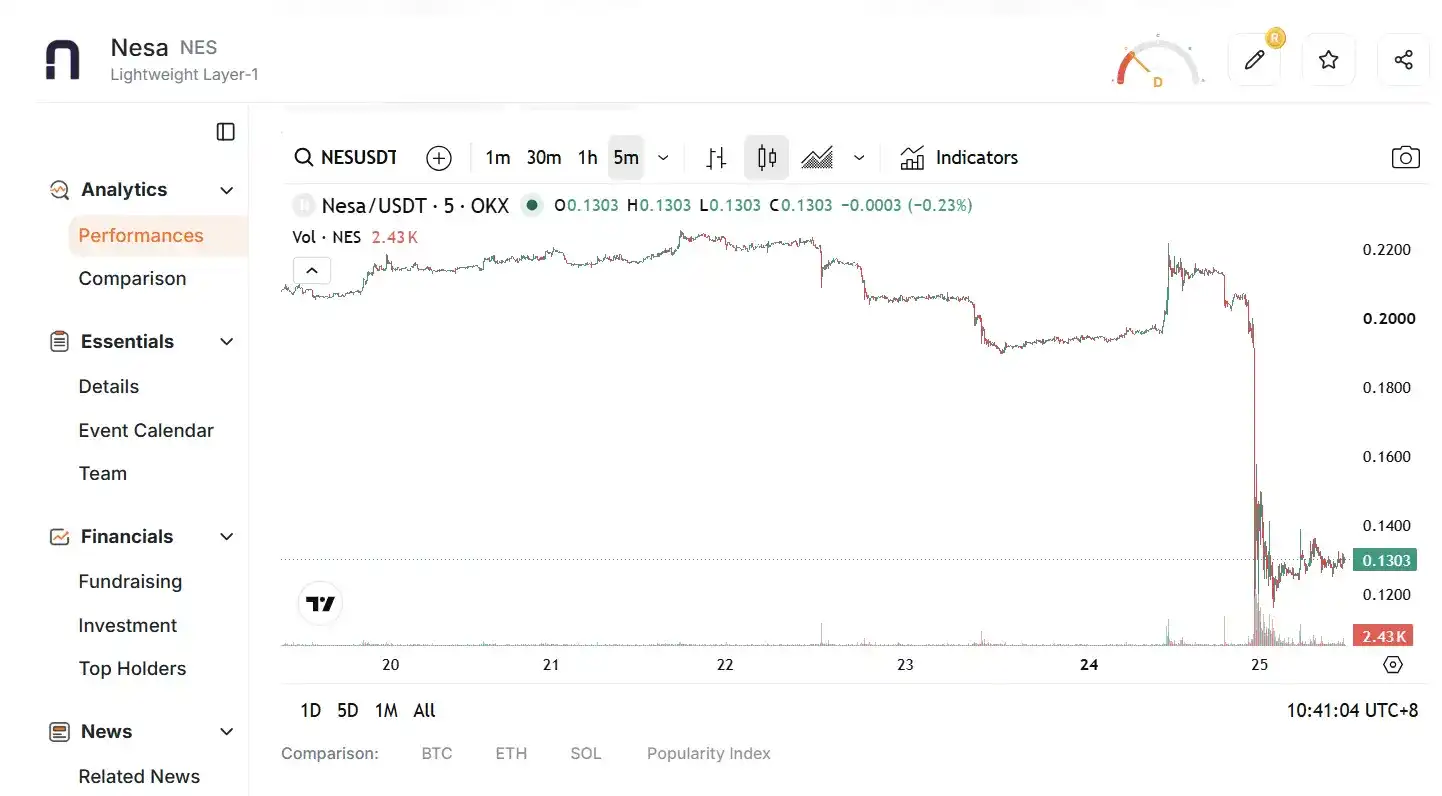
By then, the Nesa token had already plummeted by over 94%, dropping from its previous price of $0.22 to $0.011. Very few projects can recover normal operations from such a steep decline.

However, the fact that the project team did not take proactive measures to mitigate the risk even after multiple Cosmos EVM security incidents and at least 2 days after the issue was exposed still indicates a severe lack of risk and responsibility awareness within their technical team.

As early as the 21st, MANTRA publicly stated that they had identified the root cause of the incident, which was limited to the Cosmos EVM module on the MANTRA Chain.
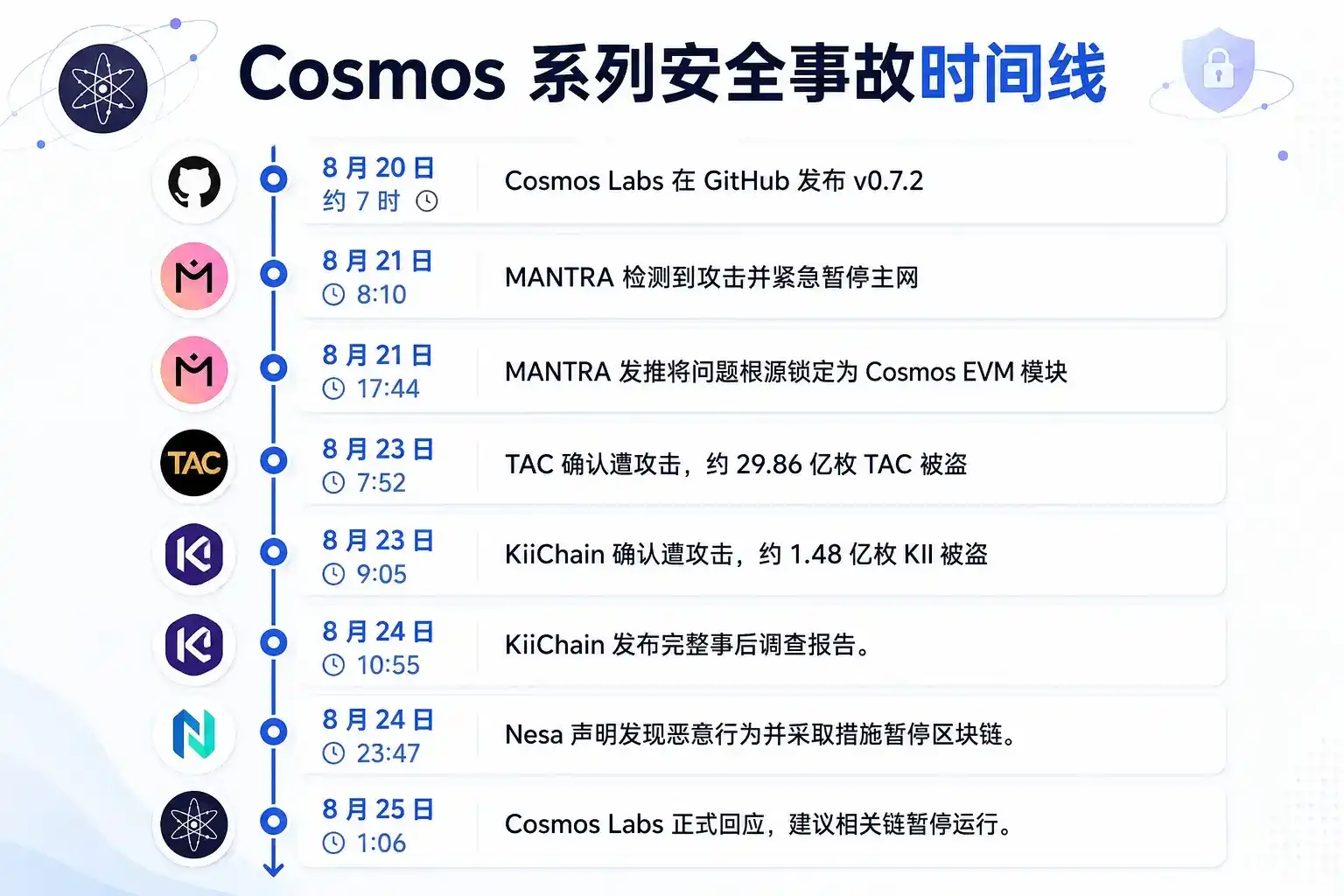
As more discussions erupted, Cosmos Labs' public response statement arrived belatedly: "An ongoing security incident is affecting users of the Cosmos EVM module. The security and engineering teams at Cosmos Labs have proactively responded to this event. We have advised Cosmos EVM chains that have been in contact with us to request their validators pause their chains."

However, it was too late. Criticism and disappointment from various quarters flooded social media. "They maintain a shared EVM module that dozens of chains depend on, but when a critical precompilation vulnerability emerged, they didn't proactively issue patches through main channels, provide clear PoCs, or coordinate deployment guidance. These chains are downstream of your code. Your job is to release security patches + deployable PoCs quickly so the entire ecosystem can upgrade cleanly. Instead, we got silent upstream disruption, with each team struggling alone," said developer @justde.

Currently, the Cosmos token ATOM still has a market cap of $800 million, ranking 68th among all tokens, but it has fallen more than 95% from its peak.

Its ecosystem development has also continued to suffer setbacks over the past few years. In just the past six months, Cosmos ecosystem projects like Neutron, Mars Protocol, Pryzm, Leap Wallet, and Cosmostation have announced they are ceasing operations. Projects like Secret Network and Noble have announced they are abandoning the Cosmos ecosystem, opting to build their own Layer1 or migrate to the Ethereum ecosystem.

This series of thefts undoubtedly further magnifies the deep-seated flaws in Cosmos's underlying code security audits, cross-chain coordination mechanisms, and emergency response systems.

Security vulnerabilities themselves might be inevitable, but the unbelievable logic of "publishing a patch without informing downstream" and various "amateurish" performances are enough to send chills down the spine of all builders.

Trending Cryptos

Related Questions

QWhat major security incident occurred in the Cosmos ecosystem recently, and which projects were affected?

AA series of attacks targeted several Cosmos EVM module-based blockchains, including MANTRA, TAC, KiiChain, and Nesa. Hackers drained the protocol treasury wallets, leading to a crash of over 90% in tokens like KII, TAC, and NES within hours.

QWhat was the root cause of these attacks, and how did the vulnerability become known to potential attackers?

AThe attacks exploited a critical security vulnerability in the Cosmos EVM module, fixed in the v0.7.2 patch released publicly on GitHub on August 19th by Cosmos Labs. The vulnerability became widely exploitable because Cosmos Labs published the patch openly without providing private, coordinated warnings or mandatory upgrade notices to dependent project teams first.

QHow did Cosmos Labs' handling of the security patch contribute to the 'security disaster', according to critics?

ACritics argue that Cosmos Labs failed in its coordination responsibility. By publicly releasing the patch on GitHub without prior private warnings, clear Proof-of-Concept (PoC) details, or coordinated deployment guidance for downstream projects, they effectively alerted hackers while leaving project teams unprepared, leading to a race attackers won.

QWhat specific criticism did the KiiChain project level against Cosmos Labs regarding the patch announcement?

AKiiChain accused Cosmos Labs of irresponsibility by bundling the critical security fix with unrelated, previously handled issues in the announcement. They stated Cosmos Labs did not treat it as an extreme emergency that could cause permanent fund loss and failed to recommend pausing all affected chains, which could have prevented the attacks.

QWhat does the article suggest about the broader state of the Cosmos ecosystem beyond this specific incident?

AThe article suggests the Cosmos ecosystem is facing significant challenges, including a declining ATOM token value (down over 95% from its peak) and a trend of projects like Neutron, Secret Network, and Noble either shutting down or migrating away from Cosmos. This incident highlights deeper systemic issues in code security audits, cross-chain coordination, and emergency response protocols within the ecosystem.

Related Reads

Bernstein Research Report Analysis: Circle Benefits from USDC Expansion Cycle, Maintains Outperform Rating with $140 Price Target

Bernstein Report Analysis: Circle Benefits from USDC Expansion Cycle, Maintains Outperform Rating with $140 Target Stablecoin markets are reversing. After nearly six months of stagnation and decline, the supply of USDC suddenly increased by $1.7 billion in the final week of August. Circle's stock price has rebounded 42% from its slump driven by concerns over OUSD competition. On August 24, Bernstein published a report stating this is not a temporary technical rebound. Four key factors are driving a new stablecoin expansion cycle: the macro interest rate environment, expansion of the on-chain capital market, proliferation of stablecoin payments, and the emerging use of AI agent payments. Circle, as the largest compliant stablecoin issuer, is positioned to benefit significantly. Bernstein maintains its "Outperform" rating for Circle with a $140 price target, implying a 59% upside from the current price. The recovery in USDC supply validates the macro logic. The US Treasury's long-end bond buyback plan is reshaping the macro narrative for stablecoins, with stablecoins absorbing incremental short-term Treasury supply. Both Bitcoin and stablecoins benefit from this macro shift. AI agent payments represent a new growth frontier. Stablecoin payments are extending from "person-to-person" to "machine-to-machine." Bernstein highlights the x402 payment protocol, designed for AI agents to autonomously hold wallets, discover services, and make instant micropayments using USDC. While current volumes are small, this signals stablecoins' evolution towards becoming a native currency for the digital economy. USDC accounts for over 99% of x402 transaction volume. Circle benefits from two structural trends. First, the expansion of the on-chain capital market: its ARC blockchain, with validators like BlackRock and DTCC, supports asset tokenization. USDC has also been used as collateral for regulated derivatives. Second, the continued adoption of stablecoin payments: USDC's share of adjusted transaction volume has risen from ~40% in 2025 to over 60% year-to-date in 2026. Bernstein's $140 valuation is based on a long-term discounted cash flow model, corresponding to ~23x 2028 adjusted EBITDA. Key risks include digital asset volatility, increased competition, and Circle's reliance on interest income for 99% of its revenue. The stablecoin expansion is a structural story, and Circle sits at the confluence of these driving trends.

marsbit13m ago

Bernstein Research Report Analysis: Circle Benefits from USDC Expansion Cycle, Maintains Outperform Rating with $140 Price Target

marsbit13m ago

Trading

Spot

Hot Articles

How to Buy ATOM

Welcome to HTX.com! We've made purchasing Cosmos (ATOM) simple and convenient. Follow our step-by-step guide to embark on your crypto journey.Step 1: Create Your HTX AccountUse your email or phone number to sign up for a free account on HTX. Experience a hassle-free registration journey and unlock all features.Get My AccountStep 2: Go to Buy Crypto and Choose Your Payment MethodCredit/Debit Card: Use your Visa or Mastercard to buy Cosmos (ATOM) instantly.Balance: Use funds from your HTX account balance to trade seamlessly.Third Parties: We've added popular payment methods such as Google Pay and Apple Pay to enhance convenience.P2P: Trade directly with other users on HTX.Over-the-Counter (OTC): We offer tailor-made services and competitive exchange rates for traders.Step 3: Store Your Cosmos (ATOM)After purchasing your Cosmos (ATOM), store it in your HTX account. Alternatively, you can send it elsewhere via blockchain transfer or use it to trade other cryptocurrencies.Step 4: Trade Cosmos (ATOM)Easily trade Cosmos (ATOM) on HTX's spot market. Simply access your account, select your trading pair, execute your trades, and monitor in real-time. We offer a user-friendly experience for both beginners and seasoned traders.

4.8k Total ViewsPublished 2024.03.29Updated 2026.06.02

How to Buy ATOM

Discussions

Welcome to the HTX Community. Here, you can stay informed about the latest platform developments and gain access to professional market insights. Users' opinions on the price of ATOM (ATOM) are presented below.

活动图片