Hey, did you hear?
The good days for human researchers are, at best, only two years left.
Two years from now, humans doing AI research will be like humans playing chess today.
Of course you can still play, but no one will care how well you play.

This is the latest bombshell dropped by former OpenAI inference model lead Jerry Tworek.
He joined OpenAI in 2019 and stayed for seven years. Back when reinforcement learning refused to scale, he was the one who stubbornly pushed it forward. He personally led the teams that hammered out the o1 and o3 generations of major breakthroughs.
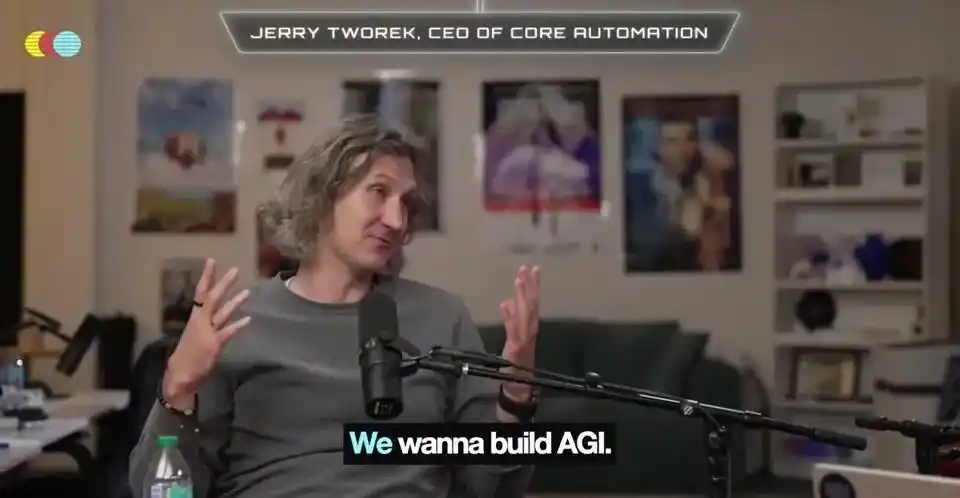
"We want to build AGI." This was the entire roadmap Ilya gave at an all-hands meeting when he first joined OpenAI in 2019. Seven years later, he went out on his own.
What's even more chilling is that he's not the only one saying this. The most popular inside joke among AI researchers right now goes like this—
We only have a few days of work left, so let's get it done while we still can, then we can all retire and rest.
Everyone treats it as dark humor, passing it around. But everyone who tells the joke knows perfectly well in their hearts.
This joke is probably reality.
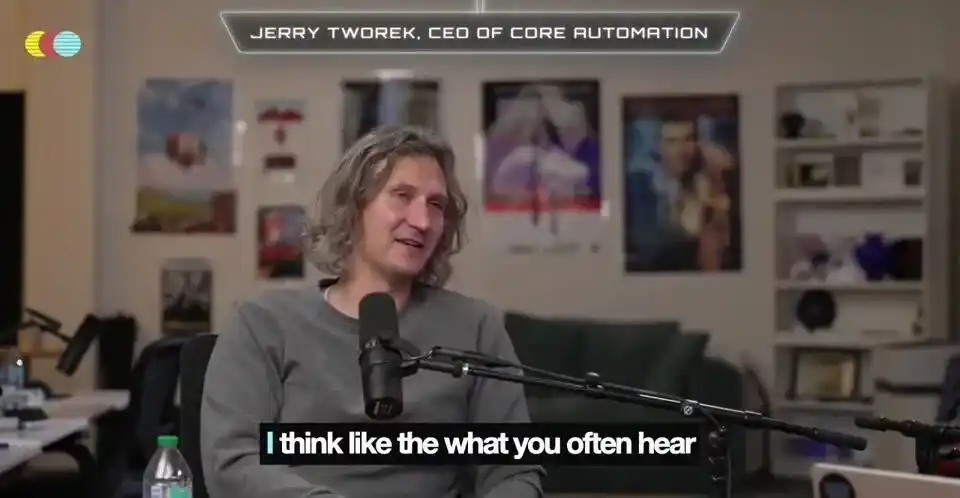
And that's just the appetizer. Throughout the interview, he delivered one hard-hitting statement after another:
- Agents do have creativity, but it's an extremely low-quality, massively produced creativity. Ideas are diverse, but they are also generally terrible.
- In the whole world, there might only be thirty to fifty people who truly understand, end-to-end, how to train and deploy a frontier model. Everyone else is supporting them.
- The assumption that Transformer is the optimal solution is almost certainly false.
- In the seven years at OpenAI, there were only three or four serious attempts to replace the underlying architecture.
- The premise that the world needs us to go to work in order to function simply doesn't hold.
Below is the edited version. Enjoy.
Half the Work is Already Done Without Humans
The two-year figure isn't about benchmark scores or computing power.
He's counting how much of the *research* work is still being done by humans.
And that work was already split into two parts long ago.
One part is generating ideas, figuring out which direction to go. The other part is the labor, turning ideas into code that runs and fetching the data.
And the labor part has basically been handed over to Agents.
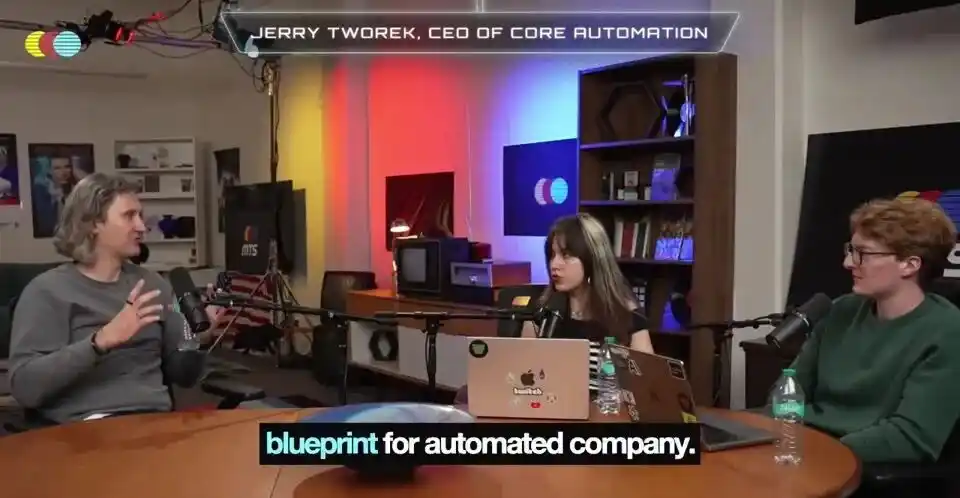
Tworek started a company called Core Automation in April this year, with the slogan of building the world's most automated AI lab.
There, the full cycle of an experiment has been compressed from a month down to a single day. Efficiency improved thirtyfold!
However, the idea-generation part is not something Agents can handle yet. The reason is—
They are absolutely a high-creativity species.
But they squander creativity in an extremely low-quality, massively produced way. The ideas are indeed diverse, but the ideas are also generally terrible.
Only Thirty to Fifty People in the World
Listening to this, the idea-generation part seems secure.
But there aren't many people who can actually generate ideas to begin with.
During the interview, the host revealed that an OpenAI internal researcher had told him in confidence—
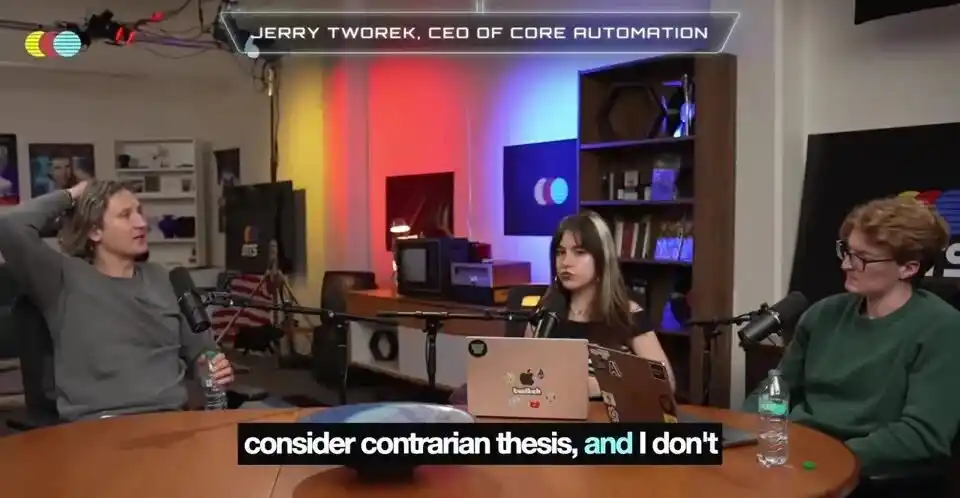
In the whole world, there might only be thirty to fifty people who truly understand, end-to-end, how to train and deploy a frontier model.
Everyone else is supporting these few dozen minds, including the vast majority of full-time employees at that top company.
Tworek didn't refute this.
He also believes that's how any top-tier team operates. A handful of people set the course, followed by an entire roaring execution machine.
To understand just how sought-after these few dozen people are, look at his own hiring list.
Core Automation's co-founder Rohan Anil is from Anthropic, and before that, Google DeepMind.
Anmol Gulati, who worked on Gemini at DeepMind, was also recruited. Even Julia Villagra, OpenAI's former head of people, followed him over.
All the labs are fishing from the same pool. And this pool only has a few dozen fish.
So the two-year figure doesn't relate to all of humanity.
It's about how long these few dozen people can hold on.
Seven Years, the Architecture Was Only Seriously Challenged Three or Four Times
Since there are only a few dozen people left, what's the final wall standing in front of AI?
Tworek's answer is one word: Transformer.
In his view, it almost certainly isn't the optimal solution.
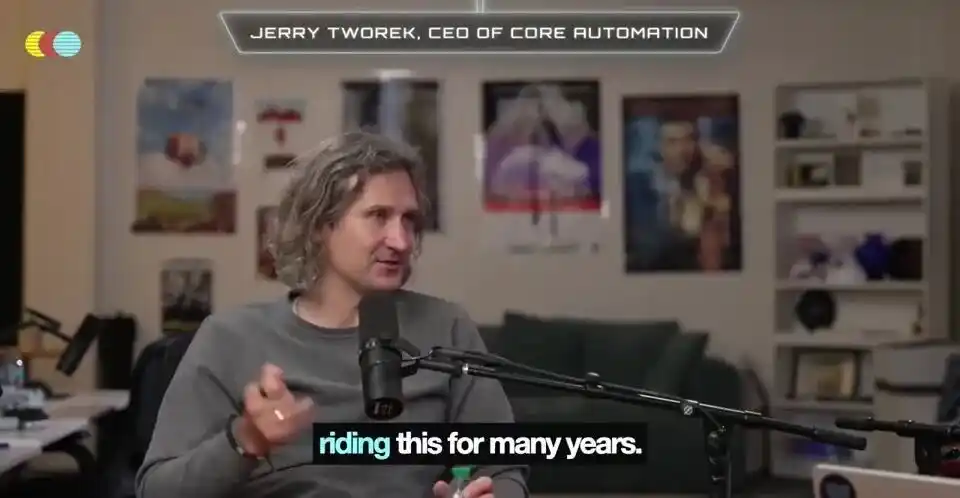
First, models can't continue learning after deployment. You can chat with them all you want, they won't get stronger; the next conversation will be with the same old model. The context window also can't hold up. He said after using Codex for about twenty minutes, he'd have to compress once.
Second, if you try to patch it with continuous fine-tuning, you'll find it's not only extremely inefficient but also leads to catastrophic forgetting—learning new things makes it forget the old.
So most of the work the entire industry has done around Transformer in recent years has essentially been about making it cheaper, not actually making it stronger.
What Tworek really wants isn't actually in the architecture itself.
He wants models that can continue learning at test time, models that can keep growing from user interaction, from user data. Changing the architecture is just a means to that end.
Everyone in the industry understands these principles. But after all these years, why is Transformer still standing firm?
The reason behind it is absurdly simple—they barely even tried.
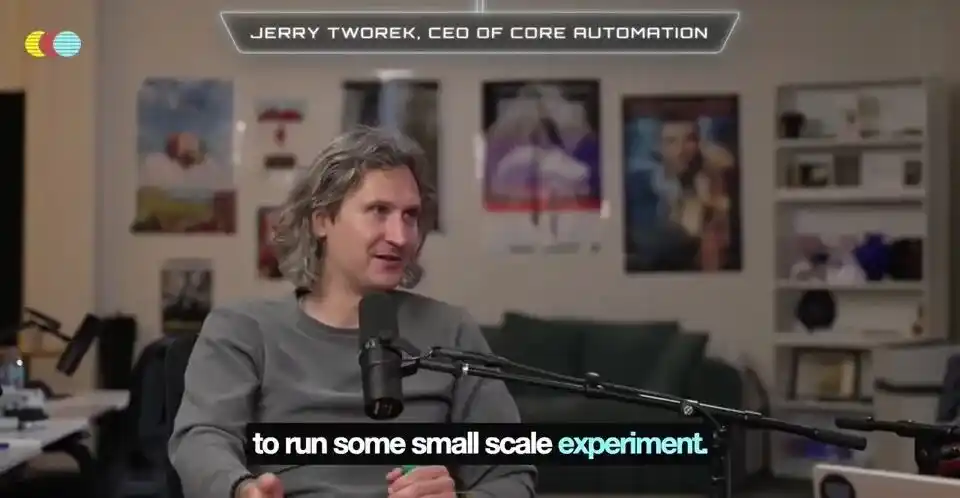
In his seven years at OpenAI, there were only three or four serious attempts to replace the underlying architecture.
The process was like this.
A researcher first writes a small-scale validation experiment, which takes at least three months to run after writing. If the results look promising, only then dare they scale it up.
And by scaling up, you have to convince about ten people with decision-making power using your silver tongue. Then these ten people pour three to six months into your bottomless pit.
In the end, it's either crushed by the momentum Transformer has already snowballed, or partially absorbed, becoming a screw on its body.
Seven years, three or four times. This is the total output in architectural innovation from the world's strongest AI lab.
"Jare, Take This Compute and Burn It"
He himself ran into exactly the same dead-end at OpenAI. What pried it open was one sentence.
At that time, that batch of half-dead experiments had struggled to show a faint "sign of life." Not great, but at least there was a sprout.
Right at this critical juncture, Jakub Pachocki, who later became OpenAI's Chief Scientist, found him.
"Jare, all these GPUs are for you. See if you can push the results in your hands a bit bigger, a bit harder."
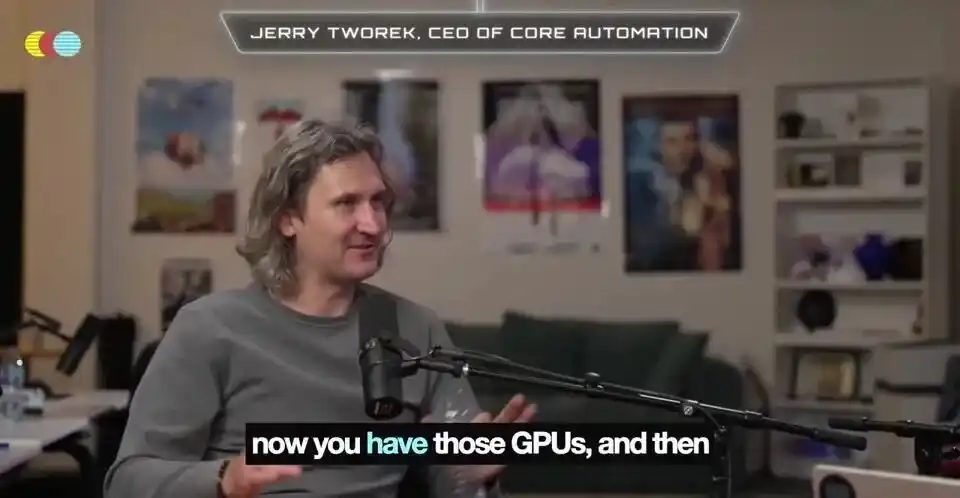
"Now you have these GPUs in your hands." When he recounted this sentence, o1 didn't even have a name yet.
This sentence pulled him out of a paradox—
You must first deliver results to be qualified for compute.
But you clearly need that compute first to hammer out the results.
Tworek says most frontier directions are trapped in this paradox. The secret wars fought tooth and nail for compute in labs are ultimately about finding a way out.
And the exit sometimes is just a tiny bit of confidence from leadership.
Just having someone from above say, I want you to have a decent compute quota to go hard at it. That's enough.
Once the gate opened, there was no holding back.
Reinforcement learning crossed several orders of magnitude from this point on.
Then the emergence of o1 broke through; the path of reasoning models, which countless people had declared dead, was stubbornly brought to life by him.
$100,000, Replacing an Expert
And this time, he doesn't have to wait for anyone to say anything.
The most expensive link in the whole chain is translating abstract ideas into code that can actually run. And that's precisely what today's Agents excel at.
For example, Core Automation used this approach to tackle GPU kernels.
Specifically, they threw a QR decomposition kernel at a programming Agent for four weeks, burning about $100,000 in API call costs, and finally pushed the speed of this kernel to sixty times its original.
This work belongs to low-level performance engineering, tweaking how a piece of matrix computation runs faster on graphics cards, usually requiring a handful of experts to manually tune line by line.
And there aren't many such experts in the world.
Now $100,000 can replace one. It doesn't need to be convinced, nor does it need three to six months.
The barrier that was stuck for seven years was just washed away like that.
So What Can We Do Then?
Even the hardest-to-crack architecture is loosening up, so the steering wheel in the hands of those few dozen people won't be held for much longer.
At the end of the interview, the host made it clear and asked him: when this day really comes, what is left for humans to do?
For this, Tworek described two scenes.
The first is Ancient Greece.
People meet in the square, leisurely chat philosophy all day, then go exercise, eat olives, and drink wine.
He laughed himself right after describing it, admitting that this is probably just projecting his own wishes.
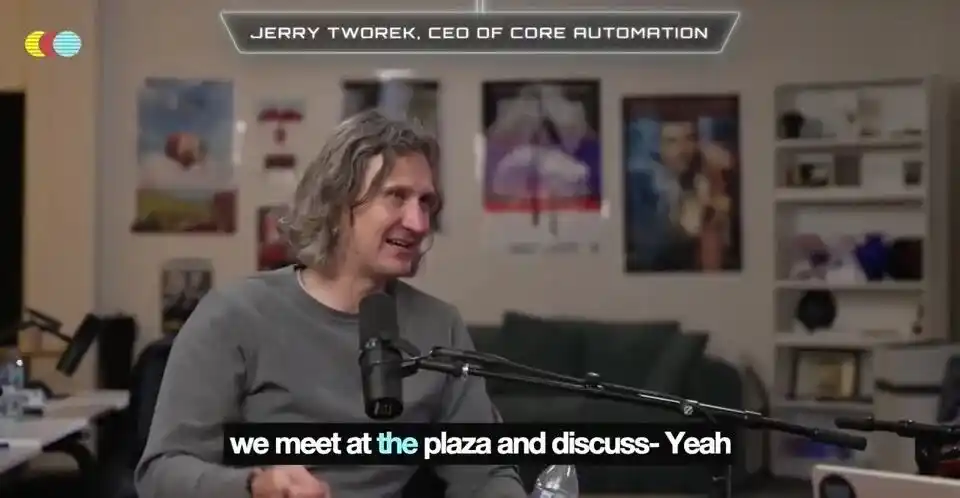
"We meet in the square and then chat." His exact words describing post-AGI era human daily life. He laughed first after saying it.
The second scene is high school, or rather university.
He thinks humans should retain a pursuit of "excellence" itself. Keep greedily learning new things, training both body and mind to the limit.
It's a bit like professional sports; there's no economic reason forcing you to bleed and sweat, but the pride in human bones is to reach for that thing called "greatness."
We need to find various ways to do this.
Because in the next world, there won't be things like "if you don't do it, the world will collapse." The world will run on its own on the infrastructure we've already built.
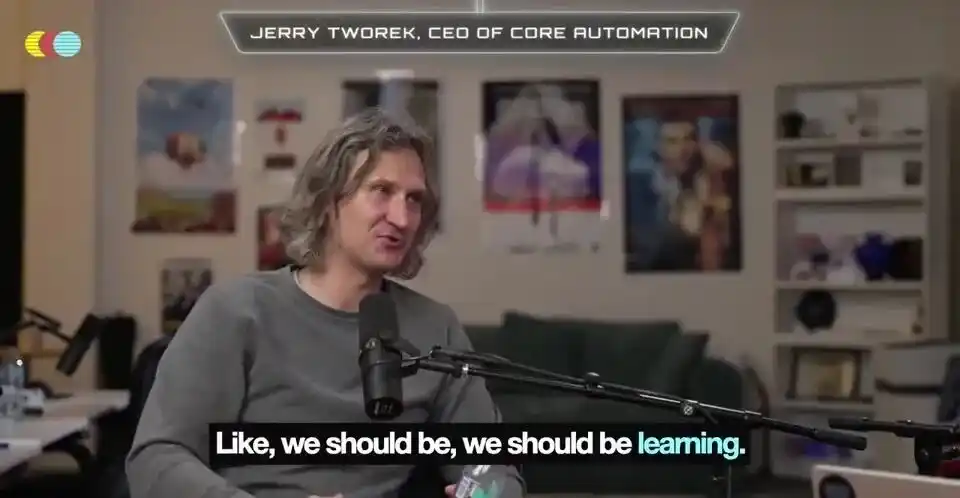
"We should keep learning forever." He described this as a kind of obligation, not a pastime.
Then he calmly revealed his cards.
The assumption that we must work for the world to function is fundamentally unnecessary.
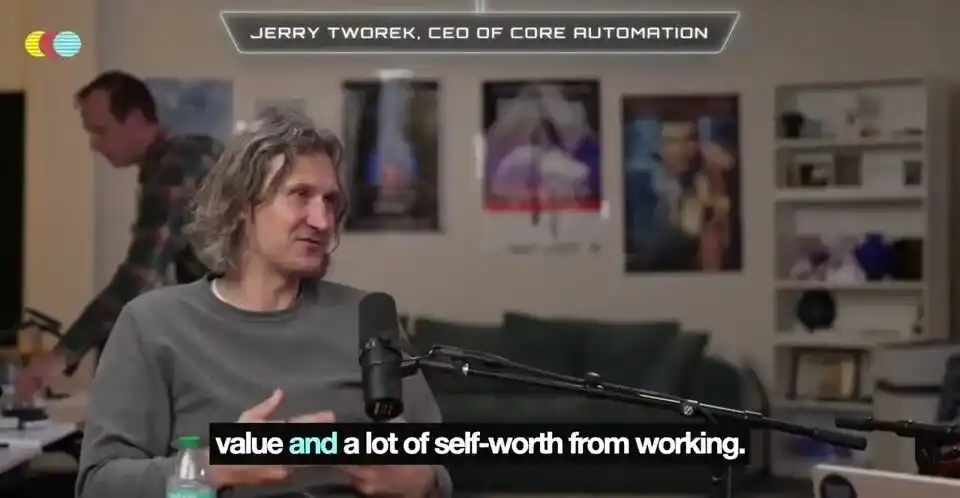
"Many people's self-worth comes from work." He admits this is the hardest hurdle to cross, including for himself.
He Himself Is Also on This List
To be honest, what sends the biggest chill down the spine after listening to the whole thing isn't that two-year figure.
It's that he himself knows he is stepping on the accelerator for this countdown.
The thing he wants to build is defined as something that can learn and strengthen itself, no longer needing people to feed it while standing by. If built, those few dozen positions will disappear even faster.
And he has an even harsher statement; the first one he sentences is himself.
If you're not the lab with the most terrifying compute reserves and the largest scale, you will die a very ugly death.
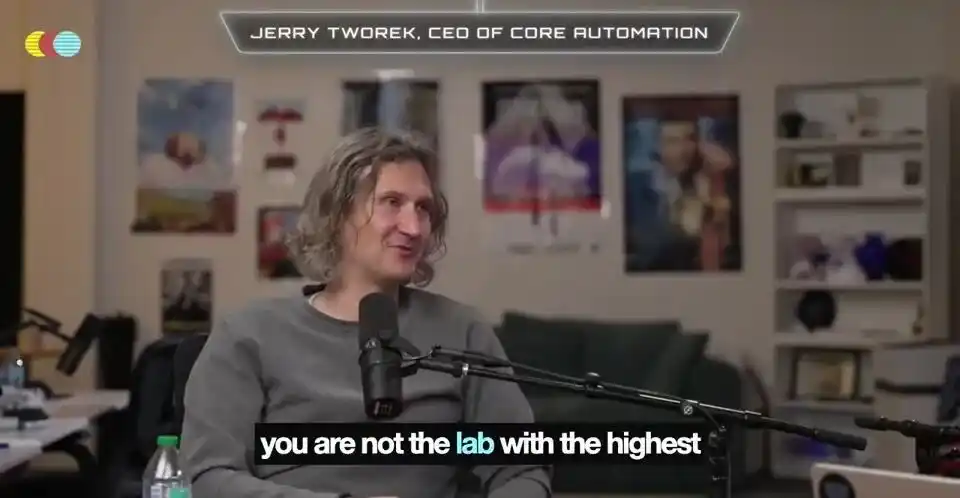
When he said this, Core Automation was only four months old, with zero revenue on the books.
He said since starting the company, almost every week someone comes to tell him, Jare, it's too late, that ladder to heaven was already pulled up long ago.
His response is only one of his company's mantras.
People at our company love to say, everything is a skill issue.
Translated, it means, when you fail in the end, don't blame the environment; blame your own lack of skill.
You know what? In the context of this interview, it really has that flavor.
Looking back at that popular joke from the beginning.
We only have a few days of work left, so let's get it done while we still can.
Is the tone in that excitement, or desolation? We cannot know.
Because for the people saying it, those two emotions are one and the same.
Tworek says the pace of this field is extremely draining. After so many years of doing it, he is really, really tired.
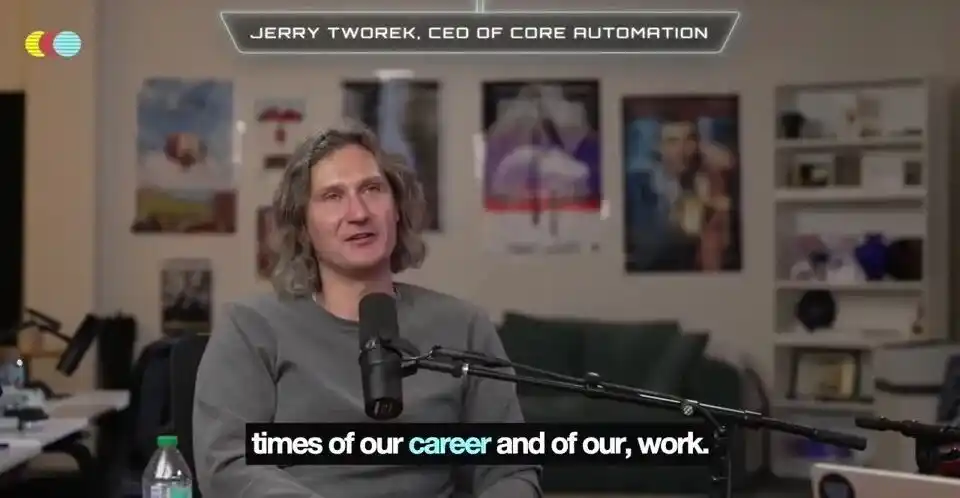
"But if we truly believe this is the most important period in our entire careers."
"Then it is probably, incredibly worth it."
References:
https://x.com/MTSlive/status/2092387349623935322
This article is from the WeChat public account "New Zhiyuan", author: ASI Revelation, editor: Moshe