2008-style crisis ahead? – How crypto investors are reacting to ‘zero rate cuts’

ambcryptoPublished on 2026-03-21Last updated on 2026-03-21

Abstract

With expectations of zero rate cuts and persistent inflation risks, crypto market dynamics are shifting toward capital preservation. While the total crypto market cap remains stable near $2.4 trillion, defensive positioning is evident as stablecoin supply hits a new all-time high of $316 billion. USDT outflows and declining exchange reserves indicate investors are moving liquidity into on-chain stablecoins, preparing to redeploy when risk appetite improves. Analysts warn that sustained high yields and borrowing costs could heighten systemic risks, echoing pre-crisis conditions. This cautious stance suggests stablecoins are becoming a key hedging tool amid deteriorating macro conditions.

Markets are now pricing in the “long-term” macro impact of the ongoing war.

Notably, one consistent theme across analysts is that expectations for rate cuts this year have effectively dropped to zero. Historically, crypto has thrived in low-rate environments, where cheap liquidity fuels risk-taking and makes leverage more accessible.

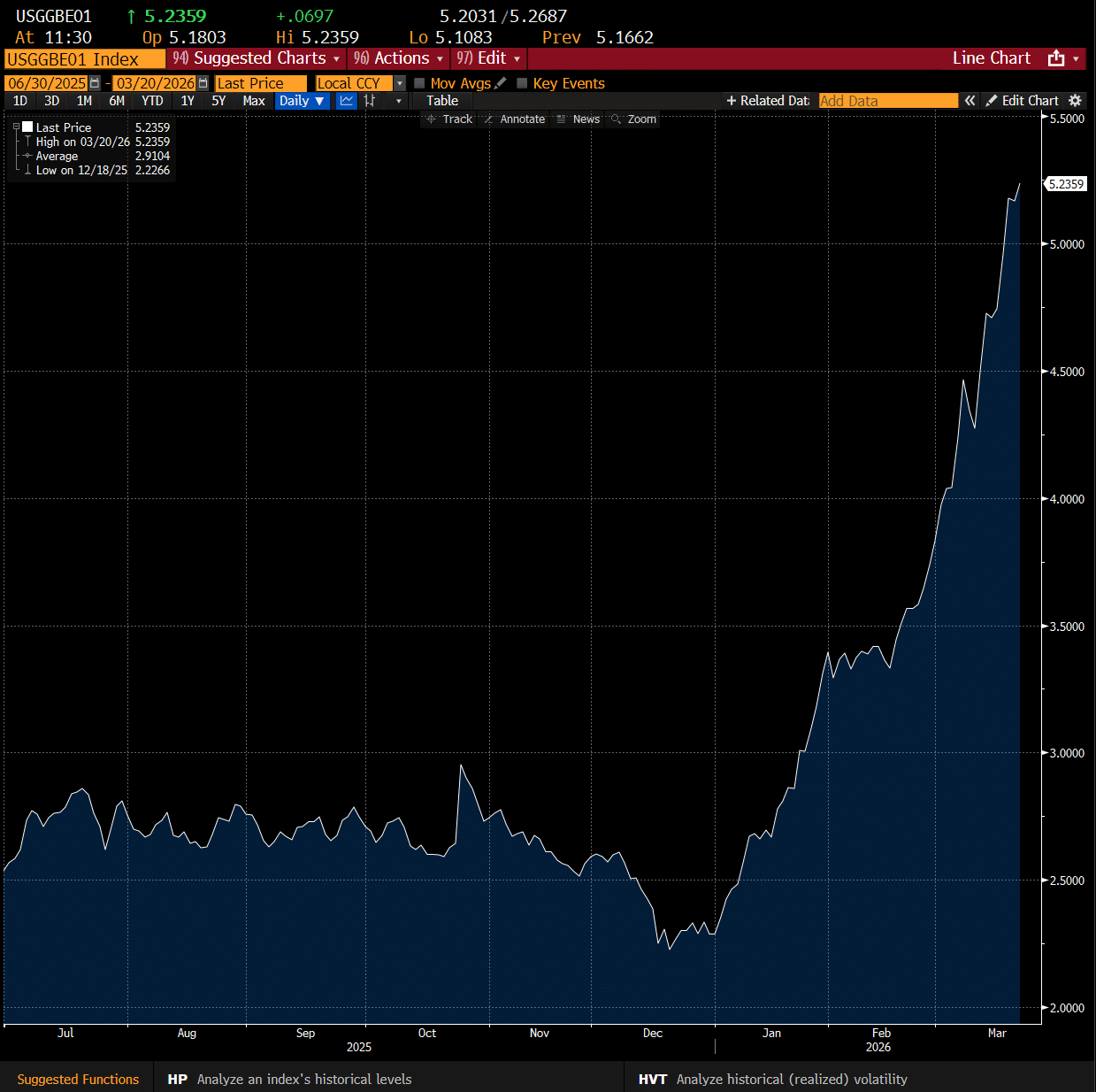
However, with inflation risks embedding deeper into the economy, the outlook for fresh capital inflows is clearly weakening. In fact, a recent Bloomberg report indicates that investors are pricing U.S. inflation above 5% over the next 12 months, based on the 1-year breakeven rate.
Source: X

So the natural question is, what does this mean for crypto?

Interestingly, some analysts are now flagging the risk of a 2008-style financial crisis. The pressure point here is the U.S. Treasury market, with yields pushing up to 4.37%, the highest level since July 2025. With debt levels already elevated, higher yields raise government borrowing costs, tightening the overall macro setup.

In short, if the Fed holds a zero rate-cut stance through the year, the risk of a crisis can’t be ruled out, especially with the data backing it. For crypto, that naturally shifts the focus toward hedging and capital preservation. So the question is, with macro tightening becoming structural, are stablecoins set to become the “long-term” parking zone for capital?

Defensive capital builds in crypto as macro conditions deteriorate

Zooming out, the long-term impact of the war still doesn’t appear to be fully priced into crypto markets.

Despite bearish macro commentary, total crypto market cap has held steady around the $2.4 trillion level, with no meaningful outflows. Large-cap assets continue to trade near key resistance zones without any significant rejection, indicating that conviction remains intact and risk hasn’t meaningfully unwound.

That said, the underlying data is starting to shift. Stablecoin market cap is up 2.22% this month, recently hitting a new all-time high of $316 billion. This points to liquidity building on the sidelines, with capital staying within crypto rather than rotating out.
Source: CryptoQuant

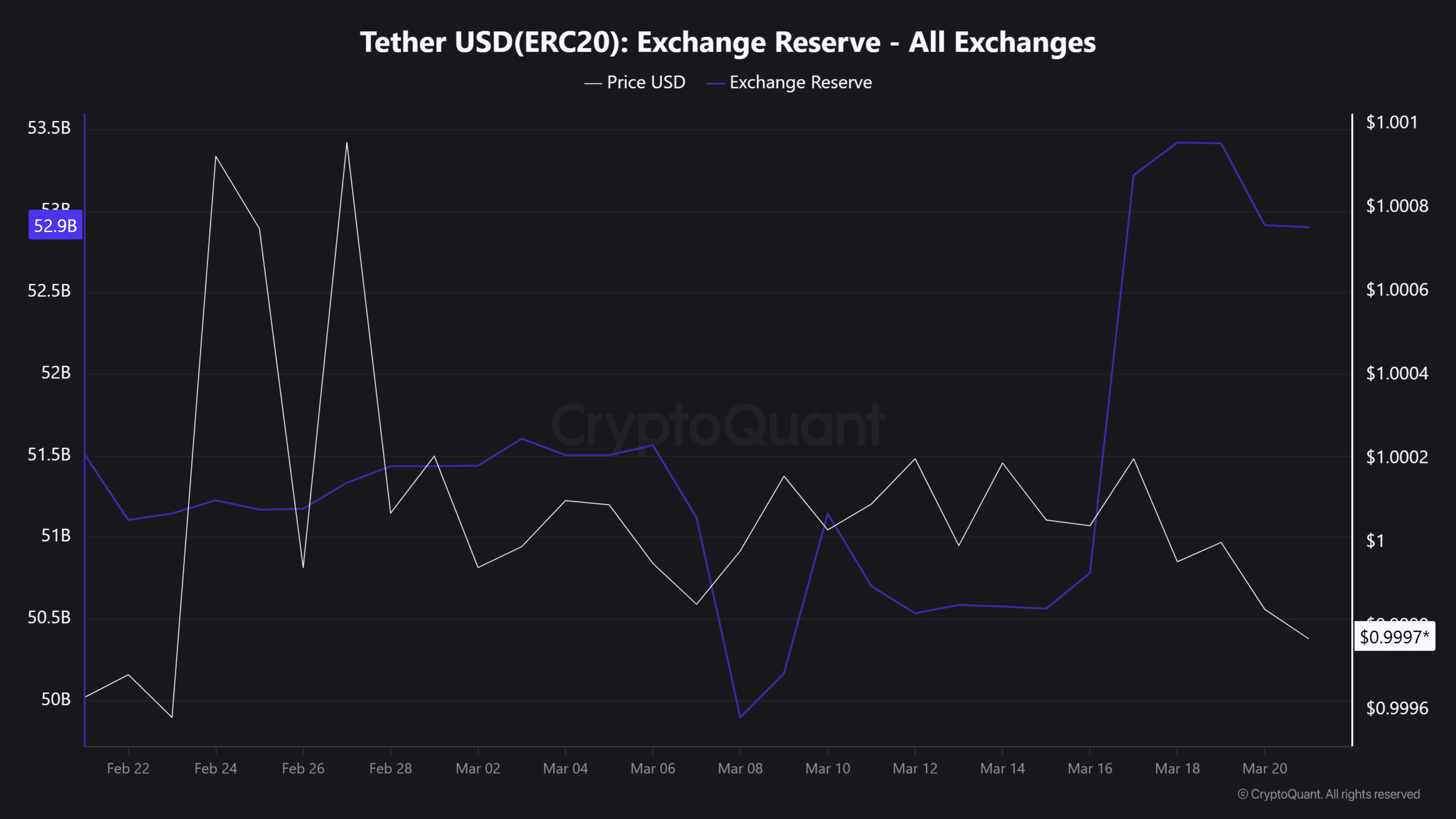
Supporting this trend, USDT netflows, according to CryptoQuant, have recorded their first significant outflow of over $500 million in nearly two weeks, pushing exchange reserves down by approximately 0.97% over the past three days.

From a technical perspective, this suggests sideline capital is starting to move off exchanges, with investors rotating into safe positions. Against the backdrop of a bearish macro environment, the market clearly appears to be in a “cautious” positioning phase, with liquidity being preserved on-chain.

For crypto’s long-term outlook, that’s a constructive signal. With the war keeping rate-cut expectations low and U.S. economic risks at historically high levels (supported by analyst forecasts and hard data), investors piling into stablecoins are likely staging capital to deploy once risk appetite returns, making it a trend to watch closely.


Final Summary

  • High inflation, rising U.S. Treasury yields, and zero rate-cut expectations are creating a risk-off environment, prompting crypto investors to preserve capital.
  • Rising stablecoin supply and USDT outflows show investors are staging capital on-chain, ready to deploy once risk appetite returns.

Related Questions

QWhat is the main concern for crypto investors according to the article, and how are they reacting?

AThe main concern is the combination of high inflation, rising U.S. Treasury yields, and expectations of zero interest rate cuts, creating a risk-off environment. Crypto investors are reacting by preserving capital, moving it into stablecoins as a defensive strategy.

QHow does the article link the current macroeconomic situation to a potential 2008-style crisis?

AThe article links it through the pressure on the U.S. Treasury market, with yields reaching a high of 4.37%. With elevated debt levels, higher yields increase government borrowing costs, tightening the overall macroeconomic environment and raising the risk of a financial crisis if the Fed maintains a zero rate-cut stance.

QWhat does the recent growth in stablecoin market capitalization indicate about investor behavior?

AThe stablecoin market cap hitting a new all-time high of $316 billion, along with USDT netflows moving off exchanges, indicates that investors are building liquidity on the sidelines. This shows a shift towards cautious, defensive positioning, with capital being preserved on-chain and staged for future deployment when risk appetite returns.

QDespite bearish macro conditions, what does the steady total crypto market cap around $2.4 trillion suggest?

AIt suggests that conviction among crypto investors remains intact and that risk hasn't meaningfully unwound. Large-cap assets are holding near key resistance levels without significant rejection, indicating that there have been no major capital outflows from the crypto market overall.

QWhat is the 'constructive signal' for crypto's long-term outlook mentioned in the article?

AThe constructive signal is that investors are piling into stablecoins, staging capital on-chain. This indicates that liquidity is being preserved within the crypto ecosystem and is poised to be deployed back into risk assets once macroeconomic conditions improve and risk appetite returns.

Related Reads

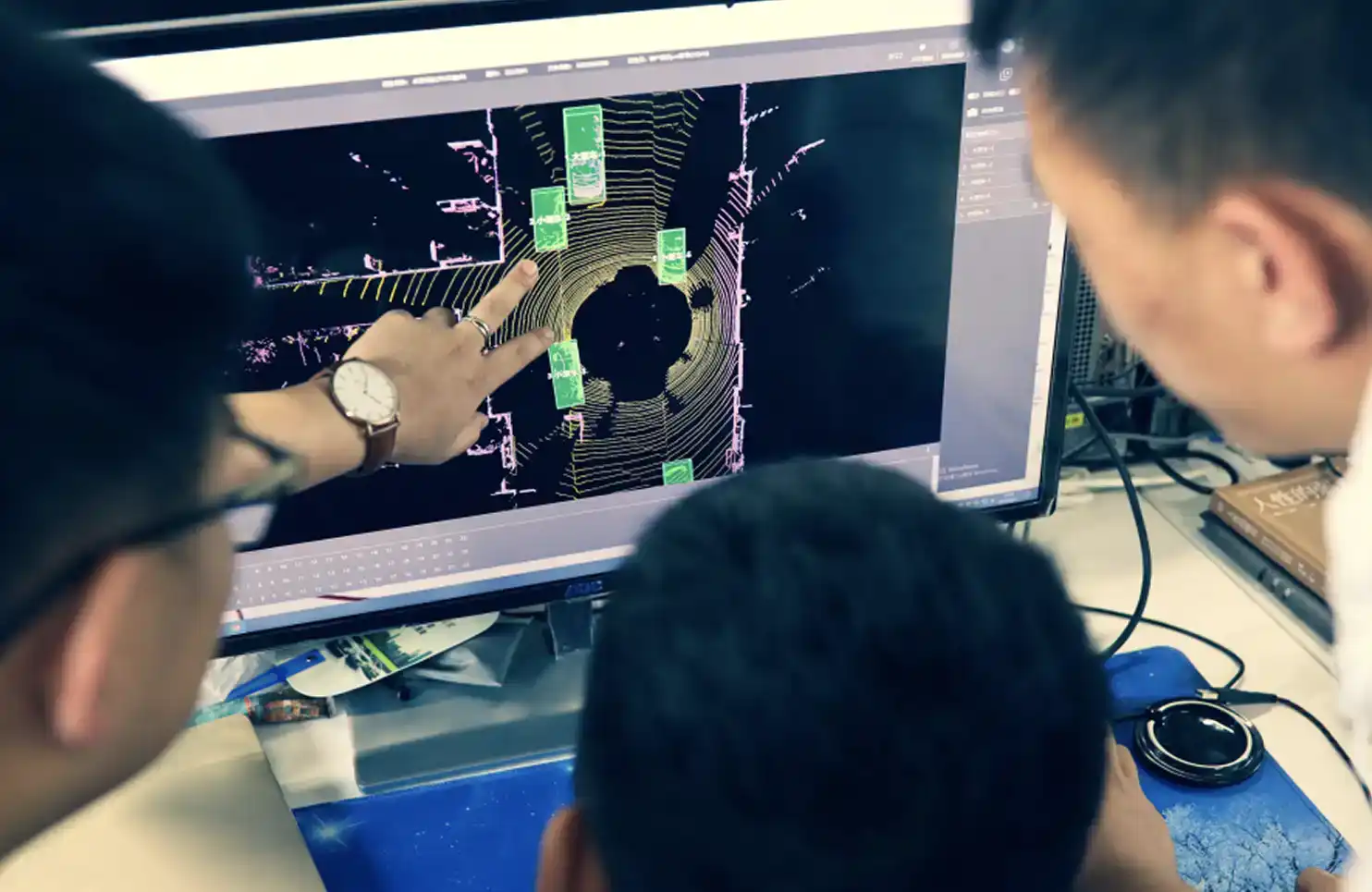
The Small-Town Youth Labeling AI Giants

In China's hinterland cities like Datong, Shanxi, thousands of young people are working as data annotators—the invisible workforce behind AI development. They perform repetitive tasks like drawing bounding boxes on images or rating AI-generated responses, earning piece-rate wages as low as a few cents per task. These workers, mostly from rural areas or small towns, endure intense labor conditions: strict monitoring, high error tolerance thresholds, and mental exhaustion. Despite the cognitive nature of their work, they are often paid meager salaries, with some earning as little as ¥30 ($4) for a day’s work. As AI industry evolves, even highly educated workers—including master’s graduates—are being drawn into similar precarious freelance roles, evaluating complex AI outputs under vague and shifting standards. Yet the industry is structured through layers of outsourcing, where most profits flow to tech giants like OpenAI and Microsoft, while annotators see dwindling incomes. Worse, as AI models become more self-sufficient, the demand for human annotators is declining. Companies like Li Auto have slashed annotation costs by using AI-powered tools that complete in hours what used to take humans years. These annotators, who helped train the very systems now replacing them, face an uncertain future—a stark contrast to the booming valuations and optimistic narratives of the global AI industry. No one seems to see a problem with any of this.

marsbit22m ago

The Small-Town Youth Labeling AI Giants

marsbit22m ago

Meeting at the Pinnacle of Generalist: 30 Billion in 30 Days, What Did Qianxun AI Do Right?

Qianxun Intelligence, a Chinese embodied AI and robotics startup, completed two major funding rounds totaling 3 billion RMB within 30 days in early 2026, backed by prominent investors including Shunwei Capital (Lei Jun) and Yunfeng Capital (Jack Ma). Founded in January 2024 by a team with expertise in robotics, AI, and commercialization, the company focuses on developing general-purpose embodied AI models. Its open-source model, Spirit v1.5, surpassed competitors in performance benchmarks, demonstrating strong zero-shot generalization capabilities for complex tasks. The company follows a scaling law approach similar to large language models (LLMs), leveraging massive diverse datasets—including internet videos, wearable device data, and teleoperation data—to train its Vision-Language-Action (VLA) model. Qianxun employs a multi-source data engine, collecting over 200,000 hours of real-world interaction data, with plans to reach 1 million hours by 2026. It uses low-cost wearable devices for efficient data acquisition and emphasizes real-world deployment for continuous data feedback. The company has deployed robots like "Xiao Mo" in industrial settings (e.g., battery production lines for CATL) and commercial scenarios (e.g., as baristas in JD.com malls), using operational data to refine its models. This "commercialize while iterating" strategy supports both revenue generation and model improvement, positioning Qianxun to compete globally in embodied AI.

marsbit54m ago

Meeting at the Pinnacle of Generalist: 30 Billion in 30 Days, What Did Qianxun AI Do Right?

marsbit54m ago

Trading

Spot
Futures

Hot Articles

How to Buy WAR

Welcome to HTX.com! We've made purchasing WAR (WAR) simple and convenient. Follow our step-by-step guide to embark on your crypto journey.Step 1: Create Your HTX AccountUse your email or phone number to sign up for a free account on HTX. Experience a hassle-free registration journey and unlock all features.Get My AccountStep 2: Go to Buy Crypto and Choose Your Payment MethodCredit/Debit Card: Use your Visa or Mastercard to buy WAR (WAR) instantly.Balance: Use funds from your HTX account balance to trade seamlessly.Third Parties: We've added popular payment methods such as Google Pay and Apple Pay to enhance convenience.P2P: Trade directly with other users on HTX.Over-the-Counter (OTC): We offer tailor-made services and competitive exchange rates for traders.Step 3: Store Your WAR (WAR)After purchasing your WAR (WAR), store it in your HTX account. Alternatively, you can send it elsewhere via blockchain transfer or use it to trade other cryptocurrencies.Step 4: Trade WAR (WAR)Easily trade WAR (WAR) on HTX's spot market. Simply access your account, select your trading pair, execute your trades, and monitor in real-time. We offer a user-friendly experience for both beginners and seasoned traders.

1.4k Total ViewsPublished 2024.03.29Updated 2026.03.18

How to Buy WAR

Discussions

Welcome to the HTX Community. Here, you can stay informed about the latest platform developments and gain access to professional market insights. Users' opinions on the price of WAR (WAR) are presented below.

活动图片