Ethereum Foundation Faces Another Departure as Hsiao-Wei Wang Steps Down

TheNewsCryptoPublished on 2026-06-19Last updated on 2026-06-19

Abstract

Hsiao-Wei Wang, a key researcher and contributor, has resigned from the Ethereum Foundation. Her work was pivotal in Ethereum's transition to Proof-of-Stake and projects related to scalability and validator engagement. This departure is part of a broader period of organizational restructuring and strategic reorientation for the Foundation, which has seen several other high-profile exits recently. The Foundation is implementing leadership and structural changes to better define its role within the ecosystem, while emphasizing that Ethereum's development remains decentralized. This transition occurs as developers continue work on major initiatives like the Glamsterdam update and Layer-1 scaling. Market observers view these changes as the Foundation adapting to support Ethereum's ongoing growth.

Ethereum Foundation has witnessed some changes in leadership through the resignation of Hsiao-Wei Wang from the Foundation. She has been one of the key figures in Ethereum’s research, development, and governance operations in recent years. The move marks yet another transition period for the Ethereum Foundation. They are making changes to their organizational structure and priorities.

She joined the Ethereum Foundation as a researcher and was later recognized as one of its key contributors. She was responsible for pushing Ethereum towards using the Proof-of-Stake mechanism and has worked on multiple projects related to the scalability of Ethereum and validator engagement. She was often mentioned as a contributor to activities within Ethereum’s Beacon Chain and to protocol research. The latest departure has happened during a period of change for the Ethereum Foundation. In recent months, there have been several other high-profile departures from the company. Which was going through a reorientation of its strategy and vision.

Observers in the industry are following up on news such as Ethereum releasing some key projects dedicated to scalability, institutionalization, privacy, and UX improvements. The firm has been working throughout the year to effect leadership and organizational changes aimed at better defining its position in the ecosystem. In previous efforts at restructuring, the foundation adopted a co-executive leadership structure, which included Wang along with others. This came in addition to the foundation’s growing emphasis on scaling Ethereum and layer two coordination.

The Foundation Restructuring Remains in Focus

Market analysts also pointed out that leadership changes are typical for such organizations. This is because the Ethereum Foundation is considered one of the key organizations that work on Ethereum’s development. Nevertheless, the foundation itself stressed several times that Ethereum is a decentralized network that is being developed by independent developers, researchers, validators, and other ecosystem participants all over the world.

At the same time, the departure occurs against the backdrop of continuing work by Ethereum developers on such important initiatives as the forthcoming Glamsterdam update and Layer-1 scaling initiatives. The main concern of community members now is how this structural change of the foundation will help to accomplish their goals.

Thus, while the Ethereum Foundation continues making changes internally. The market participants keep watching what is going to happen next. Market analysts regard this move as an attempt by the Ethereum Foundation to adapt to the changing conditions and help Ethereum grow.

Highlighted Crypto News:

Coinbase CEO Warns Illinois Crypto Tax Could Kill Blockchain Innovation

TagsBlockchainETHEREUMEthereum (ETH)Ethereum Foundation

Trending Cryptos

Related Questions

QWho has recently stepped down from the Ethereum Foundation and what was her primary area of contribution?

AHsiao-Wei Wang has recently stepped down. She was a key contributor responsible for pushing Ethereum towards Proof-of-Stake and worked on projects related to scalability and validator engagement, notably within the Beacon Chain.

QWhat is one of the main reasons cited for the recent leadership changes at the Ethereum Foundation?

AThe leadership changes are part of the Ethereum Foundation's ongoing efforts to restructure its organization and reorient its strategy and vision for better defining its position in the ecosystem.

QAccording to the article, what are some of the key project areas the Ethereum Foundation is dedicated to?

AThe Ethereum Foundation is dedicated to key projects focused on scalability, institutionalization, privacy, and user experience (UX) improvements.

QWhat significant Ethereum network update is mentioned as part of the backdrop for these organizational changes?

AThe upcoming Glamsterdam update is mentioned as an important initiative that Ethereum developers are working on during this period of organizational change.

QHow does the Ethereum Foundation itself describe the nature of Ethereum's development, despite its own key role?

AThe Ethereum Foundation stresses that Ethereum is a decentralized network developed by independent developers, researchers, validators, and other participants worldwide.

Related Reads

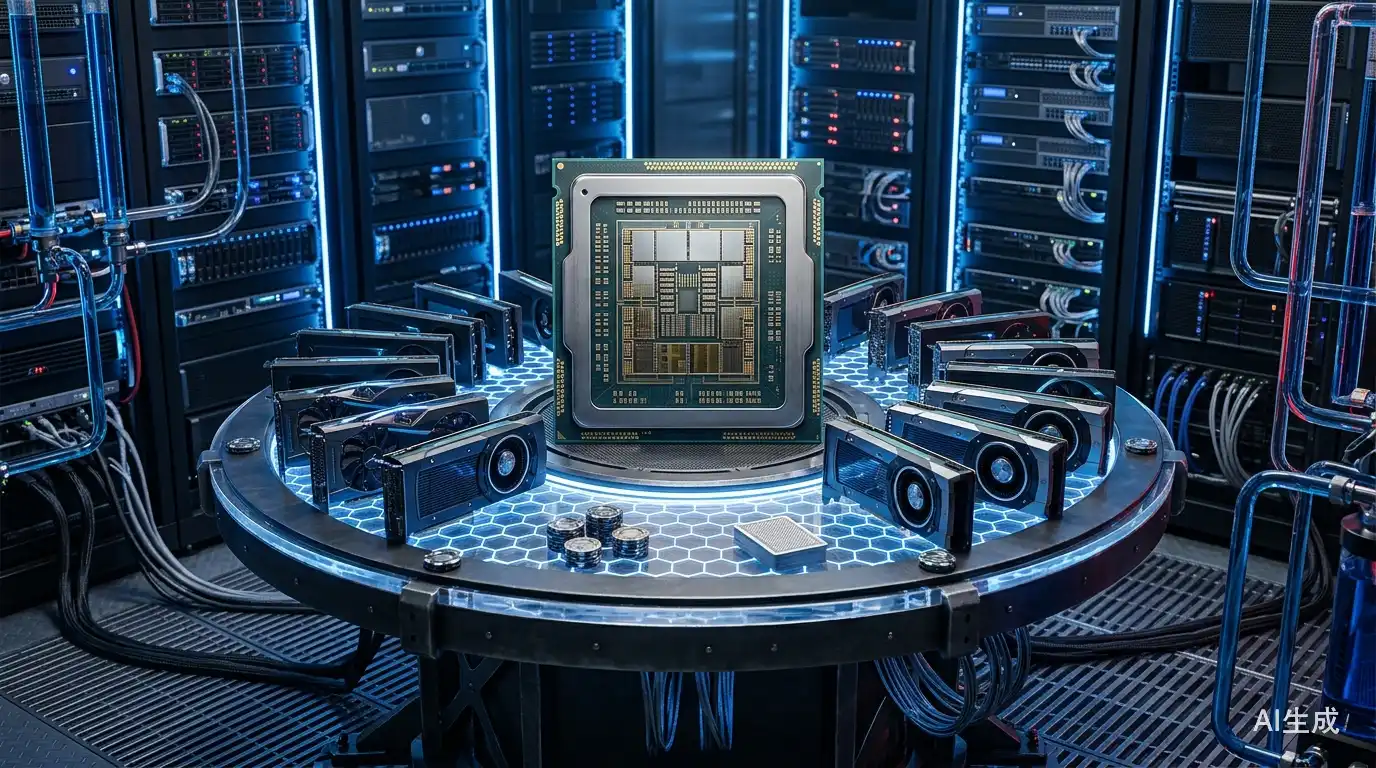
CPU Makes a Comeback to the Table, A $170 Billion "Power Seizure" Drama Begins

A new era is dawning for the server CPU (Central Processing Unit), driven by the shift from AI model training to large-scale reasoning and the rise of Agentic AI. This article explores how the CPU is reclaiming a central role in the AI data center. For years, the focus has been on the GPU (Graphics Processing Unit) for AI training. However, as AI moves to the inference and Agent phase—where tasks involve complex, multi-step reasoning, tool calls, and data management—the workload balance is flipping. Studies show CPUs now handle over 70% of the workload in Agentic AI, up from 10-30% in training. This is because Agent tasks generate massive intermediate data (KV Cache) that exceeds GPU memory, forcing it to be offloaded to the CPU's larger, more scalable memory pools. This increased importance is translating into market changes. Major players are taking note: NVIDIA launched its first standalone CPU line, Vera, based on ARM architecture and optimized for Agent performance. AMD doubled its server CPU market forecast to over $1200 billion by 2030. Analyst reports project the total server CPU market could reach $1700 billion by 2030, with AI-driven demand being a primary driver. Furthermore, the classic ratio of CPUs to GPUs in AI servers is rapidly changing, converging from 1:8 toward 1:1 for Agent deployments. This surge in demand has led to a rare industry-wide price increase of 10-15% for server CPUs from Intel and AMD, breaking a decade-long trend of "more performance for the same price." Demand is bifurcating into high-core-count CPUs for in-rack GPU support and moderate-core CPUs for standalone Agent task orchestration. In China, this global trend presents an opportunity for domestic CPU manufacturers like Hygon (海光信息) and Huawei Kunpeng, who are bolstered by both growing AI infrastructure needs and national policies promoting technological self-reliance ("xin chuang"). The maturity of their software ecosystems is also accelerating, evidenced by faster adaptation to new AI models. In conclusion, the narrative is shifting from a GPU-centric view to one where CPU-GPU synergy is critical. The CPU is no longer a peripheral component but a performance-defining bottleneck and a key growth driver in the AI hardware stack, opening a massive new market estimated in the hundreds of billions of dollars.

marsbit6h ago

CPU Makes a Comeback to the Table, A $170 Billion "Power Seizure" Drama Begins

marsbit6h ago

TechFlow Intelligence: AMD AI Director Publicly Criticizes Claude Code for "Becoming Dumber and Lazier", Trump Claims Full Ceasefire in Hormuz But Strait Still Has 80 Unexploded Mines

TechFlow Intelligence Report: This daily digest covers key developments in AI, crypto, hardware, and geopolitics. In AI, SK Telecom faces US export control scrutiny over its partnership with Anthropic, while a Gemini user reports being misled in a scam scenario, sparking safety debates. China's Z.AI launches the GLM-5.2 model, rivaling Claude Opus without NVIDIA chips. In crypto, Bithumb lists ReProtocol, and Upbit delists KernelDAO. On the hardware front, MIT researchers build a custom OS to study chips, ASML denies US claims its advanced lithography machines are in China, and Amazon considers selling its in-house AI chips. Apple's future A21 Pro chip may use TSMC's latest N2P process. Major tech issues include 10,000 GitHub repositories distributing malware and Apple patching a critical eavesdropping flaw in Beats earbuds. US stocks rise, led by semiconductors, with Intel surging 10.6%, while SpaceX falls 3.5%. Geopolitically, despite a US-Iran deal, the Strait of Hormuz remains risky with ~80 uncleared mines, stalling 80M barrels of oil on standby tankers. Iran postpones Switzerland talks, and Trump calls the agreement an "unconditional surrender." The report highlights a contrast: temporary geopolitical calm versus the ongoing, fundamental restructuring of tech supply chains and chip independence.

marsbit6h ago

TechFlow Intelligence: AMD AI Director Publicly Criticizes Claude Code for "Becoming Dumber and Lazier", Trump Claims Full Ceasefire in Hormuz But Strait Still Has 80 Unexploded Mines

marsbit6h ago

Trading

Spot
Futures

Hot Articles

Discussions

Welcome to the HTX Community. Here, you can stay informed about the latest platform developments and gain access to professional market insights. Users' opinions on the price of ETH (ETH) are presented below.

活动图片