Author: C Labs Crypto Watch
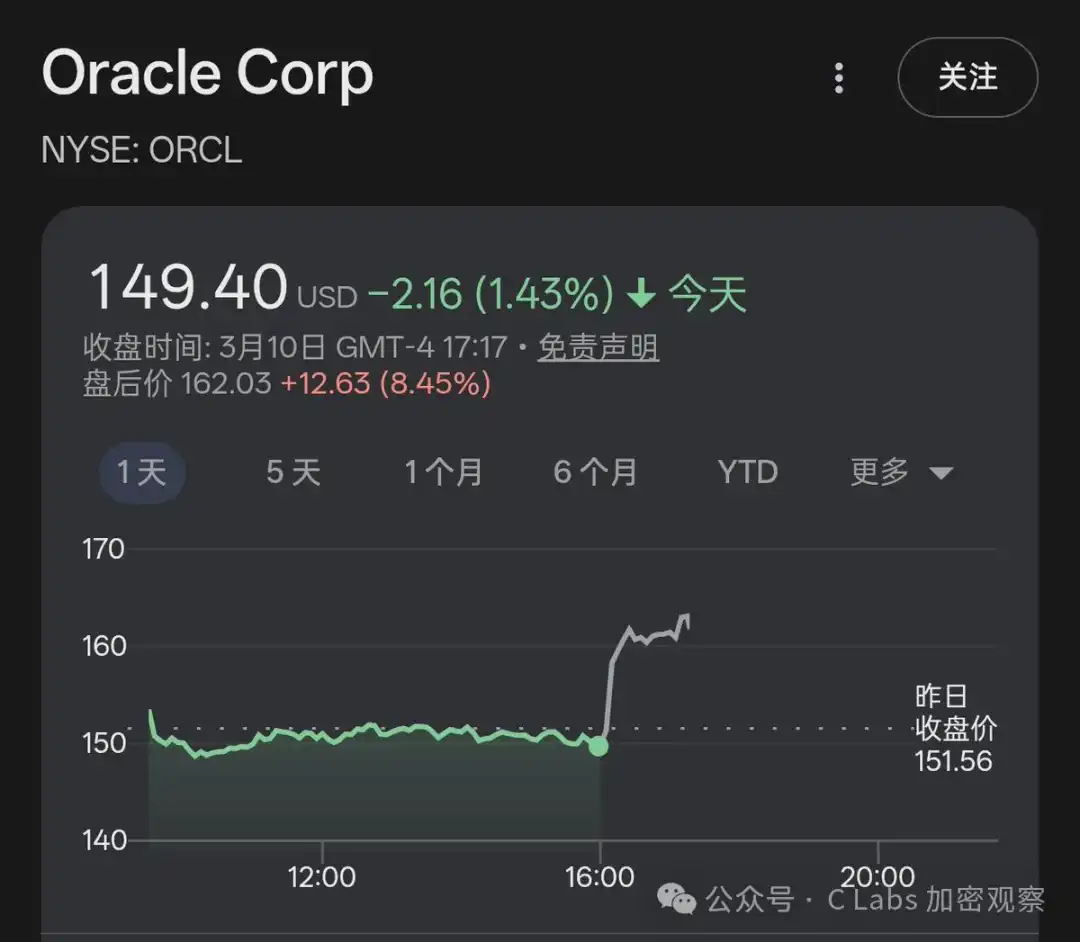
Today (March 10), Oracle released an earnings report that drew applause from Wall Street.

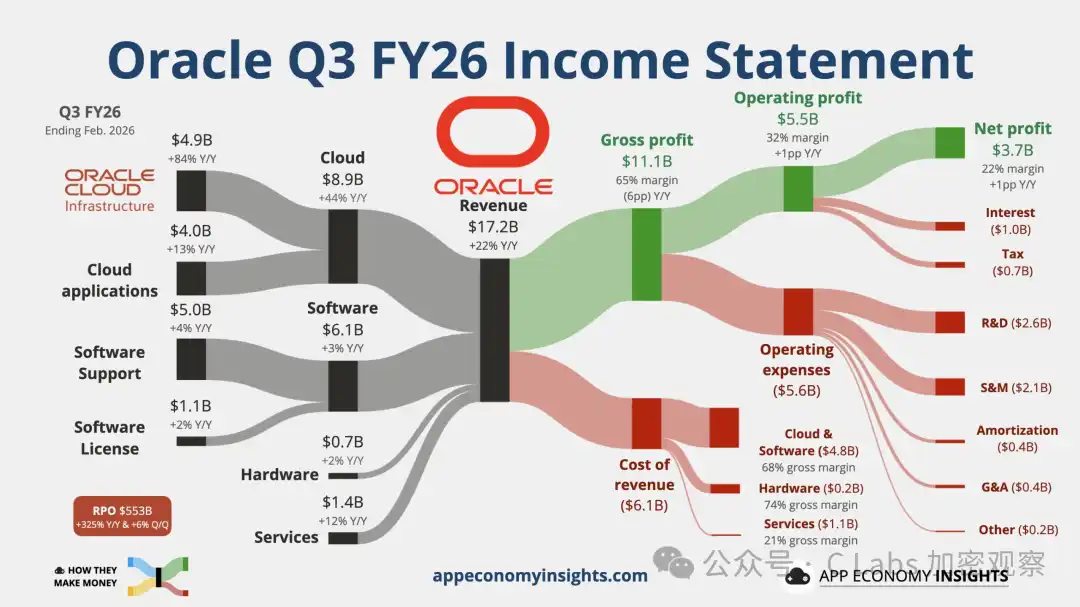
Total revenue reached $17.2 billion, a 22% year-over-year increase. Cloud business grew by 44%. The remaining performance obligation (RPO) surged to $553 billion, up 325% year-over-year. Oracle claimed this was the first time in 15 years that both revenue and profit achieved over 20% growth simultaneously. The stock price rose over 10% in after-hours trading.
But in the same week, other news was also circulating:
-
Several banks are quietly withdrawing from Oracle's data center projects;
-
A private credit institution refused to finance Oracle's $10 billion data center;
-
Oracle is preparing to lay off tens of thousands of employees.
These two sets of news come from the same company and occurred during the same period.
01. Oracle's Financial Problems
First, free cash flow is negative, and significantly so
Over the past 12 months, Oracle's free cash flow was negative $13.18 billion. Operating cash flow was positive at $23.5 billion, but capital expenditures consumed even more—the full-year capital expenditure guidance for this year is $50 billion, more than seven times that of two years ago. Revenue is growing, but so is accelerating.
Second, debt continues to expand
This quarter, Oracle raised an additional $30 billion through investment-grade bonds and convertible preferred stock, bringing total debt to over $100 billion. Hidden in the footnotes of the earnings report is an even larger number: $248 billion in off-balance-sheet lease commitments. This means Oracle currently owes over $100 billion in loans and has signed long-term leases totaling $248 billion over more than a decade—this money hasn't been paid yet, but it's already owed.

Oracle promised during the earnings call not to issue new debt in the 2026 calendar year. Publicly committing to "not borrowing new money this year"—this speaks volumes: creditors are becoming uneasy, and Oracle had to step in to reassure them.
Third, data centers become obsolete as soon as they're built!
The $553 billion RPO is the most attractive number in the entire earnings report, up 325% year-over-year. But Oracle explained the source of these contracts during the call: most of the equipment is either prepaid by customers or brought by customers themselves for Oracle to operate.

In plain terms: Oracle is increasingly playing the role of an "operator" rather than using its own money to build data centers and then leasing them out. This shift in business model reduces balance sheet pressure but also means Oracle is no longer a capital-intensive, high-margin computing power landlord; instead, it has become a computing power property management company. It's akin to the digital center version of "Wanda Commercial Management." Meanwhile, Oracle's largest customer, OpenAI, has canceled the expansion contract for its Texas data center.
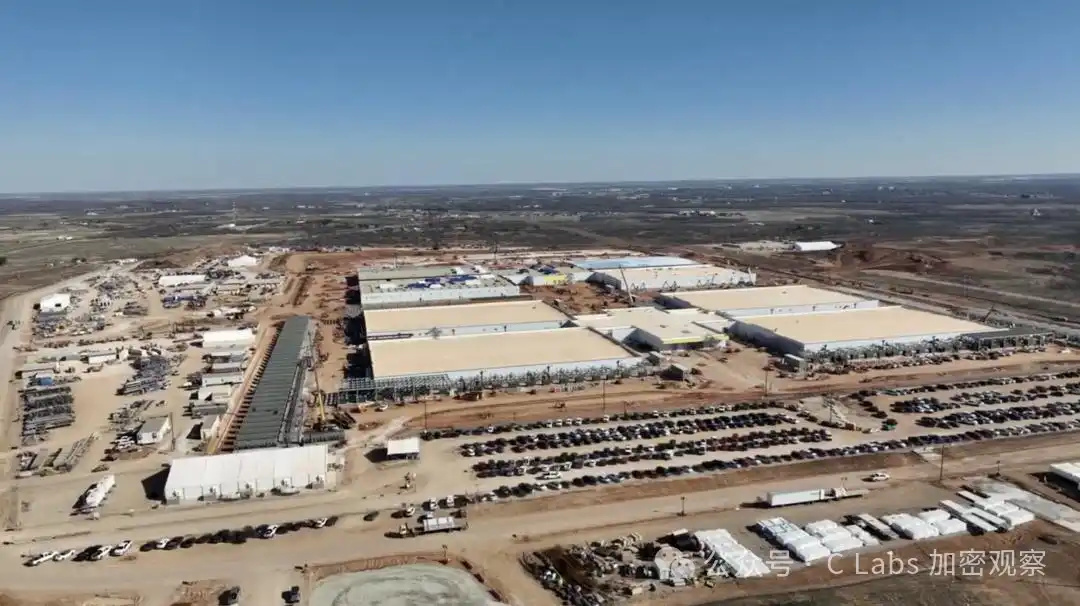
The reason is that Oracle's data centers are equipped with Blackwell chips, while Nvidia's next-generation Vera Rubin offers five times the inference performance of Blackwell. OpenAI doesn't want to be tied to an infrastructure that is about to become outdated. Data center construction cycles take 12 to 24 months, but chip update cycles have been compressed to 12 months by Jensen Huang—building a data center only for it to become obsolete upon completion is a contradiction with no simple solution. This is a significant pitfall for Oracle, which focuses on data center business but does not control chip production.
02. "Replacing Humans with AI": Oracle's Financial Self-Rescue Strategy
How to fill the financial gap? Oracle has found a politically correct answer for the current times: layoffs, justified by AI replacement.
Oracle currently has about 162,000 employees. A TD Cowen research report estimates that Oracle will lay off 30,000 employees, which could free up $8 to $10 billion in free cash flow for Oracle—specifically to fill the funding gap caused by data center expansion.

The logic is very clear: lay off workers and use the saved money to build data centers that run AI.
03. Tech Giants Rushing to Emulate Layoffs
Oracle is not an isolated case. Any tech company that has over-invested in the AI arms race and is under cash flow pressure faces the same bill. "Replacing humans with AI" provides a financially reasonable, narratively legitimate, and shareholder-acceptable way out.
Currently, North American giants like Amazon and Meta are adopting this strategy, and the capital market has welcomed it.
The bill for the AI arms race ultimately has to be paid by someone.
It's just that, once again, it's the employees who are footing the bill.
Related reading: Block Lays Off Nearly Half, Soars 24%! CEO: AI Improves Efficiency, Most Companies Will Make Similar Adjustments in the Next Year