Is It Ethereum? BlackRock CEO Wants ‘One Blockchain’ For Tokenization

bitcoinistPublished on 2026-01-22Last updated on 2026-01-22

Abstract

BlackRock CEO Larry Fink, speaking at the World Economic Forum, advocated for the rapid adoption of tokenization and called for a single common blockchain standard to streamline financial markets, reduce fees, and potentially reduce corruption. While he did not explicitly name a specific blockchain, BlackRock’s existing products and research strongly point to Ethereum as the leading candidate. The firm’s Ethereum-based tokenized fund, BUIDL, and its public-market crypto ETFs—including iShares Ethereum Trust—highlight its strategic alignment with Ethereum. BlackRock’s recent research further suggests Ethereum could serve as the foundational "toll road" for tokenization, noting that over 65% of tokenized assets currently reside on the Ethereum network.

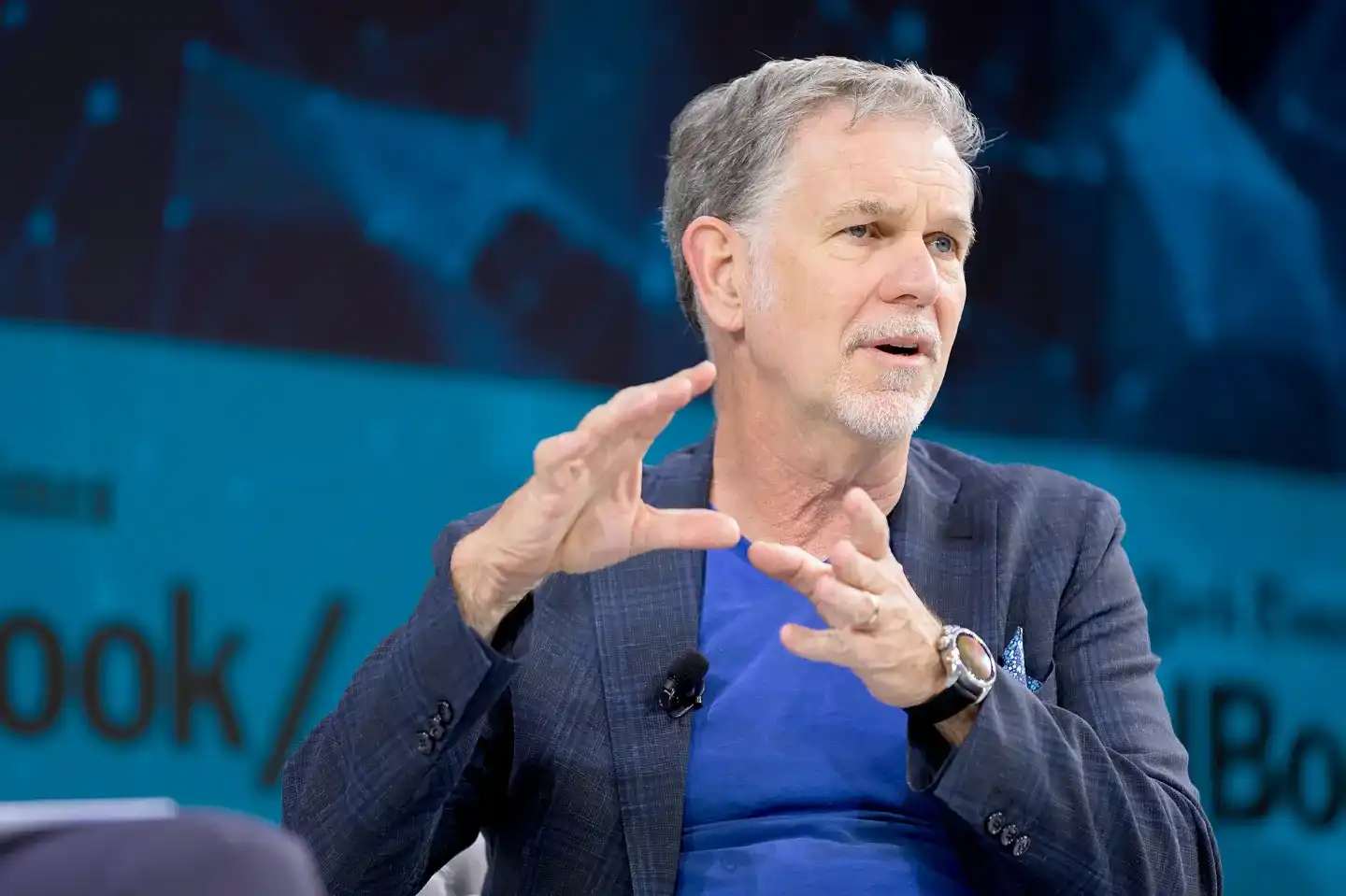
BlackRock CEO Larry Fink used the World Economic Forum stage to argue that tokenization needs to move from pilot programs to market plumbing and suggested that a shared blockchain standard could cut costs and even “reduce corruption,” a framing that immediately reignited the “which chain?” debate across crypto and specifically inside the Ethereum community.

Fink didn’t name a network. But the combination of BlackRock’s onchain product footprint and its own research positioning makes Ethereum the most natural candidate for the “one common blockchain” he alluded to, even if he kept it implicit.

Fink’s remarks, delivered in the language of infrastructure rather than crypto evangelism, leaned heavily on the operational case for digitized assets and interoperable settlement rails.

“I think the movement towards tokenization, decimalization is necessary. It’s ironic that we see two emerging countries leading the world in the tokenization and digitization of their currency, that’s Brazil and India. I think we need to move very rapidly to doing that.”

He then pushed the argument beyond payments and into capital markets: “We would be reducing fees, we would do more democratization by reducing more fees if we had all investments on a tokenized platform that can move from a tokenized money market fund to equities and bonds and back and forth.”

The most provocative line was his call for standardization and the trade-off he implied comes with it. “[If] we have one common blockchain, we could reduce corruption. So I would argue that, yes, we have more dependencies on maybe one blockchain, which we could all talk about, but that being said, the activities are probably processed and more secure than ever before.”

Why Ethereum Is Coming Up

In the abstract, “one common blockchain” could be read as a generic appeal for shared rails. In practice, BlackRock’s public-market crypto lineup and its tokenization work have concentrated around Bitcoin and Ethereum.

On the ETF side, BlackRock’s flagship US spot products track bitcoin and ether — iShares Bitcoin Trust (IBIT) and iShares Ethereum Trust (ETHA) — with ETHA launching in 2024 and now sitting in the center of the firm’s public-facing Ethereum exposure.

On the tokenization side, BlackRock’s first tokenized fund, the BlackRock USD Institutional Digital Liquidity Fund (BUIDL), debuted on Ethereum via Securitize in March 2024, making Ethereum the original issuance network for what has become one of the market’s most closely watched institutional RWAs.

While BUIDL has expanded across multiple networks over time, the key point for Fink’s “common blockchain” framing is that Ethereum has been BlackRock’s default starting point for public-chain issuance, a meaningful signal in a market where “standards” tend to follow whoever already has the deepest liquidity, the broadest integration surface, and the most conservative counterparties.

The stronger tell came this week from BlackRock research rather than Davos soundbites. In its 2026 thematic outlook, BlackRock explicitly floats the idea of Ethereum as the infrastructure layer that collects the “toll” as tokenization scales. One slide asks: “Could Ethereum represent the ‘toll road’ to tokenization?” and adds that stablecoin adoption may be an early proxy for tokenization “in action,” with “blockchains like Ethereum” positioned to benefit.

In the same section, BlackRock cites RWA data “as of 1/5/2026” and notes that “of tokenized assets 65%+ are on Ethereum,” underscoring the network’s lead in today’s tokenized-asset stack.

At press time, ETH traded at $3,005.
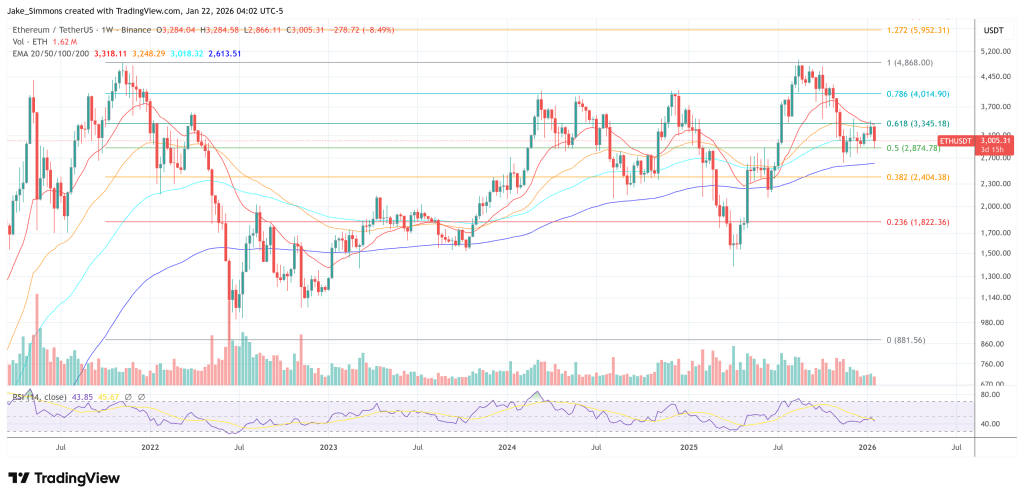
ETH remains stuck between the 0.618 and 0.5 Fib, 1-week chart | Source: ETHUSDT on TradingView.com

Related Questions

QWhat did BlackRock CEO Larry Fink advocate for at the World Economic Forum regarding blockchain technology?

ALarry Fink advocated for moving tokenization from pilot programs to market infrastructure and suggested that a shared blockchain standard could cut costs and reduce corruption.

QWhich two countries did Fink mention as leaders in the tokenization and digitization of their currency?

AFink mentioned Brazil and India as the two emerging countries leading the world in the tokenization and digitization of their currency.

QWhat is the name of BlackRock's first tokenized fund and on which blockchain was it launched?

ABlackRock's first tokenized fund is the BlackRock USD Institutional Digital Liquidity Fund (BUIDL), and it was launched on the Ethereum blockchain.

QAccording to BlackRock's research, what percentage of tokenized assets are on the Ethereum network as of January 5, 2026?

AAccording to BlackRock's research, over 65% of tokenized assets are on the Ethereum network as of January 5, 2026.

QWhat two flagship crypto ETF products does BlackRock offer, and which cryptocurrencies do they track?

ABlackRock's flagship crypto ETF products are the iShares Bitcoin Trust (IBIT), which tracks bitcoin, and the iShares Ethereum Trust (ETHA), which tracks ether.

Related Reads

Arthur Hayes' New Article: It's 'No-Trade Zone' Time

Arthur Hayes argues that the current market is in a "no-trade zone," a period of high uncertainty created by two converging forces: the deflationary shock from AI and the inflationary shock from geopolitics. AI agents are rapidly displacing knowledge workers, eroding their incomes and creditworthiness, which will eventually trigger a deflationary financial crisis in consumer credit-dependent Western economies. Simultaneously, the war in the Middle East, particularly the potential disruption to shipping through the Strait of Hormuz, threatens global energy supplies and could force nations to abandon the dollar system. Hayes outlines three main scenarios: 1) A return to normalcy, where the deflationary AI shock remains the primary concern; 2) The "Tehran Toll Booth," where Iran controls the Strait and demands payment in gold or yuan, accelerating the end of dollar hegemony; and 3) "Empire Strikes Back," where the US destroys Iran's capabilities but risks a catastrophic regional war that sends commodity prices soaring. In all but the most extreme scenarios, Hayes posits that the key driver for Bitcoin's price will be the *quantity* of money, not its price (interest rates). He expects that governments, forced to fund wars and stockpile resources, will have to print money, expanding the money supply. This would be bullish for fixed-supply assets like Bitcoin, even if it occurs alongside rising rates. However, he cautions that until this liquidity is explicitly unleashed (e.g., when bond market volatility spikes), the risk/reward for new long positions is poor. His current strategy is to wait for a clear signal of monetary expansion before deploying capital, preferring to hold gold and select crypto assets in the meantime.

marsbit1h ago

Arthur Hayes' New Article: It's 'No-Trade Zone' Time

marsbit1h ago

a16z Founder: In the Agent Era, What Truly Matters Has Changed

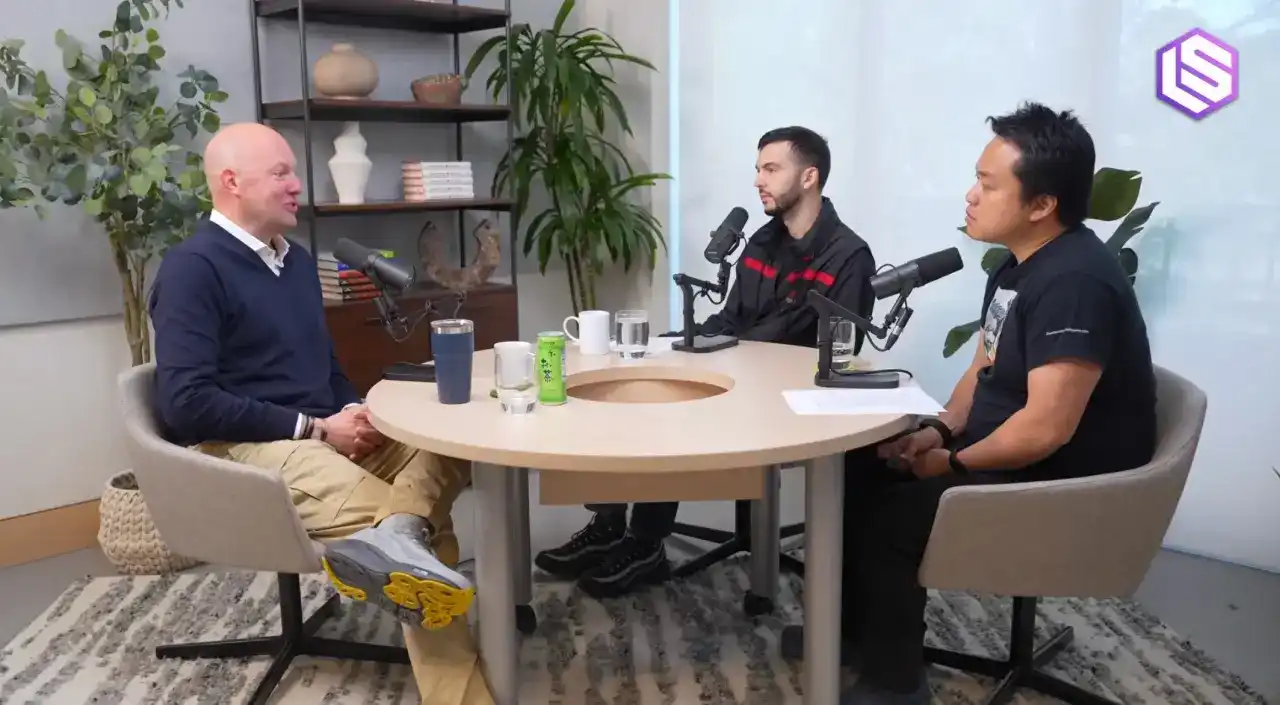
Marc Andreessen, co-founder of a16z, argues that the current AI boom is not an overnight success but the culmination of 80 years of research, now delivering practical results. He emphasizes that this era is defined by the convergence of four key capabilities: large language models (LLMs), reasoning, coding, and agents capable of recursive self-improvement. Andreessen describes the agent architecture—combining an LLM with a shell, file system, markdown, and cron/loop—as a fundamental shift beyond chatbots. This structure leverages existing software components, allowing agents to maintain state, introspect, and extend their own functionality. He predicts a move away from traditional GUI and browser-based interactions toward an "agent-first" world where software is primarily operated by bots, not humans, with people simply stating their goals. He draws parallels to the 2000 internet bubble but notes key differences: current AI infrastructure investments are led by cash-rich giants and quickly monetized. He highlights that scaling constraints involve not just GPUs but the entire chip ecosystem. Open source and edge inference are crucial for democratizing knowledge and enabling low-latency, cost-effective applications on local hardware. Finally, Andreessen identifies significant non-technical challenges: potential short-term cybersecurity crises, the need for "proof of human" identity solutions, financial infrastructure for agents, and institutional resistance from sectors like education and healthcare. He cautions that societal adoption will be slower than technological change.

marsbit2h ago

a16z Founder: In the Agent Era, What Truly Matters Has Changed

marsbit2h ago

Trading

Spot
Futures

Hot Articles

How to Buy ONE

Welcome to HTX.com! We've made purchasing Harmony (ONE) simple and convenient. Follow our step-by-step guide to embark on your crypto journey.Step 1: Create Your HTX AccountUse your email or phone number to sign up for a free account on HTX. Experience a hassle-free registration journey and unlock all features.Get My AccountStep 2: Go to Buy Crypto and Choose Your Payment MethodCredit/Debit Card: Use your Visa or Mastercard to buy Harmony (ONE) instantly.Balance: Use funds from your HTX account balance to trade seamlessly.Third Parties: We've added popular payment methods such as Google Pay and Apple Pay to enhance convenience.P2P: Trade directly with other users on HTX.Over-the-Counter (OTC): We offer tailor-made services and competitive exchange rates for traders.Step 3: Store Your Harmony (ONE)After purchasing your Harmony (ONE), store it in your HTX account. Alternatively, you can send it elsewhere via blockchain transfer or use it to trade other cryptocurrencies.Step 4: Trade Harmony (ONE)Easily trade Harmony (ONE) on HTX's spot market. Simply access your account, select your trading pair, execute your trades, and monitor in real-time. We offer a user-friendly experience for both beginners and seasoned traders.

3.2k Total ViewsPublished 2024.03.29Updated 2025.06.04

How to Buy ONE

Discussions

Welcome to the HTX Community. Here, you can stay informed about the latest platform developments and gain access to professional market insights. Users' opinions on the price of ONE (ONE) are presented below.

活动图片