Bitcoin, blockchain should form Pakistan’s new financial rail, minister says

cointelegraphPublished on 2025-12-11Last updated on 2025-12-11

Abstract

Pakistan's government, led by Bilal Bin Saqib, chairman of the Virtual Asset Regulatory Authority (PVARA), has declared Bitcoin, blockchain, and digital assets as foundational infrastructure for a new financial system. Speaking at the Bitcoin MENA Conference, Saqib emphasized that the country of 240 million can no longer rely on traditional economic models and must embrace digital assets as a core financial rail. Pakistan, now ranked third in global crypto adoption, is transforming its large unregulated crypto market into a compliant ecosystem. Key initiatives include establishing a strategic Bitcoin reserve, allocating 2,000 megawatts of surplus electricity for Bitcoin mining and AI data centers, and inviting global crypto companies to apply for operating licenses.

Pakistan sees Bitcoin and digital assets as the backbone of a new financial rail for its 240 million citizens, a senior official said at the Bitcoin MENA Conference, signaling a shift toward formal regulation of crypto markets.

Bilal Bin Saqib said on Tuesday that Pakistan can no longer rely on traditional economic models, but needs “a new engine,” citing digital assets. The minister said during a roundtable in Abu Dhabi:

“We see Bitcoin, digital assets, and blockchain not just as speculation but as infrastructure. Not as noise, but as a foundation of a new financial rail for the global south.”

Saqib, the chairman of Pakistan’s Virtual Asset Regulatory Authority (PVARA) and former special assistant to the prime minister on blockchain and crypto, said his mandate is to transform one of the world’s largest unregulated crypto markets into a compliant, investment-ready ecosystem.

Derar Islim (left) and Bilal Bin Saqib (right) at the Bitcoin 2025 MENA Conference. Source: Bitcoin Magazine

He argued that Pakistan has a young population — 70% of the country’s population is under the age of 30 — and the scale needed to build a regulated crypto ecosystem, rather than remaining a “late adopter.”

“My message is simple,” he said. “If El Salvador can do it with 6 million people, imagine what Pakistan can do with 40 times the population and one of the fastest growing digital forces in Asia.”

Related: Fiat inflation drives crypto adoption across the globe

The rise of crypto adoption in Pakistan

Pakistan has emerged as one of the world’s fastest-growing crypto markets, climbing six places to rank third in Chainalysis’ 2025 Global Crypto Adoption Index.

In May, Saqib announced that the country is preparing to establish a strategic Bitcoin (BTC) reserve and is moving toward more pro-crypto regulatory policies.
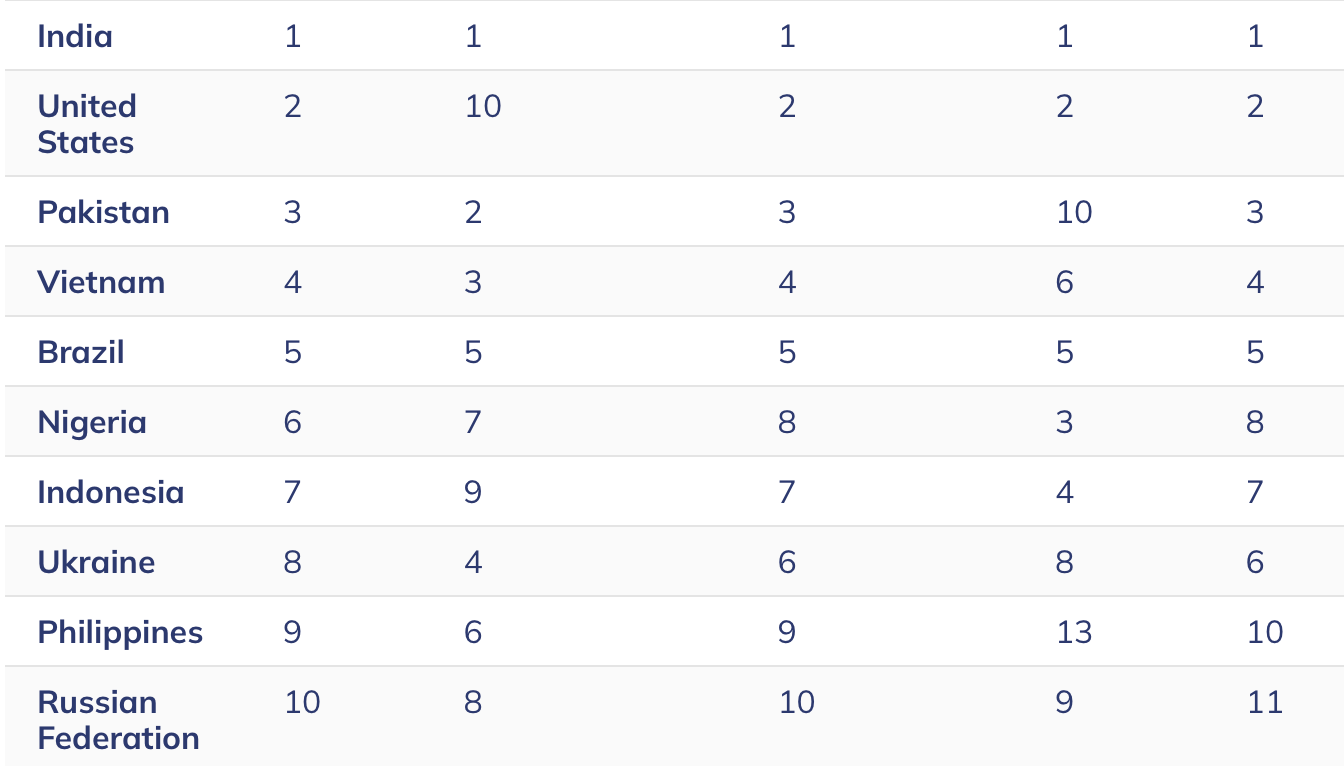
The 2025 Global Crypto Adoption Index. Source: Chainalysis

That same month, Pakistan allocated 2,000 megawatts of surplus electricity for Bitcoin mining and AI data centers as part of its national digital transformation push. Financial officials say the plan is intended to attract foreign investment and support new high-tech jobs by directing excess power into AI and crypto infrastructure.

In September, Pakistan invited global crypto companies to apply for licenses under its new federal regulatory regime. The PVARA issued a call for expressions of Interest from major exchanges and service providers seeking to enter the market.

Magazine: Quantum attacking Bitcoin would be a waste of time: Kevin O’Leary
Related Reads

Ethereum Is Becoming the New Global Financial Backend

Ethereum is emerging as a global financial backend, reducing the complexity and cost of building financial services while increasing speed and security. It embeds core financial operations—such as ownership recording, value transfer, and obligation enforcement—into software, executed via a distributed validator set. This shared infrastructure eliminates the need for redundant internal systems, transforming capital-intensive processes into software-driven activities. The platform addresses key economic frictions: triangulation (discovery and agreement), transfer (value movement), and trust (enforcement). By providing a transparent, programmable, and cryptographically secured environment, Ethereum enables real-time settlement, automated compliance, and global interoperability. This reduces operational risks and costs, particularly for new entrants and markets with fragile financial systems. Ethereum’s impact is most significant in emerging economies, where it offers immediate functional improvements, while in developed markets, benefits accumulate gradually as more processes become programmable. It shifts institutional focus from infrastructure maintenance to innovation and product design, promoting leaner, more efficient financial services. As a resilient, open, and verifiable system, Ethereum is positioned to serve as the foundational layer for future financial infrastructure, driven by economic incentives favoring transparency and reliability.

marsbitHace 24 min(s)

Ethereum Is Becoming the New Global Financial Backend

marsbitHace 24 min(s)

The Silver Crisis: When the Paper System Begins to Fail

Silver Crisis: When the Paper System Begins to Fail In December, silver became the most volatile asset in the precious metals market, surging from $40 to over $64 per ounce—a year-to-date increase of nearly 110%, far outpacing gold. While the rally appears fundamentally justified—driven by Fed rate cut expectations, industrial demand from solar/EV/AI sectors, and declining global inventories—it masks deeper structural risks. Unlike gold, which is backed by central bank purchases, silver lacks institutional support and has minimal official reserves. Its market is shallow, with a daily trading volume of only $5 billion (vs. gold’s $150 billion), dominated by paper derivatives like futures and ETFs. This makes it vulnerable to volatility and manipulation. The real driver of the rally is a futures squeeze. The market has entered a persistent “backwardation” (futures prices exceeding spot prices), indicating either extreme bullishness or deliberate market manipulation. Physical delivery demands have surged, with COMEX and Shanghai exchange inventories dropping sharply. The system—where paper claims vastly exceed physical silver—is under stress. JPMorgan, a historically dominant player in silver markets, controls ~43% of COMEX silver inventory and acts as custodian for major silver ETFs. Its influence over physical supply and delivery eligibility adds to market fragility. The silver crisis reflects a broader shift: investors are losing faith in financialized paper assets and moving toward physical holdings. This “physicalization” trend, also seen in gold, signals declining trust in traditional financial intermediaries and a reevaluation of monetary security in a deglobalizing world. As the paper system strains, those holding physical silver—and gold—may hold the ultimate advantage.

深潮Hace 32 min(s)

The Silver Crisis: When the Paper System Begins to Fail

深潮Hace 32 min(s)

Trading

Spot
Futures
活动图片