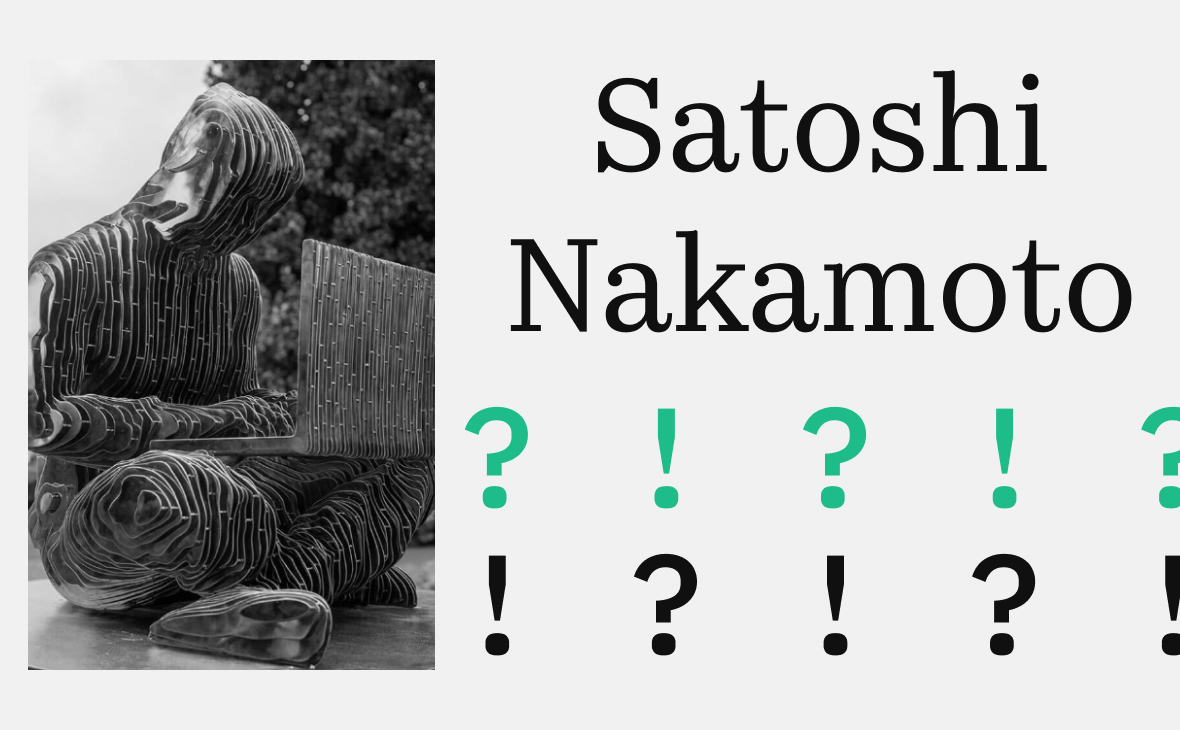
Satoshi Lives Again: NYSE Unveils Statue That Vanishes Before Your Eyes

bitcoinist2025-12-12 tarihinde yayınlandı2025-12-12 tarihinde güncellendi

Özet

A new "disappearing" statue honoring Satoshi Nakamoto, Bitcoin's pseudonymous creator, has been installed at the New York Stock Exchange. Created by Italian artist Valentina Picozzi, the sculpture uses a layered-metal technique to appear nearly invisible from some angles and fully formed from others. The installation is part of a series of 21 planned monuments worldwide, organized by investment firm Twenty One Capital. This follows a previous incident where a similar statue in Lugano was stolen and later recovered from a lake with the help of a 0.1 BTC reward. The NYSE placement is seen as a symbolic gesture bridging Bitcoin's culture with traditional finance, though Twenty One Capital's shares fell 19% during its trading debut. The artwork aims to provoke discussion on anonymity, value, and the growing cultural acceptance of cryptocurrency.

Satoshi Nakamoto, the pseudonymous creator of Bitcoin, has been honored with a new “disappearing” statue installed at the New York Stock Exchange this week.

According to reports, the piece was placed by investment firm Twenty One Capital and is part of a broader public art effort linking Bitcoin’s cultural presence with major financial sites.

Installation And The Artist

The sculpture was made by Italian artist Valentina Picozzi and is built so that it appears nearly invisible from certain angles, then clearly forms when seen from the side.

The work took about 21 months to design and build, and this NYSE placement is the sixth of a planned series of 21 monuments scattered around the globe. The layered-metal technique creates the optical effect that mirrors Satoshi’s elusive identity.

Past Incidents And Recovery

The statue’s arrival at Wall Street follows earlier headlines tied to the same design. In August, a version of the disappearing Satoshi in Lugano was briefly missing after being taken and later recovered from Lake Lugano, with the recovery drive boosted by a 0.1 BTC reward offered by the art collective behind the pieces.

Reports have disclosed that municipal workers found the sculpture in pieces, and the episode drew attention to the artwork’s symbolic value and physical fragility.

Market Reaction To The Installation

Trading and market news have shown a mixed response to the spectacle. Reports indicate that Twenty One Capital, which organized the NYSE installation, saw its shares fall about 19% during its trading debut, an early sign that symbolic moves do not always calm investor nerves. Some coverage framed the firm as a multibillion-dollar company while noting the sharp initial swing in its stock.

What This Means For Cultural Adoption

According to market and cultural commentators, placing the Satoshi statue at the NYSE signals growing acceptance of Bitcoin imagery by established institutions.

The move places a public symbol of the cryptocurrency inside one of the oldest trading venues in the US, and that contrast is being read as an example of how ideas from digital currency culture are entering mainstream spaces.

BTCUSD now trading at $89,750. Chart: TradingView

Observers say the artwork functions as both tribute and provocation, inviting debate about anonymity, value, and public memory.

What To Watch Next

Reports have noted that more of the planned installations will appear in other cities, bringing the total project aim to 21 locations.

Other institutions’ reactions remain to be seen, including whether additional major venues will host similar statues and how public opinion may shift following the recent theft and recovery in Switzerland.

The disappearing sculpture now stands as a real-world example of how art connected to the cryptocurrency world interacts with public spaces.

Featured image from Advance Innovations, chart from TradingView

İlgili Okumalar

Bitcoin's Creator Has Not Appeared Publicly for Exactly 15 Years. Where Did Satoshi Disappear To?

Bitcoin's creator, Satoshi Nakamoto, has been absent from the public eye for exactly 15 years, with his last known communication dating back to April 26, 2011. His final public forum post on December 12, 2010, addressed a DoS attack on the Bitcoin network. Shortly before disappearing, he privately corresponded with early developers, informing them he had "moved on to other things" and that Bitcoin was in good hands, specifically naming Gavin Andresen as the lead developer. His withdrawal is speculated to be linked to Andresen's planned talk about Bitcoin at the CIA headquarters. Satoshi's true identity remains one of cryptocurrency's greatest mysteries. Numerous theories exist, ranging from him being an individual to a group, or even a project by the CIA. Several individuals, including cryptographers Hal Finney and Nick Szabo, have been proposed as candidates, but all have either denied it or remained silent. Some speculate he may be deceased. The mystery is fueled further by the immense wealth potentially held by Satoshi. Research based on a unique mining pattern, dubbed "Patoshi," suggests he may have mined approximately 1.1 million BTC, worth over $100 billion at current prices. This was possible due to minimal mining competition and a high coin emission rate in Bitcoin's early days, when it could be mined on a regular laptop. The network's computational power has since grown by over 10 billion times.

RBK-crypto10 dk önce

Bitcoin's Creator Has Not Appeared Publicly for Exactly 15 Years. Where Did Satoshi Disappear To?

RBK-crypto10 dk önce

How Does x402 V2 Enable Autonomous Payments for AI Agents?

The x402 protocol, initially developed by Coinbase, leverages the HTTP 402 status code to embed payment logic directly into web requests. The newly released V2 upgrade introduces significant improvements to address limitations in cross-chain support, scalability, identity authentication, and repeated payments experienced in V1. Key enhancements include: - **Wallet Identity and Reusable Sessions**: Supports wallet-based authentication (e.g., Sign-In-With-X via CAIP-122), allowing reusable sessions after initial payment. This reduces latency and costs for high-frequency use cases like AI agent tasks and LLM inference. - **Unified Payment Interface**: Enables multi-chain payments (e.g., Base, Solana) and compatibility with traditional systems (ACH, SEPA, credit cards) via Facilitators. Dynamic payTo routing allows context-aware pricing and complex market structures. - **Modular Architecture**: A plugin-driven SDK simplifies integration, supporting easy expansion to new chains and payment methods without core changes. Multi-Facilitator support automates optimal payment path selection based on preferences. - **Automatic Discovery**: Services can expose metadata for automatic synchronization, ensuring real-time pricing and availability updates without manual intervention. For end-users, V2 enables seamless, subscription-like access with reduced friction. Developers benefit from flexible, low-maintenance payment integration and dynamic pricing models. AI agents gain autonomy to make economic decisions, such as purchasing API calls or compute resources independently using allocated budgets. x402 V2 evolves from a pay-per-use tool into a versatile economic layer, though challenges like ecosystem adoption, modular risks, and regulatory uncertainty remain.

比推30 dk önce

How Does x402 V2 Enable Autonomous Payments for AI Agents?

比推30 dk önce

Bitcoin (BTC) Price Trend and Investor Sentiment Suggest a Bullish December

Bitcoin (BTC) is showing signs of a potential bullish December, challenging a decade-old bearish seasonal pattern where November losses typically extend into year-end declines. Key factors supporting this shift include reduced leverage, with open interest dropping from $94 billion to $60 billion, and Bitcoin’s price reclaiming its monthly volume-weighted average price (rVWAP), indicating controlled distribution. Liquidity dynamics have also shifted, with deep liquidity clusters moving upward, and around $3 billion in short positions set to liquidate near $96,000. Market structure diverges from historical cycles due to spot ETF inflows, introducing constant structural demand and accelerating price discovery. Analysts note that Bitcoin’s four-year cycle, while not obsolete, is no longer time-aligned, resembling extended accumulation phases like mid-2016 or late-2019. Macro liquidity (M2) growth has plateaued, creating a late-cycle environment where risk assets rally despite underlying economic softening. Supporting indicators, such as CNY/USD and ETH/BTC correlations, along with improving PMI data and gold’s relative strength, suggest continued risk-on momentum rather than cycle fatigue. While buy-sell ratios show urgency, analysts caution this may reflect positioning squeeze rather than sustainable accumulation. Overall, December’s performance may depend more on structural forces—ETF flows, liquidity rotation, and shifting macro correlations—than traditional halving-driven周期 patterns.

cointelegraph_中文46 dk önce

Bitcoin (BTC) Price Trend and Investor Sentiment Suggest a Bullish December

cointelegraph_中文46 dk önce

İşlemler

Spot
Futures
活动图片