Could Jane Street’s $19M Bitcoin sale spark fresh liquidation risks?

ambcryptoPublished on 2026-03-07Last updated on 2026-03-07

Abstract

Jane Street, a firm with a history of market manipulation, recently transferred $19 million in Bitcoin, testing market resilience. This occurs as Bitcoin faces a long liquidity crunch, with $200 million in derivatives liquidated in 48 hours and $600 million flowing out of ETFs. The move risks triggering another long squeeze and a sharp corrective phase, echoing past events where Jane Street's actions contributed to major price declines. Weak underlying bids and selling by short-term holders suggest growing downside pressure, making this a key event to watch for potential market impact.

Jane Street and market manipulation often go hand in hand.

From a technical perspective, the firm’s involvement in the infamous 10 A.M. Bitcoin [BTC] moves can have dual effects – It may trigger risk-off sentiment, or it may act as a market test, revealing underlying resilience.

In line with this, a wallet linked to Jane Street recently transferred $19 million worth of Bitcoin, immediately drawing market attention. The question is – Does this signal another bearish phase, or will existing liquidity absorb the shock and reinforce market conviction?

Notably, the timing of this move is critical.

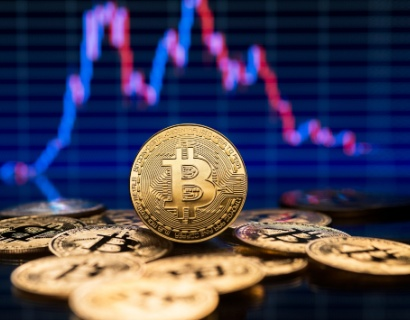
Bitcoin began the week bullish, rallying by roughly 12% from the $65k support level. However, in the latter half of the week, nearly 8% of those gains were wiped out, leaving only about 3% of the weekly advance intact. The result? A long liquidity crunch.

Coinglass data revealed that traders liquidated nearly $200 million in the derivatives market within 48 hours. Especially as long positions closed following a week of sustained short squeezes.

In such an environment, Jane Street’s Bitcoin transfer might appear deliberate.

With BTC trapped in a volatility loop, such large moves can increase liquidation risk while creating opportunities for traders to profit. Hence, the key question is – Will this FUD trigger another corrective phase, or can underlying liquidity reveal the market’s resilience?

Jane Street move puts Bitcoin’s resilience to the test

Given historical trends, absorbing this shock will be difficult.

Jane Street’s past actions provide some context though. The firm was sued for manipulating Bitcoin and played a role in the October crash last year, which triggered a 30%+ correction and drove market sentiment to all-time lows.

The question now is whether history will repeat itself. According to CryptoQuant, short-term hodlers are selling, with 27k BTC offloaded in the last 24 hours. This coincided with Bitcoin’s nearly 4% correction from the $70k-level.

The lack of follow-through highlights Bitcoin’s weak underlying bid.

ETF flows support this view too. Nearly $600 million flowed out over the past two days after peaking at roughly $1 billion in net inflows earlier this week. This simply reinforces the link between capital flows and BTC’s volatile weekly action.

In this environment, Jane Street’s $19 million Bitcoin move reflects strategic positioning rather than speculation. As the market slowly flips back to risk-off, this action could trigger another long squeeze, creating opportunities for bears to capitalize.

If this thesis holds, a crash could unfold, making this a key event to watch.


Final Summary

  • Jane Street’s $19 million Bitcoin move tests market resilience as weak bids and ETF outflows highlight growing downside pressure.
  • Market faces the risk of a cascading long squeeze, pushing Bitcoin towards another sharp corrective phase.


Related Questions

QWhat was the value of the Bitcoin transfer made by the wallet linked to Jane Street, and why did it draw immediate market attention?

AA wallet linked to Jane Street transferred $19 million worth of Bitcoin. It drew immediate market attention because the firm is historically associated with market manipulation, and such a large move in a volatile market can signal a potential bearish phase or test the market's underlying resilience.

QAccording to the article, what were the two potential dual effects of Jane Street's involvement in the infamous 10 A.M. Bitcoin moves?

AThe two potential dual effects are that it may trigger risk-off sentiment among traders, or it may act as a market test that reveals the underlying resilience of the market.

QWhat does Coinglass data reveal about trader liquidations in the derivatives market, and what was the cause?

ACoinglass data revealed that traders liquidated nearly $200 million in the derivatives market within 48 hours. This was caused by long positions being closed following a week of sustained short squeezes, leading to a long liquidity crunch.

QHow do ETF flow trends support the view of Bitcoin's weak underlying bid, according to the article?

AETF flows support this view because nearly $600 million flowed out over the past two days. This followed a peak of roughly $1 billion in net inflows earlier in the week, reinforcing the link between capital outflows and Bitcoin's volatile price action and indicating weak underlying demand.

QWhat historical event involving Jane Street is cited to suggest that absorbing the shock of their recent move will be difficult?

AThe article cites that Jane Street was sued for manipulating Bitcoin and played a role in the October crash last year, which triggered a correction of over 30% and drove market sentiment to all-time lows, suggesting a similar outcome could occur.

Related Reads

TAO is Elon Musk who invested in OpenAI, Subnet is Sam Altman

The article, titled "TAO is Elon Musk who invested in OpenAI, Subnet is Sam Altman," presents a critical analysis of the Bittensor (TAO) project. It argues that Bittensor functions as a decentralized AI marketplace where TAO tokens fund AI research via subnets. However, the author highlights a fundamental flaw: subnet operators have no obligation to return any value, such as AI models or profits, back to the TAO ecosystem or its token holders. This structure is likened to Elon Musk's early investment in the non-profit OpenAI, which later commercialized its technology without returning value to its initial benefactor. The bear case posits that Bittensor is essentially a wealth transfer from crypto speculators to AI researchers ("miners"). Subnets can use TAO incentives for development and then take their successful products elsewhere, leaving TAO holders with diluted tokens from inflation and no captured value. The lack of enforced equity or binding mechanisms means the project relies on a "hope" that subnet tokens maintain value. The optimistic perspective counters that two factors could create a successful, self-sustaining economy: 1) AI's perpetual and massive resource needs could incentivize subnets to stay for continued funding, and 2) crypto has a proven ability to aggregate resources through token incentives, as seen with Bitcoin and Ethereum. The conclusion states that investing in TAO is a bet on a博弈论 (game theory) miracle—that soft incentives alone will be enough to keep the best subnets within the ecosystem and create a flywheel effect. This outcome is possible but represents a highly skewed, low-probability success scenario amidst significant risks of failure.

marsbit8m ago

TAO is Elon Musk who invested in OpenAI, Subnet is Sam Altman

marsbit8m ago

Hermes Agent Guide: Surpassing OpenClaw, Boosting Productivity by 100x

A guide to Hermes Agent, an open-source AI agent framework by Nous Research, positioned as a powerful alternative to OpenClaw. It is described as a self-evolving agent with a built-in learning loop that autonomously creates skills from experience, continuously improves them, and solidifies knowledge into reusable assets. Its core features include a memory system (storing environment info and user preferences in MEMORY.md and USER.md) and a skill system that generates structured documentation for complex tasks. The agent boasts over 40 built-in tools for web search, browser automation, vision, image generation, and text-to-speech. It supports scheduling automated tasks and can run on various infrastructures, from a $5 VPS to GPU clusters. Popular tools within its ecosystem include the Hindsight memory plugin, the Anthropic Cybersecurity Skills pack, and the mission-control dashboard for agent orchestration. Key differentiators from OpenClaw are its architecture philosophy—centered on the agent's own execution loop rather than a central controller—and its autonomous skill generation versus OpenClaw's manually written skills. Installation is a one-line command, and setup is guided. It integrates with messaging platforms like Telegram, Discord, and Slack. It's suited for scenarios requiring a persistent, context-aware assistant that improves over time, automates workflows, and operates across various deployment environments.

marsbit59m ago

Hermes Agent Guide: Surpassing OpenClaw, Boosting Productivity by 100x

marsbit59m ago

Brother Sun "Rights Protection" Stands Up Against the Trump Family, WLFI Is the Real Scythe in the Crypto Circle

The article details the controversy surrounding World Liberty Financial (WLFI), a cryptocurrency project linked to the Trump family. It reports that WLFI allegedly used the DeFi lending protocol Dolomite, whose co-founder is also a WLFI advisor, as a disguised channel to sell tokens by collateralizing around 5 billion WLFI tokens to borrow approximately $75 million in stablecoins. Despite WLFI's claims that the loans were for ecosystem development and posed no liquidation risk, critics argue it was a way for insiders to cash out, shifting risk to retail investors. The piece highlights WLFI's significant price decline—over 66% since its September 2025 launch—and suggests the Trump family and insiders are the main source of selling pressure, as they control nearly 74% of the token supply. It also revisits WLFI’s prior move to blacklist 272 addresses, including those of investor Justin Sun, under the pretext of preventing large-scale sell-offs, which now appears to be an effort to reduce competition for their own sales. Sun publicly accused WLFI of exploiting users, freezing assets, and treating the crypto community as a "personal ATM." WLFI countered by threatening legal action. The author notes that while Sun’s criticism may gain sympathy, a legal battle in the U.S. against the well-connected Trump family would be risky for him. Finally, the article concludes that WLFI exemplifies how powerful elites can exploit crypto’s regulatory gray areas for profit, and urges the community to reject such projects driven more by political privilege than genuine decentralized finance ideals.

Odaily星球日报1h ago

Brother Sun "Rights Protection" Stands Up Against the Trump Family, WLFI Is the Real Scythe in the Crypto Circle

Odaily星球日报1h ago

Trading

Spot
Futures

Hot Articles

What is $BITCOIN

DIGITAL GOLD ($BITCOIN): A Comprehensive Analysis Introduction to DIGITAL GOLD ($BITCOIN) DIGITAL GOLD ($BITCOIN) is a blockchain-based project operating on the Solana network, which aims to combine the characteristics of traditional precious metals with the innovation of decentralized technologies. While it shares a name with Bitcoin, often referred to as “digital gold” due to its perception as a store of value, DIGITAL GOLD is a separate token designed to create a unique ecosystem within the Web3 landscape. Its goal is to position itself as a viable alternative digital asset, although specifics regarding its applications and functionalities are still developing. What is DIGITAL GOLD ($BITCOIN)? DIGITAL GOLD ($BITCOIN) is a cryptocurrency token explicitly designed for use on the Solana blockchain. In contrast to Bitcoin, which provides a widely recognized value storage role, this token appears to focus on broader applications and characteristics. Notable aspects include: Blockchain Infrastructure: The token is built on the Solana blockchain, known for its capacity to handle high-speed and low-cost transactions. Supply Dynamics: DIGITAL GOLD has a maximum supply capped at 100 quadrillion tokens (100P $BITCOIN), although details regarding its circulating supply are currently undisclosed. Utility: While precise functionalities are not explicitly outlined, there are indications that the token could be utilized for various applications, potentially involving decentralized applications (dApps) or asset tokenization strategies. Who is the Creator of DIGITAL GOLD ($BITCOIN)? At present, the identity of the creators and development team behind DIGITAL GOLD ($BITCOIN) remains unknown. This situation is typical among many innovative projects within the blockchain space, particularly those aligning with decentralized finance and meme coin phenomena. While such anonymity may foster a community-driven culture, it intensifies concerns about governance and accountability. Who are the Investors of DIGITAL GOLD ($BITCOIN)? The available information indicates that DIGITAL GOLD ($BITCOIN) does not have any known institutional backers or prominent venture capital investments. The project seems to operate on a peer-to-peer model focused on community support and adoption rather than traditional funding routes. Its activity and liquidity are primarily situated on decentralized exchanges (DEXs), such as PumpSwap, rather than established centralized trading platforms, further highlighting its grassroots approach. How DIGITAL GOLD ($BITCOIN) Works The operational mechanics of DIGITAL GOLD ($BITCOIN) can be elaborated on based on its blockchain design and network attributes: Consensus Mechanism: By leveraging Solana’s unique proof-of-history (PoH) combined with a proof-of-stake (PoS) model, the project ensures efficient transaction validation contributing to the network's high performance. Tokenomics: While specific deflationary mechanisms have not been extensively detailed, the vast maximum token supply implies that it may cater to microtransactions or niche use cases that are still to be defined. Interoperability: There exists the potential for integration with Solana’s broader ecosystem, including various decentralized finance (DeFi) platforms. However, the details regarding specific integrations remain unspecified. Timeline of Key Events Here is a timeline that highlights significant milestones concerning DIGITAL GOLD ($BITCOIN): 2023: The initial deployment of the token occurs on the Solana blockchain, marked by its contract address. 2024: DIGITAL GOLD gains visibility as it becomes available for trading on decentralized exchanges like PumpSwap, allowing users to trade it against SOL. 2025: The project witnesses sporadic trading activity and potential interest in community-led engagements, although no noteworthy partnerships or technical advancements have been documented as of yet. Critical Analysis Strengths Scalability: The underlying Solana infrastructure supports high transaction volumes, which could enhance the utility of $BITCOIN in various transaction scenarios. Accessibility: The potential low trading price per token could attract retail investors, facilitating wider participation due to fractional ownership opportunities. Risks Lack of Transparency: The absence of publicly known backers, developers, or an audit process may yield skepticism regarding the project's sustainability and trustworthiness. Market Volatility: The trading activity is heavily reliant on speculative behavior, which can result in significant price volatility and uncertainty for investors. Conclusion DIGITAL GOLD ($BITCOIN) emerges as an intriguing yet ambiguous project within the rapidly evolving Solana ecosystem. While it attempts to leverage the “digital gold” narrative, its departure from Bitcoin's established role as a store of value underscores the need for a clearer differentiation of its intended utility and governance structure. Future acceptance and adoption will likely depend on addressing the current opacity and defining its operational and economic strategies more explicitly. Note: This report encompasses synthesised information available as of October 2023, and developments may have transpired beyond the research period.

363 Total ViewsPublished 2025.05.13Updated 2025.05.13

What is $BITCOIN

Discussions

Welcome to the HTX Community. Here, you can stay informed about the latest platform developments and gain access to professional market insights. Users' opinions on the price of BTC (BTC) are presented below.

活动图片