Avalanche, Cosmos and Polygon ETPs Launched by ETC Group

u.todayPublished on 2022-03-28Last updated on 2022-03-28

Abstract

The new investment vehicles have become available on Zurich-based SIX Swiss Exchange and Frankfurt-based Deutsche Börse.

British crypto-investment firm ETC Group launched three new cryptocurrency exchange-traded products that track the value of three cryptocurrencies: Avalanche (AVAX), Polygon (MATIC), and Cosmos (ATOM), according to a Monday report published by ETF Stream.  
The new investment vehicles have become available on Zurich-based SIX Swiss Exchange and Frankfurt-based Deutsche Börse.
ETC Group founder Bradley Duke claims that investors have become “increasingly interested” in gaining exposure to the hottest altcoins in order to diversify their portfolios. Duke claims that the newest products offer a substantial level of liquidity for high-quality trading.    
ETC Group also provides institutional investors with exposure to such cryptocurrencies as Bitcoin Cash, Ethereum, and Litecoin.
In December, Europe’s top provider of institutional-grade crypto-backed securities also launched ETPs for Polkadot, Solana, Cardano, and Tezos.  
Earlier this month, the company also made a trailblazing move by launching the world’s first metaverse-focused exchange-traded fund (ETP). It helps investors to gain exposure to a slew of companies that work on such cutting-edge technologies as VR/AR and 3D graphics.
ETC Group rolled out the first centrally cleared Bitcoin exchange-traded product in the world back in 2020 Deutsche Boerse. Last October, it topped $1.5 billion in assets under management, becoming the world’s number one physically-backed single cryptocurrency ETP.
Last June, the company announced that it would list the first Bitcoin ETP in the U.K.
The company now offers eight physically-backed ETPs that track the value of separate cryptocurrencies.
Having launched its products in Frankfurt, Vienna, Paris, London, Amsterdam, Zurich and Frankfurt, ETC Group has managed to gain a significant presence on European financial markets. Europe is generally known to be more crypto-friendly compared to the U.S.

Related Reads

Building USDC by Its Own Hands, Why Does Coinbase Turn to Support Competitor OUSD?

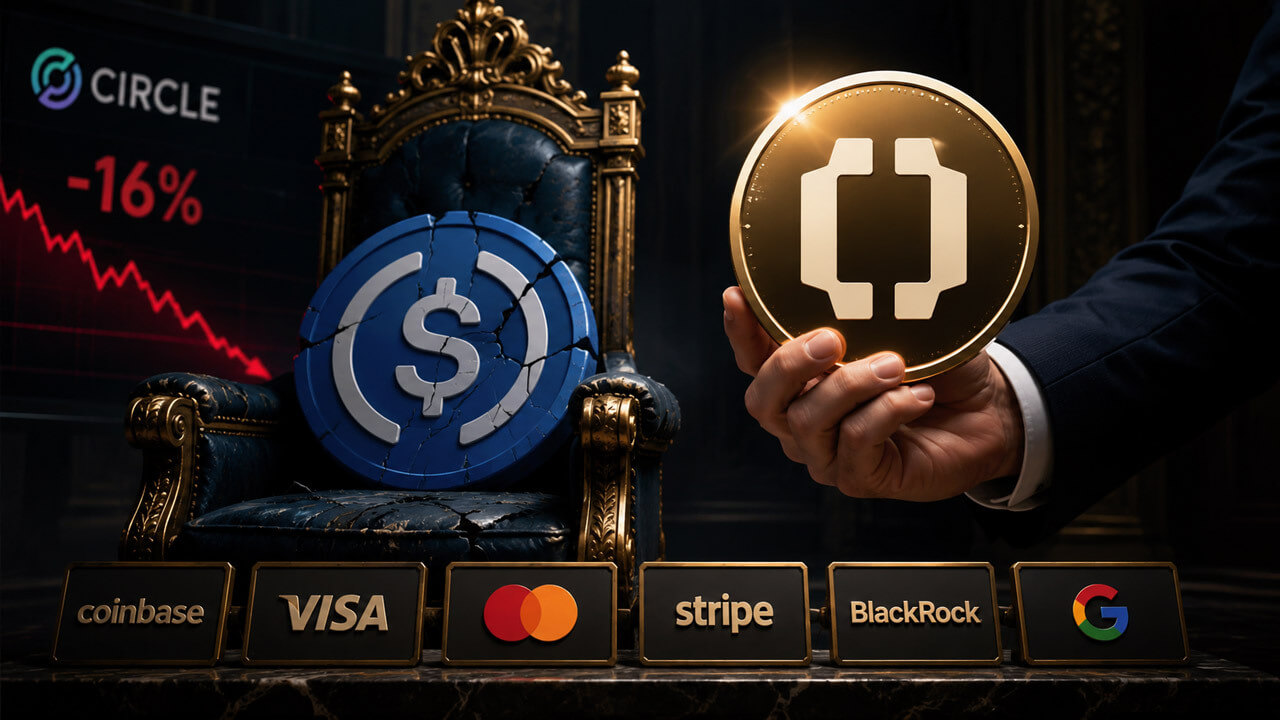
Coinbase, a key distributor of the dominant stablecoin USDC, has joined over 140 major companies—including Visa, Mastercard, and BlackRock—as a founding member of the Open USD (OUSD) alliance, a move that directly challenges the current stablecoin economic model. The new project aims to upend the established profit structure by offering zero minting and redemption fees and allocating the majority of reserve interest earnings to distribution partners, rather than the issuer. This shift highlights a growing power struggle in the $320+ billion stablecoin market, where platforms with massive user bases are demanding a larger share of the revenue generated from the underlying reserves. Circle, the issuer of USDC, saw its stock plummet 16% on the day of the OUSD announcement, reflecting investor concern over the potential strain on its crucial partnership with Coinbase. While Coinbase earned over $900 million from its USDC partnership in 2024, its support for a competing model gives it significant leverage as its revenue-sharing agreement with Circle nears expiration in August 2026. Circle CEO Jeremy Allaire defended the USDC model, emphasizing its decade-long development, deep liquidity, and extensive ecosystem integration, which he argues cannot be easily replicated by a large, potentially slow-moving consortium. He also questioned the sustainability of a zero-fee model and warned that diverting all reserve interest would leave issuers without funds for critical compliance and operational infrastructure. Analysts remain skeptical of OUSD's prospects, citing the "cold start" problem of building liquidity, potential governance challenges within a large alliance, and heightened regulatory scrutiny. The emergence of OUSD signals a broader industry bifurcation, where stablecoins are increasingly viewed as backend settlement tools. The core competition is shifting from technology to a direct negotiation over how profits from the network are distributed between issuers and the powerful distribution channels.

Foresight News1h ago

Building USDC by Its Own Hands, Why Does Coinbase Turn to Support Competitor OUSD?

Foresight News1h ago

Trading

Spot
活动图片