This Week in Coins: Ethereum Takes Another Week of Losses, XRP Soars

DecryptPublished on 2022-09-24Last updated on 2022-09-24

Abstract

ETH is down 19% since the merge. XRP ballooned this week when news broke that the SEC's lawsuit against Ripple may soon come to a conclusion.

The prices of crypto market leaders Bitcoin and Ethereum dipped on Wednesday following news that the United States Federal Reserve was hiking interest rates by another 75 basis points to stem the effects of inflation.

Back in June, when the Fed first raised interest rates by 75 basis points this year, many remarked that the hike was the steepest of its kind from the central bank since 1994.

In July, the Fed called another 0.75% hike. Bitcoin and Ethereum’s prices both actually jumped within an hour of the announcement. This isn’t typical market behavior, since interest rate hikes make it more expensive to borrow, which in turn means that investors are more likely to dump their riskier assets.

In any case, neither leading cryptocurrency held any ground this time around. Bitcoin fell .53% over the past seven days, according to CoinGecko, and currently trades for $19,086, while Ethereum sank 7.5% to $1,328.

Several other leading cryptocurrencies posted double-digit percentage losses this week, among them COSMOS, down 12% to $14.39. Ethereum Classic (ETC) dropped 15% to $28.74, and Near Protocol (NEAR) dipped 10.5% to $3.79.

But some names escaped contagion and managed to post double-digit percentage gains: Stellar (XLM) blew up 16% to $0.1243, Cronos climbed 16% to $0.1228, and Algorand (ALGO) ballooned 38% to $0.408.

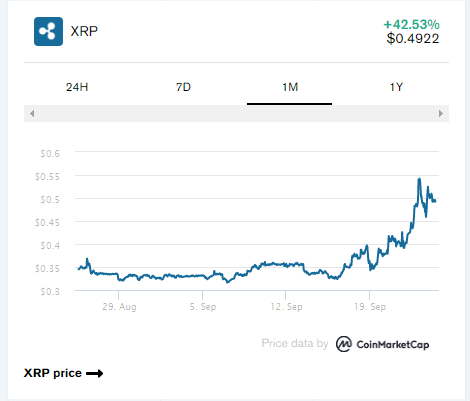
The biggest rally was from XRP, which blew up 44% in one week to $0.5232. The pump followed news earlier this week that both Ripple and the SEC have filed motions for summary judgment in the $1.3 billion lawsuit, each maneuvering to dismiss the lawsuit before trial.

The SEC took Ripple to court in December 2020 for allegedly selling XRP as an unregistered security.
The week after the merge

Of course, ETH was already on a downslide before the inflation news from the Fed this week.

Data from Glassnode showed that predictions the merge would be a case of “buy the rumor sell the news” largely played out. “It is quite unsurprising that profits were taken where profits were available,” Glassnode wrote in its Monday merge. “Funding rates have since completely reverted to neutral [after sinking to an all-time low of -1,200% in the leadup to the merge], suggesting much of the short-term speculation premium has dissipated.”

Glassnode had in August reported an overwhelming demand to purchase call options for ETH at a premium, calling it a “state of extreme bullish bias” for the asset’s price in September. However, the same report noted that ETH's implied volatility was higher on downside price predictions than upside predictions, indicating that traders were “paying a premium for 'sell-the-news' put option protection post-Merge.”

Ethereum miners were cashing out big in the run-up to the merge. According to OKLink, which pulls data across a dozen different mining pools, including F2Pool, Binance, and BTC.com, miners sold a total of 14,785 ETH, totaling $19.73 million in transactions from September 9 to the day of the merge on September 15. The largest sale came on September 14 when miners offloaded nearly 8,032 Ethereum.

Gensler vs Ethereum

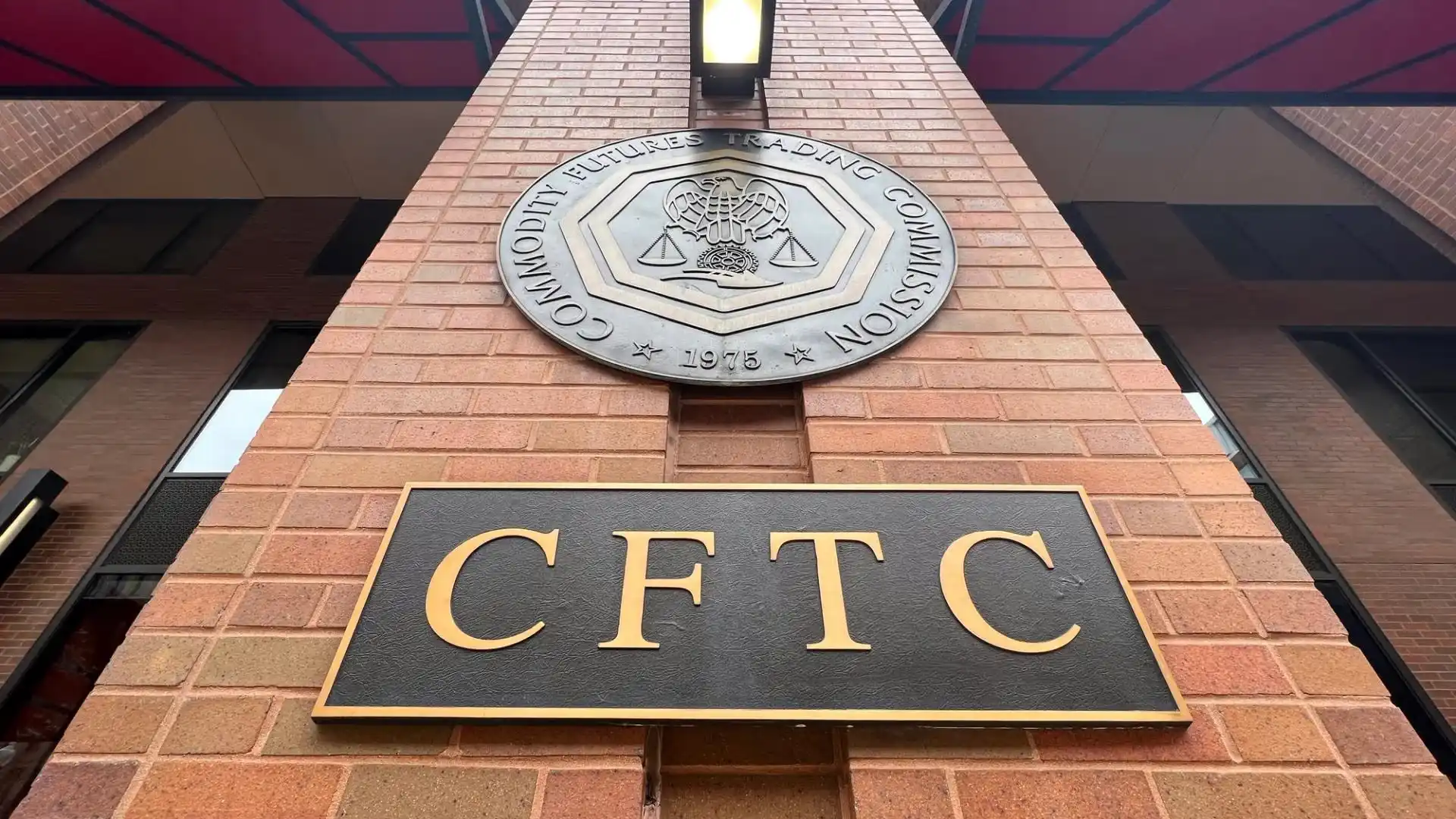
In a federal lawsuit against a crypto influencer filed on Monday, the SEC suggested that it believes the U.S. government has jurisdiction over all Ethereum transactions.

According to a sentence in the lawsuit’s 69th paragraph, the SEC claims it can sue Ian Balina not only because his case concerns transactions made in the United States, but also because the fact that most of the Ethereum network’s validators are in the U.S. means the entire blockchain falls under the government’s purview—or so the SEC is arguing.

Gensler has previously said that Bitcoin is a commodity, but many think his silence on Ethereum may be a sign that he views the blockchain as essentially a U.S. securities exchange. Just last week, Gensler said proof-of-stake cryptocurrencies, which allow holders to passively earn returns through staking, could be classified as securities: “from the coin’s perspective…that’s another indication that under the SEC's "Howey test," the investing public is anticipating profits based on the efforts of others.

MicroStrategy buys more Bitcoin

MicroStrategy isn't any less bullish on Bitcoin in its post-Saylor era: On Monday, the software firm added another 300 BTC, at the time worth around $6 million, to its treasury. MicroStrategy was already the single biggest corporate HODLer in the world, but the additional Bitcoin now means the company has 130,000 Bitcoins, or about $2.45 billion at the current price.

MicroStrategy’s stock dropped 6% at the start of trading on Monday on the Bitcoin buy, but had recovered by the following day.

Related Reads

Exporting to Domestic Sales: The Chinese-style Outbound Journey of an AI Short Film

From Export to Domestic Boom: The Chinese-Style Overseas Journey of an AI Short Film The story begins with PJ Ace, a prominent Hollywood AI filmmaker, launching a public search on X for the creator of a stunning AI-generated short film titled "Zombie Scavenger." The film, featuring a robot cowboy in a post-apocalyptic wasteland, impressed Ace with its quality, which he estimated would have cost $500,000 and six months pre-AI. The trail led back to China. The creator, Mx-Shell, is a self-described amateur from China with a photography and music background. Using ByteDance's AI video tool, Seedance 2.0, he independently produced the short in about ten days for a minimal cost. Ironically, while the film went viral overseas after Ace's endorsement, it initially gained little traction on Chinese platforms like Bilibili. This sparked a "cross-server" search. Ace posted in English on X, while Mx-Shell, who doesn't speak English, posted his QQ email in Chinese comment sections. With netizens' help, they connected. Ace extended an invitation, asking if Mx-Shell was interested in becoming a Hollywood director. The article highlights this as a case of "talent export" or "brilliance going overseas." A creator in China, using domestic AI tools and computing power, captured global attention first. This "export-to-domestic-sales" path succeeded due to China's competitive, low-cost AI video tool market and its vast pool of untapped creative talent. Mx-Shell's success underscores that AI lowers production barriers, but core creativity, aesthetic judgment, and storytelling sense remain uniquely human. His path—individual, low-budget, and quality-driven—contrasts with the industrialized, capital-intensive route of bulk-producing AI short dramas for overseas markets. His story, spontaneous and beyond any corporate marketing plan, serves as powerful validation for tools like Seedance 2.0. The piece concludes that while China has many creators whose traditional barriers (equipment, funds, teams) are being dismantled by AI, the challenge of visibility remains. Until a robust domestic AI creative ecosystem develops, this indirect route of gaining overseas recognition first may continue to be a viable path for Chinese talent.

marsbit40m ago

Exporting to Domestic Sales: The Chinese-style Outbound Journey of an AI Short Film

marsbit40m ago

One Article to Understand the Profit Pools and Industry Landscape of the AI Storage Hierarchy

**Deciphering the Profit Pools and Industry Landscape of the AI Storage Hierarchy** AI storage architecture can be divided into six distinct layers based on proximity to computing units: 1) On-chip SRAM, 2) HBM, 3) Motherboard DRAM, 4) CXL pooling layer, 5) Enterprise SSD, and 6) NAS & Cloud Object Storage. In 2025, the total market for these layers (excluding embedded SRAM value) was approximately $229 billion, with DRAM constituting half, HBM 15%, and SSD 11%. The profit landscape is highly concentrated, with over 90% market share in the top three layers for key players. These profit pools are categorized into three types: 1) High-margin, oligopolistic silicon layers (HBM, embedded SRAM, QLC SSD), 2) High-margin, emerging interconnect layers (CXL), and 3) Scalable, recurring-revenue service layers (NAS, Cloud Object Storage). **Key Layers Analysis:** * **On-chip SRAM:** Profits accrue primarily to TSMC via advanced wafer sales for AI chips. * **HBM:** The largest AI-era profit pool, driven by AI accelerator demand. SK Hynix (57-62% share), Samsung, and Micron dominate. HBM boasts exceptionally high margins (e.g., SK Hynix's 72% operating margin in Q1 2026) and is projected to grow at a ~40% CAGR to $100 billion by 2028. * **Motherboard DRAM:** The largest market by revenue ($121.8B in 2025), controlled by Samsung, SK Hynix, and Micron. High profitability is sustained as capacity shifts to HBM. * **CXL Pooling Layer:** Enables rack-level memory sharing for AI workloads. The market is forecast to grow from $1.6B in 2024 to $23.7B by 2033. While memory giants lead, companies like Astera Labs (holding ~55% share in retimers/controllers) achieve very high margins (~76%). * **Enterprise SSD:** A major beneficiary of the AI inference era, especially QLC SSDs, with the market expected to reach $76B by 2030. Samsung, SK Hynix (including Solidigm), and Micron are key players. * **NAS & Cloud Object Storage:** The outermost data lake layer, growing steadily (CAGR ~16-17%). Profit derives from long-term data hosting, egress fees, and ecosystem lock-in, led by vendors like NetApp, Dell, and cloud providers (AWS, Azure, Google Cloud). **Summary:** Profitability correlates strongly with proximity to compute: layers like HBM and CXL components command the highest margins (60%+ and 76%+, respectively) despite smaller market sizes, while DRAM has the largest revenue base. The primary growth vectors are HBM (CAGR ~28%), Enterprise SSD (CAGR ~24%), and CXL pooling (CAGR ~37%). Barriers vary by layer, encompassing advanced manufacturing (HBM), IP/certification (CXL), and high switching costs (service layers).

marsbit1h ago

One Article to Understand the Profit Pools and Industry Landscape of the AI Storage Hierarchy

marsbit1h ago

a16z, The Biggest Donor Behind the US Midterm Elections

Theodore Schleifer reports for The York Times that the venture capital firm Andreessen Horowitz (a16z), along with its founders Marc Andreessen and Ben Horowitz, has become the single largest donor in the current U.S. midterm election cycle, contributing over $115 million in political funds. This massive expenditure, far exceeding the $63 million from the 2024 cycle, marks a significant shift in political funding from individual billionaires to corporate entities. A16z’s strategy involves long-term political engagement. Immediately after the 2024 election, it injected over $23 million into key crypto-focused Super PACs. Its funding is now channeled through a bipartisan network supporting its core business interests: $47.5 million to the crypto Super PAC Fairshake and $50 million to Leading the Future, a new Super PAC promoting pro-artificial intelligence candidates. The firm and its founders have also donated $12 million to a pro-Trump Super PAC. This political push is closely tied to a16z's commercial stakes in crypto and AI and reflects founders’ evolving political views, particularly Andreessen’s shift toward conservative circles. His access has grown, including an advisory role during Trump’s transition and a seat on a White House tech council. The firm’s activism has sparked internal dissent and external backlash. Critics, including progressive Democrats and some Republicans, argue it represents an attempt to buy political influence. In response, a rival "Public First" Super PAC, dubbed "z16a," has formed to counter a16z’s spending on AI policy. Despite the controversy, a16z frames its involvement as essential for fostering a pro-innovation policy environment.

marsbit1h ago

a16z, The Biggest Donor Behind the US Midterm Elections

marsbit1h ago

Trading

Spot
Futures
活动图片