Bitcoin: Merge renders ETH less of a cryptocurrency as per this BTC maximalist

AmbcryptoPublished on 2022-09-18Last updated on 2022-09-18

Abstract

Microstrategy board chairman Michael Saylor recently said that the Ethereum [ETH] Merge meant BTC was going to be stronger. Saylor made that statement while attending an Australian conference. According to him, moving from Proof-of-Work (PoW) to Proof-of-Stake (PoS) renders ETH less of a crypto asset.

Bitcoin [BTC] maximalist and Microstrategy board chairman Michael Saylor recently said that the Ethereum [ETH] Merge meant BTC was going to be stronger. Bloomberg reported that Saylor made that statement while attending an Australian conference. According to him, moving from Proof-of-Work (PoW) to Proof-of-Stake (PoS) renders ETH less of a crypto asset. Saylor said, “Proof-of-Work is the only universally accepted, proven method for creating a digital commodity.”

”“

Strong, but not all round

”“

It may, however, seem that the ex-CEO made some significant points. This is because BTC has been hitting some highs lately. Leading on-chain platform, Glassnode, revealed that the number of addresses holding 1 BTC and more reached another All-Time High (ATH).

”“

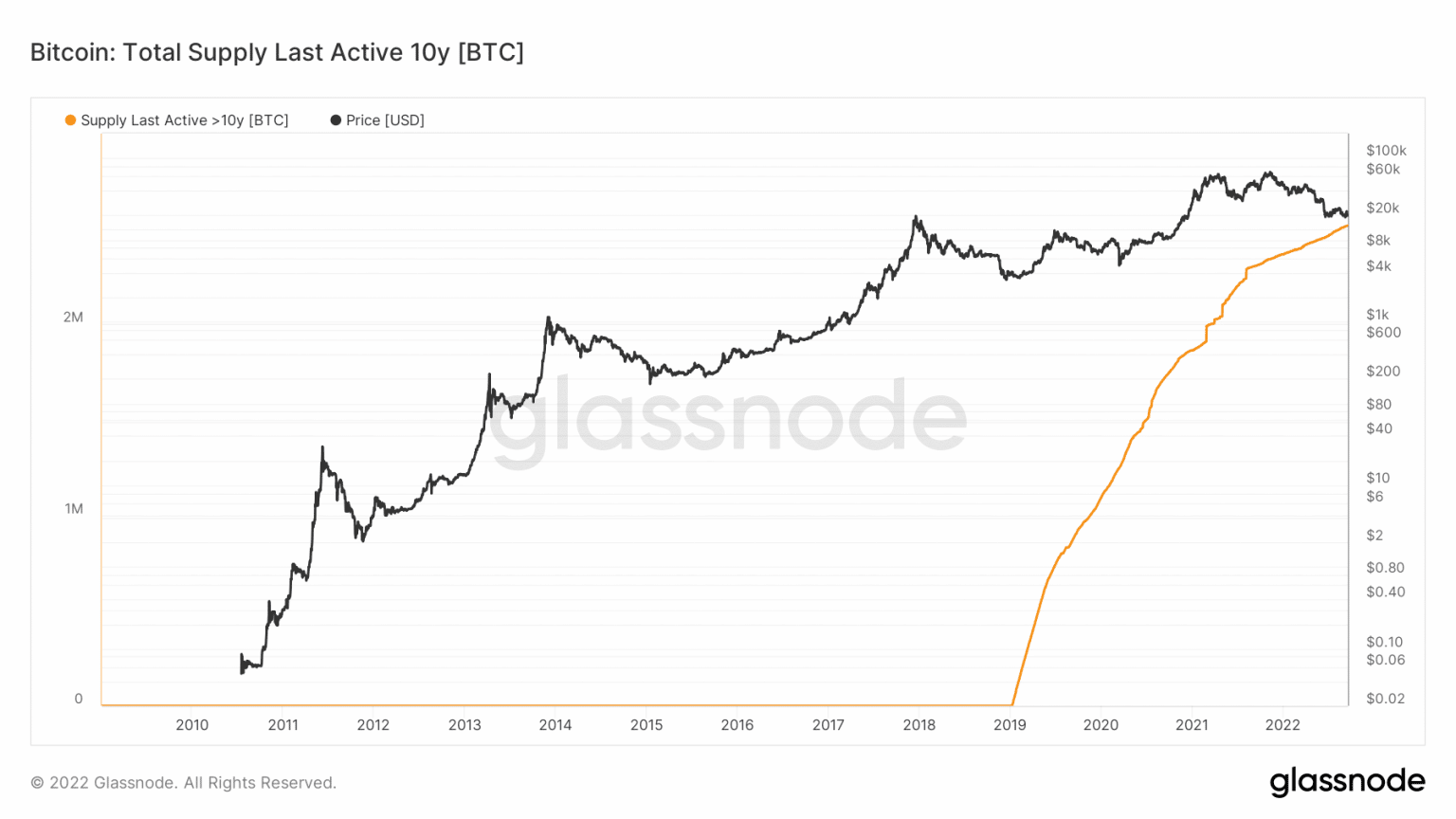
Additionally, BTC also showed strength per the amount of supply last active in ten years. According to the details, the metric was now at an ATH of 2,516,592.726 BTC based on Glassnode data.
Source: Glassnode

”“

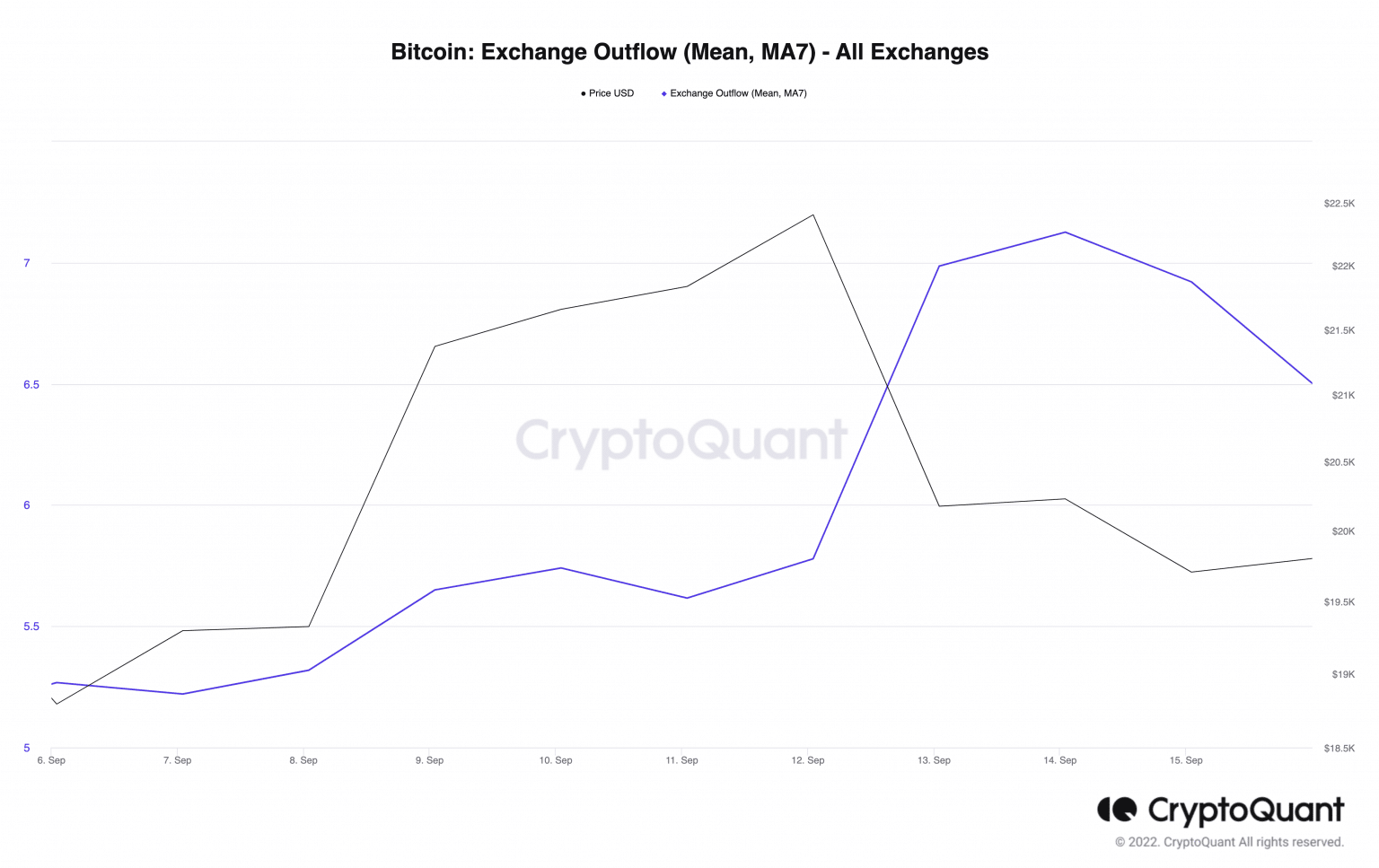
However, BTC did not record highs in all aspects, as there were some lows in significant areas. CryptoQuant showed that the seven-day mean exchange inflow and outflow were down from the last 24 hours. While the mean exchange inflow decreased by 46%, the outflow recorded a 54% decline.
Source: CryptoQuant

”“

This decrease may have been expected following a massive selling pressure per increased exchange coin inflow earlier.

”“

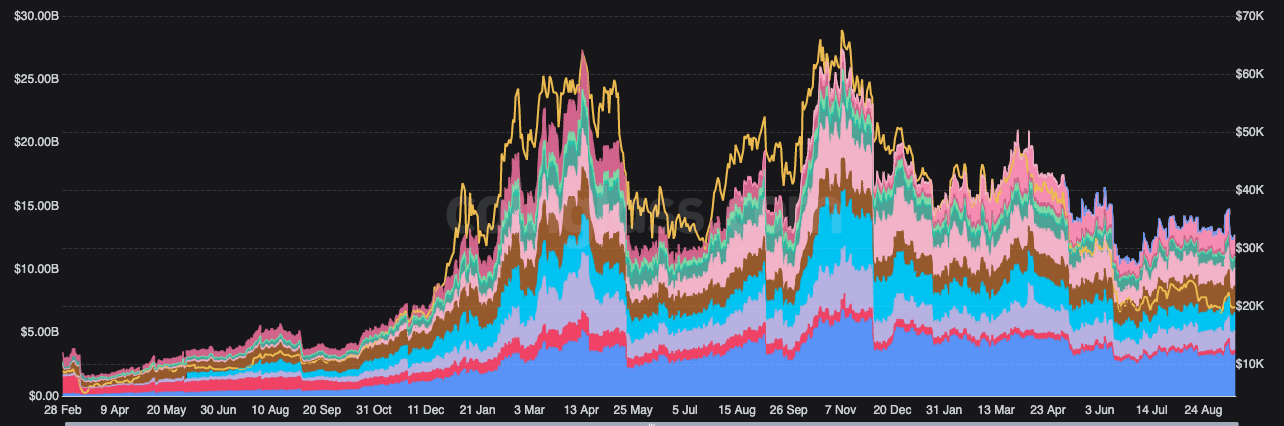
On the derivatives aspects, Coinglass showed that over $27 million worth of BTC had been liquidated in the last 24 hours. There seemed to be some stability compared to the previous day’s levels. Per the open futures interest, there has been an increase across almost all exchanges.

”“

At press, the open futures positions were a cumulative $14.68 billion. This state meant BTC traders had been active in both long and short positions.
Source: CoinGlass

”“

While BTC might have shown strength in the derivatives market, its price was not on the same page. CoinMarketCap revealed that BTC had lost control of sustaining $20,000. At the time of writing, it was trading at $19,882.

”“

Despite outrage from some ETH faithful corners about the securities tag, Saylor seemed to have made up his mind. The executive had earlier stated that Bitcoin had no alternative. He went further by tweeting the Wall Street Journal article on the Securities and Exchange Commission (SEC) considering ETH as securities.

”“

Finally, there was no clear indication that BTC was no more substantial than ETH. However, loyalists from both ends would hope one is proven wrong as time goes on.


Related Reads

Bitcoin Trading Strategy Breakdown: Celebrity Predictions and Classic Models All Fail, Only These Four Indicators Remain

Analysis of Bitcoin Trading Strategies: Why Celebrity Forecasts and Classic Models Fail, Leaving Only These Four Reliable Indicators This analysis examines the failure of common Bitcoin prediction methods and identifies four reliable indicators for constructing a trading strategy. The author reviewed all major BTC prediction approaches from 2017-2025, categorizing them into three groups: celebrity price targets (consistently over-optimistic), analytical models like Stock-to-Flow (broken post-2022), and on-chain signals. The key finding is that more data often creates confusion, not clarity. The strategy discards unreliable elements: celebrity predictions (incentivized to be extreme), pure models (invalidated by post-ETF market changes), and the Fear & Greed Index used alone (too many false signals). Four reliable indicators were selected: 1. **MVRV Z-Score:** Accurately identifies cycle bottoms when entering its green zone (e.g., 2018, 2020, 2022). Note: Its ability to call tops is now ineffective post-2024. 2. **SOPR (28-day MA):** Consistently signals bottoms when below 1.0, indicating holders are selling at a loss. 3. **ETF Net Flow:** A crucial post-2024 metric showing institutional momentum (e.g., sustained inflows = buying). 4. **Macro Liquidity (Fed policy & M2):** Sets the overall directional bias (e.g., bullish during easing cycles). The core strategy involves waiting for a multi-signal共振 (resonance). For example, a bottom signal requires MVRV in the green zone + SOPR < 1.0. A top signal requires overheated on-chain data + sustained ETF outflows. Macro policy sets the overall direction. The Fear & Greed Index is only used as a weighted confirmatory signal, never alone. Action is only taken when three or more indicators align. The author automated this into a monitoring system that sends Telegram alerts only when signals trigger. As of the article's date (April 15, 2026), the system showed a strong bottom signal: extreme fear (F&G=12), MVRV in the buy zone, and SOPR < 1.0. The only contrary signal was weak ETF flows. Historically, such triple on-chain共振 has preceded 100%+ returns. The conclusion emphasizes building a personal framework over relying on external predictions, allowing for iterative improvement and customization based on individual risk tolerance.

marsbit1h ago

Bitcoin Trading Strategy Breakdown: Celebrity Predictions and Classic Models All Fail, Only These Four Indicators Remain

marsbit1h ago

Trading

Spot
Futures
活动图片