When Meme Traffic Meets RWA: The Financial Ambitions of Hyperliquid and Robinhood

marsbitPubblicato 2026-08-11Pubblicato ultima volta 2026-08-11

Introduzione

When Meme traffic meets RWA: Hyperliquid and Robinhood's Financial Ambitions This article explores the transformative role of speculation in financial market evolution, arguing it can provide the liquidity and capital foundation for mature, compliant businesses. The analysis draws parallels to historical examples, like 19th-century Chicago grain markets, where speculators provided necessary counterparty liquidity for farmers, eventually establishing a global pricing infrastructure. The author examines contemporary cases in crypto. The launch of Uniswap's Pools meme token platform on Robinhood Chain—originally built for tokenized stock trading—demonstrates how speculative meme trading can drive significant user adoption and liquidity. Despite initial volatility, this traffic can seed future, more substantial financial activities. Similarly, Hyperliquid, which began with high-leverage crypto trading, has successfully migrated its speculative model to real-world assets (RWAs) like equities, commodities, and indices. By July, RWA perpetual contract volumes on Hyperliquid surpassed its crypto trading for the first time, showcasing how speculation can build new, all-weather pricing layers. The core thesis is that speculation itself is neutral. Its long-term value and sustainability are determined by the underlying assets it engages with. While pure bubbles collapse, speculation anchored to valuable assets—be it wheat, gold, or equities—can evolve into foundational market infrast...

Author: Prathik Desai, Token Dispatch

Compiled by: Saoirse, Foresight News

"When the capital development of a country becomes a by-product of the activities of a casino, the job is likely to be ill-done." – John Maynard Keynes, 1936

The crypto industry is often criticized, with the common perception that it is entirely driven by speculation, and many label it as a casino with no fundamental support. But many fail to realize that speculation is often a leading signal of market evolution. A group of speculators, scorned by the mainstream, gather together to form liquidity, and the mature, compliant businesses of the future are built upon this very liquidity.

In this article, I will analyze this evolutionary path in light of recent phenomena in the crypto market: a public chain originally intended for stock trading launches a Meme coin issuance platform; a perpetual futures trading platform transforms into infrastructure for bulk commodity trading; and a brokerage firm, relying on funds from frog-themed tokens, supports the construction of its on-chain stock trading system.

The story unfolds......

In the crypto space, speculation has many names: market noise, bubbles, casinos. But one point is almost never acknowledged: in the industry's march towards maturity, speculation can become the foundation upon which upper-layer business models grow.

However, it must be clarified: not all bubbles can transform into foundations. Bubbles that remain purely speculative for too long will eventually burst quickly. But if a bubble can combine with a sustainable trading scenario and continuously generate trading activity, it can become the foundation, supporting the landing of more businesses.

This is not a new phenomenon; it has been repeated throughout the long history of finance.

Consider the Chicago grain market in the 1840s. The Chicago Board of Trade introduced futures markets with the original intention of helping farmers, whose harvests were highly uncertain, lock in selling prices in advance to minimize losses. But for every farmer wanting to sell grain forward, there needed to be a counterparty willing to take on the long side of the forward contract and bear the price risk. Speculators filled this gap. The essence of a functional risk transfer market is speculative capital voluntarily taking on the price risk that farmers wanted to shed.

The key to the birth of the futures market was the decoupling of "physical grain" and "grain as a traded commodity." American historian William Cronon termed this process the abstraction of grain. Once grain trading was simplified into warehouse receipt notes, ownership could be freely transferred, allowing speculators to participate in trading on a large scale. Massive speculative trading created sufficient liquidity, enabling farmers to always find counterparties. This ample liquidity ultimately allowed Chicago to grow into the global pricing center for wheat.

Interestingly, at the time, a large number of people resisted and despised this type of trading. The Grange Movement openly criticized exchange speculators, accusing them of profiting from farmers' labor. Yet this mechanism eventually evolved into indispensable price discovery infrastructure for the global agricultural economy. If there had been no speculators acting as counterparties in the 1870s, the global wheat market today would not have a mature pricing system.

Economist John Maynard Keynes's remarks on speculation are well-known, but his complete view more clearly reveals the dual role of speculation. Keynes divided market activities into two categories: enterprise investment, which forecasts the earnings an asset will produce over its full lifetime; and speculation, which forecasts the psychology of the market. He feared that in markets with ample liquidity, speculation would cannibalize enterprise investment.

A closer reading of his discourse shows speculation's dual nature.

"Speculators may do no harm as bubbles on a steady stream of enterprise. But the position is serious when enterprise becomes the bubble on a whirlpool of speculation. When the capital development of a country becomes a by-product of the activities of a casino, the job is likely to be ill-done."

Speculation that exists independently of underlying assets is highly risky; but if speculation is anchored to valuable underlying assets, it can play a positive role.

As early as the first known book on securities markets – Joseph de la Vega's "Confusion of Confusions" written in 1688 – the author noted that the Amsterdam Exchange attracted both investors and gamblers. Most existing exchanges started this way. But over time, this history faded, and a stereotype formed: that serious investment needs were the original purpose of exchanges. This is not the case.

Looking at the Present

On August 5th, the crypto industry's largest decentralized exchange, Uniswap, launched the Pools issuance platform, allowing users to issue and trade Meme coins on Robinhood Chain. This blockchain was built by the eponymous brokerage firm, initially aiming to serve its 30 million funded accounts for tokenized stock trading.

The story goes much further. Before the Pools platform officially launched, traders unearthed the yet-to-be-public smart contract, conducting over $150 million in trades through it. This forced Uniswap to simultaneously support both the test and official contract versions and delay the launch plan. The platform's top token, FRONG, named after the frog video filename used in Uniswap's pre-launch promotional material, was minted six days early via the same contract; on the day the platform officially opened, the token had 12,141 holders.

Interpret this as you will: approximately $150 million in capital traded a frog-themed token on infrastructure not yet officially operational, built on a public chain originally designed for securities trading. FRONG has now become the unofficial mascot of the Pools platform. It's hard not to suspect this was a deliberately orchestrated move to drive traffic to Uniswap's latest V4 version chain. Even if not planned, on-chain Uniswap V4 daily trading volume surged from $86.2 million to $228.3 million, nearly tripling.

But as stated at the article's outset, not all bubbles and speculation can foster sustainable business models. Whether a speculative activity can last long-term depends fundamentally on *what* it is speculating on. We can look at shturl.c.

For years, shturl.c has made speculation its core product and is now one of the largest Meme coin issuance platforms. Seventy percent of Meme coins on the platform have a lifespan of less than a day, with only a tiny fraction surviving over a month.
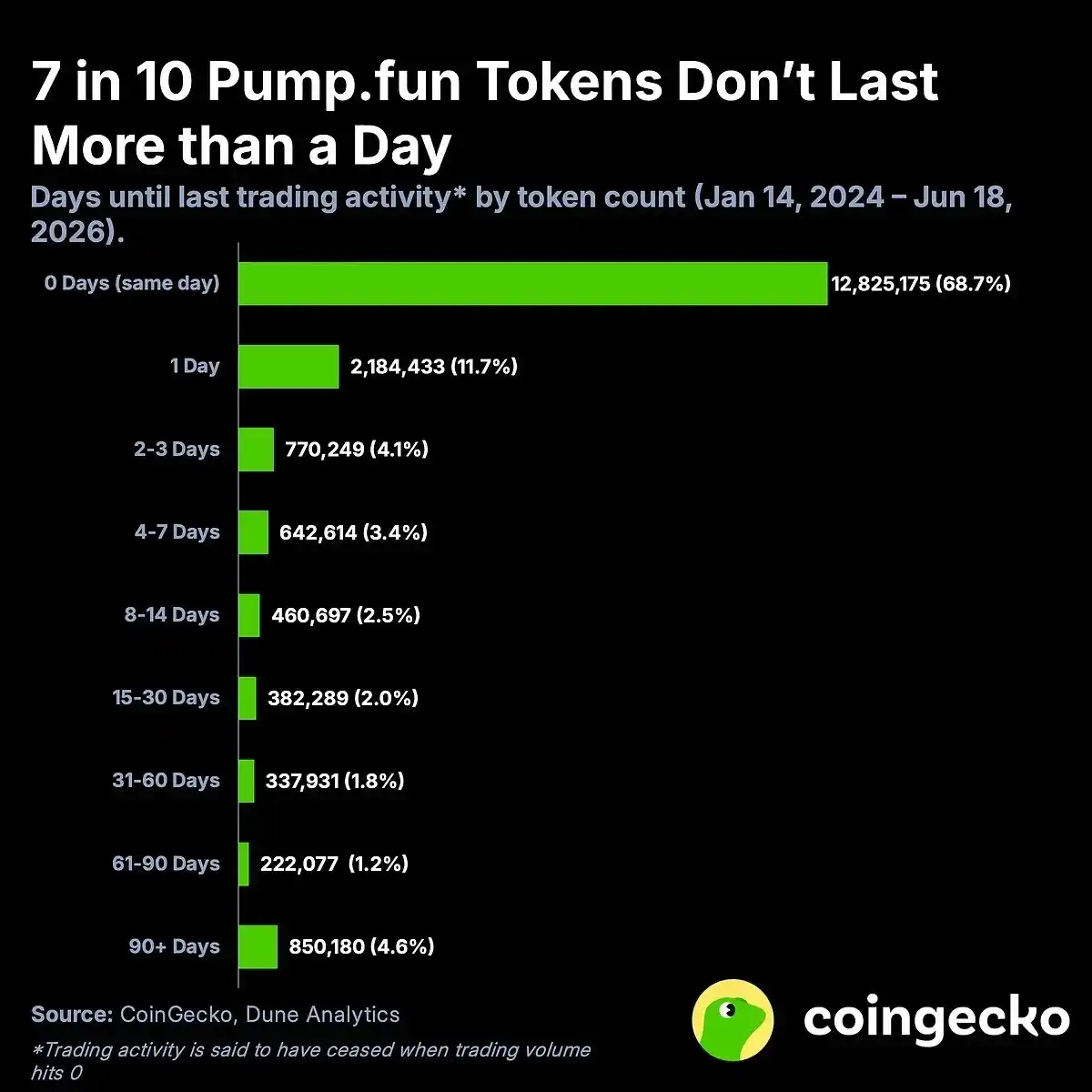
@Coingecko

From January–July 2026, the protocol's fee revenue nearly halved compared to the same period last year, reaching only $420 million. Despite this, it remains one of the crypto industry's most revenue-generating protocols, with annual revenue of $620 million and a net profit of $584 million last year.

Hyperliquid is another platform of this type. It initially focused on high-leverage cryptocurrency trading, catering to traders' directional bets. Later, it extended the leveraged trading model to various assets for round-the-clock trading, unrelated to crypto. Under the HIP-3 governance framework, the platform has now launched perpetual contracts for Nvidia, Tesla, Nasdaq tracking products, gold, crude oil, silver, stock indices, and more. When oil-related news breaks on a Sunday, traders can immediately take positions, while traditional markets wait until Monday to open.

In early July, the platform's real-world asset perpetual contract volume historically surpassed cryptocurrency trading for the first time, accounting for 52% of total volume.

Although Hyperliquid's overall trading volume has shrunk by nearly half from its 2025 peak, growth in real-world asset trading has offset the decline in crypto trading pairs. This is precisely the value speculation can create: Hyperliquid migrated the leverage trading model that attracts native crypto users to assets like gold, pre-IPO company equity, and stock indices, building a new round-the-clock pricing layer. Many traditional trading platforms are now emulating this model.

Robinhood Chain is replicating this development path in real-time.

Although the team positions this public chain as underlying infrastructure for on-chain stock trading, CEO Vlad Tenev is happy with the traffic brought by Meme coin traders.

"We built Robinhood Chain with the goal of being the best public chain for real-world asset trading... but it's also excellent for trading Meme coins."

Riding the wave of Meme coin trading, the chain surpassed Base chain in daily active users within three weeks of launch. The traffic and capital from Meme coin trading serve as the seed capital for the future development of the on-chain stock trading system.

Of course, this doesn't guarantee that speculation will inevitably upgrade into a mature business. Whether this transformation can be completed depends on the platform's own choices.

Robinhood, with 30 million funded users and multiple business lines, has strong distribution capabilities that could potentially convert the traffic from Meme coin trading into a user base for on-chain securities trading. We can see that its Q2 prediction market revenue skyrocketed over tenfold year-over-year to $156 million, accounting for 20% of the platform's total trading revenue.

The Nature of Speculation

Many still fail to understand speculation. Speculation itself is neither absolutely good nor bad. Stripped of all labels, speculation is simply one of humanity's oldest instincts.

When people convert their views into financial bets, speculation is naturally born.

In its most primitive form, speculation is the search for liquidity to price an asset; wherever liquidity flows, it prices that asset. The asset can be a sack of wheat, Nvidia stock, a frog video named frong.mp4, the outcome of a football match, or the probability of a presidential candidate winning.

The attributes of the underlying asset itself determine the direction and boundaries of speculation. Once speculation loses the support of a valuable underlying asset, the hype generated by the same capital ultimately struggles to precipitate long-term, valuable outcomes. This rule runs through the history of finance, and the crypto industry is treading the same path.

Hyperliquid tied leverage trading to assets like gold, building a new pricing system in just two years; Robinhood leverages the unexpected traffic from Meme coin speculation to simultaneously build the underlying channels for on-chain securities trading.

What kind of system speculation ultimately constructs depends on how much value the underlying asset can bear.


Crypto di tendenza

Domande pertinenti

QAccording to the article, how does the author view the role of speculation in the evolution of financial markets?

AThe author argues that speculation can serve as a foundational layer for future, more mature financial infrastructure. While often criticized, speculation aggregates liquidity, which can later be leveraged to build sustainable and compliant business models, such as price discovery systems or asset trading platforms.

QWhat historical example does the author use to illustrate the positive function of speculation?

AThe author cites the 19th-century Chicago grain market. Speculators provided the necessary liquidity and counterparty risk-taking in the newly created futures market, which allowed farmers to hedge their price risks. This speculative activity was crucial in establishing Chicago as a global wheat pricing center.

QHow does the Hyperliquid platform demonstrate the transition from pure speculation to a valuable financial infrastructure?

AHyperliquid started as a high-leverage crypto trading platform. By extending its perpetual contract model to non-crypto assets like stocks (Nvidia, Tesla), indices, and commodities (gold, oil), it created a 24/7 pricing layer. The article notes that trading volume for these real-world assets now surpasses its crypto volume, showing how speculative crypto capital helped build a broader asset pricing system.

QWhat is the connection between Meme coin trading and Robinhood Chain's long-term ambitions?

ARobinhood Chain was initially built to facilitate tokenized stock trading for its users. However, the massive influx of users and liquidity from Meme coin trading (e.g., via the Uniswap Pools launch) provided unexpected seed capital and user traffic. Robinhood aims to channel this speculative activity to support the development of its core infrastructure for on-chain securities trading.

QWhat key factor determines whether speculative activity can lead to sustainable business development, according to the article's conclusion?

AThe decisive factor is the underlying asset or subject of the speculation. Speculation must be anchored to a valuable underlying asset to have a positive, lasting impact. The nature and value-carrying capacity of the underlying asset define the direction and boundaries of what the speculative activity can eventually build (e.g., gold vs. a fleeting meme).

Letture associate

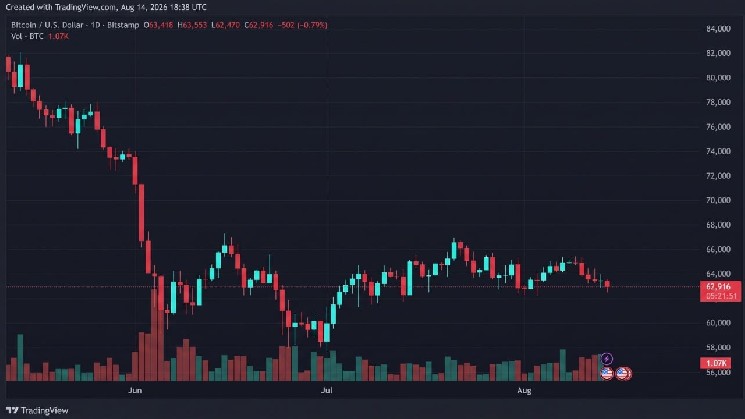
Bitcoin Price Drops to $62,470 as Sellers Retest $63,000 Support Level

Bitcoin's price fell below $63,000 for a second consecutive day on Friday, hitting an intraday low of $62,470. The cryptocurrency later recovered to trade just above $63,000, leaving it nearly flat for the past 24 hours and for August overall, with a weekly loss of 2.6%. The volatility triggered significant liquidations, with $26 million of leveraged long Bitcoin positions liquidated over 24 hours. Market sentiment was further dampened by data showing over $131 million in outflows from spot Bitcoin ETFs for a second straight day, signaling a potential pullback by institutional investors. Adding to the negative pressure, index provider MSCI has proposed new criteria for "non-operating companies" in its global indexes, which could lead to the exclusion of firms holding significant digital assets like Bitcoin on their balance sheets. Companies such as Strategy and Metaplanet could be affected, potentially forcing index-tracking funds to sell their shares. Strategy publicly criticized the proposal, arguing digital assets are legitimate assets and index providers should not dictate what companies can own. Public consultations on MSCI's proposal end September 30, with a final decision expected by October 16. If approved, exclusions could begin in November, potentially triggering sustained institutional selling and damaging a key bridge for Bitcoin adoption in the corporate sector.

cryptonews.ru1 h fa

Bitcoin Price Drops to $62,470 as Sellers Retest $63,000 Support Level

cryptonews.ru1 h fa

Trading

Spot

Articoli Popolari

Cosa è MEME 2.0

Memecoin 2.0: L'Ascesa di $MEME 2.0 nel Mondo delle Criptovalute Introduzione Nel panorama in continua evoluzione delle criptovalute, è emerso un nuovo contendente. Memecoin 2.0, simboleggiato come $MEME 2.0, porta il concetto di meme coin a un livello emozionante. Come prodotto derivato dal Memecoin originale, questo progetto ha catturato l'attenzione della comunità crypto spostando il focus da incentivi finanziari tipici a un'esperienza coinvolgente e divertente. Operando sulla blockchain di Ethereum, Memecoin 2.0 ridefinisce audacemente l'impegno della comunità nella sfera crypto. Che cos'è Memecoin 2.0, $MEME 2.0? Alla base, Memecoin 2.0 è un progetto di criptovaluta che dà priorità allo spirito di comunità e al divertimento associato alla cultura meme. A differenza delle criptovalute convenzionali, che si concentrano su casi d'uso pratici e benefici tangibili, Memecoin 2.0 si distingue abbracciando il lato più leggero della moneta digitale. Il progetto esiste senza promesse di utilità, una roadmap strutturata o ritorni finanziari, concentrandosi invece sulla creazione di una comunità vibrante incentrata sui meme e sul divertimento condiviso. Facendo così, attinge alla crescente tendenza della cultura meme nello spazio online, rendendola un giocatore unico nel mondo degli asset digitali. Creatore di Memecoin 2.0, $MEME 2.0 Nonostante ricerche approfondite sulle origini di Memecoin 2.0, l'identità esplicita del suo creatore rimane sconosciuta. Questa anonimità non è rara nella comunità crypto, dove molti progetti sono guidati da individui o gruppi che preferiscono rimanere dietro le quinte. La mancanza di informazioni pubblicamente disponibili sul creatore potrebbe essere vista come una mossa strategica, mettendo in evidenza l'impegno della comunità piuttosto che la notorietà individuale all'interno dello spazio. Investitori di Memecoin 2.0, $MEME 2.0 Le informazioni riguardanti gli investitori o il supporto finanziario per Memecoin 2.0 sono scarse. Questa assenza di dettagli potrebbe suggerire che il progetto sia autofinanziato o che il suo focus sulla comunità piuttosto che sulle strutture d'investimento tradizionali abbia attratto un tipo diverso di sostenitore. Poiché il mondo delle meme coin coinvolge tipicamente un maggior coinvolgimento di base piuttosto che investimenti istituzionali, questo approccio si allinea con l'etica dei progetti guidati dalla comunità. Come funziona Memecoin 2.0, $MEME 2.0? Memecoin 2.0 opera interamente sulla blockchain di Ethereum, capitalizzando le sue robuste caratteristiche di sicurezza e scalabilità. Sfruttando i punti di forza di Ethereum, Memecoin 2.0 può offrire un ambiente sicuro per le interazioni degli utenti garantendo che le transazioni siano sia efficienti che convenienti. Uno degli attributi unici di Memecoin 2.0 risiede nella sua struttura guidata dalla comunità. Il valore e la popolarità del token $MEME 2.0 derivano dalla partecipazione attiva dei suoi utenti, piuttosto che dalla utilità intrinseca. Questo design rinforza il focus del progetto sull'aspetto dell'intrattenimento delle criptovalute, implicando che la risata e l'impegno della comunità siano le vere monete che guidano il suo successo. Inoltre, il progetto si inserisce all'interno dell'ecosistema più ampio delle meme coin, dove il valore di ciascuna meme coin oscilla in base alla cultura, alle tendenze e all'impegno della comunità piuttosto che ai principi economici tradizionali. Cronologia di Memecoin 2.0, $MEME 2.0 Per comprendere meglio l'evoluzione e le pietre miliari di Memecoin 2.0, ecco una cronologia che evidenzia eventi significativi nella sua storia: 2024: L'inizio di Memecoin 2.0 è riconosciuto come un ramo del Memecoin originale, affermandosi all'interno del contesto fiorente delle meme coin mentre opera sulla blockchain di Ethereum. 13 luglio 2024: Memecoin 2.0 si posiziona ufficialmente come una meme coin incentrata sulla comunità sulla rete Ethereum, enfatizzando il suo approccio centrato sull'intrattenimento che invita gli utenti a impegnarsi e partecipare alla sua crescita. Punti Chiave su Memecoin 2.0, $MEME 2.0 Diverse caratteristiche critiche definiscono Memecoin 2.0: Approccio Centrico alla Comunità: La missione principale di Memecoin 2.0 è creare un'esperienza comunitaria divertente e coinvolgente, capitalizzando il piacere collettivo derivante dalla cultura memetica. Costruita su Ethereum: Operare sulla blockchain di Ethereum fornisce al progetto un'infrastruttura essenziale che garantisce sicurezza e scalabilità. Mancanza di Utilità o Roadmap: In una marcata deviazione dalle criptovalute tradizionali, Memecoin 2.0 non promette alcuna caratteristica utilitaria o ritorni finanziari, riaffermando il suo impegno per il coinvolgimento della comunità e l'impegno sociale. Focus sulla Cultura Memetica: Abbracciando gli aspetti umoristici e culturali del fenomeno meme, Memecoin 2.0 offre una piattaforma per gli utenti per interagire con la crypto offline e online. Ulteriore Contesto: L'Importanza delle Meme Coin Le meme coin sono emerse come una classe distinta di criptovaluta, spesso guidata dall'umorismo e da un approccio spensierato al trading. Queste monete generalmente mancano di significative utilità o roadmap di sviluppo, attirando gli utenti con la promessa di divertimento, interazione comunitaria e rilevanza culturale. Nel panorama del più ampio ecosistema crypto, le meme coin rianimano l'importanza dell'impegno della comunità, opponendosi ad approcci esclusivamente orientati al profitto. Progetti come Memecoin 2.0 danno il via a un'era in cui l'intrattenimento può armonizzarsi con le aspirazioni finanziarie, trasformando la blockchain in un parco giochi per la creatività e l'interazione sociale. Conclusione Memecoin 2.0, o $MEME 2.0, incarna una nuova ondata di criptovaluta che dà priorità all'impegno della comunità rispetto a rigidi strutture finanziarie. Con un focus sull'umorismo e l'interazione sociale, capitalizza sulla fascinazione circondante la cultura meme. Operando sulla blockchain di Ethereum, Memecoin 2.0 sfrutta le capacità della tecnologia mantenendo fermo il suo impegno per il valore ricreativo della valuta digitale. Mentre lo spazio delle criptovalute continua a evolversi, Memecoin 2.0 serve come testimonianza della nozione che il futuro degli asset digitali potrebbe ben dipendere da esperienze condivise, risate e solidi legami comunitari. Nel mondo imprevedibile delle crypto, forse la gioia può essere altrettanto preziosa quanto il guadagno finanziario tradizionale.

187 Totale visualizzazioniPubblicato il 2024.04.04Aggiornato il 2024.12.03

Cosa è MEME 2.0

Come comprare MEME

Benvenuto in HTX.com! Abbiamo reso l'acquisto di Memeland (MEME) semplice e conveniente. Segui la nostra guida passo passo per intraprendere il tuo viaggio nel mondo delle criptovalute.Step 1: Crea il tuo Account HTXUsa la tua email o numero di telefono per registrarti il tuo account gratuito su HTX. Vivi un'esperienza facile e sblocca tutte le funzionalità,Crea il mio accountStep 2: Vai in Acquista crypto e seleziona il tuo metodo di pagamentoCarta di credito/debito: utilizza la tua Visa o Mastercard per acquistare immediatamente MemelandMEME.Bilancio: Usa i fondi dal bilancio del tuo account HTX per fare trading senza problemi.Terze parti: abbiamo aggiunto metodi di pagamento molto utilizzati come Google Pay e Apple Pay per maggiore comodità.P2P: Fai trading direttamente con altri utenti HTX.Over-the-Counter (OTC): Offriamo servizi su misura e tassi di cambio competitivi per i trader.Step 3: Conserva Memeland (MEME)Dopo aver acquistato Memeland (MEME), conserva nel tuo account HTX. In alternativa, puoi inviare tramite trasferimento blockchain o scambiare per altre criptovalute.Step 4: Scambia Memeland (MEME)Scambia facilmente Memeland (MEME) nel mercato spot di HTX. Accedi al tuo account, seleziona la tua coppia di trading, esegui le tue operazioni e monitora in tempo reale. Offriamo un'esperienza user-friendly sia per chi ha appena iniziato che per i trader più esperti.

436 Totale visualizzazioniPubblicato il 2024.12.12Aggiornato il 2026.06.02

Come comprare MEME

Discussioni

Benvenuto nella Community HTX. Qui puoi rimanere informato sugli ultimi sviluppi della piattaforma e accedere ad approfondimenti esperti sul mercato. Le opinioni degli utenti sul prezzo di MEME MEME sono presentate come di seguito.

活动图片