$100,000 a Month, Trump Starts Selling 'Alpha'

Odaily星球日报Published on 2026-07-18Last updated on 2026-07-18

Abstract

Donald Trump's media company is reportedly planning to sell low-latency access to his Truth Social posts to institutional clients for up to $100,000 per month. This service would allow traders and investment firms to see his posts—often containing major policy announcements—a few seconds before the general public. In fast-moving financial markets, this brief time advantage is considered highly valuable, enabling subscribers to potentially profit from early reactions to market-moving statements. The report compares this "Trump Terminal" to traditional financial data services like Bloomberg Terminal, noting a key difference: while others aggregate and distribute information, Trump's service offers direct, privileged access to the source himself. This move is seen as the latest example of Trump commercializing his political influence and personal brand, following ventures into NFTs, meme coins, and other media products. The underlying premise is that his statements have repeatedly moved markets, making early access to them a tradable asset.

Original | Odaily Planet Daily(@OdailyChina)

Author | Azuma(@azuma_eth)
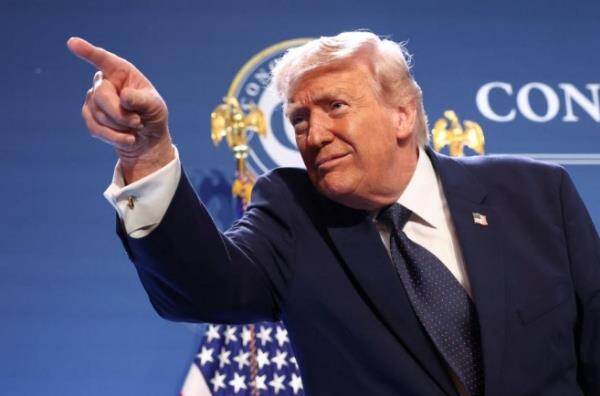
Trump has once again pulled off a "stunt" that defies public perception.

The Financial Times reports that Trump Media & Technology Group (TMTG) is exploring ways to commercialize the real-time news feed on its Truth Social platform, planning to offer low-latency data services to institutional clients for as much as $100,000 per month. Institutions purchasing this service will be able to access Trump's latest posts faster than regular users, to track policy signals, market sentiment, and the potential impact of political events.

The Time Advantage is the Most Valuable Thing in the Market

For investors focused on the U.S. market, Truth Social is not an ordinary social media platform. After the January 6th Capitol riot in 2021, Trump was banned from mainstream platforms like Twitter (now X) and Facebook. Subsequently, TMTG launched Truth Social, and Trump began using it as his primary channel for communication. Although Trump later regained his X account, his major policy statements on tariffs, trade, foreign affairs, regulation, and more are still often published first on Truth Social, gradually making it the primary source for global investors tracking Trump's movements.

Even so, this seems like an almost unbelievable business. After all, Truth Social is itself a public platform, and every post Trump makes becomes visible to everyone within seconds. Since the information is public, why would institutions be willing to pay such a high price for it?

The answer is actually quite simple. In financial markets, the most expensive thing has never been the information itself, but the time advantage of obtaining it earlier than others.

For the average user, seeing a post a few seconds earlier is almost meaningless. But for quantitative funds, high-frequency trading firms, and even some crypto trading teams, those few seconds can determine whether a trade results in profit or loss. When the market has become accustomed to repricing assets based on Trump's every move, whoever gets the information first has the chance to act first.

In other words, what TMTG is really selling is not a post, but a form of "Presidential Alpha."

The 'Trump Terminal' That Surpasses Bloomberg Terminal

In fact, TMTG is not the first to think of this business.

On Wall Street, selling real-time data is an extremely mature business model. Whether it's Bloomberg, Reuters, the New York Stock Exchange, or Nasdaq, they all have long provided paid data services to institutions. From corporate earnings reports and macroeconomic data to stock tick-by-tick trades and order book changes, these institutions can often access information earlier via dedicated lines or data interfaces with lower latency and higher stability.

Notably, what they sell is mostly not "exclusive news" — the vast majority of information is eventually made public to the entire market. What's truly valuable is that institutions can receive this information milliseconds, hundreds of milliseconds, or even seconds faster than others. This time advantage often translates to trading opportunities and can directly determine a strategy's profitability.

TMTG is doing the same thing, even taking it a step further — unlike traditional financial terminals like Bloomberg Terminal, which are merely collectors and distributors of information, Trump himself is the source. No matter how fast a Bloomberg Terminal is, it is essentially aggregating and transmitting market information; what TMTG is selling is exclusive priority access to every update Trump posts on Truth Social.

In other words, no matter how powerful the Bloomberg Terminal is, it's just a second-hand information broker, while the leader's "Trump Terminal" is absolute firsthand intelligence.

This Money, Only Trump Can Make

Theoretically, every U.S. president, as well as leaders of other major nations, possess a similar ability to influence markets.

From key official appointments to fiscal policies, from diplomatic maneuvers to war conflicts, a leader's words and actions can sway the pricing of global capital markets. But Trump is probably the only one to actually package this influence into a business and unabashedly sell it to Wall Street.

The crucial premise here is that Trump's firsthand information is truly valuable enough.

Over the past few years, Trump's Truth Social has become a critical information source for global investors. From tariff policies and trade negotiations to cryptocurrency regulation and Federal Reserve Chair selections, Trump's posts have repeatedly triggered sharp fluctuations in the stock market, the U.S. dollar, gold, and crypto markets. A series of trading strategies formed around expectations of Trump's policies, such as "Trump Trades" and "TACO Trades," further demonstrate that the market has long viewed his pronouncements as a tradable "market factor."

But the more important reason might be Trump himself. If past U.S. presidents largely viewed their political influence as a public resource, Trump is more accustomed to seeing influence as an asset that can be operated, amplified, and commercialized.

Looking back over recent years, from NFTs and meme coins to Truth Social, Truth.Fi, Trump Mobile, and now selling real-time Truth Social data services to institutions, the product forms have constantly changed, but the underlying logic has remained unchanged — continuously transforming the "Trump" IP into a commercial product that can be sold, subscribed to, and invested in.

For many traditional politicians, the presidency signifies power and necessitates maintaining a distance from commercial interests. In Trump's eyes, the two do not seem to have a natural boundary. As long as the market is willing to pay for influence, then influence itself can become a commodity.

In other words, Trump did not create the demand; rather, he realized earlier than anyone else that "presidential influence" itself is an asset that can be priced and sold.

Related Questions

QWhat service is Trump Media & Technology Group (TMTG) reportedly exploring, and how much does it cost?

ATMTG is exploring the commercialization of Truth Social's real-time feed by offering low-latency data services to institutional clients, with a reported price of up to $100,000 per month.

QWhy would institutional clients be willing to pay a high fee for access to Trump's posts on Truth Social a few seconds earlier than the public?

ABecause in financial markets, the time advantage of receiving information even a few seconds earlier can be critical for trading decisions. For quant funds, high-frequency trading firms, and crypto trading teams, this head start can determine the profit or loss of a trade, as markets often react to Trump's policy signals.

QHow does the proposed 'Trump Terminal' service differ from traditional financial data terminals like Bloomberg Terminal?

ATraditional terminals like Bloomberg Terminal aggregate and distribute market information from various sources, acting as secondary information distributors. In contrast, the 'Trump Terminal' offers exclusive priority access to Trump's posts directly from the source (Truth Social), making it a primary information channel.

QAccording to the article, what is the underlying logic behind Trump's various business ventures like NFTs, meme coins, and now the data service?

AThe underlying logic is the continuous commercialization of the 'Trump' IP. The article states that Trump consistently transforms his influence and personal brand into sellable, subscribable, and investable commercial products.

QWhat does the article suggest is unique about Trump's approach to presidential influence compared to other politicians?

AThe article suggests that while traditional politicians often view presidential influence as a public resource to be kept separate from business, Trump sees it as a commercially viable asset. He recognizes that 'presidential influence' itself can be priced and sold as a commodity if the market is willing to pay for it.

Related Reads

New Fire Group Chief Economist Fu Peng's Latest Speech: Crypto Assets Deeply Bound to Liquidity, Global Assets 'Shrink Circle' with Widening Divergence

The chief economist of Sinovation Group delivered a speech at Wiki Finance EXPO Hong Kong 2026, analyzing the global market through the lens of liquidity. He argues that all major assets, including cryptocurrencies, are fundamentally tied to global liquidity, which is now shifting from an era of extreme post-2008 ease to sustained tightening under new Fed leadership. This marks the end of widespread "asset flooding" and ushers in a "shrinking circle" dynamic: capital is abandoning speculative, low-quality assets and concentrating in a few high-conviction, value-driven core holdings. The only dominant global investment theme is AI, viewed as a 20-25 year productivity cycle. However, a critical inflection point has been reached in Q2, where major tech firms' free cash flow has turned negative. The market narrative has pivoted from rewarding pure capital expenditure growth to demanding proof of future revenue generation and returns. While the AI super-cycle's long-term thesis remains intact, the initial hardware-driven phase (e.g., Nvidia, memory chips) is maturing. The speaker warns of significant volatility risk not from industry fundamentals, but from excessive financial leverage built up in these "certain" assets. He emphasizes that investment strategy must evolve from broad diversification to focused, cyclical allocation within the AI value chain (upstream hardware, midstream, downstream applications), avoiding blind long-term holds on single names. For crypto, this liquidity paradigm shift means the era of speculative "air coin" mania is over; the market is maturing, with institutional participation increasing and volatility stabilizing for core assets like Bitcoin and Ethereum. The core takeaway is that understanding the top-down liquidity framework is essential for navigating the current era of market分化 and focused capital allocation.

链捕手3m ago

New Fire Group Chief Economist Fu Peng's Latest Speech: Crypto Assets Deeply Bound to Liquidity, Global Assets 'Shrink Circle' with Widening Divergence

链捕手3m ago

4 Hours, 118 Responses: Liang Wenfeng’s Internal Q&A Addresses Everything

**DeepSeek Founder Liang Wenfeng's Candid Reflections on the Company's Path to AGI** DeepSeek has recently completed its first external funding round, raising over 500 billion RMB (approx. $74B) at a pre-money valuation of 3.675 trillion RMB ($543B). Founder Liang Wenfeng personally invested 200 billion RMB. This marks a strategic shift from its initial "no financing, no IPO, no commercialization" principle. In a recent investor Q&A, Liang articulated DeepSeek's core philosophy and roadmap. The company is driven by a powerful, unwritten vision for beneficial AGI rather than pure commercial maximization. He emphasizes "strategic restraint"—avoiding unnecessary conflicts, prioritizing long-term AGI success over short-term gains, and maintaining an open, cooperative stance even with competitors. Liang outlined the AGI technical roadmap: current focus on Agent capabilities, followed by solving "continual learning," which he sees as the key to unlocking models that can learn and adapt like humans. This could lead to a gradual "singularity" where AI accelerates its own research, and eventually to embodied intelligence. DeepSeek will strictly focus on this "AGI mainline," avoiding distractions like video generation which, while commercially viable, don't directly advance core intelligence. He identifies team stability as the single most critical factor for success, now bolstered by the recent funding. While talent is not a bottleneck, the primary constraint compared to the US is compute resources. Liang is optimistic about domestic AI chips, stating that Nvidia's CUDA moat is eroding and that within a year, the viability of the Chinese chip ecosystem will be proven, with Huawei's offerings being key. The main issue is production capacity. On competition, Liang believes the final differentiators will be cost, time-to-market, and user experience. He foresees Chinese companies playing a major role by offering systematically lower-cost AI services globally. DeepSeek's commercialization strategy involves offering API services at a "reasonable profit" and focusing on coding Agents. He remains committed to open-sourcing even their strongest models, seeing no downside as the barriers to effective deployment remain high. The company operates with a unique dual management structure combining top-down direction with significant bottom-up, unstructured research time for employees. Data quality and post-training are identified as major current challenges, with half of core researchers involved in data labeling efforts. Liang concludes that DeepSeek aims to be one of several trillion-dollar companies in the AI era, achieved through extreme focus on its chosen path.

链捕手10m ago

4 Hours, 118 Responses: Liang Wenfeng’s Internal Q&A Addresses Everything

链捕手10m ago

After Three Consecutive Quarters of Decline, Can the Crypto Market Find a Window for Stabilization in Q3?

The cryptocurrency market has just concluded its worst-performing quarter since 2022, with total capitalization dropping 12.6% to $2.1 trillion. All core metrics indicate capital is leaving the sector, not just rotating within it. Bitcoin fell 14.2% and Ethereum dropped 25.4% in Q2, breaking their previous correlation with US tech stocks. A key driver is the reversal in US spot Bitcoin ETF flows, which saw a net outflow of approximately $4.67 billion in Q2, including a record monthly outflow near $4.5 billion in June. While recent data suggests long-term holders are accumulating again, sustained ETF outflows mean continued selling pressure. Market focus is now singularly on the Federal Reserve. The upcoming July FOMC meeting is seen as the most critical event for Q3. A dovish signal could support Bitcoin reclaiming a $68,000-$84,000 range, while a hawkish stance might establish a new trading band around $50,000-$56,000. Additionally, regulatory uncertainty persists, with the progress of the crucial *CLARITY Act* stalling in the Senate, reducing its perceived 2026 passage probability to 40-45%. Despite the broad downturn, a few sectors showed growth. Prediction markets saw nominal volume surge 48.7% year-over-year to $113.8 billion, and tokenized collectibles transaction volume rose 143% quarterly to $1.4 billion. The Real-World Asset (RWA) tokenization sector also continued steady growth, now representing ~$28.1 billion in on-chain value. The market's foundation for an extreme crash appears limited, with Bitcoin price hovering near its 200-week moving average. However, the trading paradigm has shifted from narrative-driven speculation to decisions based on price action, policy developments, and interest rate expectations, making a broad sentiment-driven rally unlikely in the near term.

marsbitYesterday 08:36

After Three Consecutive Quarters of Decline, Can the Crypto Market Find a Window for Stabilization in Q3?

marsbitYesterday 08:36

Trading

Spot
活动图片