More and More 'Model Supermarkets' Are Opening: ByteDance, Alibaba, and Tencent Compete to Integrate

marsbitОпубликовано 2026-04-24Обновлено 2026-04-24

Введение

Chinese tech giants like ByteDance, Alibaba, and Tencent are accelerating the rollout of integrated AI model subscription services—dubbed “model supermarkets”—to provide developers with bundled access to multiple leading domestic large language models (LLMs). ByteDance’s Volcengine recently upgraded its "Coding Plan" by adding newer models like GLM-5.1, Minimax M2.7, and Kimi k2.6, allowing subscribers to use various top models under a single monthly fee starting at ¥40. However, user feedback reveals significant issues, including rapid consumption of usage limits (e.g., hitting caps within hours), frequent server errors (like HTTP 429), and slow response times during peak hours. Complaints about misleading deduction rates—where calls to advanced models consume more quota—are also common. The trend is industry-wide: Alibaba, Tencent, and Baidu have all launched similar multi-model coding plans. While these platforms reduce trial costs for developers, they also expose challenges in balancing affordability with service quality and computational stability. Amid this shift, independent AI companies like Zhipu, MiniMax, and Moonlight Face (Kimi) are developing strategies to avoid becoming mere “pipes” in this ecosystem—focusing on vertical applications, autonomous agents, and long-context models to retain competitiveness. Analysts suggest that, while platform aggregation may pressure model firms in the short term, specialized and vertical AI capabilities will remain differentia...

ByteDance's Volcano Engine recently officially launched GLM-5.1 in its Coding Plan, with the official statement claiming "aligned with the original full capabilities, no purchase limits." Prior to this, Volcano's Coding Plan had long only offered older models like GLM-4.7. This update not only introduced GLM-5.1 but also integrated multiple latest domestic large models such as Minimax M2.7, Kimi k2.6, and DeepSeek-V3.2.
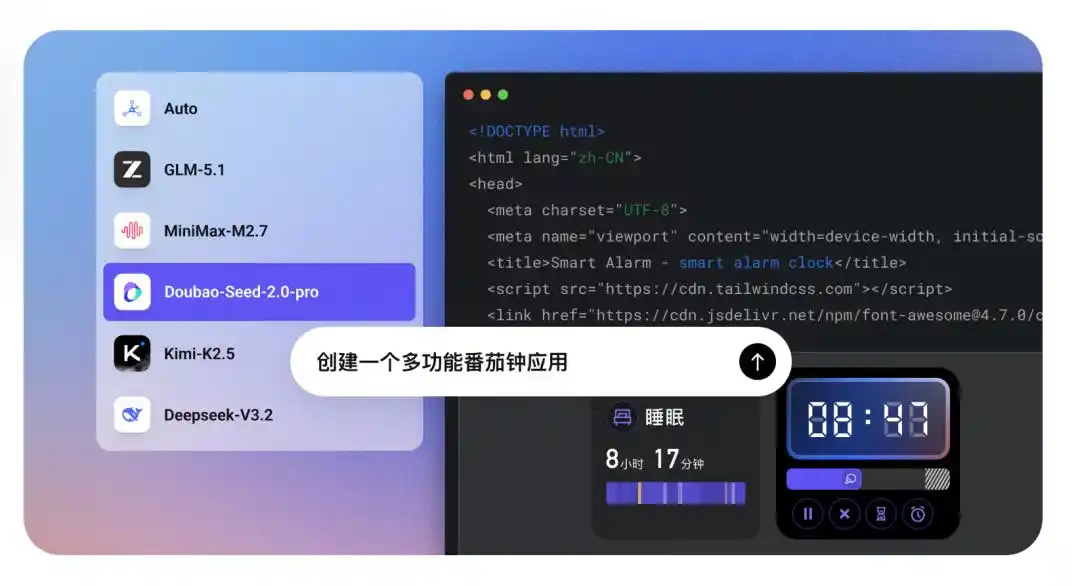
This means developers can call upon multiple leading models simultaneously with just one subscription fee. Market feedback indicates that this "bundled model" significantly reduces developers' trial-and-error costs. Currently, the Lite plan is priced at 40 yuan per month, and the Pro plan at 200 yuan per month, making many developers willing to "buy a spot first."

Zhipu's GLM-5.1 itself demonstrated impressive engineering capabilities in an update in early April 2026. In two official videos released by Zhipu, "Building a Linux Desktop from Scratch in 8 Hours" and "655 Iterations, Increasing Query Throughput of the Vector Database to 6.9 Times the Initial Official Version," it redefined public imagination regarding large models' "8-hour effective execution."

Journalist's On-the-Ground Visit to Developer Community: Majority of Users Report "Not Durable"

Upon entering a Volcano Coding developer exchange group, the journalist found that alongside posts sharing experience feedback, a large number of users reported a gap between expectations and actual experience. Scrolling through a few pages of the exchange community revealed numerous posts complaining and requesting refunds, with many netizens exclaiming "feel cheated."
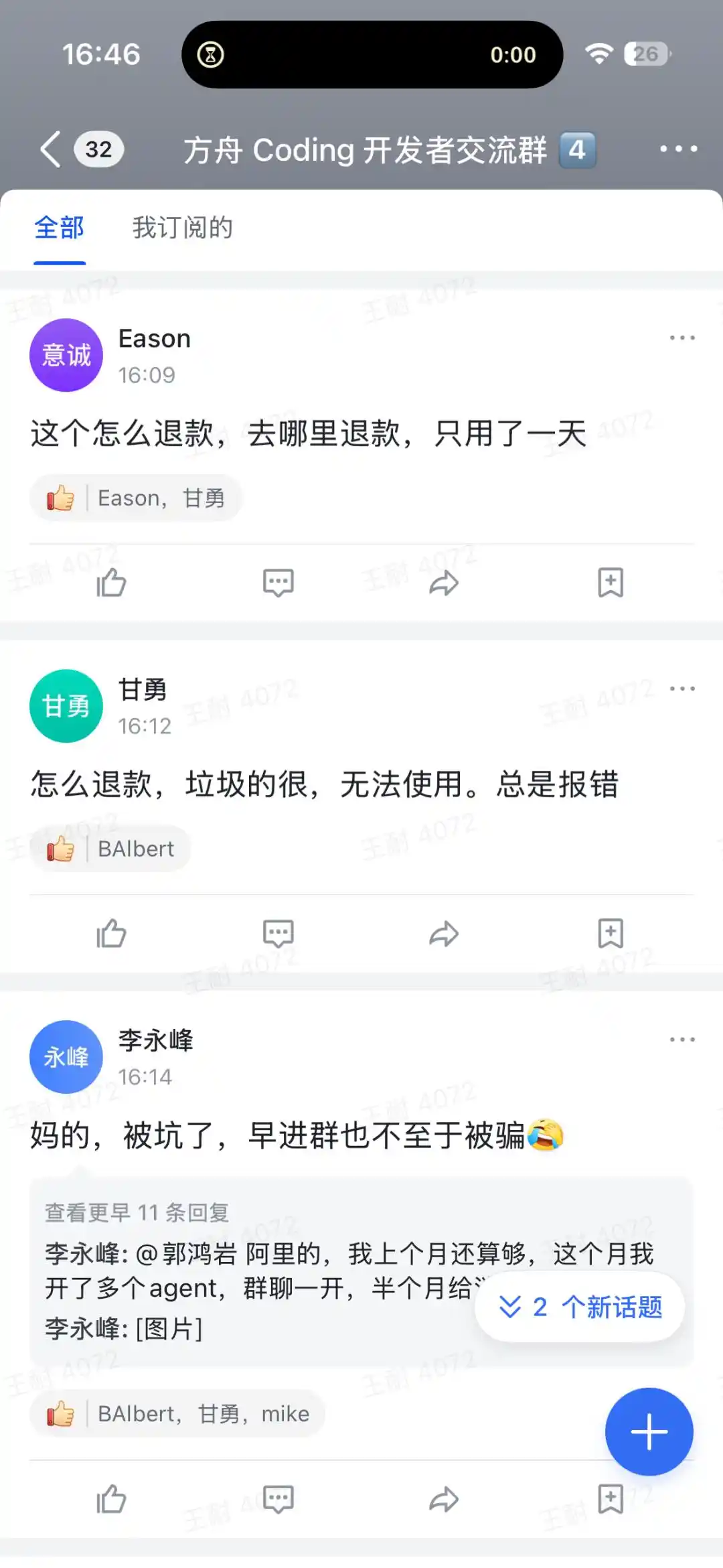
The controversies mainly focus on two points:

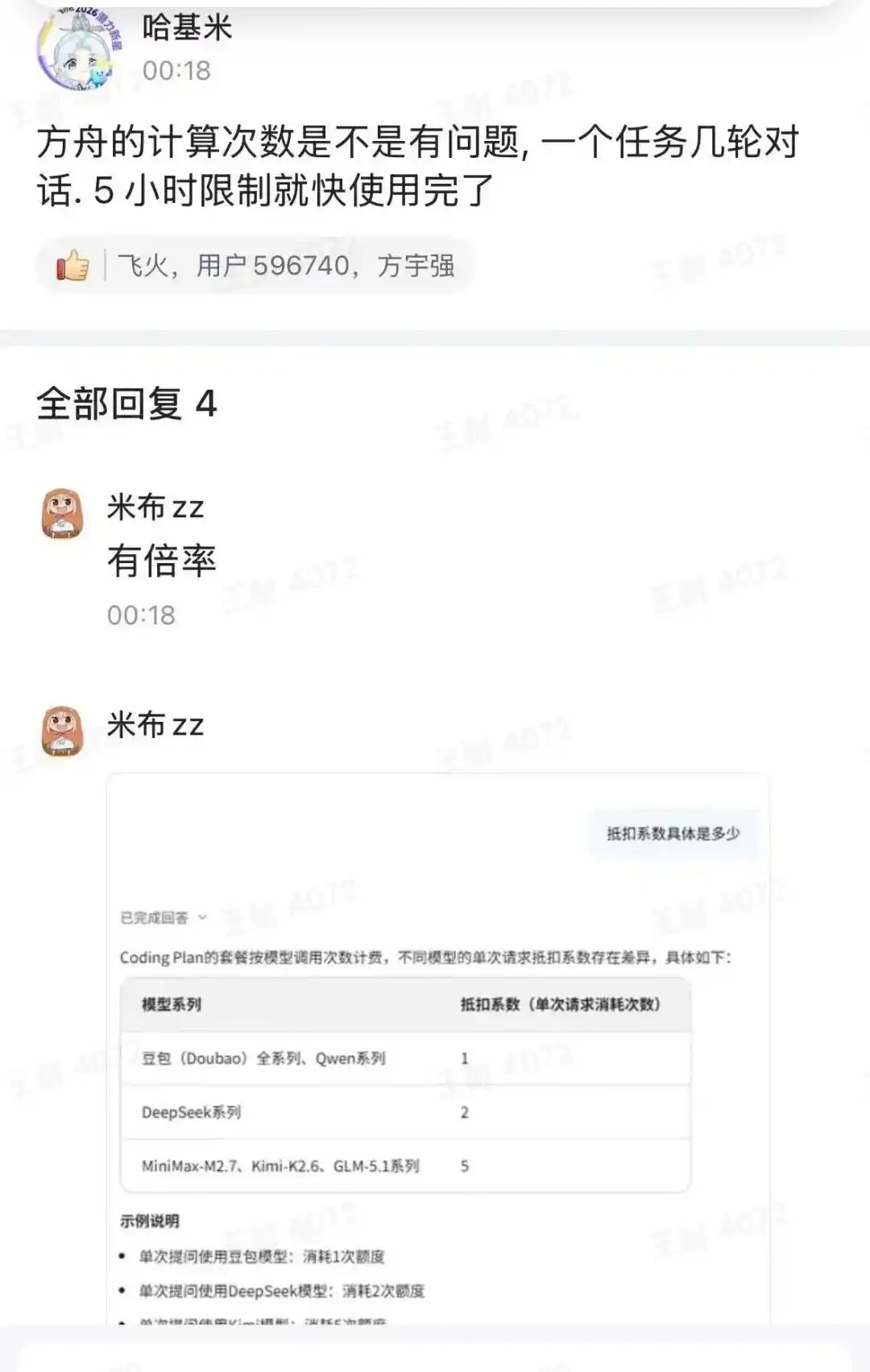
One is the issue of usage limits being consumed too quickly. A user named "Hakimi" posted saying "a few rounds of dialogue in one task and the 5-hour limit is almost used up." Another netizen shared that the reason their "5-hour limit was triggered" was because the account had a continuous sliding window over 5 hours, with the actual number of requests exceeding 6004, surpassing the system limit.
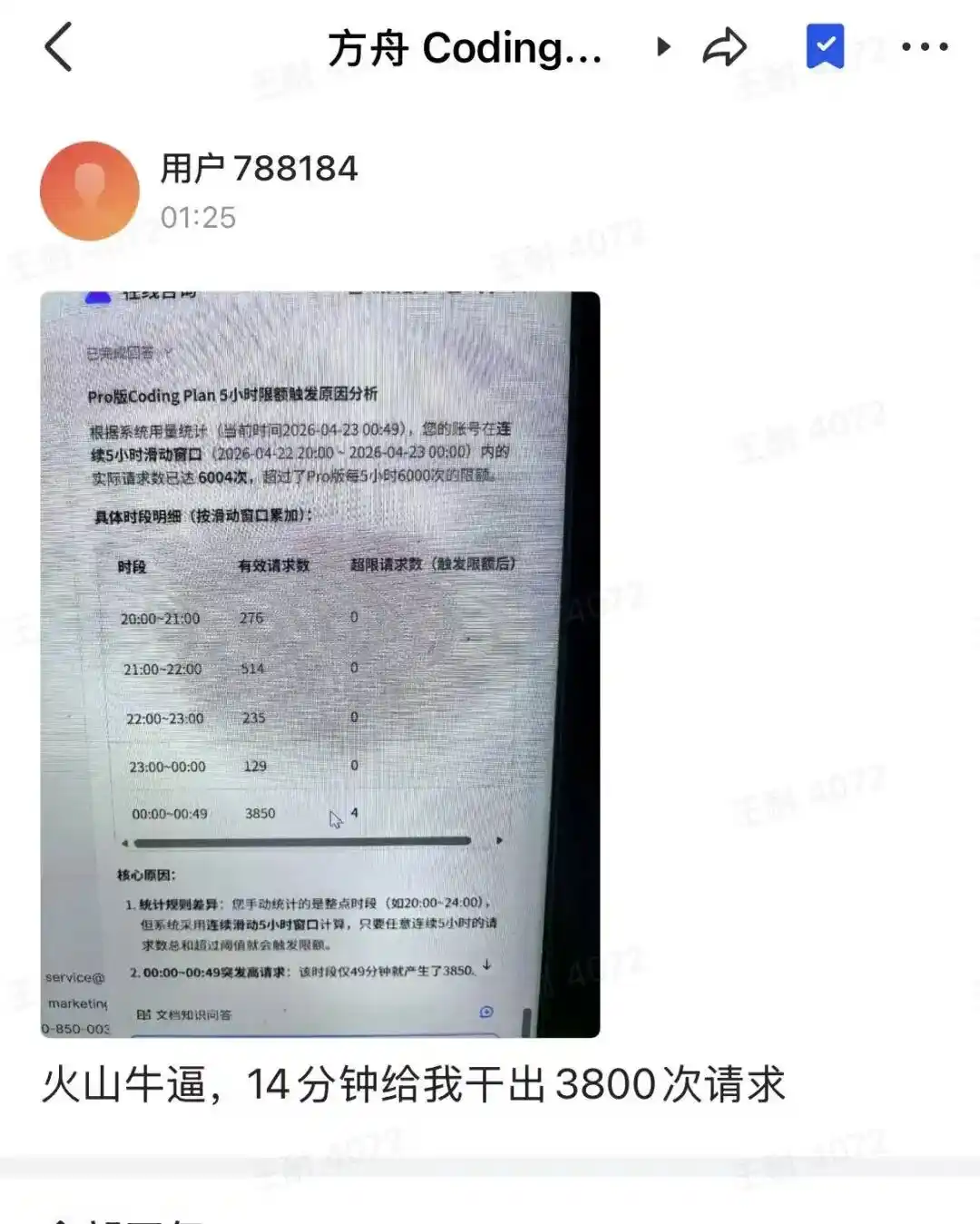
The second is the decline in experience due to computational resource scheduling pressure. Many users reported encountering 429 errors (too many requests) and "first-character delays of over one minute during peak hours being the norm." One user bluntly stated: "The 5-hour limit triggers too frequently, making it unusable for serious development."

Simultaneously, behind the low price of 40 yuan per month for the Coding Plan, there is also a hidden "undercurrent" regarding different deduction coefficients for "a single call request" within the plan. For example, a user posted an image in the developer exchange group showing the "differences in deduction coefficients for calling different models." For instance, the Doubao series and Qwen series have a deduction coefficient of 1, the DeepSeek series is 2, and the MiniMax-M2.7, Kimi-K2.6, and GLM-5.1 series are 5.
This also reflects that building a "model supermarket" is not as easy as imagined. Developers are attracted by the "cost-effectiveness," but the shortcomings exposed initially in areas like computational resource scheduling have caused many developers to hesitate after trying it out. This also reveals the growing pains of the "bundled model" in its early stages. As users flock in, the carrying capacity of the computing platform faces challenges. Finding a sustainable balance between attracting users with low prices and maintaining service quality will be a long-term challenge for Volcano Engine and its followers.

Cloud Vendors Collectively Shift to "Model Supermarkets": Initial Signs of Stratification and Solidification

This "integrative" update by Volcano Engine's Coding Plan is not an isolated incident.

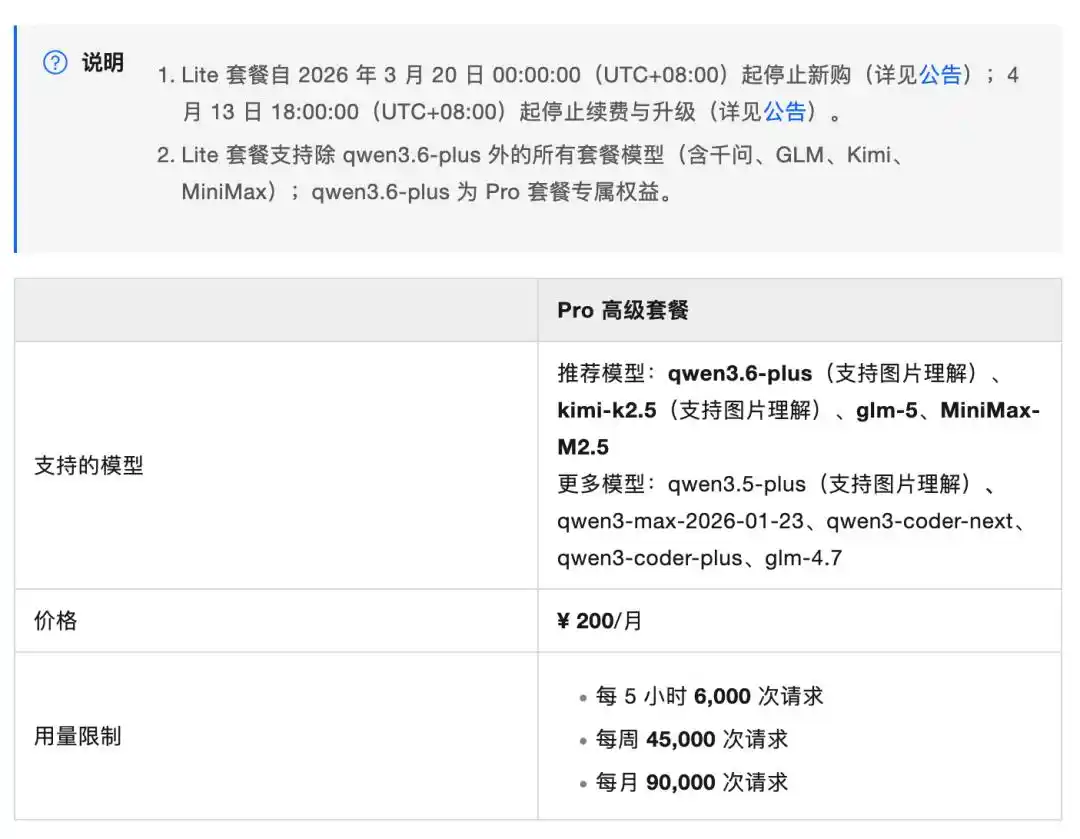
Since early 2026, mainstream cloud vendors like Alibaba Cloud, Baidu Intelligent Cloud, and Tencent Cloud have all been advancing multi-model integration layouts. For example, Alibaba Cloud, as an industry pioneer, earlier launched the multi-model subscription package "Bailian Coding Plan," currently supporting the Qwen series, kimi-k2.5, glm-5, MiniMax-M2.5, and other models. Currently, the Pro price is 200 yuan per month, and the Lite package stopped new purchases from March 20th and stopped renewals and upgrades from April 13th.
Tencent Cloud's large model Coding Plan subscription service was fully updated in March 2026, supporting multiple latest models including Tencent HY 2.0 Instruct, GLM-5, Kimi-K2.5, and MiniMax-M2.5. Baidu Qianfan officially launched its AI coding subscription service, Coding Plan, in February 2026, also one of the较早 (relatively early) domestic cloud vendors to offer such services.

The "model supermarket" model is not a choice of just one company but is becoming a track where cloud vendors are racing to layout. However, tearing open the aggregation strategy of cloud vendors, whoever can provide more stable services, more transparent quota rules, more flexible disaster recovery mechanisms, and whoever can extend beyond programming to more enterprise-level service capabilities, and whether the renewal rate can keep up, all become new core competitive factors.

Internationally, Amazon Bedrock and Microsoft Azure's model aggregation service platforms, though different in scenarios from the domestic Coding subscription model, belong to the same integration trend.
Overall, industry competition is shifting from "single model capability competition" to "platform integration capability + ecosystem service capability" competition, and industry concentration will rapidly increase.

Wang Kai, Chief Asset Allocation Analyst at Guosen Securities, told reporters that although industry differentiation is accelerating, judging the integration period might be slightly premature. "More accurately, this is the refinement and iteration of industry chain分工 (division of labor). Model vendors focus on algorithms, cloud vendors focus on engineering delivery, each leveraging their main business advantages." He believes that regardless of whether other cloud vendors follow suit, the competitive landscape will evolve from individual efforts to ecological niche differentiation.

Increased Pressure for Large Model Companies to Become "Pipelined"?

So-called "pipelining" does not mean model companies disappear, but rather that they lose product premium, user connection rights, and discourse power, with profits shifting towards the computing platform side, becoming a "dominated" role.

Under the aggregation wave of cloud vendors, "pipelining" is also becoming a Sword of Damocles hanging over the heads of independent large model companies. In this silent game, leading players like Zhipu AI, Moonlight Shadow (Kimi), and MiniMax have not chosen passive compromise but have grown from their genes, offering different breakout paths.

Zhipu AI CEO Zhang Peng, in a public dialogue on April 8th, clearly stated that Zhipu's ultimate goal is never to become a "replaceable calling tool" but to build a fully autonomous agent. This positioning attempts to upgrade Zhipu from a "model supplier" to a "task executor," thereby bypassing the low-price trap of pure API pipelines.

Moonlight Shadow (Kimi) adopts a strategy of "decentralized layout + deep cultivation of long text." It synchronously accesses multiple mainstream cloud platforms like Volcano Engine and Alibaba Cloud, achieving multi-source computational power supply, avoiding being bound to a single channel, and ensuring service stability and cost control. Kimi K2.6, launched in April 2026, adopts a Mixture of Experts (MoE) architecture with a standard context window of 256K tokens.

MiniMax focuses its core investments on vertical fields such as content creation, intelligent customer service, education, enterprise services, and entertainment socializing, with key layouts in scenarios like game AI, digital humans, and multimodal interaction, creating "customized capabilities difficult for cloud platforms to replace."
Will platform integration by major vendors accelerate the "pipelining" of model companies? Wang Kai, Chief Asset Allocation Analyst at Guosen Securities, believes it is necessary to distinguish between short-term and long-term perspectives.

"In the short term, distribution channels being controlled by the platform, partial ceding of pricing power, and profits of model vendors shifting to the entry point side are business norms. But in the long run, general models are prone to homogenization; deep learning models in vertical scenarios like finance, healthcare, and law have professional barriers that cannot be erased simply by centralized aggregation." he said.

In terms of responding to the risk of being platformized, strategies from OpenAI and Anthropic can be referenced. On one hand, strengthen channels that directly face end-users, such as the independent operation of ChatGPT and Claude, which essentially establishes user connections bypassing platforms. On the other hand, the speed of technological iteration and user brand recognition are two effective moats, so model companies need to balance R&D investment with productization layout.

The final outcome of this game of "pipelining vs. platformization" might not be about who eats whom, but a further clarification of division of labor. Cloud vendors act as pipes, model companies focus on technology, and both sides gradually find their respective survival boundaries in the game.

As for who eats whom, at this stage, it is far from the end of the story.

This article is from the WeChat public account "Sci-Tech Innovation Board Daily," author: Wang Nai

Трендовые криптовалюты

Связанные с этим вопросы

QWhat is the main advantage of ByteDance's Volcano Engine Coding Plan 'model supermarket' for developers?

AThe main advantage is that developers can access multiple leading domestic large models (like GLM-5.1, Minimax M2.7, Kimi k2.6, DeepSeek-V3.2) with a single subscription fee, significantly reducing trial-and-error costs.

QWhat are the two main complaints from developers about the Volcano Engine Coding Plan service?

AThe two main complaints are: 1) Usage limits being exhausted too quickly (e.g., a few rounds of dialogue using up the 5-hour limit), and 2) Performance issues like frequent 429 errors (too many requests) and long response delays during peak hours.

QWhich major cloud providers in China are also adopting the 'model supermarket' strategy mentioned in the article?

AMajor cloud providers adopting this strategy include Alibaba Cloud (with its 'Bailian Coding Plan'), Tencent Cloud, and Baidu Qianfan, all of which offer multi-model subscription services.

QWhat is the concept of 'pipelining' (管道化) as a risk for independent large model companies?

A'Pipelining' refers to the risk where independent model companies lose product pricing power, user connection rights, and discourse power. Their profits shift to the computing power platform providers, reducing them to a 'dominated' role as easily replaceable API tools.

QWhat strategies are companies like Zhipu AI, Moonshot (Kimi), and MiniMax adopting to avoid being 'pipelined'?

AZhipu AI aims to build fully autonomous agents to become 'task executors' rather than mere suppliers. Moonshot (Kimi) uses a multi-platform strategy and focuses on long-text capabilities. MiniMax invests heavily in vertical fields like content creation and gaming AI to build customized capabilities that are hard for platforms to replace.

Похожее

60-дневное окно снижает цены на нефть: почему рынок упал?

23 июня цены на нефть продолжали снижаться, Brent и WTI демонстрировали падение после значительного снижения накануне. Рынок сместил фокус с военных рисков на Ближнем Востоке на изменения в фактических поставках после временной договорённости между США и Ираном. Восстановление движения танкеров через Ормузский пролив, ключевой маршрут для нефтяных грузов, снизило опасения по поводу немедленных перебоев в поставках, что давит на цены. Временное соглашение между Вашингтоном и Тегераном, включающее 60-дневное окно для переговоров, также позволяет Ирану временно увеличить продажи нефти, ослабляя напряжённость на рынке. Однако этот период является переговорным, а не окончательным решением. Взаимное недоверие сторон означает, что риски, связанные с безопасностью судоходства и будущими санкциями, сохраняются. Хотя краткосрочные факторы снижают панические настроения, перспективы остаются неопределёнными. Низкий уровень стратегических нефтяных запасов США ограничивает возможности реагирования на потенциальные сбои. Рынок интерпретирует текущее снижение как ослабление, а не устранение рисков. Любые новые политические или операционные сбои в переговорах или судоходстве могут быстро вернуть премию за риск в цены на нефть.

marsbit9 мин. назад

60-дневное окно снижает цены на нефть: почему рынок упал?

marsbit9 мин. назад

Капитализация SK Hynix впервые за 26 лет превысила Samsung, корейские брокеры прогнозируют рост еще на 50%

**SK Hynix впервые за 26 лет превзошла Samsung по рыночной капитализации, аналитики видят потенциал роста в 50%** **Суть:** 22 июня рыночная капитализация SK Hynix достигла 208 трлн вон, впервые с 2000 года превысив показатель Samsung Electronics (207.3 трлн вон). Акции SK Hynix выросли в этом году на 342%, а Samsung — на 198%. **Ключевой драйвер — HBM и ИИ.** Рост обусловлен лидерством SK Hynix на рынке памяти HBM (70-80% доля), критически важной для ускорителей искусственного интеллекта, и заключением долгосрочных контрактов (LTA), которые снижают волатильность прибыли. **Целевая цена взлетает.** Аналитик Hanwha Investment & Securities резко повысил целевую цену на акции SK Hynix с 1,63 млн до 4,3 млн вон — самый высокий прогноз среди корейских брокеров. Аргумент: компания превращается из циклической в устойчиво прибыльную благодаря LTA и высокому спросу на HBM. Другие аналитики также активно повышают прогнозы. **Финансовые показатели.** В первом квартале 2026 года выручка SK Hynix впервые превысила 50 трлн вон, операционная маржа составила рекордные 72%. **Коррекция после роста.** 23 июня акции SK Hynix достигли 3 млн вон в предторговый период, но в ходе основных торгов упали более чем на 5% на фоне общей слабости рынка технологических акций. Некоторые предупреждают о возможной перекупленности, но крупные инвесторы рассматривают падение как возможность для покупки.

marsbit26 мин. назад

Капитализация SK Hynix впервые за 26 лет превысила Samsung, корейские брокеры прогнозируют рост еще на 50%

marsbit26 мин. назад

Цена аренды GPU упала на 30% за три недели, цепочка создания стоимости ИИ «мигрирует» от NVIDIA к чипам памяти

Заголовок: Цены на аренду GPU упали на 30% за три недели, цепочка создания стоимости ИИ переходит от Nvidia к чипам памяти. За три недели цена аренды ключевого чипа Nvidia B200 упала с 6,11 $/час до 4,22 $/час. Одновременно на рынке полупроводников наблюдается резкое расхождение: ETF SMH вырос на 15% за месяц, акции Micron и SanDisk взлетели почти на 60%, в то время как акции Nvidia упали примерно на 3%. Это указывает на сдвиг в цепочке создания стоимости ИИ: узким местом становятся не GPU, а чипы памяти. Падение цен на аренду B200 вызвано улучшением выходной годности на производстве TSMC, увеличением поставок HBM3e от SK Hynix и Micron, а также усилением конкуренции среди новых облачных провайдеров. Ожидается, что к четвертому кварталу 2026 года цена может стабилизироваться на уровне 2,50–3,00 $/час. Тем временем спрос на высокоскоростную память (HBM) для ИИ-моделей стремительно растет, что привело к взлету акций производителей памяти. Micron, чья выручка почти утроилась, и SanDisk демонстрируют рекордные результаты. Согласно TrendForce, контрактные цены на память в первой половине 2026 года выросли более чем на 100%. Аналитики, такие как Рич Привороцкий из Goldman Sachs, отмечают, что устойчивость цен на аренду — ключевой индикатор дефицита вычислительных мощностей. Их снижение ставит под сомнение прежние оценки для «верхнего» сегмента аппаратного обеспечения, в то время как компании, монетизирующие использование, находятся в более выгодном положении. Несмотря на падение спотовых цен, рынок долгосрочных контрактов остается горячим, о чем свидетельствует сделка SpaceX с Google на 300 млрд долларов. Однако наличие в контрактах условий досрочного расторжения говорит о растущей осмотрительности покупателей. Риск для Nvidia заключается не в спросе, который остается высоким, а в возможном ослаблении ценового давления. Прибыль может смещаться от производителей GPU к производителям памяти, где дефицит и цены остаются исключительно высокими. Отчет Micron, ожидаемый 24 июня, станет важной проверкой этой новой рыночной динамики.

marsbit35 мин. назад

Цена аренды GPU упала на 30% за три недели, цепочка создания стоимости ИИ «мигрирует» от NVIDIA к чипам памяти

marsbit35 мин. назад

От Corning до Ciena: возможности 10-кратного роста в цепочке оптоволоконной связи для ИИ

**Резюме: Инвестиционные возможности в цепочке оптических коммуникаций для ИИ: от Corning до Ciena** Перенос данных в ИИ-дата-центрах достигает физических пределов медных кабелей, что требует перехода на оптические технологии (фотонику). Этот переход создает инвестиционные возможности не только для известных компаний-производителей чипов, но и для ключевых поставщиков по всей цепочке создания стоимости. **Ключевые сегменты и компании:** 1. **Волокно и кабели:** **Corning** — лидер с уникальными технологиями, долгосрочными контрактами на миллиарды долларов с крупнейшими облачными гигантами (Meta, Amazon и др.) и растущей прибыльностью. 2. **Соединители и разъемы:** **Amphenol** — доминирующий поставщик высокоскоростных соединительных решений с сильным ростом в сегменте ИИ и эффектом масштаба. 3. **Системный уровень (оптические сети):** **Ciena** — лидер в области когерентной оптики, чьи решения позволяют увеличить пропускную способность существующих волокон, имея значительный портфель заказов. 4. **Ключевые материалы и тестовое оборудование:** * **AXT** — важный поставщик полупроводниковых подложек (фосфид индия) для лазеров, но с высокими рисками, связанными с производством в Китае. * **VEO Solutions** — поставщик тестового оборудования, необходимого для всей индустрии ("производитель лопат" в золотой лихорадке"). **Также упоминается:** **Credo Technology** как мост между медными и оптическими решениями (высокий рост, но высокая зависимость от нескольких клиентов). Для диверсифицированного подхода отмечен новый тематический ETF **FOTO**, фокусирующийся на фотонике. **Общий вывод:** Переход на оптические коммуникации в ИИ-инфраструктуре неизбежен и ускоряется. Основные выгоды, вероятно, получат не только "звездные" компании, но и критически важные поставщики по всей цепочке — от материалов и компонентов до систем и тестирования.

marsbit54 мин. назад

От Corning до Ciena: возможности 10-кратного роста в цепочке оптоволоконной связи для ИИ

marsbit54 мин. назад

Чип-компания выпускает стандарт сертификации AIDC для накопления энергии: какие права есть у NVIDIA? Пересмотр логики энергоснабжения через вычислительную мощность: кто вырывается вперёд, а кого оставляют за дверью?

Компания NVIDIA, известная как производитель графических процессоров, опубликовала «Руководство по самосертификации систем хранения энергии» (BESS) для центров обработки данных искусственного интеллекта (AI DC). Стандарт устанавливает 10 жестких и 12 проверяемых показателей, фокусируясь исключительно на испытаниях силовых преобразователей (PCS), а не на батареях. Основные требования включают: динамический отклик для буферизации ИИ-нагрузок, отсутствие колебаний при резких изменениях мощности, высокоскоростной опрос данных и предоставление детальных электромагнитных моделей. Этот шаг отражает растущую потребность AI DC в переопределении логики электроснабжения. С ростом энергопотребления ИИ-чипов (например, до 225 кВт на стойку в NVIDIA Vera Rubin) и мгновенными скачками нагрузки традиционные ИБП и дизельные генераторы становятся неэффективными. Хранилища энергии превращаются в активный, управляемый компонент сети, а не пассивное хранилище. Стандарт NVIDIA уже влияет на рынок. Компания Fluence, благодаря партнерству с Siemens, стала эксклюзивным поставщиком BESS в эталонном проекте AI DC для NVIDIA, что вызвало рост её акций. Прогнозируется, что к 2030 году AI DC создадут спрос на 321 ГВт·ч новых систем хранения ежегодно. Такие компании, как Sungrow, Trina Solar и Far East Cable, уже получают крупные заказы в этом сегменте. Однако новый стандарт создает высокий барьер для входа. Помимо технических требований, производители должны предоставить историю поставок PCS за 12 месяцев и реалистичный план увеличения производства в 10 раз за 24 месяца. Полный процесс сертификации, включающий тесты на безопасность, тепловое разгон и киберзащиту, может занять 1-2 года и стоить миллионы юаней. Это ставит мелких игроков в невыгодное положение и смещает конкуренцию в отрасли с цены и объема на превосходство в управлении, контроле и надежности поставок. Таким образом, NVIDIA, как компания, задающая требования к вычислительной мощности, теперь определяет и стандарты электроснабжения для её обеспечения, перерисовывая конкурентный ландшафт индустрии накопителей энергии.

marsbit1 ч. назад

Чип-компания выпускает стандарт сертификации AIDC для накопления энергии: какие права есть у NVIDIA? Пересмотр логики энергоснабжения через вычислительную мощность: кто вырывается вперёд, а кого оставляют за дверью?

marsbit1 ч. назад

Торговля

Спот
Фьючерсы

Популярные статьи

Как купить S

Добро пожаловать на HTX.com! Мы сделали приобретение Sonic (S) простым и удобным. Следуйте нашему пошаговому руководству и отправляйтесь в свое крипто-путешествие.Шаг 1: Создайте аккаунт на HTXИспользуйте свой адрес электронной почты или номер телефона, чтобы зарегистрироваться и бесплатно создать аккаунт на HTX. Пройдите удобную регистрацию и откройте для себя весь функционал.Создать аккаунтШаг 2: Перейдите в Купить криптовалюту и выберите свой способ оплатыКредитная/Дебетовая Карта: Используйте свою карту Visa или Mastercard для мгновенной покупки Sonic (S).Баланс: Используйте средства с баланса вашего аккаунта HTX для простой торговли.Третьи Лица: Мы добавили популярные способы оплаты, такие как Google Pay и Apple Pay, для повышения удобства.P2P: Торгуйте напрямую с другими пользователями на HTX.Внебиржевая Торговля (OTC): Мы предлагаем индивидуальные услуги и конкурентоспособные обменные курсы для трейдеров.Шаг 3: Хранение Sonic (S)После приобретения вами Sonic (S) храните их в своем аккаунте на HTX. В качестве альтернативы вы можете отправить их куда-либо с помощью перевода в блокчейне или использовать для торговли с другими криптовалютами.Шаг 4: Торговля Sonic (S)С легкостью торгуйте Sonic (S) на спотовом рынке HTX. Просто зайдите в свой аккаунт, выберите торговую пару, совершайте сделки и следите за ними в режиме реального времени. Мы предлагаем удобный интерфейс как для начинающих, так и для опытных трейдеров.

1.5k просмотров всегоОпубликовано 2025.01.15Обновлено 2026.06.02

Как купить S

Sonic: Обновления под руководством Андре Кронье – новая звезда Layer-1 на фоне спада рынка

Он решает проблемы масштабируемости, совместимости между блокчейнами и стимулов для разработчиков с помощью технологических инноваций.

2.3k просмотров всегоОпубликовано 2025.04.09Обновлено 2025.04.09

Sonic: Обновления под руководством Андре Кронье – новая звезда Layer-1 на фоне спада рынка

HTX Learn: Пройдите обучение по "Sonic" и разделите 1000 USDT

HTX Learn — ваш проводник в мир перспективных проектов, и мы запускаем специальное мероприятие "Учитесь и Зарабатывайте", посвящённое этим проектам. Наше новое направление .

1.8k просмотров всегоОпубликовано 2025.04.10Обновлено 2025.04.10

HTX Learn: Пройдите обучение по "Sonic" и разделите 1000 USDT

Обсуждения

Добро пожаловать в Сообщество HTX. Здесь вы сможете быть в курсе последних новостей о развитии платформы и получить доступ к профессиональной аналитической информации о рынке. Мнения пользователей о цене на S (S) представлены ниже.

活动图片