分析人工智能超级智能联盟(ASI)16%暴涨:FET将冲击0.30美元?

ambcryptoPublicado em 2026-03-24Última atualização em 2026-03-24

Resumo

在加密货币市场整体复苏的背景下,人工智能超级智能联盟(FET)出现强劲反转趋势。FET在守住0.20美元支撑位后强势反弹,日内涨幅达15.5%,最高触及0.239美元。此次上涨伴随AI板块普涨,市场资金重新流入人工智能概念代币。 链上数据显示,FET交易所净流出达-150万枚,交易所储备量降至3.84亿枚的年度新低,表明卖压减轻且买方需求旺盛。虽然散户买盘积极,但鲸鱼在0.20-0.22美元区间持续抛售形成阻力。技术指标显示FET已突破9日移动平均线,MACD指标持续走强,预示上涨趋势可能延续。 若买盘动能维持,FET可能突破0.25美元阻力并挑战0.30美元目标位。但鲸鱼抛售压力仍存,价格也可能回落至0.20-0.22美元区间寻求支撑。

在加密货币市场整体复苏的背景下,人工智能超级智能联盟(Artificial Superintelligence Alliance)实现了强劲的趋势逆转。经过一周的横盘整理,FET最终守住了0.20美元关口,并攀升至0.239美元的局部高点,随后小幅回调。

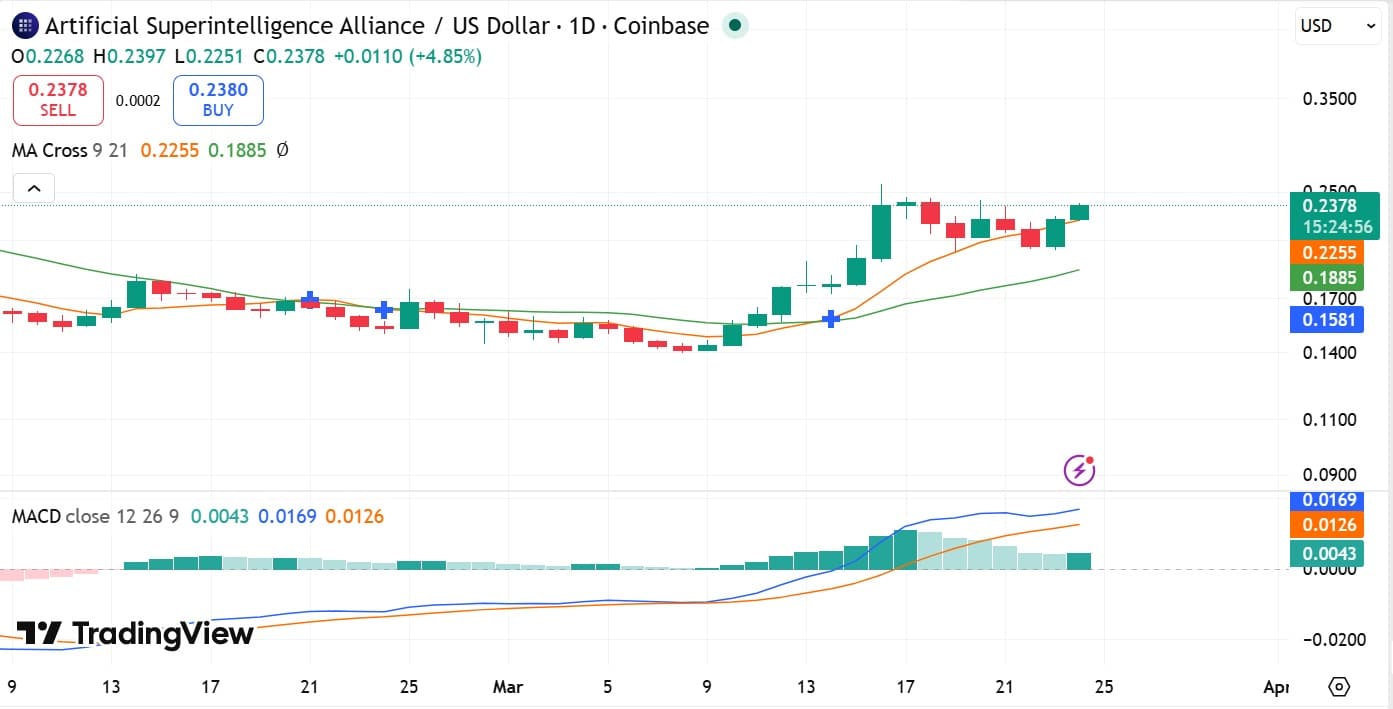
截至发稿时,人工智能超级智能联盟[FET]交易价格为0.238美元,日内涨幅达15.5%。随着价格上涨,该山寨币突破了其9日移动平均线,反映出强劲的上行动能。

随着AI代币大幅上涨,FET实现了全板块走强,包括TAO和Render在内的所有主要AI代币均出现反弹。

这表明市场对AI叙事重新显现积极情绪,推动大量资金涌入该板块。FET及其他AI代币经历了强烈的投机需求。

FET迎来资金轮动

在全行业资金轮动的背景下,随着后期买家涌入市场布局,FET出现大量资金流入。

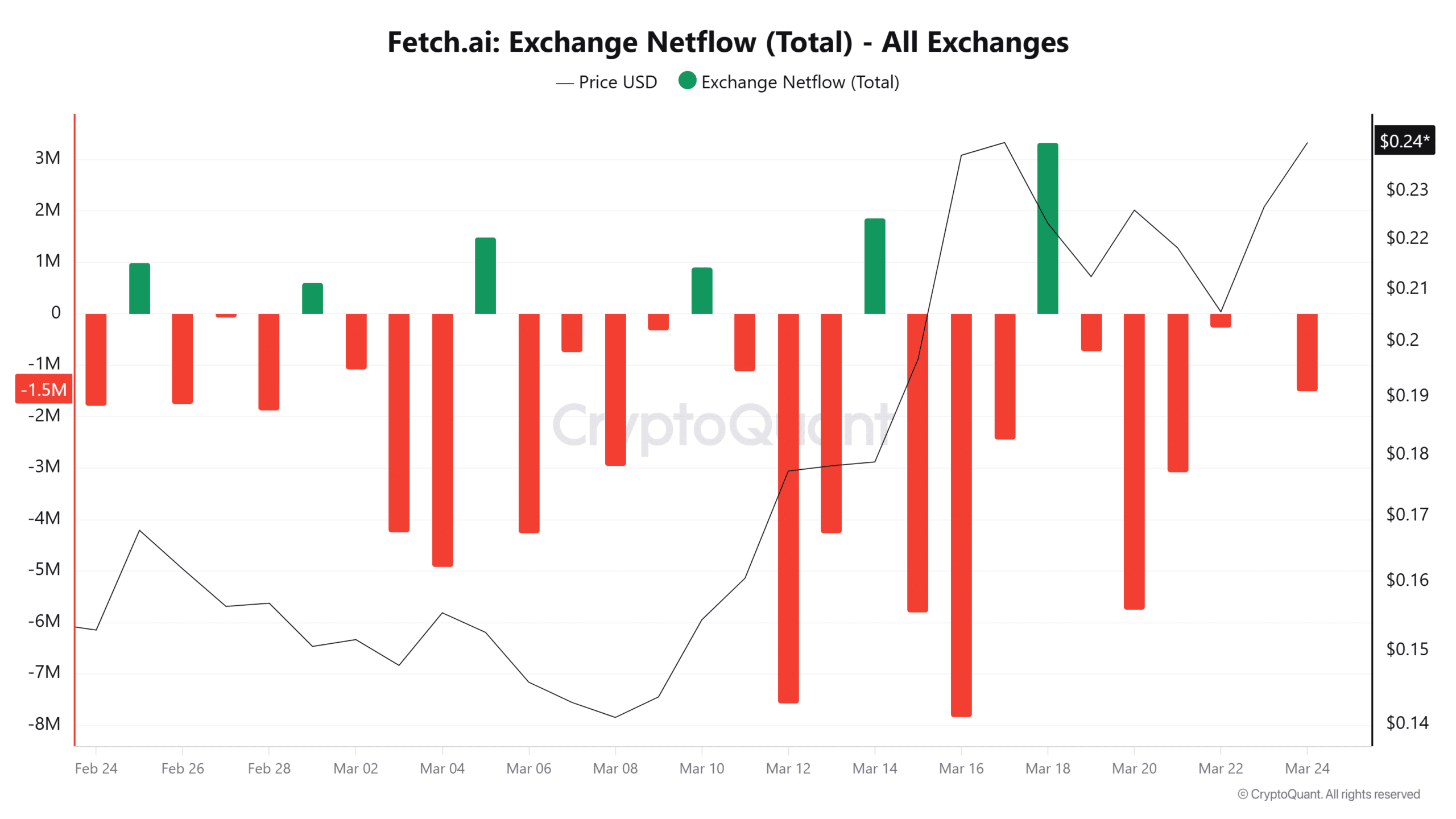
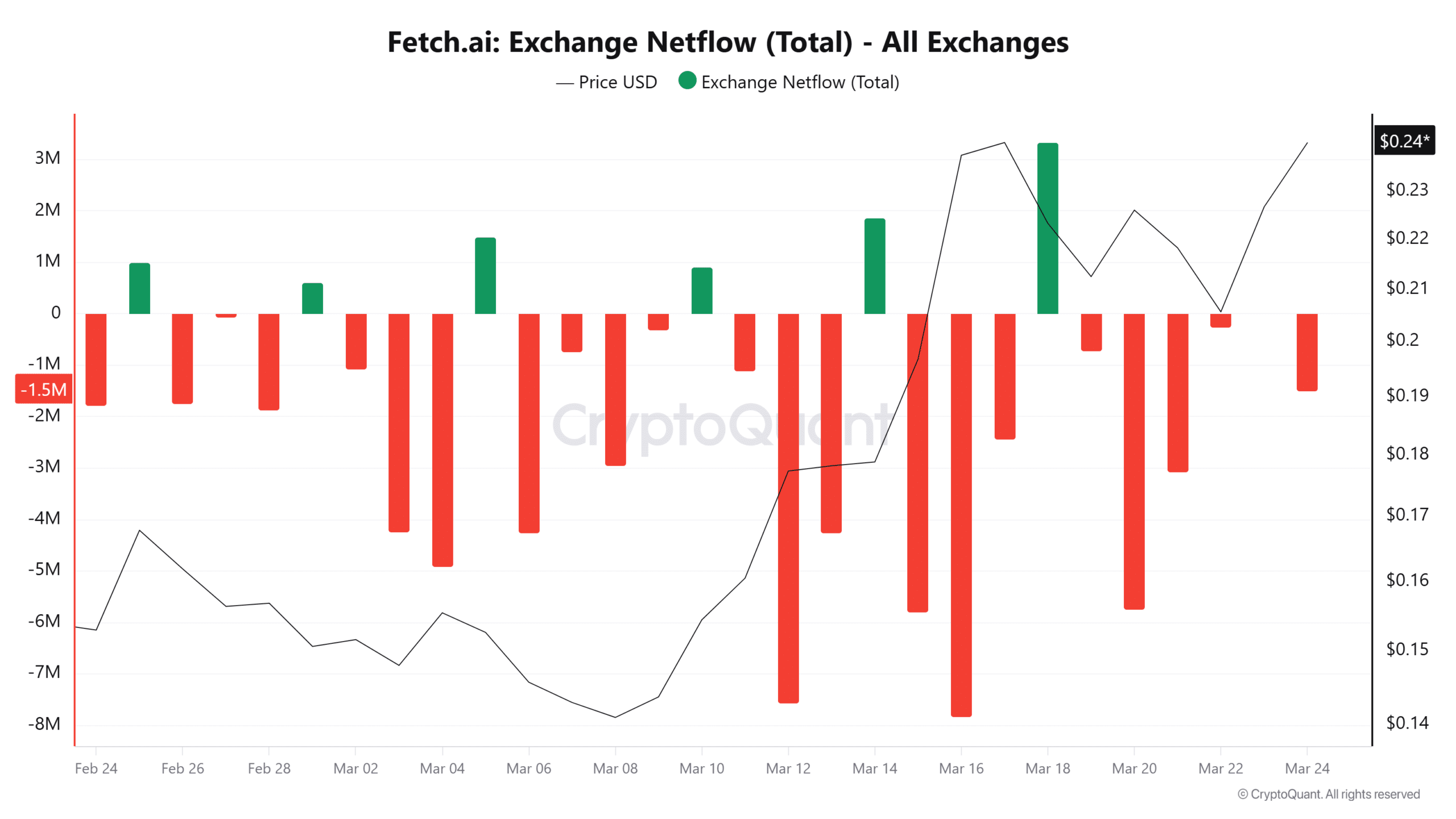
过去24小时内,超过1770万FET从交易所流出,而流入量为1620万。因此,该山寨币的交易所净流量降至-150万,较前一天的7千大幅下降。
来源:CryptoQuant

这种趋势逆转表明市场情绪发生显著转变,买家力量超过卖家。

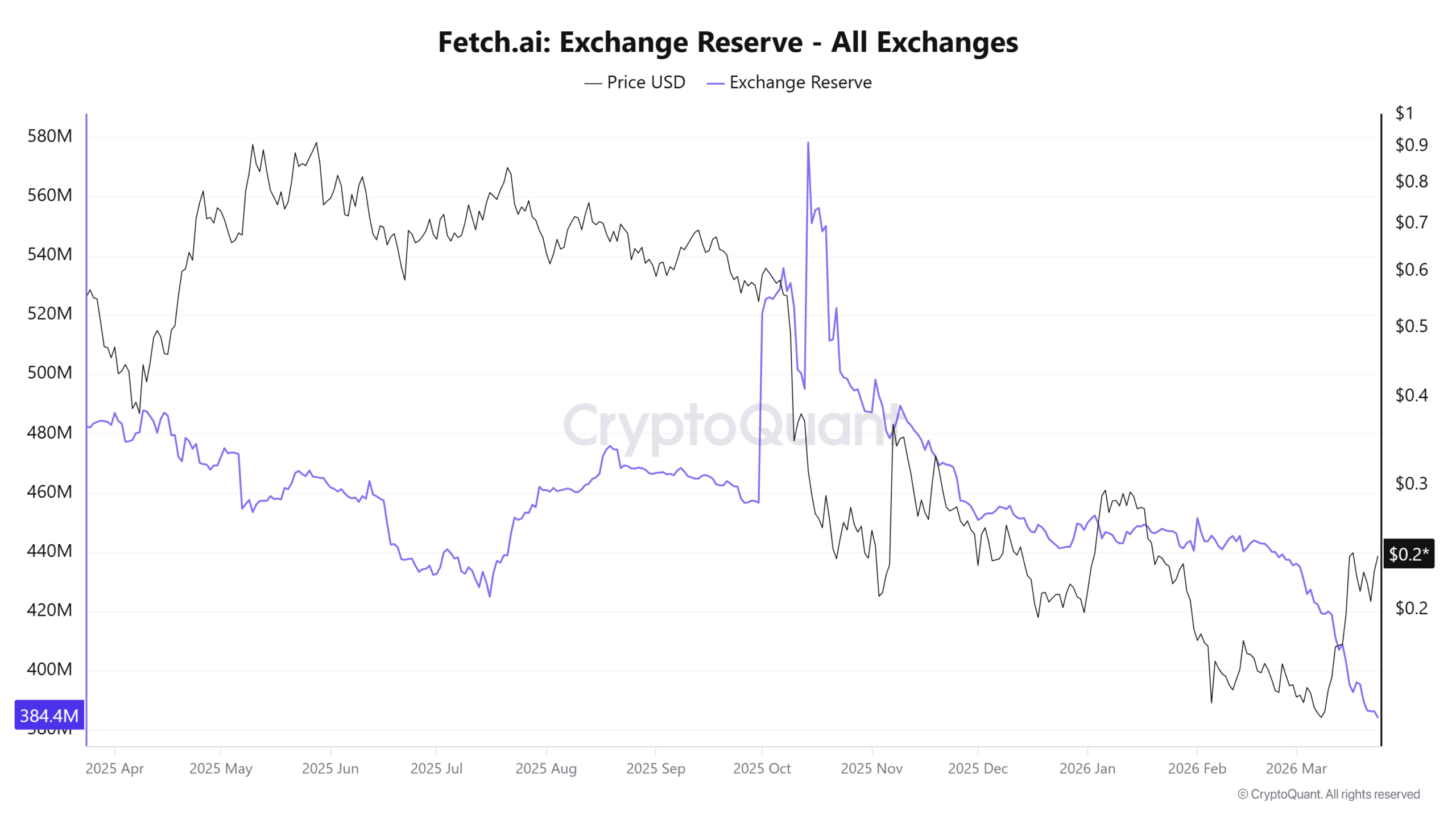
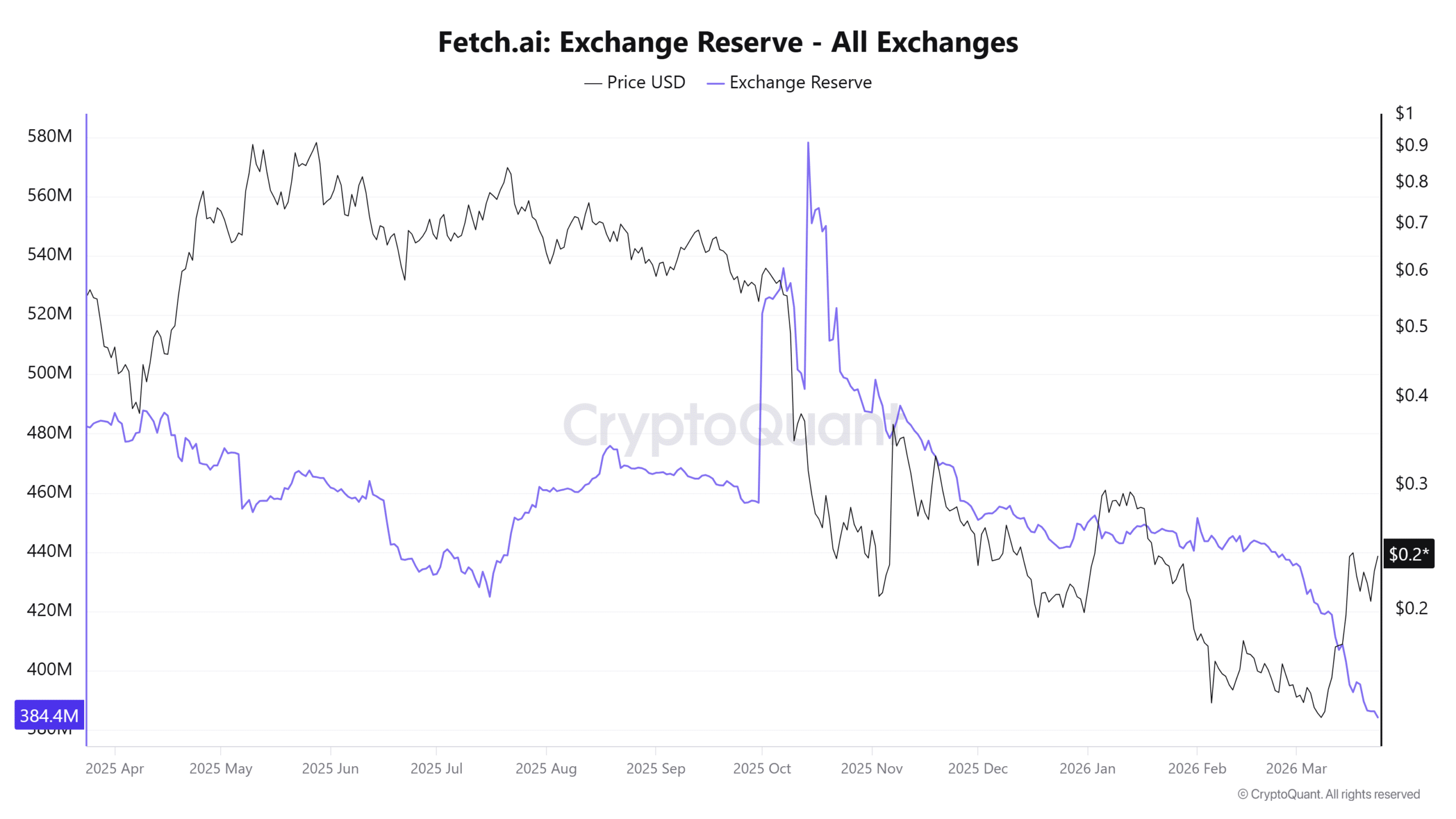
此外,该山寨币的交易所储备量骤降至3.84亿,创下2024年新低。通常,交易所储备降低(尤其是山寨币)意味着抛压减轻和购买外流增强。
来源:CryptoQuant

因此,FET变得越来越稀缺,有效减少了即时出售的供应量。通常,更大的稀缺性会加速资产的上行动能,推动价格进一步上涨。

鲸鱼仍持看跌态度

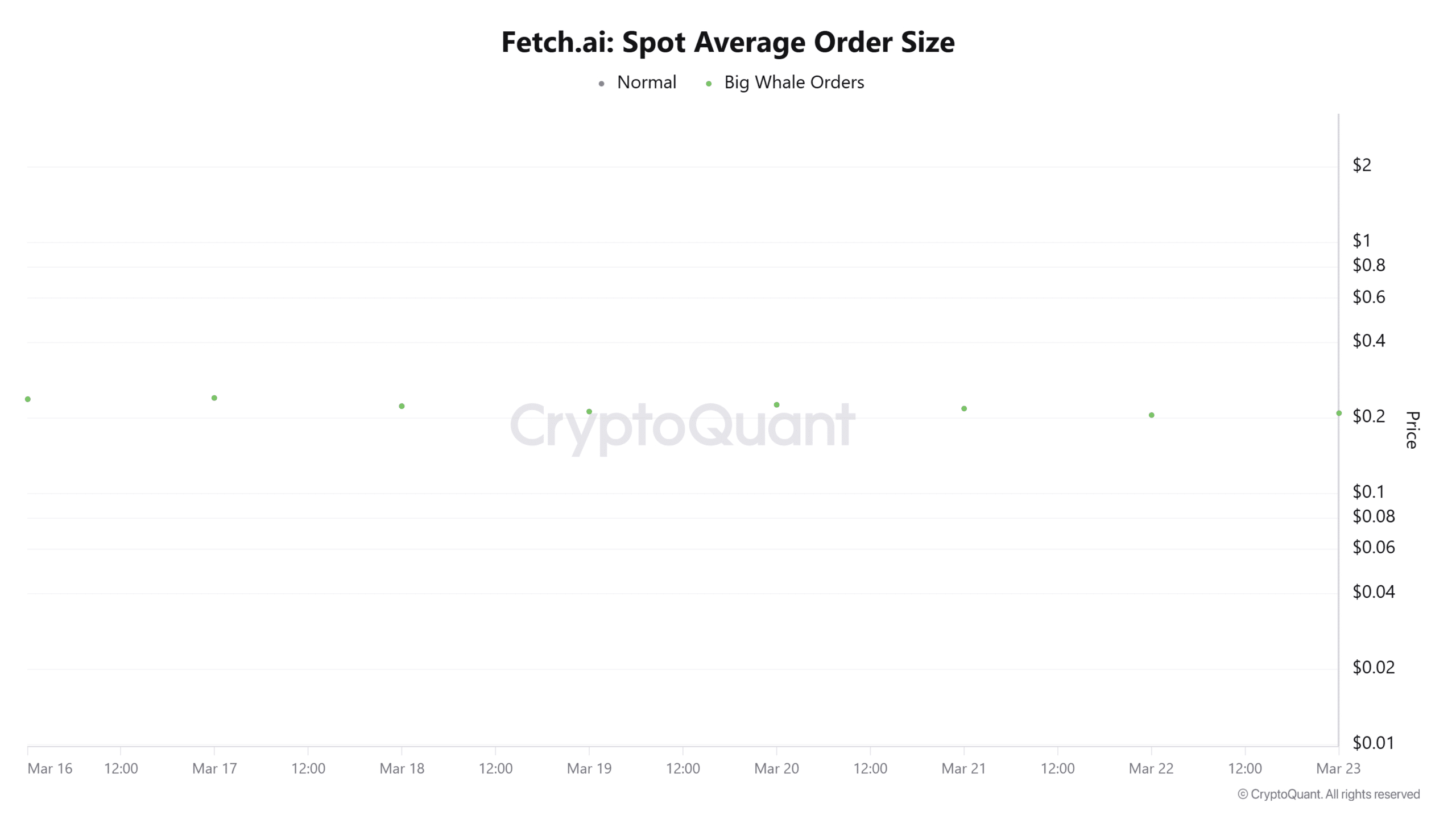
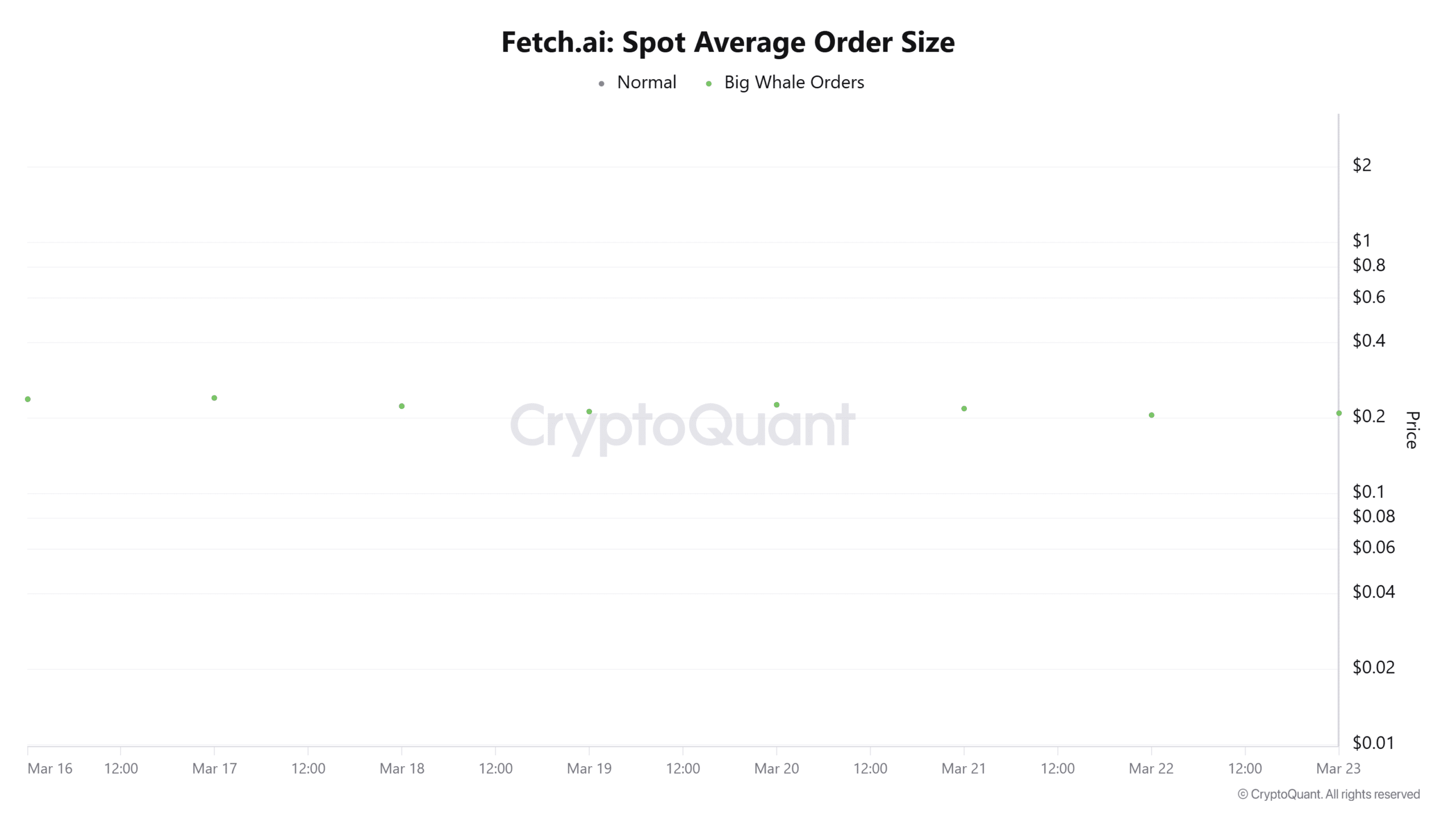
尽管近期市场上涨,现货鲸鱼仍持怀疑态度并抑制市场。CryptoQuant的现货平均订单大小数据显示鲸鱼持续参与现货市场。
来源:CryptoQuant

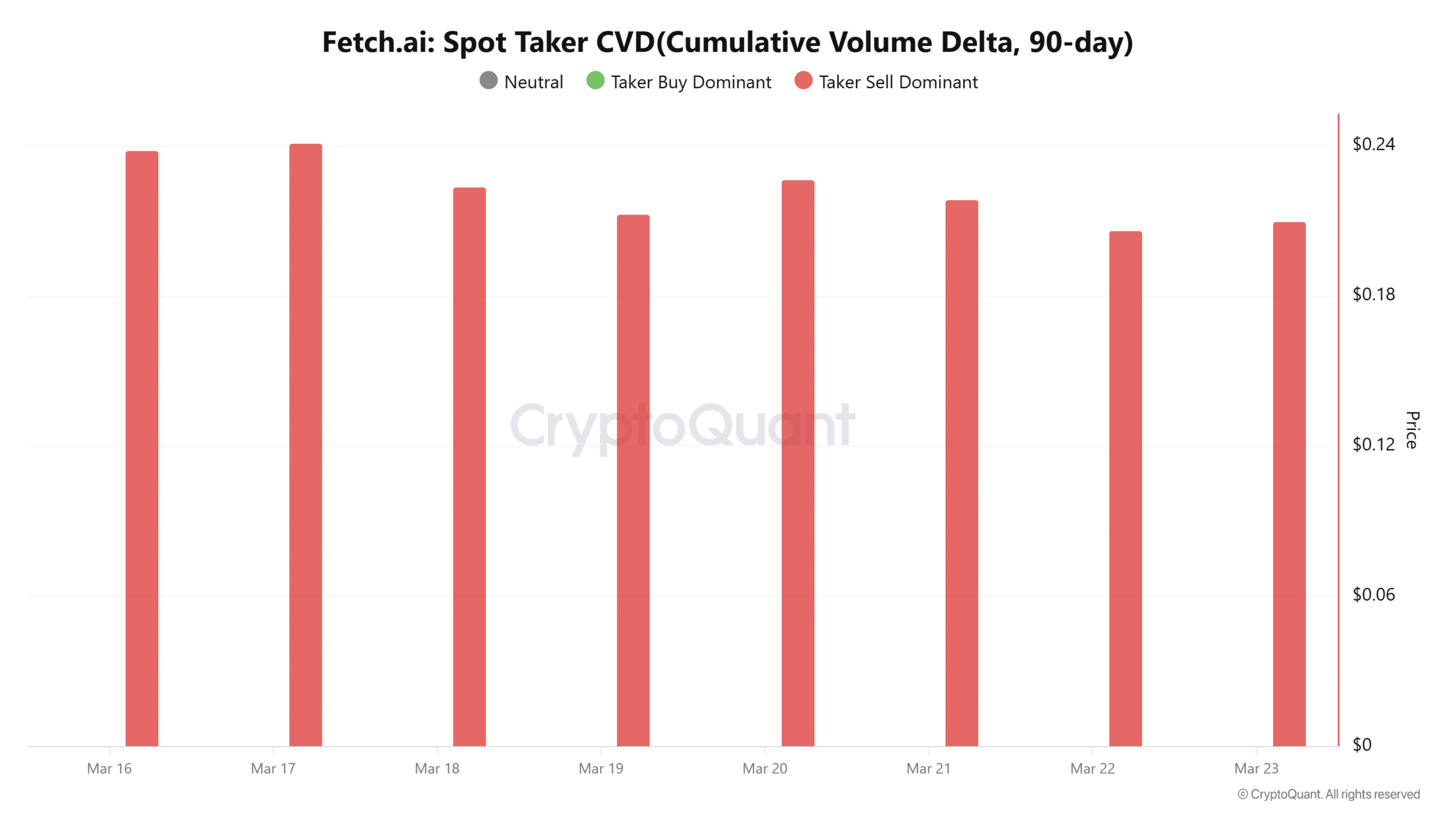
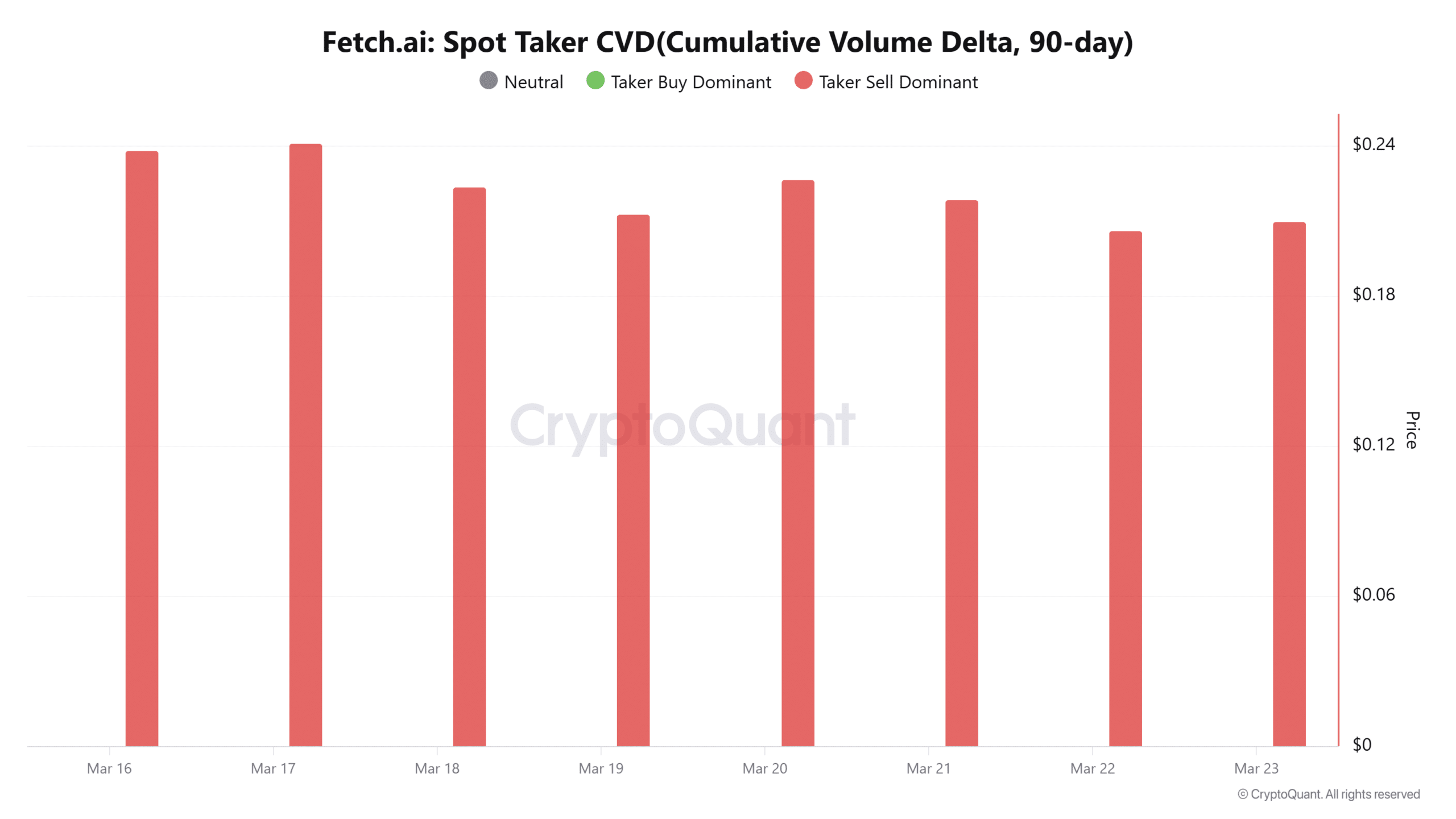
这些大型市场参与者多次在0.20至0.22美元价格区间进入市场。这些订单可能是买入或卖出,根据现货订单CVD数据,多数为卖出订单。

因此,鲸鱼一直在0.20-0.22美元区间积极抛售,这显著拖累了市场。历史上,鲸鱼抛压增加会削弱市场,从而加速下跌,通常成为价格走低的前兆。
来源:CryptoQuant

FET未来走势

人工智能超级智能联盟在AI板块资金轮动加剧的背景下实现显著上涨。

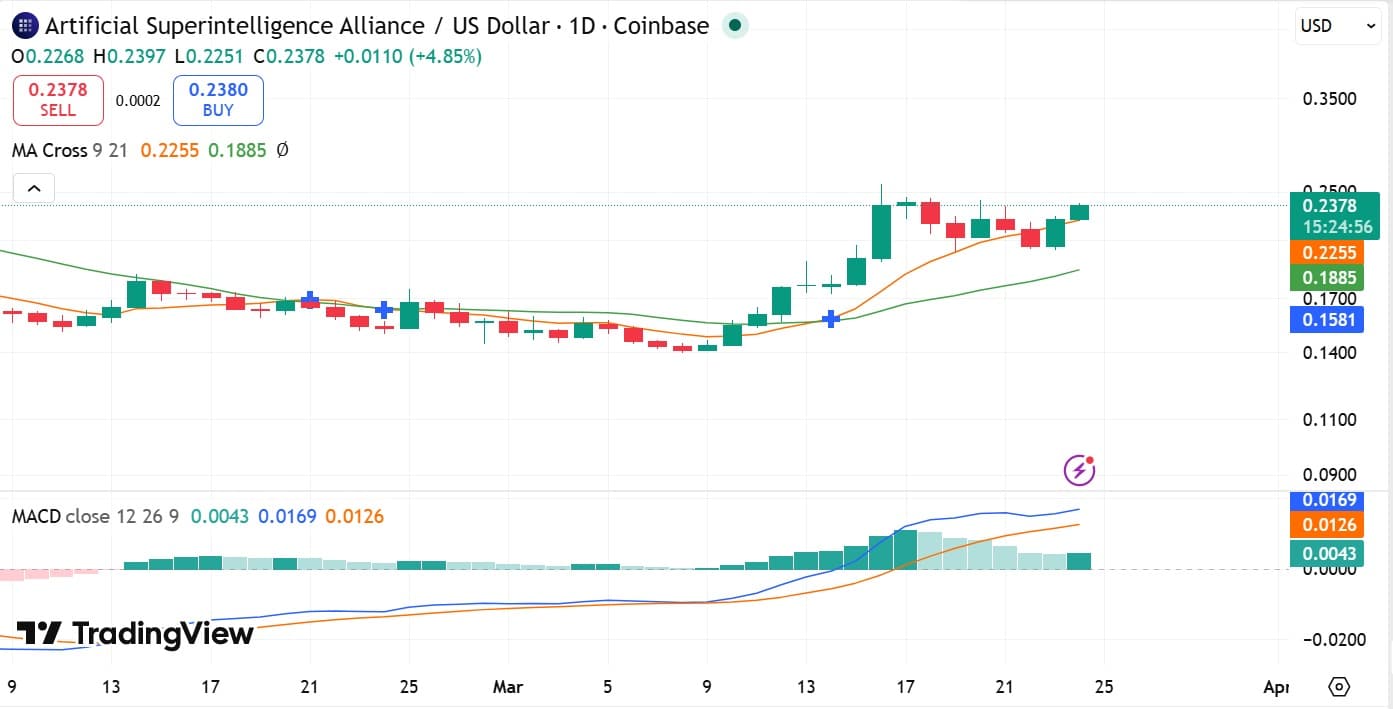
因此,该山寨币突破了短期移动平均线MA9,表明上行动能强劲。同时,MACD持续上升至0.016,进一步验证了趋势强度。
来源:TradingView

当动量指标如此设置时,表明市场需求确立,买家完全掌控局面。历史上,这种配置通常预示着趋势的延续。

因此,若需求保持稳定,人工智能超级智能联盟可能突破0.25美元的即时阻力位并目标0.3美元。但由于鲸鱼仍在抛售,回调风险依然存在,FET可能跌破0.22美元,随后在0.20美元附近寻求支撑。


最终总结

  • 人工智能超级智能联盟[FET]成功守住0.20美元,暴涨15.5%至0.238美元的局部高点
  • 在投机需求复苏和AI板块 resurgence 的背景下,FET迎来资金轮动

Criptomoedas em alta

Perguntas relacionadas

Q根据文章,FET当前的价格是多少?

A截至文章撰写时,FET的交易价格为0.238美元。

QFET在24小时内的价格涨幅是多少?

AFET在24小时内上涨了15.5%。

Q文章中提到FET的交易所净流出量是多少?

AFET的交易所净流出量为150万枚,从前一天的7千枚大幅下降。

Q鲸鱼在FET市场中的行为如何?

A鲸鱼在0.20至0.22美元的价格区间内积极抛售,这给市场带来了下行压力。

Q文章认为FET的下一个目标价格可能是多少?

A如果需求保持稳定,FET可能会突破0.25美元的阻力位,并目标指向0.3美元。

Leituras Relacionadas

a16z: From Companies to DAOs, DUNA May Become the Next Generation Organizational Form

This article, "From Companies to DAOs: How DUNA Could Become the Next Organizational Form," traces the 500-year evolution of business collaboration. It begins with medieval structures like the *commenda* and Florentine *compagnia*, which exposed partners to personal risk. The modern corporation, exemplified by the Dutch East India Company (VOC), was a revolutionary leap, enabling large-scale, capital-intensive ventures by offering limited liability and reducing coordination costs. However, corporations introduced new challenges like principal-agent problems and bureaucratic overhead. The piece argues that software and internet-native protocols are now reducing these traditional overheads. Decentralized Autonomous Organizations (DAOs) emerged as a new model for coordination without centralized management. Yet, DAOs face a significant legal vacuum: they lack legal recognition, leaving members exposed to unlimited personal liability, and their tokens are vulnerable to being classified as securities under unclear regulations (e.g., the Howey Test). This has forced projects into suboptimal workarounds like offshore foundations. The article identifies the Decentralized Unincorporated Nonprofit Association (DUNA) as a potential solution. Recently legalized in states like Wyoming, the DUNA provides a legal wrapper for decentralized networks. It grants key protections—legal personality, limited liability, and perpetual existence—to a group without imposing a traditional hierarchical management structure. This allows token-holder communities to govern, hold assets, and contract as a single legal entity, aligning with their decentralized nature. While DUNA doesn't solve all governance challenges or magically resolve securities law questions, it represents a crucial step. It fills the legal recognition gap, offering a native legal form for internet-scale, decentralized collaboration and extending the separation of personal risk from organizational venture into a new domain.

marsbitHá 33m

a16z: From Companies to DAOs, DUNA May Become the Next Generation Organizational Form

marsbitHá 33m

2026 Mid-Year Report On-Chain RWA: Tokenized Stock Market Cap Doubles in a Year, But 90% of Rights Are Hollow Shells

The 2026 Mid-Year Report on On-Chain RWA highlights a significant growth in tokenized stock market capitalization, which nearly doubled from $951 million in March to $1.89 billion by July. However, the report reveals a fundamental contradiction in this "layer 2.5" ecosystem: products with the strongest legal foundation (like regulated U.S. infrastructure) lack liquidity and distribution, while freely tradable offshored wrapper products often lack substantive ownership rights. The increase is driven largely by a few products (SECZ, FGRS, STRCx) and platforms (Ondo, xStocks, Securitize collectively hold over 85% share). While distributed value across networks like Ethereum, Solana, and BNB Chain has grown, the market remains fragmented. Products referencing the same underlying asset (e.g., Apple stock) are distinct legal liabilities with different intermediaries and jurisdictional rules, offering varying degrees of legal claim. The report cautions that headline numbers are misleading, as they reflect changes in distributed token value—driven by issuance, conversions, and price movements—not pure investor inflows. True "canonical shares" with legal ownership, wide wallet distribution, institutional liquidity, and independent on-chain price discovery do not yet exist at scale. Tokenized treasuries show stronger product-market fit, and ETFs may be easier to scale than single stocks. The core takeaway is a trade-off: legal certainty versus liquidity and composability.

marsbitHá 1h

2026 Mid-Year Report On-Chain RWA: Tokenized Stock Market Cap Doubles in a Year, But 90% of Rights Are Hollow Shells

marsbitHá 1h

Coldcard Hardware Wallet Hacked: 594 Bitcoin Withdrawn in 25 Minutes

The Coldcard hardware wallet has been compromised, with hackers stealing approximately 594.5 Bitcoin (~$40 million) from 500 addresses in just 25 minutes. The root cause was a critical software bug, undetected for five years, which disabled the device's secure chip for generating true random numbers. This led to the creation of private keys based on predictable data like the processor's serial number, drastically reducing cryptographic security. The attackers exploited this offline by brute-forcing possible seed phrases, finding active addresses on the public ledger, and signing transactions. Initially, Coinkite (Coldcard's maker) claimed only older models were at risk but later admitted all devices running the compromised firmware were vulnerable. CEO Rodolphe Novak (NVK) apologized but ruled out financial compensation for affected users. To secure funds, owners must urgently update their firmware to specific safe versions, generate a completely new seed phrase on the updated device, and transfer all assets to new addresses created with that new seed. While a BIP-39 passphrase can help, it does not replace this migration process. Other Coinkite products like TAPSIGNER were not affected. This incident underscores that even specialized hardware requires rigorous, independent code audits, especially for cryptographic functions. It parallels past failures, like a 2006 OpenSSL bug in Debian, and raises questions about whether automated code analysis can ever fully replace human scrutiny in critical security areas.

cryptonews.ruHá 3h

Coldcard Hardware Wallet Hacked: 594 Bitcoin Withdrawn in 25 Minutes

cryptonews.ruHá 3h

Trading

Spot

Artigos em Destaque

Como comprar FET

Bem-vindo à HTX.com!Tornámos a compra de FETCH.ai (FET) simples e conveniente.Segue o nosso guia passo a passo para iniciar a tua jornada no mundo das criptos.Passo 1: cria a tua conta HTXUtiliza o teu e-mail ou número de telefone para te inscreveres numa conta gratuita na HTX.Desfruta de um processo de inscrição sem complicações e desbloqueia todas as funcionalidades.Obter a minha contaPasso 2: vai para Comprar Cripto e escolhe o teu método de pagamentoCartão de crédito/débito: usa o teu visa ou mastercard para comprar FETCH.ai (FET) instantaneamente.Saldo: usa os fundos da tua conta HTX para transacionar sem problemas.Terceiros: adicionamos métodos de pagamento populares, como Google Pay e Apple Pay, para aumentar a conveniência.P2P: transaciona diretamente com outros utilizadores na HTX.Mercado de balcão (OTC): oferecemos serviços personalizados e taxas de câmbio competitivas para os traders.Passo 3: armazena teu FETCH.ai (FET)Depois de comprar o teu FETCH.ai (FET), armazena-o na tua conta HTX.Alternativamente, podes enviá-lo para outro lugar através de transferência blockchain ou usá-lo para transacionar outras criptomoedas.Passo 4: transaciona FETCH.ai (FET)Transaciona facilmente FETCH.ai (FET) no mercado à vista da HTX.Acede simplesmente à tua conta, seleciona o teu par de trading, executa as tuas transações e monitoriza em tempo real.Oferecemos uma experiência de fácil utilização tanto para principiantes como para traders experientes.

159 Visualizações TotaisPublicado em {updateTime}Atualizado em 2026.06.02

Como comprar FET

Discussões

Bem-vindo à Comunidade HTX. Aqui, pode manter-se informado sobre os mais recentes desenvolvimentos da plataforma e obter acesso a análises profissionais de mercado. As opiniões dos utilizadores sobre o preço de FET (FET) são apresentadas abaixo.

活动图片