XION Giới Thiệu Xác Minh Email Trên Chuỗi Khối Với Các Mô-đun DKIM và ZK

TheNewsCryptoPublished on 2026-02-10Last updated on 2026-02-10

Abstract

XION đã ra mắt mô-đun DKIM trên chuỗi và mô-đun ZK cấp giao thức, đánh dấu bước tiến lớn trong việc xác minh email phi tập trung. Đây là blockchain đầu tiên lưu trữ trực tiếp khóa xác thực DKIM trên chuỗi, loại bỏ sự phụ thuộc vào cơ sở hạ tầng DNS tập trung. Giải pháp này cho phép xác minh email mà không cần tin tưởng vào bên thứ ba, đồng thời hỗ trợ xác thực bằng zero-knowledge để chứng minh thông tin từ email (như việc làm, giao dịch) mà không tiết lộ nội dung hoặc danh tính. Ứng dụng bao gồm tố cáo ẩn danh, khôi phục ví không cần hạt giống, xác minh bằng cấp và giao dịch vé tự động. Hiện đã hỗ trợ Gmail và Apple Mail, phủ hơn 3.8 tỷ người dùng. XION hướng tới biến email thành lớp xác thực tin cậy cho internet, mở rộng tiện ích Web3 cho người dùng đại chúng.

Nhà cung cấp cơ sở hạ tầng blockchain XION đã công bố một sáng kiến lớn nhằm biến việc xác minh internet trở nên thực sự không cần tin cậy với việc ra mắt các mô-đun DKIM và Zero-Knowledge (ZK) cấp giao thức. Việc ra mắt, được công bố bởi người sáng lập dự án Burnt Banksy, định vị XION là blockchain đầu tiên lưu trữ khóa xác thực email trực tiếp trên chuỗi khối, loại bỏ sự phụ thuộc lâu nay vào cơ sở hạ tầng DNS tập trung.

Email đã âm thầm trở thành lớp định danh mặc định của internet, hỗ trợ mọi thứ từ đăng nhập tài khoản đến xác minh việc làm. Tuy nhiên, bất chấp sự phổ biến của nó, việc xác thực email chưa bao giờ hoàn toàn không cần tin cậy. Cho đến bây giờ.

Xác minh email truyền thống dựa vào DKIM (DomainKeys Identified Mail), một tiêu chuẩn mã hóa được các nhà cung cấp như Gmail và Apple Mail sử dụng để xác thực thư. Tuy nhiên, các khóa DKIM thường được tìm nạp từ các máy chủ DNS tập trung do các nhà cung cấp email kiểm soát.

Điều này tạo ra một lỗ hổng nghiêm trọng: khi các nhà cung cấp xoay vòng khóa DKIM của họ, các bằng chứng xác minh cũ hơn có thể bị phá vỡ. Không có lịch sử bất biến của các khóa trong quá khứ, không có phương án dự phòng phi tập trung và không có cách nào để xác minh email một cách độc lập theo thời gian mà không cần tin tưởng vào cơ sở hạ tầng DNS.

Ngay cả các giải pháp mới hơn tập trung vào quyền riêng tư, bao gồm các hệ thống dựa trên zkEmail, vẫn phụ thuộc vào các truy vấn DNS tập trung này. Trên thực tế, xác minh "không cần tin cậy" vẫn còn một phần dựa trên sự tin cậy.

Đột Phá DKIM Trên Chuỗi Khối Của XION

Mô-đun DKIM mới được ra mắt của XION giải quyết vấn đề này ở cấp độ giao thức. Thay vì dựa vào DNS, XION lưu trữ các khóa xác thực email trực tiếp trong trạng thái blockchain, tạo ra một bản ghi lịch sử vĩnh viễn, có thể xác minh được về các khóa DKIM.

Điều này biến XION thành blockchain đầu tiên hỗ trợ xác thực email gốc, trên chuỗi khối. Một khi các khóa được ghi lại, chúng vẫn có thể được xác minh vô thời hạn – loại bỏ nguy cơ các bằng chứng bị hỏng do xoay vòng khóa hoặc lỗi DNS.

Khi ra mắt, hệ thống hỗ trợ Gmail và Apple Mail, bao phủ hơn 3,8 tỷ người dùng, tương đương hơn 90% lưu lượng email toàn cầu.

Xác Minh Zero-Knowledge Ở Lớp Giao Thức

Mô-đun DKIM hoạt động song song với Mô-đun ZK cấp giao thức của XION, cho phép các bằng chứng không kiến thức (zero-knowledge proofs) được xác minh trực tiếp bởi chính blockchain thay vì thông qua các hợp đồng thông minh. Theo XION, phương pháp này hiệu quả hơn tới mười lần so với xác minh dựa trên hợp đồng.

Cùng nhau, các mô-đun cho phép người dùng chứng minh các sự thật có nguồn gốc từ email của họ—chẳng hạn như tình trạng việc làm, giao dịch mua hàng hoặc thông tin xác thực—mà không tiết lộ nội dung email hoặc danh tính cá nhân.

Trên thực tế, điều này có nghĩa là người dùng có thể chứng minh một tuyên bố là đúng bằng mật mã trong khi vẫn giữ kín mọi thông tin khác.

Các Trường Hợp Sử Dụng Thực Tế Ngoài Crypto

Những tác động của nó vượt xa các ứng dụng gốc Web3. Với việc xác minh email không cần tin cậy được thiết lập, một loạt các trường hợp sử dụng trong thế giới thực trở nên khả thi.

Ví dụ, việc tố cáo nặc danh trở nên an toàn hơn khi các cá nhân có thể chứng minh họ làm việc tại một công ty mà không tiết lộ danh tính của họ, trong khi các đánh giá nơi làm việc được xác minh nhưng ẩn danh trở nên khả thi thông qua xác nhận mật mã từ email việc làm.

Cơ chế cơ bản tương tự cho phép khôi phục ví không cần hạt giống (seedless wallet recovery), sử dụng email như một bản sao lưu mật mã an toàn thay cho các cụm từ khôi phục dễ vỡ, và hỗ trợ xác minh thông tin xác thực riêng tư, chẳng hạn như chứng minh đã tốt nghiệp mà không để lộ toàn bộ bảng điểm. Nó cũng mở khóa việc bán lại vé không cần tin cậy, nơi việc thanh toán diễn ra tự động một khi bằng chứng dựa trên email được xác thực, và hợp lý hóa các khiếu bảo hiểm bằng cách cho phép chứng minh chi tiết chính sách trực tiếp từ thư tín email đã được xác thực.

Những trường hợp sử dụng này dựa trên cơ sở hạ tầng vốn đã tồn tại, là email, thay vì buộc người dùng phải áp dụng các hệ thống định danh mới.

Một Lớp Tin Cậy Cho Internet

XION định khung buổi ra mắt này như một phần của tầm nhìn rộng lớn hơn nhằm biến việc xác minh trở nên vô hình và phổ quát. Khi nội dung do AI tạo ra, bot và mạo danh ngày càng phổ biến, sự tin cậy và xác minh đang chuyển từ các tính năng tùy chọn thành cơ sở hạ tầng cốt lõi của internet.

Bằng cách làm cho email trở nên hữu ích về mặt mật mã ở cấp độ giao thức, XION hướng tới việc biến công cụ giao tiếp được sử dụng rộng rãi nhất của internet thành một lớp xác minh an toàn.

Hơn 150 thương hiệu đã và đang xây dựng trên XION, và các mô-đun mới mở rộng ngăn xếp xác minh hiện có của nền tảng, bao gồm các công cụ như zkTLS để chứng minh dữ liệu dựa trên web và xác nhận ứng dụng cho môi trường di động.

Việc Burnt Banksy công bố DKIM On‐Chain của XION không chỉ là một khoảnh khắc sản phẩm; đó là một tuyên bố về nơi internet đang hướng đến. Là một người sáng lập, anh ấy luôn hoạt động tại giao điểm của văn hóa và mật mã, sử dụng nghệ thuật như một con ngựa thành Troia để lôi kéo mọi người vào những cuộc trò chuyện sâu hơn về quyền sở hữu kỹ thuật số và sự tin cậy.

Với DKIM On‐Chain, anh ấy đang định khung lại email – một trong những công nghệ phổ quát nhất, bị bỏ quên trên hành tinh – như một nguyên thủy tin cậy có thể lập trình mà bất kỳ ai cũng có thể sử dụng mà không cần thay đổi hành vi của họ. Sự tham gia của anh ấy báo hiệu chính xác điều mà đột phá này đại diện: cơ sở hạ tầng có tâm hồn, kỹ thuật có mục đích và cam kết làm cho Web3 trở nên trực quan đủ cho một tỷ người dùng tiếp theo.

Tuyên bố miễn trừ trách nhiệm: TheNewsCrypto không xác nhận bất kỳ nội dung nào trên trang này. Nội dung được mô tả trong Thông cáo Báo chí này không đại diện cho bất kỳ lời khuyên đầu tư nào. TheNewsCrypto khuyến nghị độc giả của chúng tôi đưa ra quyết định dựa trên nghiên cứu của riêng họ. TheNewsCrypto không chịu trách nhiệm về bất kỳ thiệt hại hoặc mất mát nào liên quan đến nội dung, sản phẩm hoặc dịch vụ được nêu trong Thông cáo Báo chí này.


TagsThông cáo Báo chíXION

Trending Cryptos

Related Questions

QXION đã giới thiệu công nghệ gì để xác minh email trên chuỗi khối?

AXION đã giới thiệu Mô-đun DKIM trên chuỗi (On-Chain DKIM Module) và Mô-đun Zero-Knowledge (ZK) ở cấp độ giao thức, cho phép lưu trữ khóa xác thực email trực tiếp trên chuỗi khối và xác minh bằng chứng không tiết lộ thông tin (zero-knowledge proofs) một cách hiệu quả.

QTại sao việc xác minh email truyền thống được cho là không hoàn toàn phi tập trung?

AXác minh email truyền thống dựa vào các khóa DKIM được lấy từ máy chủ DNS tập trung do nhà cung cấp email kiểm soát. Khi các nhà cung cấp xoay vòng khóa DKIM, các bằng chứng xác minh cũ có thể bị hỏng, và không có lịch sử bất biến của các khóa trước đó, khiến nó phụ thuộc vào cơ sở hạ tầng DNS tập trung.

QCác mô-đun mới của XION hỗ trợ những nhà cung cấp email nào?

AHệ thống của XION hiện hỗ trợ Gmail và Apple Mail, bao phủ hơn 3,8 tỷ người dùng, tương đương hơn 90% lưu lượng email toàn cầu.

QỨng dụng thực tế nào của công nghệ này được đề cập ngoài lĩnh vực tiền mã hóa?

ACác ứng dụng thực tế bao gồm tố cáo nặc danh an toàn, đánh giá nơi làm việc được xác minh nhưng ẩn danh, khôi phục ví không cần hạt giống (seedless wallet recovery), xác minh thông tin xác thực riêng tư (như bằng tốt nghiệp), bán lại vé tin cậy và hợp lý hóa các yêu cầu bảo hiểm.

QTầm nhìn lớn hơn của XION khi giới thiệu công nghệ này là gì?

AXION hình dung đây là một bước tiến để biến email - công cụ giao tiếp phổ biến nhất của internet - thành một lớp xác minh bảo mật, tạo ra một 'lớp tin cậy cho internet' trong bối cảnh nội dung do AI tạo ra và gian lận ngày càng phổ biến, giúp Web3 trở nên trực quan cho hàng tỷ người dùng tiếp theo.

Related Reads

Low Investment Isn't Apple's Immunity Pass

While Meta and Google face investor scrutiny over ballooning AI capital expenditures, Apple's minimal AI investment has paradoxically become a strength. Its market cap recently reclaimed the global top spot, surpassing $5 trillion. The irony is deep: Apple's own AI efforts have lagged, with "Apple Intelligence" delayed and core talent lost, forcing reliance on partners like Google Gemini and Alibaba's Qianwen. Its Q3 FY2026 (Q2 CY) earnings initially seemed stellar. Revenue hit $109.4B (up 16% YoY), with iPhone and Mac sales, growing 22% and 29% respectively, driving most of the growth. However, the stock fell over 8% post-earnings. The primary concern was a weaker Q4 revenue growth forecast of 9-11%, below expectations, due to looming supply chain constraints. Apple is feeling the indirect cost of the AI boom. Soaring memory and chip prices, fueled by massive data center investments from Microsoft, Amazon, and others, are forcing Apple to raise Mac and iPad prices significantly. The upcoming iPhone launch is also expected to see substantial price hikes. Despite avoiding heavy AI infrastructure spending—its capital expenditures are actually down 28%—Apple cannot escape the industry-wide supply and cost pressures. While Apple's operating cash flow remains robust, its substantial R&D spending (up 32% YoY) has yet to yield major AI breakthroughs. As Tim Cook prepares to step down as CEO, Apple faces a challenging transition: balancing its premium hardware success against the strategic and cost pressures of the AI era it has so far cautiously navigated.

marsbit23m ago

Low Investment Isn't Apple's Immunity Pass

marsbit23m ago

PA Graphics Explanation | One Chart to Understand the Major Web3 Events in August 2026

**PANews Crypto Calendar: Key Web3 Events in August 2026** PANews introduces its revamped crypto calendar, featuring comprehensive coverage, flexible filtering, and easy export options. The market in August will be shaped by multiple key events across macroeconomics, regulation, tokenomics, and project developments: * **Macro & Policy:** Key US economic data releases (July Non-Farm Payrolls, CPI), the Federal Reserve meeting minutes, and the Jackson Hole Economic Symposium will be in focus. On the regulatory front, the US Senate plans to release a new draft of the *CLARITY Act*, while the EU's expanded crypto ban against Belarus comes into effect. * **Token Unlocks:** Significant token unlocks are scheduled for assets including ENA, AVAX, CONX, ZRO, and KAITO, which may influence market volatility. * **Project Updates & Shutdowns:** Several services, including Exchange Art, Ctrl Wallet, Zapper, NFTfi, and Summer.fi, are set to cease operations or undergo major adjustments. Users are advised to manage their assets accordingly. * **Corporate Activity:** Q2 earnings reports from companies like SpaceX, Circle, and Nvidia are due. Unitree Robotics will initiate its IPO subscription on the STAR Market, and Moonshot AI plans to begin a Pre-IPO financing round. * **Industry Events:** Major conferences such as Bitcoin Asia 2026 and the 2026 Digital Expo will take place. The overarching market narrative for August will revolve around macroeconomic expectations, regulatory developments, token unlock schedules, and ongoing industry consolidation.

marsbit34m ago

PA Graphics Explanation | One Chart to Understand the Major Web3 Events in August 2026

marsbit34m ago

Wall Street's Most Famous 'Cassandra' Now Has His Sights Set on Nvidia

Michael Burry, the famed "Big Short" investor, has once again captured Wall Street's attention with a series of short positions against major tech and semiconductor stocks, most notably Nvidia. In late June and July, through his "Cassandra Unchained" newsletter, Burry disclosed short bets against Nvidia, Tesla, Applied Materials, Caterpillar, the SOXX semiconductor ETF, and later, Micron Technology. His core thesis revolves around potential distortions in the AI infrastructure boom, specifically questioning whether extended depreciation schedules (e.g., 6 years vs. a realistic 2-3 years for AI chips) by cloud giants like Microsoft and Google artificially inflate profits. He also raises concerns about possible "off-balance-sheet circular financing," where chip demand might be propped up by vendor-backed funding to clients. Nvidia's stock experienced volatility following these disclosures, briefly dipping but largely holding near Burry's reported entry points, leaving his positions roughly flat or slightly underwater as of late July. This move is part of a pattern for Burry, whose track record since his legendary 2008 bet is mixed. He has faced notable losses, such as on Tesla in 2021, while scoring on broader market turns like the 2020 pandemic crash. His methodology focuses intensely on free cash flow and scrutinizing original financial documents to spot overvaluation and structural risks, but it often struggles with timing the market. The article contrasts Burry's stance with other prominent investors. Steve Eisman, another "Big Short" figure, is not shorting Nvidia, citing strong fundamentals but expressing nervousness about sustainability. Jim Chanos agrees with the broad "accounting mismatch" concern—comparing it to the dot-com bubble—but targets financial leverage in private equity firms rather than the chip stocks themselves. While Nvidia's short interest remains relatively low at 1.3-1.4% of float, the massive stock size means absolute short losses have been significant, exceeding $5 billion earlier this year. The piece concludes that for ordinary investors, the key takeaway is not replicating specific short bets but learning from the critical frameworks these investors use: questioning rosy accounting, identifying structural vulnerabilities, and maintaining skepticism during market euphoria, even if pinpointing the exact catalyst for a downturn remains elusive.

marsbit59m ago

Wall Street's Most Famous 'Cassandra' Now Has His Sights Set on Nvidia

marsbit59m ago

Weekly Selection丨Epic Stock Market Volatility, Changxin Tech's IPO Reshapes Storage Landscape, Saylor Aims to Re-Anchor STRC Around September 8th

PANews Weekly Digest: Market Turmoil, Tech Breakthroughs, and Crypto Developments. The week saw significant volatility across global markets. South Korea's KOSPI index experienced extreme turbulence, including multiple trading halts, largely driven by sharp declines in AI hardware stocks like SK Hynix. In contrast, China's Changxin Xinqiao (CXC) achieved a landmark IPO with a market cap surpassing 4 trillion yuan, marking a major success for the domestic DRAM industry after a decade of losses. In the crypto and Web3 space, several key narratives emerged. AI is driving demand for new infrastructure, with projects like AI agent wallets and programmable payments gaining traction, attracting interest from firms like Coinbase. The Bitcoin mining sector is pivoting, with companies like MARA focusing on energy management as electricity becomes a core AI-era asset. Meanwhile, the RWA (Real World Assets) sector faces a "utilization puzzle," with hundreds of billions in on-chain assets remaining dormant. Notable market movements included a historic single-day surge of over 17% for the KOSPI index and a significant migration of $16.5 billion in staked ETH within the Lido ecosystem. Michael Saylor announced a target to re-peg the STRC stablecoin around September 8th. Other highlights include discussions on Ethereum's ambitious 2030 roadmap for scaling and privacy, analysis showing high protocol revenues not always translating to token price gains, and warnings from Citi about potential extreme commodity price shocks by late 2026.

marsbit1h ago

Weekly Selection丨Epic Stock Market Volatility, Changxin Tech's IPO Reshapes Storage Landscape, Saylor Aims to Re-Anchor STRC Around September 8th

marsbit1h ago

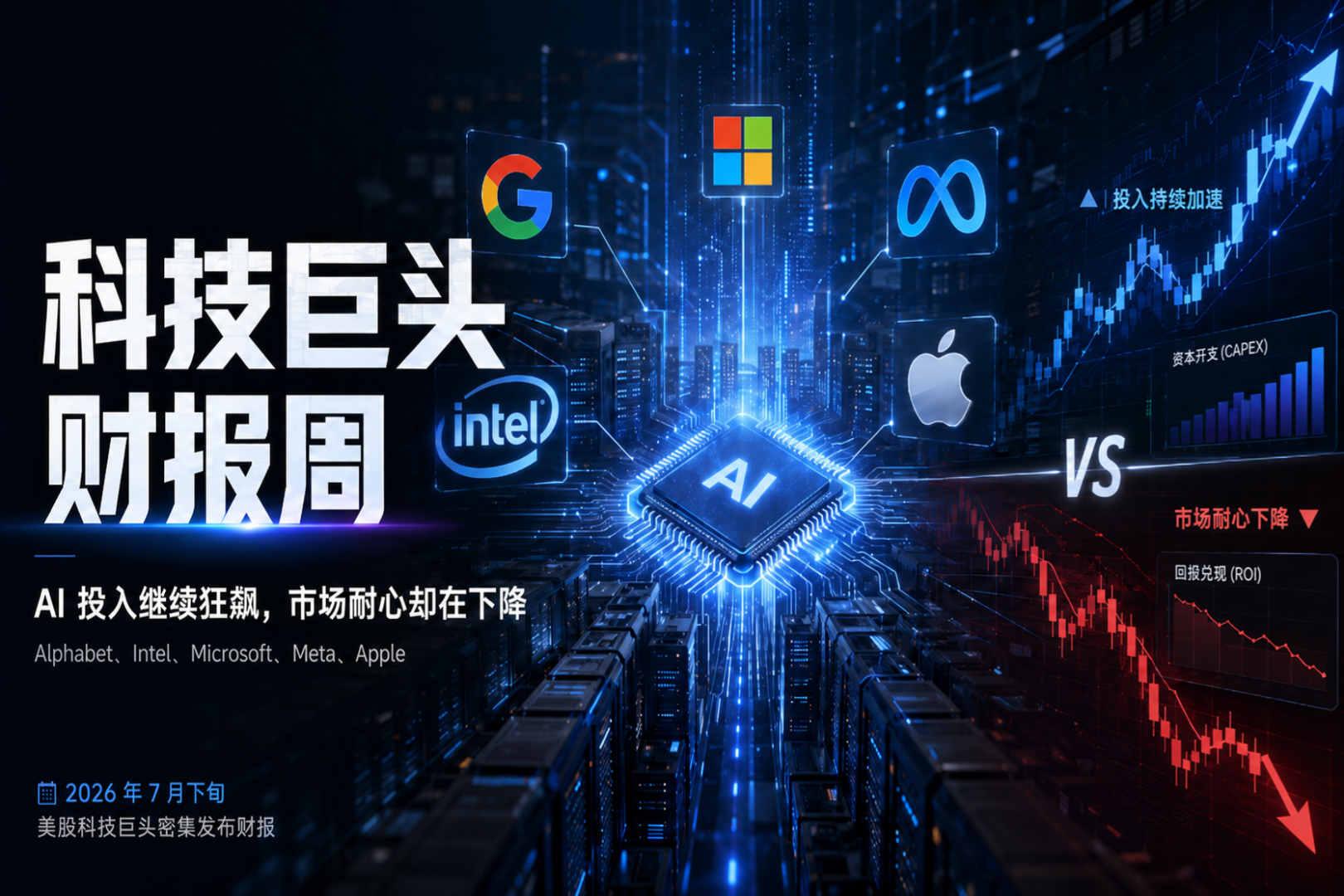
When the Market Begins to Question AI Capex: A Full Analysis of Q2 Earnings Reports from Five Tech Giants

In late July 2026, five major US tech giants—Alphabet, Intel, Microsoft, Meta, and Apple—released their Q2 earnings reports. While all companies exceeded revenue and profit expectations, driven by strong AI-related business growth, investor reactions diverged sharply due to concerns over escalating AI capital expenditures (capex) and their impact on free cash flow. Alphabet reported strong revenue growth and a surging cloud business, but its stock fell after announcing a doubled year-on-year capex and negative quarterly free cash flow for the first time. Intel posted its strongest revenue growth in over 15 years, but its stock experienced volatile trading after significantly raising its full-year capex guidance. Microsoft saw its stock surge after beating estimates and, crucially, lowering its capex forecast while projecting positive free cash flow. Meta faced the most severe sell-off as its profits declined despite revenue beats, with free cash flow plunging over 90% and its capex guidance raised. Apple reported record June-quarter results, but its stock plummeted after providing Q4 revenue guidance that fell short of expectations, citing supply chain constraints and forex headwinds. The overall takeaway is that the market's focus has shifted from validating AI demand to scrutinizing the timeline for returns on massive AI investments. Companies demonstrating a clearer path to managing capex and preserving free cash flow, like Microsoft, were rewarded, while those signaling continued aggressive spending faced investor skepticism.

Odaily星球日报1h ago

When the Market Begins to Question AI Capex: A Full Analysis of Q2 Earnings Reports from Five Tech Giants

Odaily星球日报1h ago

Trading

Spot

Hot Articles

How to Buy ZK

Welcome to HTX.com! We've made purchasing ZKsync (ZK) simple and convenient. Follow our step-by-step guide to embark on your crypto journey.Step 1: Create Your HTX AccountUse your email or phone number to sign up for a free account on HTX. Experience a hassle-free registration journey and unlock all features.Get My AccountStep 2: Go to Buy Crypto and Choose Your Payment MethodCredit/Debit Card: Use your Visa or Mastercard to buy ZKsync (ZK) instantly.Balance: Use funds from your HTX account balance to trade seamlessly.Third Parties: We've added popular payment methods such as Google Pay and Apple Pay to enhance convenience.P2P: Trade directly with other users on HTX.Over-the-Counter (OTC): We offer tailor-made services and competitive exchange rates for traders.Step 3: Store Your ZKsync (ZK)After purchasing your ZKsync (ZK), store it in your HTX account. Alternatively, you can send it elsewhere via blockchain transfer or use it to trade other cryptocurrencies.Step 4: Trade ZKsync (ZK)Easily trade ZKsync (ZK) on HTX's spot market. Simply access your account, select your trading pair, execute your trades, and monitor in real-time. We offer a user-friendly experience for both beginners and seasoned traders.

3.5k Total ViewsPublished 2024.06.17Updated 2026.06.02

How to Buy ZK

Discussions

Welcome to the HTX Community. Here, you can stay informed about the latest platform developments and gain access to professional market insights. Users' opinions on the price of ZK (ZK) are presented below.

活动图片