In-Depth Report on the Equity Futures Sector: The Next Trillion‑Dollar Frontier in On‑Chain Derivatives

HTX Learn2026-02-05 tarihinde yayınlandı2026-06-17 tarihinde güncellendi

Özet

Equity futures are an innovative product connecting traditional financial markets with the crypto derivatives ecosystem, reshaping the landscape of on‑chain trading at a breakneck pace. This report will delve into the product’s fundamental nature, growth logic, technical architecture, and market ecosystem, while systematically analyzing regulatory challenges and future prospects. Our research finds that equity perpetual futures are not merely a conceptual innovation but represent a structural opportunity built on the global equity market worth over $160 trillion and the mature futures trading paradigm. Currently, leading Perp DEXs such as Hyperliquid, Aster, and Lighter have already established comprehensive product suites of equity perpetual futures, gaining clear advantages in trading depth, user experience, and asset coverage. However, regulatory uncertainty remains the greatest constraint in this sector, and the exploration of compliant product pathways will directly influence its long-term development. On the trend side, equity perpetual futures are poised to drive the on-chain derivatives market to evolve from crypto native assets toward “perpetualization of all asset classes”, potentially becoming the next trillion‑dollar growth engine.

I. Product Core: A Structural Convergence of Traditional Assets and On‑Chain Derivatives

Equity perpetual futures fundamentally represent on-chain synthetic derivatives pegged to the price moves of traditional equities. By depositing stablecoins as margin, users can gain long or short exposure to the price moves of U.S. equities such as Apple, Tesla, and Nvidia, without actually owning the underlying shares or enjoying shareholder rights like dividends or voting. This product design adeptly combines the asset base of traditional financial markets with the mature on-chain perpetual futures mechanism, creating a novel financial instrument that retains the risk characteristics of equity prices while offering the flexibility of on-chain trading.

From the perspective of product, it is critical to clearly distinguish equity perpetual futures from tokenized equities (RWA stock tokens). Tokenized equities are typically issued on-chain by custodians who hold the corresponding real shares; their legal attributes and regulatory frameworks align closely with traditional securities. By contrast, equity perpetual futures do not involve any equity ownership. Instead, they rely solely on oracles to track stock prices and construct a trading market with pure price risks on-chain via funding rates, margin, and liquidation mechanisms. This distinction places the two products in entirely different categories: the former is about asset tokenization and on-chain transfer, while the latter is an innovation in risk trading derivatives.

The rise of equity perpetual futures is not accidental but the result of multiple converging factors. On the demand side, global users' demand for U.S. equity trading has been long suppressed given that traditional broker onboarding processes are cumbersome, cross-border capital flows are restricted, and trading hours are fixed. These contrast sharply with the crypto user’s preference for 24/7 trading, stablecoin settlement, and high-leverage flexibility. Equity perpetual futures provide an alternative pathway for users to participate directly in U.S. equity price movements outside the traditional financial system. On the supply side, since 2025 oracle technologies have matured, high-performance underlying blockchains have gained wide adoption, and competition among Perp DEXs has intensified, all of which have provided the necessary technical foundation and market impetus for the rollout of equity perps. More importantly, equity perpetual futures sit at the intersection of the “RWA (Real-World Asset)” narrative and the “on-chain derivatives” narrative, possessing the vast capital base of traditional assets along with the high growth potential of crypto derivatives, which make them a natural market focus.

II. Underlying Mechanisms: The Triple Challenges of Price, Liquidity, and Leverage

The stable operation of equity perpetual futures depends on a sophisticated set of underlying mechanisms, covering price discovery, asset synthesis, risk control, and leverage management. Among these, the price feed (oracle) serves as the cornerstone of the entire system. Since on-chain protocols cannot directly access real-time quotes from NASDAQ or the NYSE, decentralized oracles must reliably transmit traditional market price data to the blockchain. Current mainstream solutions include Pyth Network, Switchboard, Chainlink, and proprietary oracle systems developed by certain protocols. Pyth secures high-frequency updates and manipulation resistance by sourcing direct quotes from market makers and exchanges; Switchboard offers highly customizable aggregated price feeds, enabling protocols to switch update strategies across different sessions; Chainlink leverages a decentralized node network for resilient, continuous, and verifiable price delivery. Some leading protocols like Hyperliquid use self-developed oracle systems that achieve a higher degree of pricing autonomy through multi-source aggregation, internal index construction, and off-chain risk-control validation.

Oracles must address core issues far beyond simple data transmission. The U.S. equity market has unique structures such as trading session limitations (not 24/7), pre-market and post-market volatility, and trading halts, which require intelligent handling of market state transitions. Mainstream approaches introduce mechanisms such as market open/close indicators, time-weighted average price (TWAP) smoothing algorithms, and outlier filtering to ensure that on-chain prices remain anchored to real-world values during market closures, while mitigating manipulation risk in low-liquidity periods. For example, during U.S. market closures, oracles may automatically switch to a lower-frequency update mode or generate internal reference prices based on the last valid price combined with on-chain supply/demand signals to maintain trading continuity while controlling tail risk.

On the synthetic asset side, equity perpetual futures do not mint tokens representing real equity ownership. Instead, they use smart contracts to create virtual positions linked to the underlying stock price. Users deposit stablecoins such as USDC as margin to open long or short positions, with P&L determined entirely by futures prices and settlement rules. Protocols use a funding rate mechanism to balance long and short positions—the funding rate incentivizes counter-directional trades when positioning becomes excessively one-sided, helping maintain a relatively balanced risk profile across the system. Compared with crypto futures, equity perpetual futures' funding rates are also influenced by additional factors like U.S. market overnight costs and traditional market trading rhythms, showing more complex cyclical characteristics.

The liquidation mechanism is a core component of the risk-control system for equity perpetual futures and faces the challenge of managing volatility across two asynchronously operating markets: The U.S. equities trade only during specific hours, while the crypto market runs 24/7. When the U.S. market is closed and the crypto market experiences sharp movements, the value of users’ collateral can be rapidly eroded, increasing liquidation risk of equity perpetual positions. To address this, leading protocols introduce cross-asset risk engines and dynamic parameter adjustment mechanisms. During U.S. market closures, the system automatically increases maintenance margin rates, lowers maximum leverage limits, and tightens liquidation thresholds to mitigate jump-risk resulting from discontinuous information. Once the U.S. market reopens, risk parameters gradually revert to normal. This design both preserves on-chain trading continuity and lowers systemic risk from cross-market mismatches.

Leverage design also highlights structural differences between traditional assets and crypto products. While some crypto perpetual futures platforms offer leverage of 100x or more, the leverage of equity perpetual futures offered by leading protocols is generally capped between 5x and 25x. This conservative approach stems from multiple considerations: First, equity prices are driven by fundamentals including financial reports, macro events, and policy changes, resulting in volatility patterns distinct from crypto assets; second, U.S. markets can gap at open or exhibit post-market moves, where high leverage can exacerbate into cascading liquidations; finally, regulators maintain a cautious stance toward equity-linked derivatives, and restrained leverage helps reduce compliance risk. Even when interfaces display up to 20x leverage, the actual available leverage often dynamically adjusts based on market conditions, underlying liquidity, and concentration of user positions, forming a risk-control framework that is “flexible in appearance, stringent at its core”.

III. Market Landscape: Differentiated Competition and Ecosystem Evolution of Perp DEXs

In the current equity perpetual futures market, a competitive landscape has emerged among leading Perp DEXs such as Hyperliquid, Aster, Lighter, and ApeX, with each exhibiting clear differentiation in technology architecture, product design, and liquidity strategies.

Hyperliquid has quickly entered the equity perpetual futures sector by leveraging its proprietary high‑performance chain and the HIP‑3 third‑party development framework supported by projects like Trade.xyz. Its core strengths lie in its deep order books and institutional‑level liquidity — the XYZ100 (a synthetic Nasdaq 100 index futures) records daily trading volumes of up to $300 million, while commodities such as SILVER and GOLD maintain open interest in the tens of millions. Hyperliquid uses a multi‑source median pricing mechanism that aggregates external oracle prices, internal EMA smoothed values, and order book market prices to generate a robust mark price for liquidation and margin calculations. This dual‑channel design of “professional matching + synthetic pricing” helps it balance high‑frequency trading and risk control effectively.
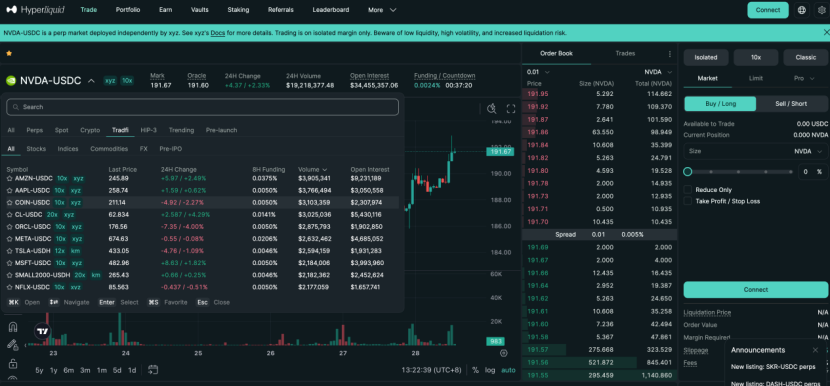
Aster has innovated with a dual‑mode architecture of Simple and Pro to cater to users with different risk preferences. The Simple mode adopts an AMM pool mechanism, enabling one‑click entry and zero‑slippage execution, suited for high‑frequency, small‑ticket, and short‑term traders. Its maximum leverage for equity perpetual futures is set at 25x. The Pro mode, built on an on‑chain order book, supports advanced order types such as limit and hidden orders, offering deeper liquidity and finer strategy execution, with a maximum leverage of 10x. Under Pro mode, tech equity perpetual futures such as NVDA have seen daily volumes in the millions and steadily growing open interest, indicating sustained participation by professional traders. Through this layered design of “traffic entry + deep market”, Aster has achieved effective segmentation of its user base and accelerated ecosystem expansion.

Lighter’s core proposition is its zk‑rollup provable matching system, where all trades and liquidations can be verified on‑chain via zero‑knowledge proofs, emphasizing transparency and fairness. Its equity perpetual futures currently support 10 U.S. stock tickers with a uniform leverage cap of 10x, reflecting a more conservative risk management stance. Its liquidity profile shows concentration at the top — COIN (Coinbase) often exceeds $10 million in daily volume, while NVDA and other mid‑tier names show moderate volume but relatively high open interest, suggesting the presence of medium‑to‑long‑term strategy capital. Lighter balances user experience with a simplified front end for easy onboarding, combined with a professional order book under‑the‑hood, satisfying the needs for professional execution.

It is worth noting that traffic entry points for equity perpetual futures are expanding beyond single protocol website into a diverse ecology. Aggregators such as Based.one integrate Hyperliquid’s core engine and provide more consumer‑friendly interfaces. Wallet‑embedded modules like Base.app allow users to open positions without leaving their wallet. Super apps such as UXUY further streamline the user journey, abstracting equity perpetuals into a Web2-like trading experience. This “protocol + application layer” division of labor is lowering barriers to participation and helping equity perpetual futures evolve from a niche professional tool to a mainstream trading product.

IV. Regulatory Challenges: Balancing Innovation and Compliance

The greatest source of uncertainty for equity perpetual futures lies on the regulatory front. Although no jurisdiction has yet enacted legislation specifically for on‑chain derivatives of this kind, regulators worldwide are closely observing their potential risks. The core issue centers on legal characterization: Do equity perpetual futures constitute unregistered securities derivatives?

In regulatory practice, U.S. authorities such as the SEC apply a principle prioritizing economic reality over technical form to derivatives tied to securities prices. Products closely related to regulated securities economically may fall under securities law jurisdiction regardless of their technological packaging. European regulators under frameworks such as MiCA have similarly emphasized that on‑chain derivatives pegged to traditional financial assets must still comply with existing financial regulations. This implies that even though equity perpetual futures do not involve custodial ownership of actual shares, their close linkage with U.S. equity prices could lead to classification as securities derivatives or contracts for difference (CFDs), triggering licensing, disclosure, investor protection, and other compliance requirements.

While regulatory attention currently focuses more on tokenized stocks and other products directly pegged to physical assets, the regulatory posture toward on‑chain “synthetic risk exposures” such as equity perpetual futures remains in an observational phase. Potential regulatory pathways may include: strengthening compliance responsibilities of front‑end operators (such as trading interface providers and liquidity facilitators); requiring transparency of price indices and oracle data sources; imposing restrictions on high leverage, reinforcing KYC/AML, and jurisdictional access controls; and explicitly folding these products into existing regulatory frameworks for derivatives.

To mitigate compliance risk, protocols may adopt strategies such as clearly distinguishing between “price tracking” and “equity tokenization”, emphasizing the synthetic and hedging nature of the product; employing multi‑source decentralized oracles to minimize manipulation concerns; setting prudent leverage caps and risk parameters to curb excessive speculation; and disclosing product risks and legal disclaimers comprehensively in user agreements. In the long term, the compliant development of equity perpetuals may require cooperation with licensed entities, providing services within regulated jurisdictions, or participating in regulatory sandbox programs.

In addition to regulatory risk, equity perpetual futures face a range of market and technical risks. Oracle failures or malicious manipulation can lead to erroneous liquidations; cross‑market volatility mismatches may amplify tail risk; insufficient liquidity can trigger severe slippage and difficulty closing positions; and smart contract vulnerabilities can be exploited to cause financial loss. These risks demand multi‑layered risk control frameworks, including but not limited to: redundant oracle sources with anomaly detection, dynamic margin adjustments, insurance fund buffers, futures security audits, and bug bounty programs.

V. Future Outlook: From Niche Innovation to Mainstream Financial Infrastructure

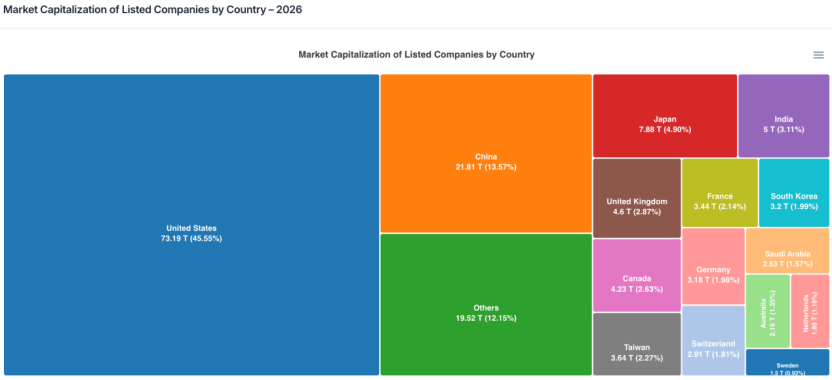
From the perspective of market scale, equity perpetual futures still enjoy great potentials. The total market capitalization of global listed companies approaches $160 trillion, with non‑U.S. markets accounting for over half of this pool — roughly $80 trillion in assets. Even a small fraction of capital participating through perpetual futures formats could easily reach hundreds of billions in scale. Drawing an analogy to crypto derivatives markets, where perpetual futures volumes have structurally exceeded spot volumes by more than three times, equity perpetual futures are expected to replicate a similar trend of derivative adoption within traditional asset classes.
In terms of product evolution, equity perpetual futures may represent just the beginning of a wider trend toward making all assets perpetual. As pricing mechanisms, clearing systems, and liquidity infrastructure mature, other asset classes including commodities (e.g., gold, oil), equities indices (e.g., S&P, Nasdaq), FX (e.g., EUR, JPY), and even interest rates — could be introduced into on‑chain perpetual futures frameworks. Perp DEXs may gradually evolve from crypto native trading venues into comprehensive multi‑asset derivatives markets, serving as crucial interfaces between traditional finance and on‑chain ecosystems.

Regulatory environments are expected to shift from ambiguity to clarity. Over the next 2–3 years, key jurisdictions are likely to issue classification guidance and regulatory frameworks for on‑chain derivatives, thereby clarifying compliance boundaries for equity perpetual futures. This transition may entail short‑term friction but ultimately benefit industry consolidation and compliant growth. Protocols that proactively build compliance capabilities, implement strong risk management systems, and maintain open dialogue with regulators are poised to gain competitive advantage under new rules.

In summary, equity perpetual futures are at a critical inflection point in their evolution from zero to one. They represent not only a natural choice for Perp DEXs seeking new narratives for growth but also a testing ground for the convergence of traditional assets and crypto finance. Despite ongoing technical and regulatory challenges, the huge underlying demand and asset scale ensure that this sector cannot be ignored. In the future, equity perpetual futures may not only become a cornerstone product of the on‑chain derivatives market, but also have the potential to reshape the way global retail investors participate in U.S. equity and broader asset trading, truly realizing a borderless, around‑the‑clock, and democratized financial market. In the process ahead, protocols that effectively balance innovation, risk, and compliance may become the builders of next‑generation financial infrastructure.


İlgili Okumalar

Conversation with Arthur Hayes: AI Has Drained Market Liquidity, BTC Will Be Below 100k by Year-End

In this June 2026 podcast interview, BitMEX co-founder Arthur Hayes explains his decision to sell his major crypto holdings (HYPE, NEAR, Worldcoin, Zcash). His rationale is based on a macro view linking oil prices, the Iran conflict, US politics, and an impending AI bubble burst. Hayes argues that high oil prices, driven by the ongoing war, will pressure domestic US inflation. To salvage the Republican Party's chances in the midterm elections, he believes Donald Trump may pivot to a populist, anti-AI stance—advocating for taxes and regulation—which would deflate the AI investment narrative. He sees the AI sector, particularly massive capital expenditure on data centers, as having absorbed nearly all excess market liquidity (around $1.5 trillion in debt issuance since 2025), starving other assets like Bitcoin. He highlights the upcoming SpaceX IPO at a ~$1.8 trillion valuation and 100x price-to-sales ratio as a potential tipping point. If these hyped IPOs underperform, it could shatter market confidence in AI. In such a scenario, all risk assets, including crypto, would fall together as correlations converge to 1 during a broad correction. Hayes has moved his portfolio into Treasuries and energy stocks (like ExxonMobil), predicting Bitcoin will be below $100k by year-end. He sees a potential crypto bull market only after the AI frenzy cools, liquidity stops flowing exclusively into AI, and possibly after a significant market downturn prompts new monetary stimulus.

marsbit11 dk önce

Conversation with Arthur Hayes: AI Has Drained Market Liquidity, BTC Will Be Below 100k by Year-End

marsbit11 dk önce

Fed's Internal Doves Flock to Hawkish Stance, Warsh's Debut "Between a Rock and a Hard Place"

U.S. Federal Reserve officials who previously advocated for rate cuts, including Governor Christopher Waller, have recently shifted their stance, with many now not ruling out the possibility of future rate hikes. This sets a challenging stage for new Fed Chair Kevin Warsh's first policy meeting. Appointed by President Trump based on his dovish views, Warsh now faces a committee where the debate has pivoted from "when to cut" to "whether to hike," driven by persistent inflation above 3%, a strong labor market, and supply-side pressures from AI infrastructure demands and geopolitical tensions. Key figures illustrate the shift. Governor Waller, once concerned about employment, now says data has pushed him toward considering rate increases. Even moderate voices like Governor Lisa Cook, while expecting inflation to ease, have indicated readiness to hike if it fails to do so. Long-time hawks such as regional Fed presidents Beth Hammack, Lorie Logan, and Neel Kashkari have grown more vocal, arguing that the real policy rate is effectively falling and that action may soon be needed. The upcoming Fed meeting is expected to keep rates steady but will likely remove the "easing bias" from its statement, signaling a neutral stance between cuts and hikes. The quarterly "dot plot" is anticipated to show most officials projecting no cuts this year, with some potentially indicating hikes. Chair Warsh, a critic of the Fed's reliance on forward guidance like the dot plot, must navigate communicating this pivot using tools he has questioned, all while steering policy in a direction counter to the preferences of the president who appointed him. The consensus suggests the Fed's next move could well be a rate increase.

marsbit1 saat önce

Fed's Internal Doves Flock to Hawkish Stance, Warsh's Debut "Between a Rock and a Hard Place"

marsbit1 saat önce

The Trillion-Yuan Market Cap 'Yi Zhong Tian': Who is the True Value King?

The article analyzes the three leading Chinese optical module companies, collectively nicknamed "Yi Zhong Tian": Xinyisheng, Zhongji Innolight, and TFC Optical Communication. It evaluates their "cost-performance" not by current stock price, but through three lenses: PEG ratio (growth vs. valuation), earnings quality, and premium/discount for certainty. Xinyisheng shows the most attractive PEG ratio and high profitability, but its valuation reflects discounts for risks like high customer concentration and reliance on overseas markets. Zhongji Innolight, the most expensive, commands a premium for its market leadership, dominant share in key products like 800G/1.6T modules, and higher earnings certainty, though it faces geopolitical risks. TFC Optical, as an upstream component supplier ("water seller"), has the highest gross margin and bets on the long-term CPO/NPO architecture trend, but trades at a high valuation with more stable, less explosive growth. The core argument is that while these companies dominate module assembly, the true profit pool and technological moat lie upstream in laser and switch chips, currently controlled by U.S. firms like Lumentum and Coherent. The long-term "cost-performance" for these Chinese leaders hinges on whether the domestic industry, exemplified by companies like Yuanjie Technology, can successfully move up the value chain into high-power laser chips. Otherwise, their high growth may remain confined to the lower-margin assembly segment.

marsbit1 saat önce

The Trillion-Yuan Market Cap 'Yi Zhong Tian': Who is the True Value King?

marsbit1 saat önce

Has the Crypto Market Bottomed? Here's What Institutions Think

The crypto market is in a period of significant debate, with leading institutions offering differing views on whether a bottom has been reached. Three prominent firms have published detailed analyses: * **Galaxy Digital** argues Bitcoin has **not yet bottomed**. Their analysis of 13 historical indicators across six dimensions (valuation, profit-taking, miner pressure, etc.) shows only four are fully met. They project a potential bottom range between $30k and $54k. * **NYDIG** states a bottom is **possible but not likely**. While metrics are close to historic bear market extremes, they note the absence of a classic panic-selling event. They also suggest increased institutional adoption may have structurally altered the market cycle, potentially leading to a shallower downturn. * **Standard Chartered Bank** asserts the **bottom has already occurred** at around $59k. They cite two key factors: potential US-Iran diplomatic progress and the anticipated SpaceX IPO, which they believe absorbed capital and caused ETF selling pressure that is now subsiding. They forecast a year-end price target of $100k. Despite the surface-level disagreement, the reports share critical common ground more valuable for long-term investors: 1. All three believe the market bottom will form **within this year**. 2. All agree the current price is **closer to the bottom than to previous highs**. 3. All maintain a **bullish long-term outlook** for Bitcoin and a new cycle. The core takeaway is that while the exact bottom price ($40k, $50k, or $60k) is debated, the consensus is that a bottom is imminent. For long-term holders, the primary focus should not be pinpointing the absolute low, but on the future potential for prices to reach $100k, $200k, or higher. The fundamental thesis for Bitcoin—sovereign debt accumulation, inflation, declining trust in centralized institutions, global digitization, and improved accessibility—remains intact and is arguably strengthening. The overall landscape is viewed as more favorable than in previous crypto winters.

marsbit1 saat önce

Has the Crypto Market Bottomed? Here's What Institutions Think

marsbit1 saat önce

İşlemler

Spot
Futures

Popüler Makaleler

BITCOIN Nedir

HarryPotterObamaSonic10Inu (ERC-20)'yu ve Kripto Alanındaki Yerini Anlamak Son yıllarda, kripto para piyasası, hem ticaret yapanların hem de topluluk etkileşimi ve eğlence değeri arayanların ilgisini çeken meme coin'lerin popülaritesinde bir artış gördü. Bu benzersiz token'lar arasında, kripto para dokusuna kültürel referansları harmanlayan ilginç bir proje olan HarryPotterObamaSonic10Inu (ERC-20) bulunmaktadır. Bu makale, HarryPotterObamaSonic10Inu'nun temel yönlerini, mekanizmalarını, topluluk odaklı ethosunu ve daha geniş kripto manzarasıyla etkileşimini incelemektedir. HarryPotterObamaSonic10Inu (ERC-20) Nedir? Adından da anlaşılacağı gibi, HarryPotterObamaSonic10Inu, Ethereum blok zinciri üzerinde inşa edilen bir meme coin'dir ve ERC-20 standardı altında sınıflandırılmaktadır. Geleneksel kripto paraların pratik kullanılabilirlik veya yatırım potansiyeline odaklandığı durumların aksine, bu token eğlence değeri ve topluluğunun gücü üzerine kuruludur. Proje, bağlı kullanıcıların bir araya gelebileceği, fikirlerini paylaşabileceği ve çeşitli kültürel fenomenlerden ilham alan etkinliklere katılabileceği bir ortam yaratmayı hedeflemektedir. HarryPotterObamaSonic10Inu'nun dikkate değer özelliklerinden biri işlemlerde sıfır vergi olmasıdır. Bu çekici unsur, küçük ölçekli yatırımcıları caydırabilecek ek ücretlerden yoksun olarak ticareti ve topluluk katılımını teşvik etmeyi amaçlamaktadır. Coin'in toplam arzı bir milyar token olarak belirlenmiştir; bu, topluluk içinde önemli bir dolaşım sağlama niyetini göstermektedir. HarryPotterObamaSonic10Inu (ERC-20) Yaratıcısı HarryPotterObamaSonic10Inu'nun kökenleri bir miktar gizemlidir; yaratıcısı hakkında spesifik bilgilerin ne olduğu bilinmemektedir. Bu token'ın geliştirilmesi, belirli bir ekip veya açık bir plan eksikliği ile gerçekleşmiştir; bu durum, meme coin sektöründe oldukça yaygındır. Proje, topluluğunun heyecanı ve katılımına dayalı olarak organik bir şekilde ortaya çıkmıştır. HarryPotterObamaSonic10Inu (ERC-20) Yatırımcıları Dış yatırımlar ve destekler söz konusu olduğunda, HarryPotterObamaSonic10Inu da belirsiz kalmaktadır. Token, bilinen herhangi bir yatırım fonunu veya önemli bir kurumsal desteği listelememektedir. Bunun yerine, projenin can damarı, kolektif eylem ve kripto alanındaki katılım yoluyla büyüme ve sürdürülebilirlik sağlayan temel topluluğudur. HarryPotterObamaSonic10Inu (ERC-20) Nasıl Çalışır? Bir meme coin olarak, HarryPotterObamaSonic10Inu, genellikle varlık değerini yöneten geleneksel çerçevelerin dışında çalışmaktadır. Projenin nasıl çalıştığını tanımlayan birkaç özelliği vardır: Sıfır Vergi İşlemleri: İşlemlerde vergi ücreti olmadan, kullanıcılar gizli maliyet endişesi olmadan token'ı serbestçe alıp satabilirler. Topluluk Etkileşimi: Proje, topluluk etkileşimi üzerine kuruludur ve sosyal medya platformlarını kullanarak heyecan yaratarak katılımı kolaylaştırır. Tartışmalar, içerik paylaşımı ve katılım, projenin erişimini genişletmeye ve destekleyiciler arasında sadakat oluşturmaya yardımcı olan kritik unsurlardır. Pratik Kullanılabilirlik Yok: HarryPotterObamaSonic10Inu'nun mali ekosistem içinde somut bir kullanılabilirlik sunmadığı belirtilmelidir. Daha ziyade, eğlence ve topluluk etkinlikleri için bir token olarak sınıflandırılmaktadır. Kültürel Referans: Token, popüler kültürden unsurları zekice harmanlayarak ilgi çekmektedir ve hem meme meraklıları hem de kripto takipçileriyle bağlantı kurmaktadır. HarryPotterObamaSonic10Inu, meme coin'lerin, daha geleneksel kripto para projelerinden nasıl farklı çalıştığını örneklendirmektedir; bu projeler, utilitarist varlıklar yerine yenilikçi sosyal yapıların bir parçası olarak piyasaya girmektedir. HarryPotterObamaSonic10Inu (ERC-20) Zaman Çizelgesi HarryPotterObamaSonic10Inu'nun tarihi, birkaç dikkate değer kilometre taşı ile işaretlenmiştir: Oluşum: Token, birçok kripto meraklısının hayal gücünü yakalayan bir viral meme'den ortaya çıkmıştır. Spesifik yaratım tarihleri mevcut değildir ve bu onun organik yükselişini vurgulamaktadır. Borsa Listelemeleri: HarryPotterObamaSonic10Inu, topluluğun daha kolay erişim ve ticaret yapabilmesini sağlamak için çeşitli borsalarda yer bulmuştur. Topluluk Katılım İnisiyatifleri: Yarışmalar, sosyal medya kampanyaları ve hayranlar ile destekçilerden içerik üretimini içeren topluluk etkileşimini artırmayı amaçlayan devam eden etkinlikler. Gelecek Genişleme Planları: Projenin yol haritası, kültürel temalarına ilişkin bir NFT koleksiyonu, ticari ürünler ve bir e-ticaret sitesi başlatılmasını içermektedir; bu da topluluğun daha fazla katılımını sağlamayı ve ekosistemine daha fazla boyut kazandırmayı hedeflemektedir. HarryPotterObamaSonic10Inu (ERC-20) Hakkında Kilit Noktalar Topluluk Odaklı Doğası: Proje, kullanıcı katılımını geliştirme önceliği taşır ve böylece kullanıcıların sürecin en önünde yer almasını sağlar. Meme Coin Sınıflandırması: Eğlenceye dayalı kripto paranın doruk noktasıdır ve geleneksel yatırım araçlarından ayrılmaktadır. Bitcoin ile Doğrudan İlişki Yok: Ticker ismindeki benzeliğe rağmen, HarryPotterObamaSonic10Inu ayırt edicidir ve Bitcoin veya diğer yerleşik kripto paralarla herhangi bir ilişkisi yoktur. İşbirliğine Odaklanma: HarryPotterObamaSonic10Inu, sahipleri arasında işbirliği ve hikaye paylaşımı için bir alan oluşturmak üzere tasarlanmıştır ve bu da yaratıcılık ve topluluk bağlarını sağlamaktadır. Gelecek Beklentileri: Başlangıçta belirlendiği temalardan NFTs ve ticari ürünlere genişleme arzusu, projenin dijital kültürde daha ana akıma girebilmesi için bir yol haritası çizmektedir. Meme coin'ler, kripto para topluluğunun hayal gücünü çalmaya devam ederken, HarryPotterObamaSonic10Inu (ERC-20), kültürel bağları ve topluluk merkezli yaklaşımıyla öne çıkmaktadır. Geleneksel bir hizmet odaklı token modeliyle uyumlu olmasa da, özünde destekçileri arasında sağlanan neşe ve dostluğu vurgulayarak, giderek dijitalleşen bir çağda kripto paraların evrilen doğasını göstermektedir. Proje gelişmeye devam ettikçe, topluluk dinamiklerinin blockchain teknolojisi dünyasındaki seyrini nasıl etkilediğini izlemek önemli olacaktır.

2.0k Toplam GörüntülenmeYayınlanma 2024.04.01Güncellenme 2024.12.03

BITCOIN Nedir

BTC Nasıl Satın Alınır

HTX.com’a hoş geldiniz! Bitcoin (BTC) satın alma işlemlerini basit ve kullanışlı bir hâle getirdik. Adım adım açıkladığımız rehberimizi takip ederek kripto yolculuğunuza başlayın. 1. Adım: HTX Hesabınızı OluşturunHTX'te ücretsiz bir hesap açmak için e-posta adresinizi veya telefon numaranızı kullanın. Sorunsuzca kaydolun ve tüm özelliklerin kilidini açın. Hesabımı Aç2. Adım: Kripto Satın Al Bölümüne Gidin ve Ödeme Yönteminizi SeçinKredi/Banka Kartı: Visa veya Mastercard'ınızı kullanarak anında Bitcoin (BTC) satın alın.Bakiye: Sorunsuz bir şekilde işlem yapmak için HTX hesap bakiyenizdeki fonları kullanın.Üçüncü Taraflar: Kullanımı kolaylaştırmak için Google Pay ve Apple Pay gibi popüler ödeme yöntemlerini ekledik.P2P: HTX'teki diğer kullanıcılarla doğrudan işlem yapın.Borsa Dışı (OTC): Yatırımcılar için kişiye özel hizmetler ve rekabetçi döviz kurları sunuyoruz.3. Adım: Bitcoin (BTC) Varlıklarınızı SaklayınBitcoin (BTC) satın aldıktan sonra HTX hesabınızda saklayın. Alternatif olarak, blok zinciri transferi yoluyla başka bir yere gönderebilir veya diğer kripto para birimlerini takas etmek için kullanabilirsiniz.4. Adım: Bitcoin (BTC) Varlıklarınızla İşlem YapınHTX'in spot piyasasında Bitcoin (BTC) ile kolayca işlemler yapın.Hesabınıza erişin, işlem çiftinizi seçin, işlemlerinizi gerçekleştirin ve gerçek zamanlı olarak izleyin. Hem yeni başlayanlar hem de deneyimli yatırımcılar için kullanıcı dostu bir deneyim sunuyoruz.

7.9k Toplam GörüntülenmeYayınlanma 2024.12.12Güncellenme 2026.06.02

BTC Nasıl Satın Alınır

$BITCOIN Nedir

DİJİTAL ALTIN ($BITCOIN): Kapsamlı Bir Analiz DİJİTAL ALTIN ($BITCOIN) Tanıtımı DİJİTAL ALTIN ($BITCOIN), geleneksel değerli metallerin özelliklerini merkeziyetsiz teknolojilerin yeniliği ile birleştirmeyi amaçlayan Solana ağı üzerinde çalışan blockchain tabanlı bir projedir. Bitcoin ile aynı isme sahip olmasına rağmen, genellikle bir değer saklama aracı olarak algılandığı için “dijital altın” olarak anılmaktadır; DİJİTAL ALTIN, Web3 ortamında benzersiz bir ekosistem yaratmak için tasarlanmış ayrı bir tokendir. Hedefi, uygulanabilir bir alternatif dijital varlık olarak kendini konumlandırmaktır, ancak uygulamaları ve işlevleri ile ilgili ayrıntılar hala gelişmektedir. DİJİTAL ALTIN ($BITCOIN) Nedir? DİJİTAL ALTIN ($BITCOIN), Solana blockchain'inde kullanılmak üzere açıkça tasarlanmış bir kripto para tokenidir. Bitcoin'in yaygın olarak tanınan bir değer saklama rolü sağlamasının aksine, bu token daha geniş uygulamalara ve özelliklere odaklanıyor gibi görünmektedir. Dikkate değer yönler şunlardır: Blockchain Altyapısı: Token, yüksek hızlı ve düşük maliyetli işlemleri yönetme kapasitesi ile bilinen Solana blockchain'inde inşa edilmiştir. Arz Dinamikleri: DİJİTAL ALTIN'ın maksimum arzı 100 katrilyon token (100P $BITCOIN) ile sınırlıdır, ancak dolaşımdaki arzı ile ilgili ayrıntılar şu anda açıklanmamıştır. Kullanım Alanı: Kesin işlevler açıkça belirtilmemiş olsa da, token'ın merkeziyetsiz uygulamalar (dApps) veya varlık tokenizasyon stratejileri ile ilgili çeşitli uygulamalar için kullanılabileceğine dair işaretler bulunmaktadır. DİJİTAL ALTIN ($BITCOIN) Yaratıcısı Kimdir? Şu anda, DİJİTAL ALTIN ($BITCOIN) arkasındaki yaratıcıların ve geliştirme ekibinin kimliği bilinmemektedir. Bu durum, merkeziyetsiz finans ve meme coin fenomenleriyle uyumlu olan birçok yenilikçi proje arasında yaygındır. Böyle bir anonimlik, topluluk odaklı bir kültürü teşvik edebilirken, yönetişim ve hesap verebilirlik konusundaki endişeleri artırmaktadır. DİJİTAL ALTIN ($BITCOIN) Yatırımcıları Kimlerdir? Mevcut bilgiler, DİJİTAL ALTIN ($BITCOIN) için bilinen herhangi bir kurumsal destekçi veya önde gelen risk sermayesi yatırımı olmadığını göstermektedir. Proje, geleneksel finansman yolları yerine topluluk desteği ve benimsemeye odaklanan bir eşler arası modelde çalışıyor gibi görünmektedir. Faaliyetleri ve likiditesi esas olarak PumpSwap gibi merkeziyetsiz borsalarda (DEX'ler) yer almakta olup, bu da onun taban hareketine vurgu yapmaktadır. DİJİTAL ALTIN ($BITCOIN) Nasıl Çalışır DİJİTAL ALTIN ($BITCOIN) 'ın operasyonel mekanikleri, blockchain tasarımı ve ağ özellikleri temelinde açıklanabilir: Konsensüs Mekanizması: Solana'nın benzersiz tarih kanıtı (PoH) ile bir hisse kanıtı (PoS) modelini birleştirerek, proje ağın yüksek performansına katkıda bulunan verimli işlem doğrulamasını sağlar. Tokenomik: Belirli deflasyonist mekanizmalar kapsamlı bir şekilde detaylandırılmamış olsa da, geniş maksimum token arzı, henüz tanımlanmamış mikro işlemler veya niş kullanım durumlarına hitap edebileceğini ima etmektedir. Etkileşim: Solana'nın daha geniş ekosistemi ile entegrasyon potansiyeli bulunmaktadır; bu, çeşitli merkeziyetsiz finans (DeFi) platformlarını içermektedir. Ancak, belirli entegrasyonlarla ilgili ayrıntılar belirtilmemiştir. Önemli Olayların Zaman Çizelgesi DİJİTAL ALTIN ($BITCOIN) ile ilgili önemli kilometre taşlarını vurgulayan bir zaman çizelgesi: 2023: Token'ın Solana blockchain'inde ilk dağıtımı, sözleşme adresi ile işaretlenmiştir. 2024: DİJİTAL ALTIN, PumpSwap gibi merkeziyetsiz borsalarda işlem görmeye başladıkça görünürlük kazanır ve kullanıcıların bunu SOL karşısında ticaret yapmasına olanak tanır. 2025: Proje, topluluk odaklı etkileşimlere yönelik potansiyel ilgi ve ara sıra ticaret faaliyetleri görür, ancak şu ana kadar dikkate değer ortaklıklar veya teknik ilerlemeler belgelenmemiştir. Kritik Analiz Güçlü Yönler Ölçeklenebilirlik: Temel Solana altyapısı, yüksek işlem hacimlerini destekleyerek $BITCOIN'in çeşitli işlem senaryolarındaki faydasını artırabilir. Erişilebilirlik: Token başına potansiyel düşük ticaret fiyatı, perakende yatırımcıları çekebilir ve parçalı mülkiyet fırsatları sayesinde daha geniş katılımı kolaylaştırabilir. Riskler Şeffaflık Eksikliği: Kamuya açık olarak bilinen destekçilerin, geliştiricilerin veya bir denetim sürecinin olmaması, projenin sürdürülebilirliği ve güvenilirliği konusunda şüpheler doğurabilir. Piyasa Volatilitesi: Ticaret faaliyeti büyük ölçüde spekülatif davranışa dayanmakta olup, bu da yatırımcılar için önemli fiyat dalgalanmalarına ve belirsizliklere yol açabilir. Sonuç DİJİTAL ALTIN ($BITCOIN), hızla gelişen Solana ekosisteminde ilginç ama belirsiz bir proje olarak ortaya çıkmaktadır. “Dijital altın” anlatısını kullanmaya çalışırken, Bitcoin'in değer saklama rolünden ayrılması, amaçlanan faydasının ve yönetişim yapısının daha net bir şekilde tanımlanması gerekliliğini vurgulamaktadır. Gelecekteki kabul ve benimseme, mevcut belirsizliklerin giderilmesine ve operasyonel ile ekonomik stratejilerinin daha açık bir şekilde tanımlanmasına bağlı olacaktır. Not: Bu rapor, Ekim 2023 itibarıyla mevcut olan sentezlenmiş bilgileri kapsamaktadır ve araştırma döneminin ötesinde gelişmeler yaşanmış olabilir.

94 Toplam GörüntülenmeYayınlanma 2025.05.13Güncellenme 2025.05.13

$BITCOIN Nedir

Tartışmalar

HTX Topluluğuna hoş geldiniz. Burada, en son platform gelişmeleri hakkında bilgi sahibi olabilir ve profesyonel piyasa görüşlerine erişebilirsiniz. Kullanıcıların BTC (BTC) fiyatı hakkındaki görüşleri aşağıda sunulmaktadır.

活动图片