JST Embarks on Its Second Buyback and Burn: Cumulative 10.96% of Total Supply Destroyed, Accelerating Entry into a New Era of Value Growth

marsbitPublished on 2026-01-16Last updated on 2026-01-16

Abstract

JST, the token of the JUST ecosystem, has completed its second major buyback and burn event on January 15, 2026, permanently removing 525 million JST (5.3% of total supply) worth over $21 million. Combined with the first burn, a total of 10.96% of JST's supply has been destroyed, accelerating its deflationary trajectory and reinforcing its value proposition. The buyback was funded by $10.19 million from JustLend DAO's Q4 2025 net profits and $10.34 million from accumulated reserve earnings, demonstrating the ecosystem's strong profitability and financial health. Key drivers include JustLend DAO's robust performance, with Total Value Locked (TVL) exceeding $7.08 billion, innovative products like sTRX (with over 9.3 billion TRX staked), and the widely adopted GasFree smart wallet, which has facilitated over $46 billion in transactions and saved users $36.25 million in fees. Additionally, growth from the USDD decentralized stablecoin ecosystem, which recently surpassed $1 billion in TVL, contributed significant incremental revenue. This burn signifies a fundamental shift for JST from a utility governance token to a yield-backed asset, directly tethering its value to the ecosystem's cash flow. The reduced supply increases scarcity, enhances per-token governance power for holders, and establishes a sustainable, transparent deflation model for DeFi. With a market cap surpassing $400 million and growing trading volume, JST is positioned for continued value appreciation driven by r...

On January 15, 2026, the JST token officially completed its second large-scale buyback and burn. This burn action not only demonstrates the project's firm commitment to its deflationary mechanism but also showcases the robust profitability and financial health of the JUST ecosystem to the entire cryptocurrency market with the destruction of 525,000,000 JST (5.3% of the total supply).

According to the JustLend DAO official announcement, the estimated value corresponding to this burn exceeds 21 million US dollars. Combined with the amount burned in the first round, the cumulative number of JST tokens burned has reached 1,084,890,753, accounting for 10.96% of the total supply. This means that in less than three months, JST has permanently removed over one-tenth of its total supply, a remarkable pace of deflation.

From a broader perspective, this burn marks a fundamental evolution in JST's value narrative. It is transitioning from a governance token to an equity asset anchored to the growth of the ecosystem's cash flow. This process not only enhances the scarcity and value foundation of the JST token but also provides a clear, practical path for the decentralized finance (DeFi) sector—one driven by real yield to fuel token value—demonstrating a transparent and sustainable new paradigm of deflation.

Strong Performance of JustLend DAO Ecosystem Forges the Financial Cornerstone for Large-Scale Buyback

Such a large-scale buyback and burn necessarily requires a solid financial foundation. The announcement clearly reveals the dual pillars of the funding source: $10,192,875 came from JustLend DAO's net profit in the fourth quarter of 2025, while another $10,340,249 originated from the project's accumulated stock of reserve earnings. These figures themselves are the most powerful proof of performance; they collectively point to a core fact: the JustLend DAO ecosystem not only possesses strong immediate profitability but also boasts a robust financial structure and sustainable cash flow, which form the solid foundation supporting its commitment to buybacks and its deflation strategy.

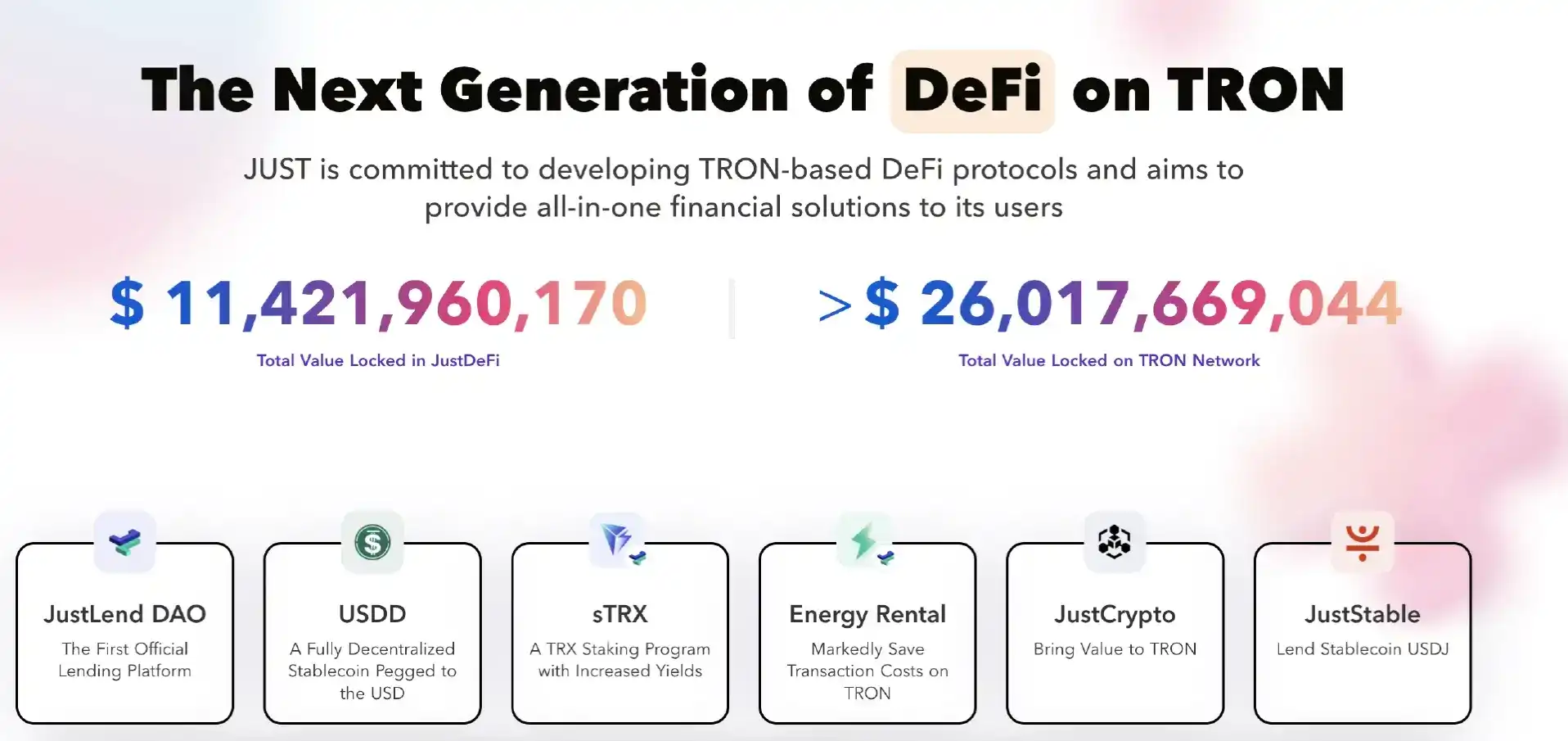
A deeper analysis of JustLend DAO's performance in Q4 2025 reveals clear growth trajectories. Firstly, as the flagship lending protocol of the JUST ecosystem, JustLend DAO benefits from the continuous improvement of the TRON infrastructure. Its Total Value Locked (TVL) broke through the $7.08 billion mark in the fourth quarter and has long been ranked among the top three in the lending market, with lending activity in its SBM market also climbing to a new cycle high.

It is worth noting that the $10,340,249 in stock earnings, which formed an important part of this buyback fund, can be traced back to the earnings from the reserve capital deposited in the SBM USDT market during the first JST buyback. The appreciation process of this capital is itself the most direct proof of the SBM market's strong profitability. It showcases JustLend DAO's sophisticated financial operation model: strategically reinvesting ecosystem profits for "self-regeneration" within the protocol, thereby providing an endogenous and sustainable source of funding for subsequent value returns.

On this basis, JustLend DAO's revenue structure is also showing a trend of diversification. While the traditional lending market, its core business, maintains steady growth, JustLend DAO has innovatively built a product matrix including sTRX (Staked TRX) and Energy Rental, greatly expanding the boundaries and depth of its value capture.

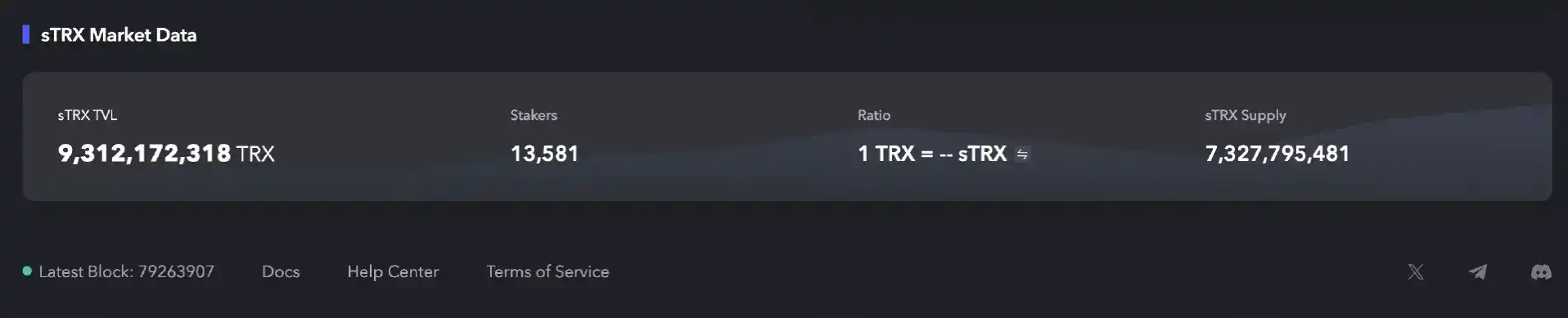
Among these, the sTRX service allows users to stake TRX to earn rewards while still flexibly participating in other DeFi activities. This innovative design significantly improves capital efficiency and user stickiness. As of January 15, the amount of TRX staked on the platform has surpassed 9.3 billion tokens. This staggering figure not only reflects the community's high recognition of the sTRX product but also generates considerable and sustainable service revenue.
Meanwhile, the "Energy Rental" service, designed to reduce users' on-chain operation costs, has also demonstrated strong market appeal through active rate optimization. Since September 2025, the base rate for this service was significantly reduced from 15% to a more competitive 8%. The rate optimization directly stimulated market demand and transaction frequency, thereby creating steady incremental revenue for the protocol through more active leasing business.

While the core product matrix continues to perform strongly, JustLend DAO, focusing on lowering the participation threshold for the general user, innovatively launched the GasFree smart wallet in March 2025. This feature彻底打破了用户必须预先持有原生代币(TRX)以支付手续费这一长期困扰新手用户的壁垒 (completely breaks down the long-standing barrier for new users of having to hold the native token (TRX) in advance to pay transaction fees), allowing users to directly deduct and pay the required network fees from the token assets they are transferring (e.g., USDT). This design not only achieves ultimate operational convenience but also fundamentally broadens the accessibility of blockchain finance.

To accelerate the adoption of this innovative feature, JustLend DAO simultaneously launched a highly attractive 90% transfer fee subsidy campaign. With this support, users only need to pay an extremely low fee of approximately 1 USDT when using the GasFree function for USDT transfers. This combined strategy quickly ignited market demand. As of January 15, the total transaction volume driven by the GasFree smart wallet has exceeded $46 billion. This astonishing scale not only validates the market's strong desire for a frictionless transaction experience but has also directly saved users a cumulative total of over $36.25 million in network fee costs. This innovation, by significantly reducing actual usage costs and cognitive barriers, has introduced massive incremental users and capital flow into the ecosystem, constituting another powerful growth pole for the platform's network effects and revenue potential.

Meanwhile, another funding channel in the buyback and burn plan, namely the incremental revenue from the USDD multi-chain ecosystem (the portion exceeding $10 million), also constitutes a significant source of value. USDD, as the core decentralized stablecoin of the TRON ecosystem, has seen remarkable results from its multi-chain expansion strategy. It has been successfully deployed on mainstream public chains like Ethereum and BNB Chain, broadening its application scenarios and user base.

Its ecosystem value recently achieved a milestone breakthrough. On January 14, USDD's TVL historically surpassed the $1 billion mark. This means that in less than two months, USDD's TVL规模实现了惊人的100%增长 (achieved an astonishing 100% growth), its expansion speed and market acceptance fully confirming the strong momentum and deep asset appeal of this stablecoin within the multi-chain ecosystem. The rapid growth of its TVL and the continuous prosperity of its ecosystem significantly enhance the potential scale of this funding channel, providing an anticipated source of value for JST's subsequent quarterly buyback and burn plans.

Through deep integration with various DeFi protocols, USDD not only consolidates its peg stability but also creates continuous value inflow for the entire ecosystem. The inclusion of USDD ecosystem's excess income in the JST buyback and burn plan builds a value闭环 (closed loop) of "stablecoin + lending protocol + governance token". In this model, the expansion and prosperity of USDD and JustLend DAO directly power the deflation of JST, while the increase in JST's value in turn enhances the attractiveness and cohesion of the entire TRON DeFi ecosystem, creating a powerful internal synergy and value feedback effect.

Deepening Deflation Mechanism: Revolutionary Reshaping of JST's Value Foundation

In summary, the significance of this buyback and burn早已超越了单纯的价格支撑范畴 (has long surpassed the scope of mere price support); it is triggering a series of profound structural changes. Most fundamentally, it has completed the reshaping of JST's value support logic. JST is no longer merely a "utility token" for paying network fees or participating in governance votes; it has evolved into an "equity asset" directly anchored to the cash flow performance of JustLend DAO, USDD, and associated ecosystems.
Through the buyback and burn mechanism, the profit growth of the ecosystem is continuously injected into the value foundation of the JST token, making holding JST equivalent to holding an equity certificate that shares in the future profit growth of the ecosystem. On January 8, CoinMarketCap data showed that JST's market cap historically broke through the $400 million mark. This is not just a numerical leap but substantial market recognition of its new positioning. Accompanying the rising market cap was increased activity of funds. On January 8, its 24-hour trading volume significantly increased by 21.92%, reaching $31.49 million, and its price had also risen 10.82% steadily over the past month, with a daily increase of 3.1%.

The synchronous expansion of trading volume and market cap at key junctures is not偶然的市场波动 (an accidental market fluctuation) but a clear "vote of confidence" from the capital markets in response to the improving fundamentals of the JUST ecosystem, particularly the profitability and value return mechanism demonstrated by the buyback and burn.

Secondly, the JST buyback and burn also带来治理权力的实质性增值 (brings substantial增值 to governance power). As the total token supply is irreversibly reduced, the governance weight in the protocol represented by each remaining JST in the market will increase accordingly. This means that long-term holders not only enjoy the economic benefits of value appreciation but also see their voice in key community decisions (such as parameter adjustments, new product launches, treasury fund usage, etc.) amplified simultaneously. This design deeply binds the interests of core community members to the long-term success of the protocol,极大地增强了社区的稳定性和参与感 (greatly enhancing community stability and sense of participation).

From a broader industry perspective, JST's buyback and burn practice provides a clear and借鉴的新范式 (new paradigm to emulate) for token economics in the DeFi field. Removing 10.96% of the total supply through two rounds of burns in an extremely short time not only demonstrates efficient execution but, more profoundly, deeply binds the protocol's financial success to the interests of token holders, thereby establishing a良性循环典范 (exemplary virtuous cycle) of "value creation - value return".

This model fundamentally reverses the old logic where token value relied on speculative narratives,转向由协议基本面现金流驱动的可持续路径 (turning towards a sustainable path driven by the protocol's fundamental cash flow), providing a solid and credible case study for the industry on how to build economic models with substantial value support.

Looking ahead, with JST buyback and burn becoming a quarterly routine, a clear, predictable deflation path has been laid out. The scarcity of JST will be a certain narrative that strengthens over time. Each quarterly report disclosure and the subsequent burn will serve as a catalyst for reassessing its intrinsic value. This burn is not an endpoint but the beginning of a more恢弘的价值累积篇章 grand chapter of value accumulation). A value revolution, supported by ecosystem profitability and driven by product synergy, has already pressed the accelerator.


Related Questions

QWhat was the total amount of JST tokens burned in the second buyback and what percentage of the total supply did it represent?

A525,000,000 JST tokens were burned, representing 5.3% of the total supply.

QWhat is the cumulative amount and percentage of JST tokens burned so far through the two buyback events?

AThe cumulative amount burned is 1,084,890,753 JST tokens, which is 10.96% of the total supply.

QWhat were the two main financial pillars that funded the buyback and burn initiative?

AThe funding came from JustLend DAO's Q4 2025 net revenue of $10,192,875 and a reserve of accumulated earnings of $10,340,249.

QWhat innovative product significantly lowered the barrier to entry for new users by eliminating the need to hold TRX for gas fees?

AThe GasFree Smart Wallet, which allows users to pay network fees directly from the tokens being transferred (like USDT).

QWhat major milestone did the USDD ecosystem achieve recently, and what does it signify for the JST buyback mechanism?

AThe USDD ecosystem's Total Value Locked (TVL) historically surpassed $1 billion, signifying rapid growth and providing a substantial, predictable value source for future JST buyback and burn plans.

Related Reads

2029 Finale Prediction: When Cryptocurrency Completely "Vanishes", Who Can Remain in This Financial Upheaval?

By 2029, the crypto industry will have transformed into a largely invisible but foundational layer for traditional finance. This timeline outlines the key shifts from now until then. By mid-2026, the most sought-after assets on-chain will not be traditional tokens, but synthetic perpetual contracts for private, high-growth companies (like SpaceX, OpenAI). These become primary price discovery tools, highlighting the market's craving for real-world asset value. Most altcoins enter a sustained bear market as their fundamental lack of asset-backed value is exposed. In late 2026, the "AI + Crypto" narrative largely fades as AI giants prove they don't need crypto infrastructure, except for prediction markets betting on model performance. Simultaneously, a quiet but significant wave of tokenization for institutional assets (money market funds, private credit) begins. The industry splits into a noisy speculative economy and a silent institutional one. Throughout 2027, major public blockchain foundations pivot decisively to serve institutional clients, building compliance toolkits and sales teams. However, key sectors hit growth ceilings: private perpetual contracts are legally restricted from public promotion, stable币 growth is capped by looming political uncertainty, and tokenization projects remain cautious. In 2028, following a U.S. election assumed to maintain a regulatory (not prohibitive) stance, a pivotal change occurs. After a major liquidation crisis exposes the flaws of synthetic contracts lacking a real-asset anchor, new regulations allow the *public solicitation* of private security sales (secondary market shares) to accredited investors. This creates a legitimate, direct on-ramp for retail capital into previously illiquid private equity. By 2029, the resulting bull market is driven by trading in real, innovative company shares (biotech, robotics, AI labs), not speculative tokens. "Crypto" as a distinct asset class recedes; it becomes the mundane, unseen plumbing for this new global private markets infrastructure. Tokens that survive are those capturing real cash flows from this infrastructure. Speculation persists but is marginalized. The core questions posed at the start are answered: token value is tied to legally enforceable claims on real assets, frontier tech adoption happens via private market channels, and crypto's absorption into traditional finance is marked by its becoming boring and invisible. The key validation for this entire thesis is whether, by late 2028, a legal pathway exists for ordinary accredited investors to access private assets directly.

marsbit41m ago

2029 Finale Prediction: When Cryptocurrency Completely "Vanishes", Who Can Remain in This Financial Upheaval?

marsbit41m ago

After the U.S. Banned Fable 5, Zhipu's Stock Soared 47%

On June 15, Chinese AI company Zhipu's stock surged up to 47.6% in Hong Kong, closing with a 32.82% gain. This sharp rise followed two key industry events. On June 12, Anthropic was compelled by a U.S. government export control order to suspend global access to its latest flagship models, Claude Fable 5 and Claude Mythos 5, impacting developers and businesses reliant on them. The next day, Zhipu announced it was opening access to its new open-source flagship model, GLM-5.2, for all Coding Plan users, with API and model weights (under the MIT license) to follow. The Anthropic incident highlighted a critical shift in the AI industry: beyond raw capability, the stability, continuous accessibility, and control over AI models are becoming equally vital, especially as AI integrates deeper into business workflows. Zhipu's move, emphasizing that "frontier intelligence should not belong to a few nor be subject to arbitrary revocation," positioned its open, accessible model as an alternative. GLM-5.2 focuses on "Long Horizon Tasks" with a 1M context window, aiming for consistency in complex, extended projects. Market analysts suggest this event exposes the risk of dependency on closed-source models subject to single jurisdiction policies, potentially accelerating a shift toward domestic base models and localized deployments. The investment response indicates a new valuation metric is emerging—prioritizing which companies can provide AI capabilities that are not only advanced but also reliably and sustainably accessible.

marsbit42m ago

After the U.S. Banned Fable 5, Zhipu's Stock Soared 47%

marsbit42m ago

PANews Column Registration and Article Submission Guide

"PANews Column Registration and Submission Guide" provides instructions for users to register as columnists and publish articles on the PANews platform. Key application requirements are emphasized: content should focus on in-depth analysis within Crypto, Web3, blockchain, data, and viewpoints. Content primarily for brand/product introductions will not be approved, and heavily AI-generated content will be rejected. Promotional (PR/soft) content is directed to the business channel. **Registration Process:** * **Web:** Go to the official website footer, click "Apply for Column," and register with a phone number or email (login via verification code, no password). Fill in the column name, description, upload an avatar, and submit links to previously published work. * **Mobile:** Navigate to "My" -> "Contribute & Create" and complete the form. **Article Submission Tutorial:** 1. Log in to the PANews website. 2. Access the "Creator Center" from your personal homepage. 3. Use the editor to create and publish articles. **Video Upload:** The platform supports embedding videos from third-party sites (e.g., Bilibili). Copy the embed code from the source video, use the editor's "Insert/Edit media" button, paste the code under the "Embed" tab, and adjust the display size (recommended: width 100%, height 560px). **PANews Skills (AI Agent Tool):** PANews offers an official AI Agent skill set called PANews Skills, enabling AI tools to query platform content, track trends, and publish column articles directly. It includes three main skills: 1. `panews`: For tracking daily must-read lists, popular articles, and funding news. 2. `panews-creator`: For managing columns, publishing articles, and uploading images. 3. `panews-web-viewer`: For parsing PANews webpages into Markdown. These skills are compatible with various AI Agent tools (OpenClaw, Cursor, Claude Code, ChatGPT, Gemini, etc.). To use the `panews-creator` skill, users must obtain a specific authentication value from the PANews website after logging into their columnist account.

marsbit53m ago

PANews Column Registration and Article Submission Guide

marsbit53m ago

I Built Myself an Investment Workbench Using AI

For the past two weeks, I've been immersed in Vibe Coding—using AI to write code from natural language descriptions. This process has enabled me to quickly build functional tools that address long-standing personal ideas. Previously, I had many concepts but found execution too cumbersome. Key ideas included a unified dashboard for assets across US stocks, Crypto, HK stocks, and A-shares; a real-time alert system for price movements; an investment map visualizing sector relationships; and a tool to correlate prediction market bets with news and market data. Traditional development hurdles meant these often remained unrealized. Using AI (Codex, Claude Code, and DeepSeek API), I built four initial tools: 1. A **Cross-Market Asset Dashboard** showing total assets, daily P&L, and holdings by market, with added features for alerts and sector mapping. It's deployed locally for privacy. 2. A **Prediction Market (PM) Monitor** tracking bets on events (e.g., company valuations) and correlating probability shifts with news and market movements. I categorize bets by conviction to filter noise. 3. A **Simple Operations Backend** for managing my writing workflow (topics, progress, publishing). It's cloud-deployed for mobile access. 4. A **One-Click Formatting Tool** that automates converting drafts into various platform-specific formats, saving manual effort. While these tools are basic, they represent a significant shift: AI lowers the barrier to creating personalized systems. I believe individual investors can now feasibly build core systems for: * **Asset Observation** (tracking holdings and changes) * **Signal Monitoring** (watching for key market shifts) * **Sector Mapping** (understanding network relationships within a sector) * **Performance Review** (documenting rationale and outcomes) The power of Vibe Coding is its fast feedback loop. Ideas can be implemented, tested, and iterated on rapidly, turning "want-to-do" into "done." This marks the start of my new phase, where I'll share investment thoughts, tool tests, on-chain operations, and educational Web3 content.

marsbit1h ago

I Built Myself an Investment Workbench Using AI

marsbit1h ago

Trading

Spot
Futures

Hot Articles

How to Buy JST

Welcome to HTX.com! We've made purchasing JUST (JST) simple and convenient. Follow our step-by-step guide to embark on your crypto journey.Step 1: Create Your HTX AccountUse your email or phone number to sign up for a free account on HTX. Experience a hassle-free registration journey and unlock all features.Get My AccountStep 2: Go to Buy Crypto and Choose Your Payment MethodCredit/Debit Card: Use your Visa or Mastercard to buy JUST (JST) instantly.Balance: Use funds from your HTX account balance to trade seamlessly.Third Parties: We've added popular payment methods such as Google Pay and Apple Pay to enhance convenience.P2P: Trade directly with other users on HTX.Over-the-Counter (OTC): We offer tailor-made services and competitive exchange rates for traders.Step 3: Store Your JUST (JST)After purchasing your JUST (JST), store it in your HTX account. Alternatively, you can send it elsewhere via blockchain transfer or use it to trade other cryptocurrencies.Step 4: Trade JUST (JST)Easily trade JUST (JST) on HTX's spot market. Simply access your account, select your trading pair, execute your trades, and monitor in real-time. We offer a user-friendly experience for both beginners and seasoned traders.

5.6k Total ViewsPublished 2024.03.29Updated 2026.06.02

How to Buy JST

Discussions

Welcome to the HTX Community. Here, you can stay informed about the latest platform developments and gain access to professional market insights. Users' opinions on the price of JST (JST) are presented below.

活动图片