Thời điểm giao dịch: Bạc lao dốc sau khi lập đỉnh, các tổ chức cảnh báo rủi ro điều chỉnh của kim loại quý, Bitcoin có phải là 'cú nảy ngược chủ'?

marsbitPubblicato 2025-12-29Pubblicato ultima volta 2025-12-29

Introduzione

Tóm tắt thị trường ngày 29/12: Bạc lập kỷ lục mới trước khi giảm mạnh, Bitcoin vượt 90.000 USD giữa cảnh báo rủi ro điều chỉnh. Bạc đạt đỉnh lịch sử 84 USD/ounce nhưng nhanh chóng lao dốc do chốt lời, đóng quanh 78 USD. Vàng, bạch kim và palladium cũng giảm. CME tăng ký quỹ giao dịch bạc lần thứ hai trong hai tuần, gợi nhớ đợt sụp đổ năm 2011. Các tổ chức như Goldman Sachs kỳ vọng vàng tăng mạnh năm 2026, trong khi UBS và Capital Economics cảnh báo rủi ro điều chỉnh. Bitcoin phá vỡ 90.000 USD nhưng nhiều nhà phân tích thận trọng, cho rằng đà tăng thiếu sức mạnh và có thể là "sự phục hồi tạm thời" (dead cat bounce) trước khi tìm hỗ trợ dưới 70.000 USD. Dòng tiền ETF Bitcoin tiếp tục tháo chảy. Tuy nhiên, một số nhà phân tích khác lạc quan, kỳ vọng Bitcoin hướng tới 100.000 USD hoặc thậm chí 112.000 USD. Ethereum vượt 3.000 USD nhưng tâm lý thận trọng. Phân tích on-chain chỉ ra rằng nếu mất hỗ trợ 2.700 USD, giá có thể giảm sâu xuống vùng 1.800-2.600 USD. Các sự kiện đáng chú ý: Dự án Lighter (Lighter) dự kiến TGE vào 29/12, airdrop 25% tổng cung. Flow bị tấn công, mất 3,9 triệu USD. Token ZBT tăng 78%. Dữ liệu chính: BTC: 89.989 USD, ETH: 3.033 USD, Chỉ số Sợ hãi & Tham lam: 24 (Sợ hãi). ETF Bitcoin ghi nhận dòng tiền ròng rút lớn tuần trước. Nhiều dự án có đợt mở khóa token lớn trong ngày, đáng chú ý là Hyperliquid (HYPE) với 2,56 tỷ USD.

Dữ liệu quan trọng hàng ngày và phân tích xu hướng, được cung cấp bởi PANews.

1. Quan sát thị trường

Bắt đầu tuần mới, thị trường kim loại quý dẫn đầu, bạc vật chất vượt qua 84 USD/ounce để lập mức cao kỷ lục mới, sau đó đối mặt với áp lực bán chốt lời, lao dốc nhanh chóng và chuyển sang giảm trong ngày, cuối cùng dao động quanh mức 78 USD. Diễn biến "tàu lượn siêu tốc" này đã trực tiếp tác động đến các sản phẩm tài chính liên quan, vàng vật chất giảm từ mức cao kỷ lục gần 4550 USD, bạch kim và palladium đều giảm gần hoặc vượt 7%. Ngoài kỳ vọng Fed cắt giảm lãi suất và logic truyền thống về việc ngân hàng trung ương tiếp tục mua vàng, thị trường bắt đầu định giá một câu chuyện mới về "kiểm soát hàng hóa", tầm quan trọng ngày càng lớn của địa chính trị và an ninh chuỗi cung ứng, đặc biệt là việc Trung Quốc thông báo áp dụng giấy phép xuất khẩu đối với bạc từ ngày 1 tháng 1 năm 2026, đã làm trầm trọng thêm kỳ vọng về tình trạng cung ứng vật chất toàn cầu căng thẳng. Tuy nhiên, sự phân hóa thị trường cũng gia tăng, Sở Giao dịch Hàng hóa Chicago (CME) đã điều chỉnh tăng ký quỹ hợp đồng tương lai bạc lần thứ hai trong hai tuần, làm dấy lên lo ngại trên thị trường về lịch sử lặp lại của vụ sụp đổ giá bạc năm 2011 do các biện pháp tương tự. Các tổ chức như Goldman Sachs lạc quan về triển vọng vàng tiếp tục tăng mạnh vào năm 2026, mục tiêu giá có thể vượt 4900 USD, nhưng UBS và Capital Economics cảnh báo rằng giá kim loại quý đã tách rời khỏi cơ bản, rủi ro điều chỉnh đang tích lũy, Capital Economics thậm chí dự đoán giá bạc có thể giảm xuống 42 USD vào cuối năm sau. Đối với bạc, mặc dù nhu cầu công nghiệp mạnh mẽ trong các lĩnh vực như năng lượng mặt trời, nhưng phân tích chỉ ra rằng nếu giá chạm mức 134 USD/ounce, có thể dẫn đến phá vỡ nhu cầu; trong khi đồng, với tư cách là vật liệu thay thế tiềm năng, do việc cải tạo nhà máy cần ít nhất 4 năm, nên trong ngắn hạn khó có thể đe dọa. Các tổ chức như Quốc Kim Chứng Khoán cho rằng, mạch đầu tư chính của năm 2026 đã xuất hiện trong giao dịch hàng hóa, chuỗi công nghiệp và thị trường ngoại hối, đó là trong cơ cấu đầu tư lớn hơn tiêu dùng, phạm vi giao dịch hàng hóa cơ bản kéo dài, lợi thế sản xuất của Trung Quốc nổi bật, các tài nguyên công nghiệp cộng hưởng với đầu tư AI và phục hồi sản xuất toàn cầu đáng được chú ý.

So với biến động mạnh của thị trường kim loại quý, thị trường tiền mã hóa tổng thể tràn ngập tâm lý thận trọng và trầm lắng, ngay cả khi Bitcoin một lần nữa vượt qua 90.000 USD vào hôm nay. Đa số nhà phân tích tỏ ra thận trọng với triển vọng thị trường sau này, ví dụ như nhà phân tích Killa cho rằng, mặc dù có thể phục hồi trong ngắn hạn, nhưng xu hướng chính vẫn là tìm hỗ trợ dưới 70.000 USD, và đánh giá chu kỳ này đã kết thúc. Ali Charts cũng bày tỏ quan điểm tương tự, cho rằng trong bối cảnh dòng vốn ròng chảy ra lên tới 4,5 tỷ USD và ETF Bitcoin đã chứng kiến dòng chảy ròng gần 1 tỷ USD trong hai tuần qua, bất kỳ đợt phục hồi nào cũng có thể là "cú nảy ngược chủ" thiếu sự hỗ trợ của nhu cầu giao ngay. Báo cáo của 10x Research cũng chỉ ra rằng, khối lượng giao dịch thị trường crypto hiện tại thấp hơn 30% so với bình thường, thị trường dưới vẻ bề ngoài yên tĩnh thực chất đang tiềm ẩn những dòng chảy ngầm, tỏ ra đặc biệt mong manh. Tuy nhiên, trên thị trường cũng không thiếu những tiếng nói lạc quan. Nhà phân tích Astronomer thông qua phân tích thanh khoản chỉ ra rằng, thị trường đã xây dựng đủ thanh khoản bán khống trong vùng từ 94.000 đến 95.000 USD, tạo điều kiện cho giá tấu xung lên mục tiêu 112.000 USD. Michaël van de Poppe thì kỳ vọng, với dòng vốn luân chuyển từ thị trường kim loại quý quá nóng sang thị trường crypto, Bitcoin có khả năng tiến về phía 100.000 USD trong tuần tới. Nhà phân tích Plan B thông qua việc nhìn lại lịch sử năm 2021 khi thị trường tăng giá giữa chừng trải qua đợt điều chỉnh hơn 50% nhưng vẫn lập đỉnh cao mới, ám chỉ rằng đợt điều chỉnh hiện tại có thể chỉ là điều chỉnh bình thường trong chu kỳ. Samson Mow thậm chí đưa ra nhận định táo bạo "năm 2025 chính là thị trường gấu", dự đoán Bitcoin có thể mở ra một thị trường gấu kéo dài mười năm. Ở cấp độ kỹ thuật, các nhà phân tích đang theo dõi sát sao các mức giá then chốt, Ardi chỉ ra rằng việc Bitcoin có thể vượt qua hiệu quả vùng kháng cự từ 90.000 USD đến 94.600 USD, cũng như giữ vững vùng hỗ trợ từ 80.000 USD đến 86.300 USD, sẽ trở thành cốt lõi để đánh giá xu hướng thị trường sau này.

Ethereum mặc dù một lần nữa vượt qua 3000 USD, nhưng tâm lý thị trường thận trọng. Nhà phân tích on-chain Murphy đã phân tích sâu hơn, ông cho rằng mâu thuẫn chính mà Ethereum đang đối mặt không phải là áp lực nắm giữ thua lỗ ở trên, mà là cấu trúc nắm giữ lời ở dưới quá phân tán. Ông chỉ ra rằng, 2700 USD hiện là vùng tiếp nhận mạnh mẽ ít ỏi có thể hình thành sự đồng thuận, một khi mất đi, giá có thể bước vào "vùng chân không" thiếu hỗ trợ hiệu quả, vùng trống gần nhất phía dưới nằm trong khoảng từ 1800 đến 2600 USD. Mặc dù vậy, ông cũng quan sát thấy nhóm cá voi lớn nắm giữ hơn 100.000 ETH có hành vi gia tăng vị thế quanh mức 2700 USD, thể hiện tư thế "lạc quan dài hạn, thận trọng ngắn hạn". Đối với diễn biến ngắn hạn, nhà phân tích kỹ thuật CyrilXBT ví Ethereum như một "lò xo cuộn tròn", cho rằng nó cần vượt qua 3345 USD để giải phóng động lực tăng. Michaël van de Poppe thì đưa ra các mức giá then chốt cụ thể: 2775 USD là mức hỗ trợ không thể phá vỡ, nếu không có thể gây ra đợt giảm dây chuyền; một khi vượt qua kháng cự 3000 USD, thì có khả năng nhanh chóng tấn công 3650 USD.

Hiện tại, điều thị trường quan tâm nhất là TGE của sàn giao dịch perpetual phi tập trung Lighter, thị trường kỳ vọng phổ biến sẽ diễn ra vào ngày 29 tháng 12, theo chi tiết airdrop được công bố, đội ngũ xác nhận airdrop sẽ chiếm 25% tổng nguồn cung, không cần nhận, trực tiếp phân phối đến ví người dùng, đồng thời đội ngũ làm rõ việc chuyển một lượng lớn token gần đây là để lưu ký phần của nhà đầu tư và đội ngũ. Cùng lúc đó, dự án blockchain Flow đã gặp một sự cố an ninh vào cuối tuần, một kẻ tấn công đã lợi dụng một lỗ hổng trong lớp thực thi để chuyển khoảng 3,9 triệu USD, khiến các node xác thực phải tạm dừng hoạt động để triển khai bản sửa lỗi; bên dự án cho biết, số dư người dùng không bị ảnh hưởng trong sự kiện này, và giao thức cũng không có rủi ro thanh toán. Ngoài ra, token ZEROBASE ZBT trong thời gian ngắn đã vượt qua 0,2 USD, tăng 78% trong 24 giờ.

2. Dữ liệu then chốt (Tính đến 13:00 HKT ngày 29 tháng 12)

(Nguồn dữ liệu: CoinAnk, Upbit, SoSoValue, CoinMarketCap)

  • Bitcoin: 89989 USD (từ đầu năm đến nay -3.25%), khối lượng giao dịch giao ngay trong ngày 31,45 tỷ USD

  • Ethereum: 3033 USD (từ đầu năm đến nay -9.2%), khối lượng giao dịch giao ngay trong ngày là 28,28 tỷ USD

  • Chỉ số Sợ hãi & Tham lam: 24 (Sợ hãi)

  • Phí GAS trung bình: BTC: 1.75 sat/vB、ETH: 0.02 Gwei

  • Tỷ lệ thống trị thị trường: BTC 59.1%, ETH 12%

  • Xếp hạng khối lượng giao dịch 24 giờ trên Upbit: BTC, ZBT, XRP, ETH, 0G

  • Tỷ lệ Long/Short BTC 24h: 50.99% / 49.01%

  • Biến động phân khúc: Các phân khúc crypto tăng phổ biến, phân khúc SocialFi tăng hơn 3%, chỉ có phân khúc Layer2 giảm nhẹ

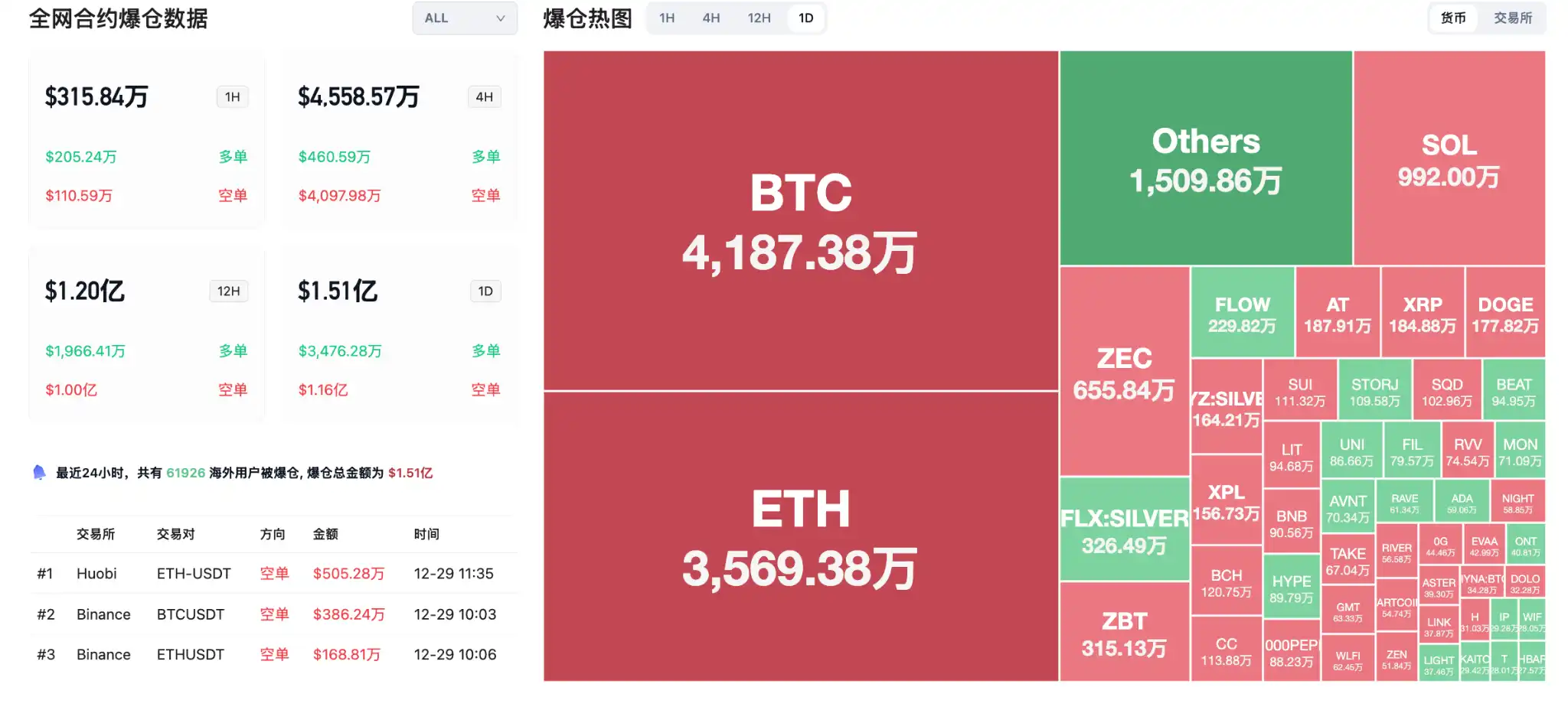
  • Dữ liệu thanh lý 24h: Toàn cầu có 61926 người bị thanh lý, tổng số tiền thanh lý là 151 triệu USD, trong đó BTC thanh lý 41,87 triệu USD, ETH thanh lý 35,69 triệu USD, ZEC thanh lý 6,55 triệu USD
3. Dòng chảy ETF (Tính đến ngày 26 tháng 12)

  • ETF Bitcoin: Tuần trước dòng chảy ròng ra 782 triệu USD, iShares Bitcoin Trust (IBIT) của BlackRock dẫn đầu với dòng chảy ròng ra 435 triệu USD

  • ETF Ethereum: Tuần trước dòng chảy ròng ra 102 triệu USD, iShares Ethereum Trust (ETHA) của BlackRock dẫn đầu với dòng chảy ròng ra 69,42 triệu USD

  • ETF Solana: Tuần trước dòng chảy ròng vào 13,14 triệu USD

  • ETF XRP: Tuần trước dòng chảy ròng vào 64 triệu USD

4. Dự kiến hôm nay

  • Hạn chót đăng ký hoàn trả tiền trong vụ án "Làn Sóng Xanh Lam Cách Nhiệt" là ngày 29 tháng 12, bỏ lỡ có thể ảnh hưởng đến việc hoàn trả tiền

  • Binance sẽ gỡ niêm yết các cặp giao dịch ký quỹ FDUSD như EIGEN/FDUSD, ARB/FDUSD vào ngày 30 tháng 12

  • Xưởng game Web3 ChronoForge sẽ đóng cửa vào ngày 30 tháng 12 do thiếu vốn

  • Padre: Người nắm giữ PADRE sẽ nhận được PUMP theo số lượng nắm giữ, cần gửi địa chỉ ví trước ngày 30 tháng 12

  • Sàn giao dịch kỳ hạn Thượng Hải: Từ khi đóng cửa ngày 30 tháng 12, biên độ giới hạn biến động giá của hợp đồng tương lai vàng và bạc được điều chỉnh thành 15%, đồng thời điều chỉnh tỷ lệ ký quỹ

  • Quỹ ETF Bạc Quốc Đầu (LOF): Hạn mức định kỳ đầu tư loại A giảm về 100 Nhân dân tệ, cổ phần loại C sẽ bắt đầu tạm dừng mua, có hiệu lực từ ngày 29 tháng 12

  • Ngũ Nhất Thế Giới, Lâm Thanh Hiên dự kiến niêm yết trên sàn chứng khoán Hồng Kông vào ngày 30 tháng 12

  • Hyperliquid (HYPE) sẽ mở khóa khoảng 9,92 triệu token vào lúc 15:30 chiều ngày 29 tháng 12, tỷ lệ so với lượng lưu thông khoảng 2.87%, trị giá khoảng 256 triệu USD;

  • Kamino (KMNO) sẽ mở khóa khoảng 229 triệu token vào lúc 20:00 tối ngày 30 tháng 12, tỷ lệ so với lượng lưu thông khoảng 5.35%, trị giá khoảng 11,8 triệu USD;

  • Slash Vision Labs (SVL) sẽ mở khóa khoảng 234 triệu token vào lúc 8:00 sáng ngày 30 tháng 12, tỷ lệ so với lượng lưu thông khoảng 2.96%, trị giá khoảng 6,8 triệu USD;

  • Zora (ZORA) sẽ mở khóa khoảng 166 triệu token vào lúc 8:00 sáng ngày 30 tháng 12, tỷ lệ so với lượng lưu thông khoảng 4.17%, trị giá khoảng 6,7 triệu USD.

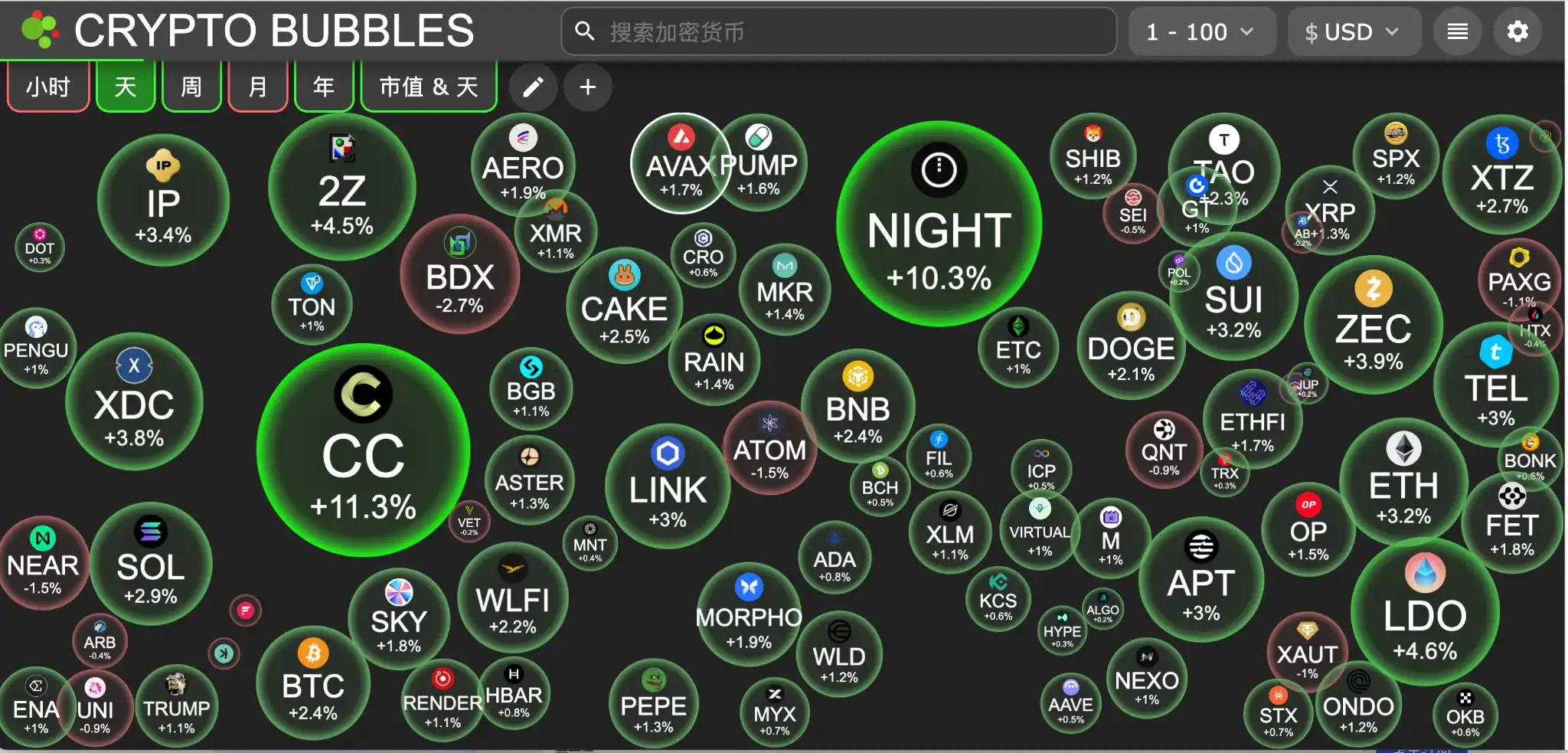
Mức tăng lớn nhất của top 100 token theo vốn hóa thị trường hôm nay: Canton Network tăng 11.3%, Midnight tăng 10.3%, DoubleZero tăng 4.7%, Lido DAO tăng 4.5%, Zcash tăng 3.9%.
5. Tin tức nổi bật

  • Dữ liệu: HYPE, SUI, EIGEN và các token khác sẽ đón nhận đợt mở khóa lớn vào tuần tới, trong đó HYPE mở khóa trị giá khoảng 256 triệu USD

  • Dự báo tuần này | EU, Anh, Hồng Kông và các quốc gia, khu vực khác thực thi quy định mới liên quan đến tài sản số; Hyperliquid (HYPE) mở khóa token trị giá khoảng 256 triệu USD

  • Nghi ngờ Trend Research một lần nữa mua 11520 ETH, trị giá 34,93 triệu USD

  • Phân tích: ETF Bitcoin giao ngay tích lũy dòng chảy ròng ra gần 6 tỷ USD trong chín tuần qua, mặt bằng vốn và tâm lý thị trường tiếp tục chịu áp lực

  • Doanh thu của Hyperliquid tuần trước chỉ là 9,16 triệu USD, mức thấp nhất kể từ đầu tháng 5

  • Khối lượng giao dịch giao ngay DEX trên Solana tính từ đầu năm đến nay đã vượt 1,7 nghìn tỷ USD, vượt Bybit để vươn lên vị trí thứ hai

  • Một cá voi lớn đã rút 2218 ETH, 37,1 triệu SKY và 4772 AAVE từ Kraken 7 giờ trước

  • Bạc vật chất vượt 80 USD/ounce, lập kỷ lục mới

  • Đồng sáng lập Hyperliquid: 1,2 triệu token HYPE sẽ được phân phối cho các thành viên đội ngũ vào ngày 6 tháng 1 sau khi mở khóa

  • Bubblemaps: Dự án Meme coin ATLAS nghi ngờ có giao dịch nội gián, 68 ví đã nắm giữ 47% nguồn cung token

  • Chỉ số chênh lệch giá Bitcoin của Coinbase đã ở trong trạng thái chiết khấu trong hai tuần liên tiếp, tạm báo -0.0784%

  • 100 triệu UNI đã được đốt từ kho bạc Uniswap, trị giá 596 triệu USD

  • Flow bị tấn công bởi hacker, thiệt hại 3,9 triệu USD, tiền gửi người dùng không bị ảnh hưởng

Domande pertinenti

QTại sao bạc sau khi lập kỷ lục mới lại giảm mạnh và những rủi ro điều chỉnh nào đang được các tổ chức cảnh báo?

ABạc giảm mạnh sau khi lập kỷ lục mới do chịu sự bán tháo chốt lời. Các tổ chức như UBS và Capital Economics cảnh báo giá kim loại quý đã tách khỏi nền tảng cơ bản, tích lũy rủi ro điều chỉnh. Capital Economics thậm chí dự đoán giá bạc cuối năm sau có thể giảm xuống 42 USD.

QPhân tích về thị trường tiền mã hóa hiện tại được mô tả như thế nào, và tại sao Bitcoin được cho là 'sự phục hồi tạm thời'?

AThị trường tiền mã hóa đang tràn ngập tâm lý thận trọng và trầm lắng. Nhiều nhà phân tích, như Ali Charts, cho rằng bất kỳ đợt phục hồi nào của Bitcoin cũng có thể là 'dead cat bounce' (sự phục hồi tạm thời của tài sản đang xu hướng giảm) do thiếu sự hỗ trợ của nhu cầu giao ngay, đặc biệt khi ETF Bitcoin có dòng tiền ròng rút gần 1 tỷ USD trong hai tuần qua.

QNhững mức giá then chốt nào đang được các nhà phân tích theo dõi để đánh giá xu hướng tương lai của Bitcoin và Ethereum?

AĐối với Bitcoin, các nhà phân tích theo dõi kháng cự ở vùng 90.000 USD đến 94.600 USD và hỗ trợ ở vùng 80.000 USD đến 86.300 USD. Đối với Ethereum, hỗ trợ then chốt là 2.775 USD (nếu mất có thể kích hoạt đợt giảm tiếp) và kháng cự ở 3.000 USD (nếu vượt qua có thể hướng tới 3.650 USD).

QSự kiện TGE của Lighter được kỳ vọng diễn ra khi nào và chi tiết về đợt airdrop là gì?

ASự kiện TGE của Lighter được thị trường kỳ vọng diễn ra vào ngày 29 tháng 12. Đợt airdrop sẽ phân bổ 25% tổng nguồn cung, không cần nhận thủ công mà sẽ được chuyển trực tiếp vào ví của người dùng.

QDòng tiền ETF của Bitcoin và Ethereum trong tuần trước (tính đến ngày 26/12) như thế nào?

ATrong tuần tính đến ngày 26 tháng 12, ETF Bitcoin có dòng tiền ròng chảy ra 782 triệu USD, trong đó iShares Bitcoin Trust (IBIT) của BlackRock dẫn đầu với dòng ra 435 triệu USD. ETF Ethereum có dòng tiền ròng chảy ra 102 triệu USD, với ETF Ethereum của BlackRock (ETHA) dẫn đầu với dòng ra 69,42 triệu USD.

Letture associate

The Trillion-Yuan Market Cap 'Yi Zhong Tian': Who is the True Value King?

The article analyzes the three leading Chinese optical module companies, collectively nicknamed "Yi Zhong Tian": Xinyisheng, Zhongji Innolight, and TFC Optical Communication. It evaluates their "cost-performance" not by current stock price, but through three lenses: PEG ratio (growth vs. valuation), earnings quality, and premium/discount for certainty. Xinyisheng shows the most attractive PEG ratio and high profitability, but its valuation reflects discounts for risks like high customer concentration and reliance on overseas markets. Zhongji Innolight, the most expensive, commands a premium for its market leadership, dominant share in key products like 800G/1.6T modules, and higher earnings certainty, though it faces geopolitical risks. TFC Optical, as an upstream component supplier ("water seller"), has the highest gross margin and bets on the long-term CPO/NPO architecture trend, but trades at a high valuation with more stable, less explosive growth. The core argument is that while these companies dominate module assembly, the true profit pool and technological moat lie upstream in laser and switch chips, currently controlled by U.S. firms like Lumentum and Coherent. The long-term "cost-performance" for these Chinese leaders hinges on whether the domestic industry, exemplified by companies like Yuanjie Technology, can successfully move up the value chain into high-power laser chips. Otherwise, their high growth may remain confined to the lower-margin assembly segment.

marsbit2 min fa

The Trillion-Yuan Market Cap 'Yi Zhong Tian': Who is the True Value King?

marsbit2 min fa

Has the Crypto Market Bottomed? Here's What Institutions Think

The crypto market is in a period of significant debate, with leading institutions offering differing views on whether a bottom has been reached. Three prominent firms have published detailed analyses: * **Galaxy Digital** argues Bitcoin has **not yet bottomed**. Their analysis of 13 historical indicators across six dimensions (valuation, profit-taking, miner pressure, etc.) shows only four are fully met. They project a potential bottom range between $30k and $54k. * **NYDIG** states a bottom is **possible but not likely**. While metrics are close to historic bear market extremes, they note the absence of a classic panic-selling event. They also suggest increased institutional adoption may have structurally altered the market cycle, potentially leading to a shallower downturn. * **Standard Chartered Bank** asserts the **bottom has already occurred** at around $59k. They cite two key factors: potential US-Iran diplomatic progress and the anticipated SpaceX IPO, which they believe absorbed capital and caused ETF selling pressure that is now subsiding. They forecast a year-end price target of $100k. Despite the surface-level disagreement, the reports share critical common ground more valuable for long-term investors: 1. All three believe the market bottom will form **within this year**. 2. All agree the current price is **closer to the bottom than to previous highs**. 3. All maintain a **bullish long-term outlook** for Bitcoin and a new cycle. The core takeaway is that while the exact bottom price ($40k, $50k, or $60k) is debated, the consensus is that a bottom is imminent. For long-term holders, the primary focus should not be pinpointing the absolute low, but on the future potential for prices to reach $100k, $200k, or higher. The fundamental thesis for Bitcoin—sovereign debt accumulation, inflation, declining trust in centralized institutions, global digitization, and improved accessibility—remains intact and is arguably strengthening. The overall landscape is viewed as more favorable than in previous crypto winters.

marsbit12 min fa

Has the Crypto Market Bottomed? Here's What Institutions Think

marsbit12 min fa

The 'Chip' Challenge and Breakthroughs in China's Optical Industry Chain

China's Photonics Industry: Bottlenecks and Breakthroughs In the global AI race, computing chips dominate the narrative, but the underlying bottleneck increasingly defining the scale of AI clusters is light—or more specifically, optical connectivity. Optical modules, which translate electrical signals to light and vice versa, are crucial for connecting thousands of GPUs in AI data centers, preventing data congestion and ensuring efficient model training. High-speed modules (800G, 1.6T) are now standard, with performance hinging on advanced DSP (Digital Signal Processor) chips. This is where a critical dependency lies. Two US giants—Marvell and Broadcom—collectively dominate over 90% of the high-end DSP chip market. Chinese optical module leaders like Zhongji Innolight and Eoptolink rely on these chips to manufacture modules for overseas AI customers, primarily in North America. While this creates a supply chain vulnerability, complete decoupling is difficult. Marvell derives over half its revenue from Greater China, and the US firms depend on Chinese partners for chip packaging and optical components. The risk from laser chips (e.g., from Lumentum), another key component, is considered more manageable due to multiple global suppliers and faster progress in domestic alternatives from companies like YOFC and Accelink. To mitigate risks, China's industry is pursuing a multi-pronged strategy: diversifying supply chains and locking in long-term orders; fostering a domestic market ecosystem to adopt homegrown DSPs from firms like Huawei HiSilicon and CETC; accelerating R&D in high-speed DSPs and advanced packaging; and investing in next-gen technologies like silicon photonics and Co-Packaged Optics (CPO) to reduce reliance on discrete DSPs. The ultimate solution lies not in short-term博弈 but in persistent advancement of domestic high-end chip R&D and manufacturing. While challenges remain in performance, certification, and ecosystem building, China's vast domestic market and manufacturing base provide a crucial buffer, buying time for the industry to achieve greater technological independence.

marsbit26 min fa

The 'Chip' Challenge and Breakthroughs in China's Optical Industry Chain

marsbit26 min fa

Behind SpaceX's $2 Trillion Market Cap: Why Does Musk Always Have the Next Move Planned?

On June 12th, SpaceX debuted on the Nasdaq, reaching a valuation that briefly touched $2 trillion. This marked the culmination of a 24-year journey from its founding in 2002, driven by Elon Musk's frustration at the high cost of buying rockets. The company's path was defined by early failures, with its first three Falcon 1 launches ending in explosions before a successful 2008 flight opened the era of commercial spaceflight. Key to its model was a fixed-price NASA contract, incentivizing cost reduction. SpaceX mastered rocket reusability, first achieving a Falcon 9 landing in 2015, which drastically cut launch costs. This enabled its profitable Starlink satellite internet constellation, envisioned years before reusability was proven, to create an internal market for frequent launches. Similarly, the next-generation Starship rocket was in development long before its first flight, with its business case evolving from Mars colonization to supporting the emerging concept of in-orbit data centers for AI—a story now central to its valuation. The company's recent IPO, a reversal of its long-standing "no IPO" stance, is funding this ambitious "space-based compute" vision. While major tech players like Google, Blue Origin, and others are investing heavily, significant technical and cost hurdles remain. Ultimately, SpaceX's history is one of creating its own demand: first with Starlink and now with space-based AI compute, betting that its next rocket will enable its next giant market.

marsbit29 min fa

Behind SpaceX's $2 Trillion Market Cap: Why Does Musk Always Have the Next Move Planned?

marsbit29 min fa

Trading

Spot
Futures

Articoli Popolari

Cosa è BITCOIN

Comprendere HarryPotterObamaSonic10Inu (ERC-20) e la sua posizione nel mondo delle criptovalute Negli ultimi anni, il mercato delle criptovalute ha assistito a un aumento della popolarità delle meme coin, catturando l'interesse non solo dei trader, ma anche di coloro che cercano coinvolgimento comunitario e valore di intrattenimento. Tra questi token unici c'è HarryPotterObamaSonic10Inu (ERC-20), un progetto intrigante che mescola riferimenti culturali nel tessuto delle criptovalute. Questo articolo esplora gli aspetti chiave di HarryPotterObamaSonic10Inu, analizzando i suoi meccanismi, l'etica guidata dalla comunità e il suo coinvolgimento con il panorama crittografico più ampio. Che cos'è HarryPotterObamaSonic10Inu (ERC-20)? Come suggerisce il suo nome, HarryPotterObamaSonic10Inu è una meme coin costruita sulla blockchain di Ethereum, classificata secondo lo standard ERC-20. A differenza delle criptovalute tradizionali che possono enfatizzare l'utilità pratica o il potenziale investimento, questo token prospera grazie al valore di intrattenimento e alla forza della sua comunità. Il progetto mira a creare un ambiente in cui gli utenti coinvolti possono riunirsi, condividere idee e partecipare ad attività ispirate a diversi fenomeni culturali. Una caratteristica notevole di HarryPotterObamaSonic10Inu è la zero tassa sulle transazioni. Questo elemento allettante tende a incoraggiare il trading e il coinvolgimento della comunità, privo di costi aggiuntivi che possono scoraggiare i trader di piccole dimensioni. L'offerta totale della moneta è fissata a un miliardo di token, un numero che segna la sua intenzione di mantenere una circolazione sostanziale all'interno della comunità. Creatore di HarryPotterObamaSonic10Inu (ERC-20) Le origini di HarryPotterObamaSonic10Inu sono avvolte in un certo mistero; i dettagli sul creatore rimangono sconosciuti. Lo sviluppo di questo token non presenta un team identificabile o un piano esplicito, cosa non rara nel settore delle meme coin. Invece, il progetto è emerso organicamente, con il suo progresso fortemente dipendente dall'entusiasmo e dalla partecipazione della sua comunità. Investitori di HarryPotterObamaSonic10Inu (ERC-20) Per quanto riguarda investimenti esterni e finanziamenti, HarryPotterObamaSonic10Inu rimane ambiguo. Il token non elenca alcuna fondazione di investimento conosciuta o un sostegno organizzativo significativo. Invece, la linfa vitale del progetto è la sua comunità di base, che informa la sua crescita e sostenibilità attraverso azioni collettive e coinvolgimento nello spazio crittografico. Come funziona HarryPotterObamaSonic10Inu (ERC-20)? In quanto meme coin, HarryPotterObamaSonic10Inu opera principalmente al di fuori delle strutture tradizionali che governano spesso il valore degli asset. Ci sono diversi aspetti distintivi che definiscono il funzionamento del progetto: Transazioni senza tasse: Senza costi fiscali sulle transazioni, gli utenti possono comprare e vendere liberamente il token senza preoccuparsi di costi nascosti. Coinvolgimento della comunità: Il progetto prospera sull'interazione della comunità, sfruttando le piattaforme social per creare entusiasmo e facilitare il coinvolgimento. Discussioni, condivisione di contenuti e coinvolgimento sono elementi cruciali che aiutano ad espandere la sua portata e a favorire la lealtà tra i sostenitori. Nessuna utilità pratica: Va notato che HarryPotterObamaSonic10Inu non offre un'utilità concreta all'interno dell'ecosistema finanziario. Piuttosto, è classificato come un token principalmente per attività di intrattenimento e comunitarie. Riferimento culturale: Il token incorpora astutamente elementi della cultura pop per attirare interesse, collegandosi a appassionati di meme e seguaci delle criptovalute. HarryPotterObamaSonic10Inu esemplifica come le meme coin operino in modo diverso rispetto ai progetti di criptovalute più tradizionali, entrando nel mercato come costrutti sociali innovativi piuttosto che come asset utilitari. Cronologia di HarryPotterObamaSonic10Inu (ERC-20) La storia di HarryPotterObamaSonic10Inu è segnata da diversi traguardi notevoli: Creazione: Il token è emerso da un meme virale, catturando l'immaginazione di molti appassionati di criptovalute. Le date di creazione specifiche non sono disponibili, sottolineando la sua crescita organica. Inserimento negli scambi: HarryPotterObamaSonic10Inu ha fatto il suo ingresso in vari scambi, consentendo un accesso e un trading più facili da parte della comunità. Iniziative di coinvolgimento della comunità: Attività in corso volte a migliorare l'interazione della comunità, comprese gare, campagne sui social media e generazione di contenuti da parte di fan e sostenitori. Piani di espansione futura: La tabella di marcia del progetto include il lancio di una collezione NFT, merchandising e un sito di eCommerce relativo ai suoi temi culturali, coinvolgendo ulteriormente la comunità e cercando di aggiungere più dimensioni al suo ecosistema. Punti chiave su HarryPotterObamaSonic10Inu (ERC-20) Natura guidata dalla comunità: Il progetto dà priorità al contributo collettivo e alla creatività, garantendo che il coinvolgimento degli utenti sia al centro del suo sviluppo. Classificazione come meme coin: Rappresenta l'epitome delle criptovalute basate sull'intrattenimento, distinguendosi dai veicoli d'investimento tradizionali. Nessuna affiliazione diretta con Bitcoin: Nonostante la somiglianza nel nome del ticker, HarryPotterObamaSonic10Inu è distintivo e non ha alcuna relazione con Bitcoin o altre criptovalute consolidate. Focus sulla collaborazione: HarryPotterObamaSonic10Inu è progettato per creare uno spazio per la collaborazione e la condivisione di storie tra i suoi detentori, fornendo un canale per la creatività e il legame comunitario. Prospettive future: L'ambizione di espandersi oltre il suo presupposto iniziale verso NFT e merchandising delinea un percorso per il progetto per potenzialmente entrare in strade più mainstream all'interno della cultura digitale. Poiché le meme coin continuano a catturare l'immaginazione della comunità crittografica, HarryPotterObamaSonic10Inu (ERC-20) si distingue per i suoi legami culturali e il suo approccio centrato sulla comunità. Anche se potrebbe non adattarsi al modello tipico di un token orientato all'utilità, la sua essenza risiede nella gioia e nella camaraderia coltivate tra i suoi sostenitori, evidenziando la natura in evoluzione delle criptovalute in un'epoca sempre più digitale. Con la continuazione dello sviluppo del progetto, sarà importante osservare come le dinamiche della comunità influenzano la sua traiettoria nel panorama in continuo cambiamento della tecnologia blockchain.

1.7k Totale visualizzazioniPubblicato il 2024.04.01Aggiornato il 2024.12.03

Cosa è BITCOIN

Come comprare BTC

Benvenuto in HTX.com! Abbiamo reso l'acquisto di Bitcoin (BTC) semplice e conveniente. Segui la nostra guida passo passo per intraprendere il tuo viaggio nel mondo delle criptovalute.Step 1: Crea il tuo Account HTXUsa la tua email o numero di telefono per registrarti il tuo account gratuito su HTX. Vivi un'esperienza facile e sblocca tutte le funzionalità,Crea il mio accountStep 2: Vai in Acquista crypto e seleziona il tuo metodo di pagamentoCarta di credito/debito: utilizza la tua Visa o Mastercard per acquistare immediatamente BitcoinBTC.Bilancio: Usa i fondi dal bilancio del tuo account HTX per fare trading senza problemi.Terze parti: abbiamo aggiunto metodi di pagamento molto utilizzati come Google Pay e Apple Pay per maggiore comodità.P2P: Fai trading direttamente con altri utenti HTX.Over-the-Counter (OTC): Offriamo servizi su misura e tassi di cambio competitivi per i trader.Step 3: Conserva Bitcoin (BTC)Dopo aver acquistato Bitcoin (BTC), conserva nel tuo account HTX. In alternativa, puoi inviare tramite trasferimento blockchain o scambiare per altre criptovalute.Step 4: Scambia Bitcoin (BTC)Scambia facilmente Bitcoin (BTC) nel mercato spot di HTX. Accedi al tuo account, seleziona la tua coppia di trading, esegui le tue operazioni e monitora in tempo reale. Offriamo un'esperienza user-friendly sia per chi ha appena iniziato che per i trader più esperti.

4.0k Totale visualizzazioniPubblicato il 2024.12.12Aggiornato il 2026.06.02

Come comprare BTC

Cosa è $BITCOIN

ORO DIGITALE ($BITCOIN): Un'Analisi Completa Introduzione all'ORO DIGITALE ($BITCOIN) L'ORO DIGITALE ($BITCOIN) è un progetto basato su blockchain che opera sulla rete Solana, con l'obiettivo di combinare le caratteristiche dei metalli preziosi tradizionali con l'innovazione delle tecnologie decentralizzate. Sebbene condivida un nome con Bitcoin, spesso definito “oro digitale” a causa della sua percezione come riserva di valore, l'ORO DIGITALE è un token separato progettato per creare un ecosistema unico all'interno del panorama Web3. Il suo obiettivo è posizionarsi come un asset digitale alternativo valido, anche se i dettagli riguardanti le sue applicazioni e funzionalità sono ancora in fase di sviluppo. Cos'è l'ORO DIGITALE ($BITCOIN)? L'ORO DIGITALE ($BITCOIN) è un token di criptovaluta esplicitamente progettato per l'uso sulla blockchain di Solana. A differenza di Bitcoin, che fornisce un ruolo di stoccaggio di valore ampiamente riconosciuto, questo token sembra concentrarsi su applicazioni e caratteristiche più ampie. Aspetti notevoli includono: Infrastruttura Blockchain: Il token è costruito sulla blockchain di Solana, nota per la sua capacità di gestire transazioni ad alta velocità e a basso costo. Dinamiche di Offerta: L'ORO DIGITALE ha un'offerta massima fissata a 100 quadrilioni di token (100P $BITCOIN), sebbene i dettagli riguardanti la sua offerta circolante siano attualmente non divulgati. Utilità: Sebbene le funzionalità precise non siano esplicitamente delineate, ci sono indicazioni che il token potrebbe essere utilizzato per varie applicazioni, potenzialmente coinvolgendo applicazioni decentralizzate (dApp) o strategie di tokenizzazione degli asset. Chi è il Creatore dell'ORO DIGITALE ($BITCOIN)? Attualmente, l'identità dei creatori e del team di sviluppo dietro l'ORO DIGITALE ($BITCOIN) rimane sconosciuta. Questa situazione è tipica tra molti progetti innovativi nel settore blockchain, in particolare quelli allineati con la finanza decentralizzata e i fenomeni delle meme coin. Sebbene tale anonimato possa favorire una cultura guidata dalla comunità, intensifica le preoccupazioni riguardo alla governance e alla responsabilità. Chi sono gli Investitori dell'ORO DIGITALE ($BITCOIN)? Le informazioni disponibili indicano che l'ORO DIGITALE ($BITCOIN) non ha alcun sostenitore istituzionale noto o investimenti di venture capital prominenti. Il progetto sembra operare su un modello peer-to-peer incentrato sul supporto e sull'adozione della comunità piuttosto che su percorsi di finanziamento tradizionali. La sua attività e liquidità si trovano principalmente su exchange decentralizzati (DEX), come PumpSwap, piuttosto che su piattaforme di trading centralizzate consolidate, evidenziando ulteriormente il suo approccio di base. Come Funziona l'ORO DIGITALE ($BITCOIN) Le meccaniche operative dell'ORO DIGITALE ($BITCOIN) possono essere elaborate in base al suo design blockchain e alle caratteristiche della rete: Meccanismo di Consenso: Sfruttando il proof-of-history (PoH) unico di Solana combinato con un modello di proof-of-stake (PoS), il progetto garantisce una validazione efficiente delle transazioni contribuendo all'alta performance della rete. Tokenomics: Sebbene meccanismi deflazionistici specifici non siano stati dettagliati ampiamente, l'ampia offerta massima di token implica che potrebbe soddisfare microtransazioni o casi d'uso di nicchia che devono ancora essere definiti. Interoperabilità: Esiste il potenziale per l'integrazione con l'ecosistema più ampio di Solana, inclusi vari piattaforme di finanza decentralizzata (DeFi). Tuttavia, i dettagli riguardanti integrazioni specifiche rimangono non specificati. Cronologia degli Eventi Chiave Ecco una cronologia che evidenzia traguardi significativi riguardanti l'ORO DIGITALE ($BITCOIN): 2023: Il dispiegamento iniziale del token avviene sulla blockchain di Solana, contrassegnato dal suo indirizzo di contratto. 2024: L'ORO DIGITALE guadagna visibilità poiché diventa disponibile per il trading su exchange decentralizzati come PumpSwap, consentendo agli utenti di scambiarlo contro SOL. 2025: Il progetto assiste a un'attività di trading sporadica e a un potenziale interesse per impegni guidati dalla comunità, sebbene non siano state documentate partnership significative o avanzamenti tecnici fino ad ora. Analisi Critica Punti di Forza Scalabilità: L'infrastruttura sottostante di Solana supporta alti volumi di transazioni, il che potrebbe migliorare l'utilità di $BITCOIN in vari scenari di transazione. Accessibilità: Il potenziale basso prezzo di trading per token potrebbe attrarre investitori al dettaglio, facilitando una partecipazione più ampia grazie a opportunità di proprietà frazionata. Rischi Mancanza di Trasparenza: L'assenza di sostenitori, sviluppatori o di un processo di audit pubblicamente noti potrebbe generare scetticismo riguardo alla sostenibilità e all'affidabilità del progetto. Volatilità del Mercato: L'attività di trading è fortemente dipendente dal comportamento speculativo, il che può comportare una significativa volatilità dei prezzi e incertezze per gli investitori. Conclusione L'ORO DIGITALE ($BITCOIN) emerge come un progetto intrigante ma ambiguo all'interno dell'evolvente ecosistema di Solana. Sebbene tenti di sfruttare la narrativa dell'“oro digitale”, la sua partenza dal ruolo consolidato di Bitcoin come riserva di valore sottolinea la necessità di una chiara differenziazione della sua utilità e struttura di governance. L'accettazione e l'adozione future dipenderanno probabilmente dall'affrontare l'attuale opacità e dalla definizione più esplicita delle sue strategie operative ed economiche. Nota: Questo rapporto comprende informazioni sintetizzate disponibili a ottobre 2023, e potrebbero essersi verificati sviluppi oltre il periodo di ricerca.

100 Totale visualizzazioniPubblicato il 2025.05.13Aggiornato il 2025.05.13

Cosa è $BITCOIN

Discussioni

Benvenuto nella Community HTX. Qui puoi rimanere informato sugli ultimi sviluppi della piattaforma e accedere ad approfondimenti esperti sul mercato. Le opinioni degli utenti sul prezzo di BTC BTC sono presentate come di seguito.

活动图片