Оператору биткоин-банкоматов Coinme приказано вернуть клиентам более 8 миллионов долларов

cryptonews.ruPubblicato 2025-07-03Pubblicato ultima volta 2025-12-04

Регулирующие органы штата Вашингтон обязали оператора биткоин-банкоматов Coinme прекратить деятельность и вернуть более 8 миллионов долларов невостребованных средств клиентов, обвинив компанию в том, что она рассматривала невостребованные ваучеры как доход и нарушала правила денежных переводов.

В постановлении о временном прекращении деятельности и заявлении о предъявлении обвинений, датированных прошлым вторником, Департамент финансовых учреждений штата Вашингтон (DFI) заявил, что система ваучеров Coinme для покупки криптовалюты нарушает Единый закон штата о денежных услугах.

Согласно документам, в период с января 2023 года по декабрь 2024 года Coinme задекларировала в качестве дохода компании 8,37 миллиона долларов в виде невостребованных ваучеров клиентов, из них 2,2 миллиона долларов — от клиентов из Вашингтона на конец 2023 года и 6,17 миллиона долларов — от клиентов из Вашингтона и других штатов на конец 2024 года.

Компания из Сиэтла продавала криптовалюту с помощью бумажных ваучеров, которые пользователи приобретали в киосках, а затем обналичивали онлайн. Но когда многие пользователи не успевали обналичить ваучеры вовремя, компания, предположительно, рассматривала эти средства как собственный доход Coinme и не сообщала об этой практике, а также не передавала бесхозное имущество государству, говорится в заявлении DFI, опубликованном в понедельник.

У платформы есть 20 дней с момента получения уведомления о судебном разбирательстве, чтобы подать ходатайство о проведении судебного слушания. Если этого не сделать, то, согласно DFI, временное предписание о прекращении деятельности становится постоянным на 21-й день.


Letture associate

13F Reveals New Signal: AI Has Not Faded, Wall Street Is Just Getting 'Pickier'

Title: 13F New Signal: AI Is Not Receding, Wall Street Just Became "Selective" Analysis of 13F filings from the second quarter of 2026, which disclose institutional holdings, reveals a key trend: the AI investment theme persists, but Wall Street is now scrutinizing opportunities more selectively rather than chasing the sector broadly. While nearly 44% of the 6,371 institutions analyzed reduced holdings in the "Magnificent Seven" tech giants, semiconductors saw net buying from 48% of institutions. This indicates the core AI infrastructure thesis remains intact. However, significant internal shifts are occurring as major funds prioritize "risk-reward" or "betting odds" over simple sector exposure. Four prominent investors exemplify this new selectivity: 1. **Berkshire Hathaway** made a major new bet on Alphabet, valuing its strong cash flow and core businesses despite AI-related uncertainties. 2. **Tiger Global** reduced crowded mega-cap tech positions (e.g., Alphabet, NVIDIA) but increased exposure to other AI-related names like AMD and semiconductor manufacturing, rebalancing within the theme. 3. **Third Point** fully exited several first-wave AI winners (NVIDIA, Broadcom) to lock in gains, reallocating to names like Alphabet and Taiwan Semiconductor, and diversifying into media and industrials. 4. **Duquesne Family Office** (Stanley Druckenmiller) also sold some semiconductor holdings while buying others (e.g., Taiwan Semiconductor), focusing on individual companies' valuation and expectation gaps rather than the sector beta. Key conclusions from the filings: * **Alphabet is becoming a "divisive asset"** with significant institutional disagreement, representing a potential source of alpha. * The **"buy any chip stock" phase is over**. Semiconductor investing is now an alpha game, requiring stock-specific analysis over blanket sector bets. * **Non-AI assets are reappearing** in portfolios (e.g., airlines, homebuilders, media) as diversification and correlation-management tools. In summary, the AI investment cycle has not ended, but the phase of easy, broad-based gains is concluding. The next phase will be defined by selective stock-picking and precise calculation of risk versus reward within the AI ecosystem.

marsbit15 min fa

13F Reveals New Signal: AI Has Not Faded, Wall Street Is Just Getting 'Pickier'

marsbit15 min fa

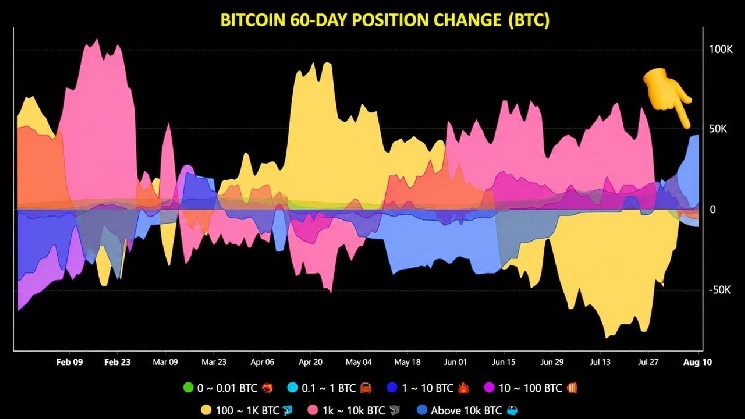
Bitcoin 'Whale Investors' Increase Their Holdings by 43,000 BTC, Ending a Months-Long Selling Wave

Large Bitcoin holders, defined as non-exchange and non-mining pool wallets, have accumulated approximately 43,000 BTC (worth around $2.9 billion) over the past 60 days. This marks a significant reversal from a several-month period where this same group were net sellers, contributing to downward pressure on Bitcoin's price following its October 2025 all-time high. The accumulation began when Bitcoin fell to around $60,000, a level that seemingly attracted large holders who had stayed on the sidelines during the sharper phase of the decline. Bitcoin has since recovered to trade in a narrower range between $62,000 and $65,000. This renewed demand is not limited to the largest "whale" wallets. Balances of so-called "dolphin" holders also increased in the same period, indicating a broader accumulation trend beyond just a handful of mega-wallets. This activity occurs against a backdrop of declining overall market activity, with August spot trading volumes hitting their lowest monthly level since August 2021, meaning the whale purchases represent a disproportionately large share of total market activity. This buying shift contrasts with the dominant selling trend seen for much of 2026 from other major entities. Looking ahead, a key factor to watch is whether this large-investor activity persists as Bitcoin approaches the upper bound of its recent $62k-$65k trading range.

cryptonews.ru21 min fa

Bitcoin 'Whale Investors' Increase Their Holdings by 43,000 BTC, Ending a Months-Long Selling Wave

cryptonews.ru21 min fa

Bitcoin (BTC) Enters a Bear Market, BlackRock Remains Optimistic! Here's Why and the Latest Statements

Bitcoin (BTC) has entered a bear market since October 2025, dropping over 50% from its all-time high of $126,000 to test support at $57,000. It is currently trading sideways around $63,000. In its latest analysis, asset management giant BlackRock stated that this severe correction does not invalidate the long-term investment case for the leading cryptocurrency. BlackRock attributes the decline primarily to market deleveraging, position shifts, capital rotation from Bitcoin into AI investments, weakening capital inflows, and a slowdown in digital asset purchases. It highlighted that open cryptocurrency futures positions exceeding $90 billion, with about 80% being perpetual futures outside the CME, were a significant contributor to the downturn. Additional selling pressure came from digital asset management firms and large Bitcoin holders, alongside net outflows from spot Bitcoin ETFs. Despite these challenges, BlackRock maintains its long-term bullish stance on Bitcoin. The firm reiterates that Bitcoin's limited supply and its potential to behave differently from traditional financial assets make it a viable tool for portfolio diversification and a potential hedge against fiat currency depreciation. BlackRock concludes that the sharp correction signals a market rebalancing of leverage and capital flows rather than a breakdown of Bitcoin's fundamental investment thesis.

cryptonews.ru32 min fa

Bitcoin (BTC) Enters a Bear Market, BlackRock Remains Optimistic! Here's Why and the Latest Statements

cryptonews.ru32 min fa

Trading

Spot
活动图片