13F Reveals New Signal: AI Has Not Faded, Wall Street Is Just Getting 'Pickier'

marsbitPubblicato 2026-08-19Pubblicato ultima volta 2026-08-19

Introduzione

Title: 13F New Signal: AI Is Not Receding, Wall Street Just Became "Selective" Analysis of 13F filings from the second quarter of 2026, which disclose institutional holdings, reveals a key trend: the AI investment theme persists, but Wall Street is now scrutinizing opportunities more selectively rather than chasing the sector broadly. While nearly 44% of the 6,371 institutions analyzed reduced holdings in the "Magnificent Seven" tech giants, semiconductors saw net buying from 48% of institutions. This indicates the core AI infrastructure thesis remains intact. However, significant internal shifts are occurring as major funds prioritize "risk-reward" or "betting odds" over simple sector exposure. Four prominent investors exemplify this new selectivity: 1. **Berkshire Hathaway** made a major new bet on Alphabet, valuing its strong cash flow and core businesses despite AI-related uncertainties. 2. **Tiger Global** reduced crowded mega-cap tech positions (e.g., Alphabet, NVIDIA) but increased exposure to other AI-related names like AMD and semiconductor manufacturing, rebalancing within the theme. 3. **Third Point** fully exited several first-wave AI winners (NVIDIA, Broadcom) to lock in gains, reallocating to names like Alphabet and Taiwan Semiconductor, and diversifying into media and industrials. 4. **Duquesne Family Office** (Stanley Druckenmiller) also sold some semiconductor holdings while buying others (e.g., Taiwan Semiconductor), focusing on individual companies' ...

Author: Jim, MSX Maitong

Editor: Frank, MSX Maitong

The least valuable takeaway from each quarter's 13F filings is likely:

"Which stock did the big shots buy this time?"

This is because 13F filings are inherently a lagging snapshot of holdings.

According to SEC rules, institutions have up to 45 days after the end of the quarter to disclose their holdings. The latest round of Q2 2026 13F filings reflects holdings as of June 30th, with the concentrated disclosure deadline being August 14th. More importantly, 13F primarily covers eligible long positions in US-listed securities and does not fully reflect short positions in stocks, etc.

Therefore, it is not suitable for real-time "copy-trading."

But from another perspective, the value of 13F is actually very high—what have the truly big funds been buying and selling over the past three months?

After analysis, we identified a crucial signal: AI has not receded, but Wall Street is becoming "pickier" about AI.

I. The AI Consensus Remains, but the "Herd Consensus" is Loosening

If you only look at a few star funds, it's easy to be misled by individual trades.

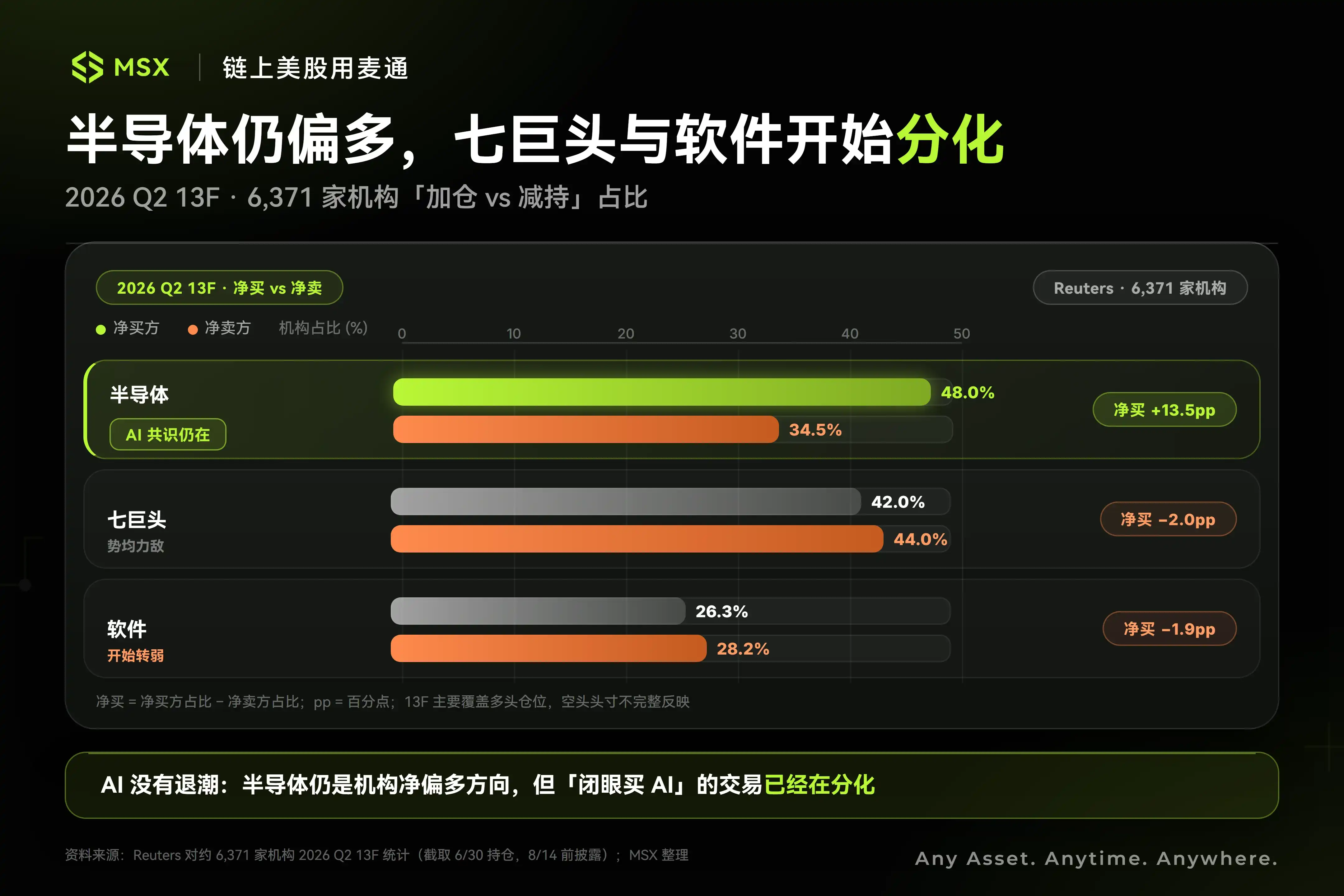
What's truly worth paying attention to is the change across the entire institutional community. Reuters analyzed Q2 13F filings from 6,371 entities including pension funds, hedge funds, and wealth management firms and found:

  • Close to 44% of institutions reduced their holdings in the "Magnificent Seven," while about 42% chose to initiate or increase positions—nearly a tie;
  • However, for semiconductors, the sentiment remains noticeably bullish: about 48% of institutions were net buyers, with only 34.5% being net sellers;
  • Software is the opposite. Among a group of major software companies, net sellers accounted for 28.2%, slightly higher than net buyers at 26.3%;

This indicates that the AI consensus still exists, but it is rapidly fragmenting internally.
After all, if Wall Street were to systematically reject AI, the first sign would likely be a unified retreat from the semiconductor, computing power, and data center supply chain.

That is not the case.

Chips remain a sector with clear institutional preference. AI infrastructure hasn't faced systematic selling either. Big money is simply starting to ask questions that were less critical over the past two years:

Has the stock price of this company already reflected its growth for the next two to three years? As AI CapEx continues to grow, who can truly turn capital expenditure into profits? If the market corrects, which type of assets have the most crowded institutional positions and are most likely to be the first to be liquidated?

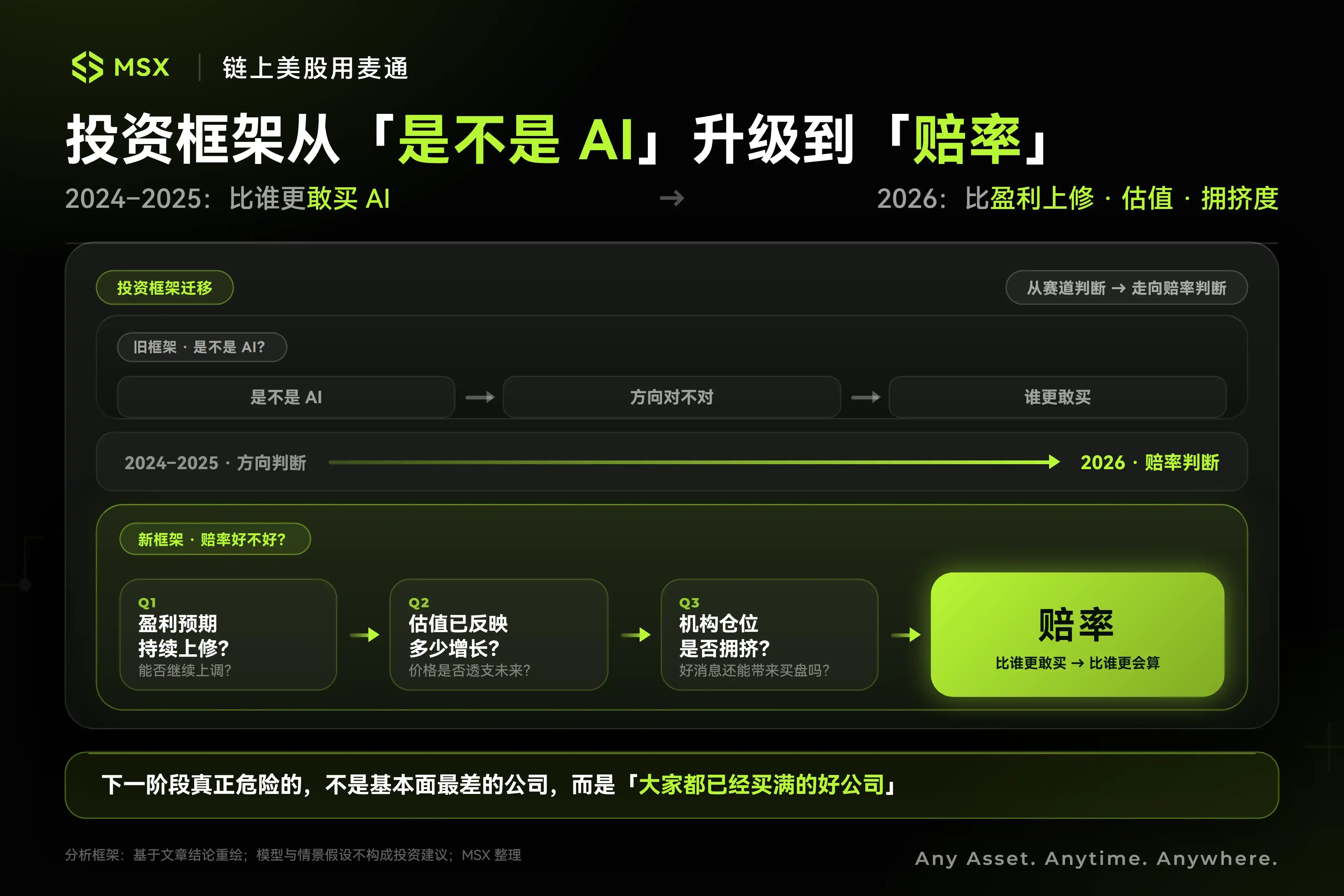
This is also the most important change in the Q2 13F: Wall Street is visibly starting to discuss "who offers better risk/reward within AI."

And Berkshire Hathaway, Tiger Global, Third Point, and Duquesne (under Druckenmiller) happen to provide four completely different answers.

II. Four Institutions, Four "Risk/Reward Mindsets"
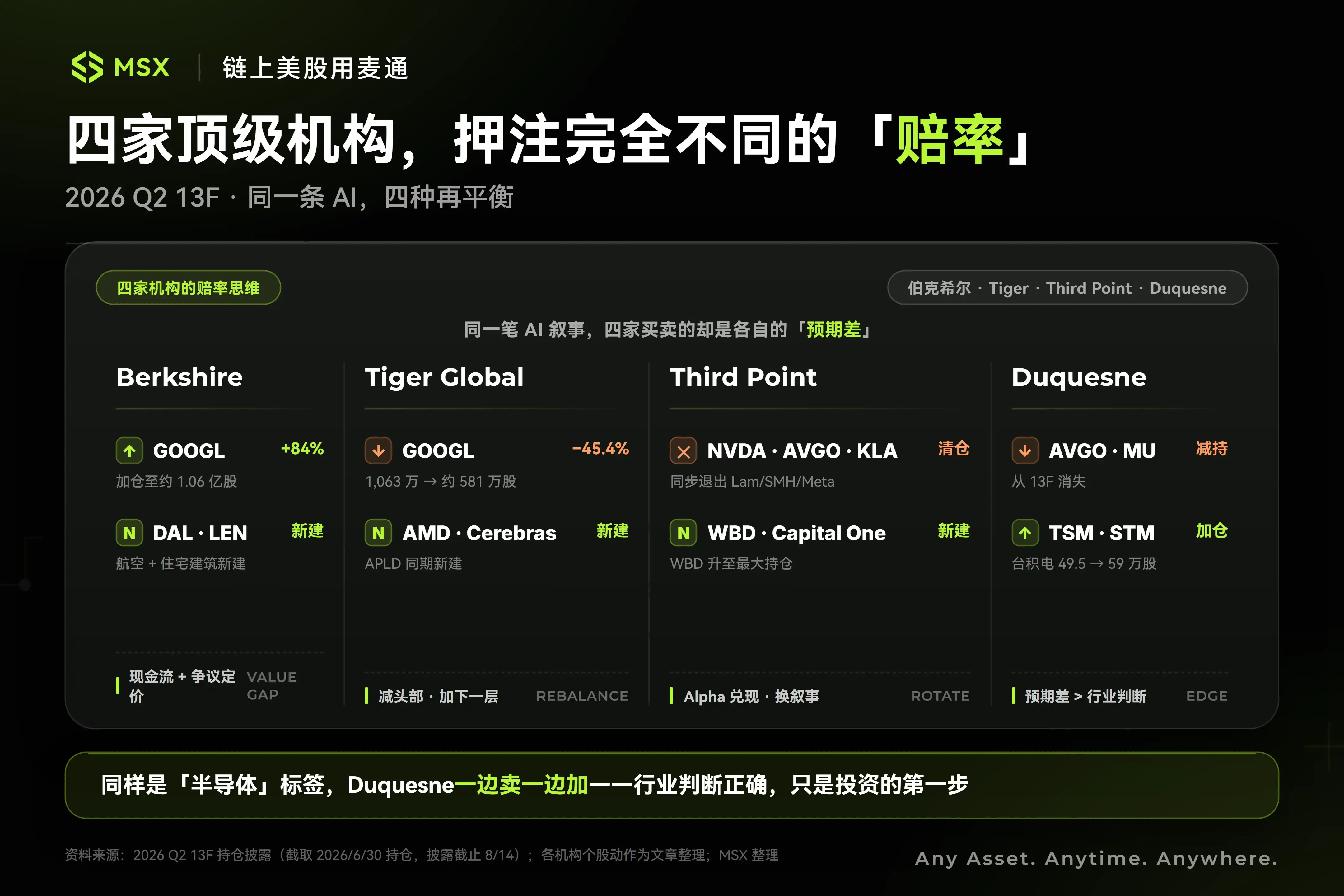
1. Berkshire Hathaway: Starting to Deploy Cash, Making a Big Bet on Google

Among this round of 13Fs, Berkshire Hathaway's move on Alphabet is particularly noteworthy.

At the end of Q1, Berkshire's disclosed holdings in Alphabet's A and C shares totaled approximately 57.84 million shares; by the end of Q2, that number had risen to about 106 million shares, an increase of over 80%.

Calculated by quarter-end market value alone, Alphabet has already jumped to become one of Berkshire's most important public U.S. stock assets. Meanwhile, Berkshire also increased exposure to airlines and homebuilders like Delta Air Lines and Lennar.

It's worth noting that Alphabet might be one of the "Magnificent Seven" least resembling a "pure AI trade."

Over the past few years, one of the market's biggest concerns has been whether generative AI would change the search gateway, even eroding the core commercial moat that Google Search has long held.

On the other hand, Alphabet still possesses Search, YouTube, Google Cloud, its advertising business, and a massive cash flow base.

Therefore, Berkshire's heavy bet is precisely on whether a company with still-strong cash flow and a core business not yet disproven, but long under pressure due to AI concerns, has room for repricing?

This is a completely different trade from chasing the hottest AI winner.

2. Tiger Global: Trimming Mega-Cap Tech, But Still Focused on Tech Positions

Tiger Global's portfolio provides another very typical sample.

In Q2, it reduced its Alphabet holdings from about 10.63 million shares to about 5.81 million shares, a decrease of 45.4%. Broadcom holdings were nearly halved, and TSMC also saw reductions. Microsoft, Meta, and NVIDIA were also trimmed to varying degrees.

If we stopped here, it would be easy to conclude that "Tiger is starting to exit AI."

But looking at what it bought paints an almost opposite picture.

Tiger initiated new positions in AMD, Applied Digital, Cerebras, etc., in Q2. Its portfolio also included AI computing power and data center-related assets like Cipher Digital and Core Scientific. Intel holdings increased from about 1.64 million shares to about 4.25 million shares.

This looks more like a rebalancing within AI positions—reducing exposure to extremely crowded top-tier assets and moving some chips toward the next layer of opportunities where market consensus isn't as strong.

NVIDIA is the most classic example. A fund's long-term bullishness on AI computing power doesn't mean it must perpetually increase its NVIDIA position.

As long as the position weight is already sufficiently high, or the stock price rises faster than earnings estimate revisions in a given phase, reducing can simply be portfolio management, not a reversal of the industry thesis.

This will also be an increasingly important aspect of U.S. stocks going forward: continued earnings growth does not necessarily mean the stock price will continue to rise in the same way it has over the past two years.

Because what determines the stock price isn't just "how good the results are," but also how much the market already believed in advance.

3. Third Point: Starting to Lock in Gains, Seeking AI's Next Wave

Daniel Loeb's Third Point made even more pronounced moves.

In Q2, it completely exited NVIDIA, Broadcom, KLA, Lam Research, and the VanEck Semiconductor ETF (SMH)—a group of core beneficiaries from the AI capital expenditure cycle—while also exiting Meta.

Looking solely at this set of trades, one could almost interpret it as a large-scale "AI reduction."

But Third Point didn't leave technology.

Instead, it significantly increased Alphabet and TSMC, and established new positions in Keysight and Flex. Meanwhile, capital began flowing into media, finance, and industrial directions like Warner Bros. Discovery, Capital One, and Norfolk Southern. Warner Bros. Discovery even became its largest public U.S. stock holding at the end of Q2.

Therefore, Third Point is essentially locking in gains from the most easily understood winners of the first phase and seeking opportunities for the next phase that aren't yet fully priced in by the market.

Why did NVIDIA, Broadcom, KLA, and Lam Research become first-phase winners? Because their logic was too straightforward:

Larger models need more GPUs; advanced chip expansion needs semiconductor equipment; expanding AI clusters need networks, ASICs, and increasingly complex infrastructure.

This logic isn't wrong.

The issue is, when all investors already know this logic, what determines the returns for the next phase becomes whether the actual growth can continue to exceed the already-high market expectations.

This also means top investment institutions are starting to believe that the most obvious alpha from AI's first phase is becoming increasingly expensive.

4. Druckenmiller: Only Trading on Mispricing

If looking for a fund that best explains the thinking of institutions this round, Stanley Druckenmiller's Duquesne might be the most typical sample.

At the end of Q1, it still held Broadcom and Micron. By Q2, both had disappeared from the 13F.

But at the same time, Duquesne initiated new tech positions in Alphabet, AMD, Palo Alto Networks, etc., and continued to increase holdings in TSMC and STMicroelectronics: TSMC increased from about 495,000 shares to about 590,000 shares, and STMicroelectronics rose from about 2.61 million shares to about 3.10 million shares.

At first glance, it even seems contradictory. They are all semiconductors, why sell some and buy others?

The answer might be precisely the most important keyword of this 13F round: mispricing/expectation gaps.

If a company's stock rises too fast and the market has already priced in growth for the next two to three years, even if the long-term industry thesis remains correct, it's perfectly reasonable to take profits first.

Conversely, if another company's profit cycle is improving and the market hasn't yet formed a consensus, then even if it's not the hottest AI leader, it might offer a better risk/reward profile.

Getting the industry call right is only the first step in investing. The valuation, entry point, and how much the market already believes at that time truly determine the ultimate returns.

III. From "Buying AI" to "Calculating Risk/Reward": What Is Wall Street Trading?

When you put these four institutions together, the truly valuable signal begins to emerge.

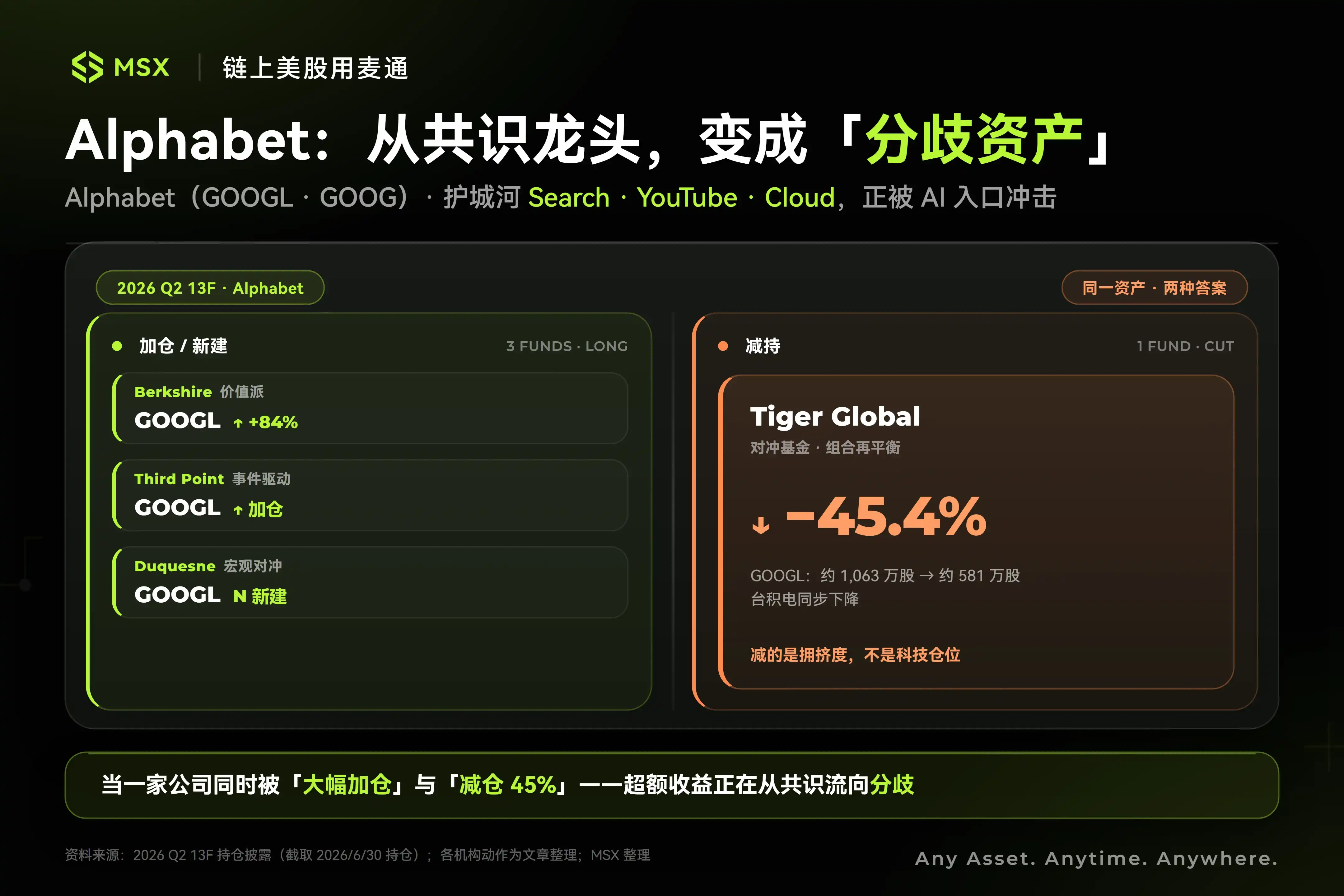
First, Alphabet is transitioning from a consensus leader to a "divisive asset."

Alphabet might be the most interesting large-cap tech stock in this cycle. Berkshire significantly increased its stake; Third Point and Duquesne also chose to increase or re-establish positions. On the other hand, Tiger Global slashed its holdings by nearly half.

The same company has received completely different answers from top-tier capital.

The market is uncertain whether AI will ultimately weaken Google Search's moat or further unleash the potential of Alphabet's massive traffic, data, cloud, and computing infrastructure.

Therefore, from this perspective, buyers see cash flow, valuation, and AI's potential upside; sellers see changes in the search gateway, expanding capital expenditures, and the long-term structural challenges the old business model might face.

Such assets are often more worthy of study than companies where "everyone knows they're good," because true excess returns come from where the market holds disagreements.
Second, the semiconductor consensus remains, but the era of "buying chips with your eyes closed" is over.

Looking at the overall 13F data, chips remain a sector where institutions are clearly net long, with the proportion of net buyers significantly higher than net sellers.

But looking at individual star funds reveals huge internal differences. Broadcom—some are selling. TSMC—some are buying, others selling. AMD—some institutions are re-establishing positions. NVIDIA has gradually transitioned from an almost undisputed core AI asset to a stock that requires re-calculating position costs and crowdedness.

This indicates that semiconductors can no longer be traded as a monolithic beta.

GPU, ASIC, foundry, memory, semiconductor equipment, networking, data center infrastructure—they all seem to belong to AI hardware, but their respective profit cycles, supply/demand positions, and valuation states are already vastly different.

In other words, AI hardware is moving from "buying the industry beta" to a stage that truly tests "individual stock alpha."

Another easily overlooked change is the re-entry of non-AI assets into portfolios.

This isn't a negation of AI, but rather more like a hedge to reduce correlation. Assets such as homebuilders, airlines, finance, healthcare, media, railroads, and industrials are reappearing in significant adjustments by some top-tier institutions:

Berkshire increased exposure to airlines and homebuilders; Third Point directed substantial funds into media, finance, and railroads; Duquesne's portfolio itself is far from being solely centered on AI.

In a sense, precisely because AI has become the market's most conspicuous and easily understood theme, big money increasingly needs to find return sources less correlated with AI.

Over the past two years, correctly judging the broad AI direction itself contributed substantial returns. Moving forward, the importance of portfolio management will only increase.

This might be the most noteworthy aspect of the latest 13F round for ordinary investors, showing us what questions the smartest, most resource-rich funds are starting to disagree on when facing the same industry thesis.
Final Thoughts

Over the past two years, the easiest trade to understand in the U.S. stock market was to find AI and buy into it.

NVIDIA, Broadcom, Meta, Microsoft, TSMC, and the entire semiconductor supply chain all simultaneously enjoyed the multiple benefits of industry growth, earnings revisions upward, and valuation expansion.

But the latest round of 13F is sending an increasingly clear signal—AI is not over, but the phase of "as long as the direction is right, everything can rise together" is ending.

This is the most noteworthy change in the Q2 2026 13F filings:

AI has not receded, but the herd is loosening.

The next phase will be determined not by who dares to chase harder, but by who is better at calculating risk/reward.

Crypto di tendenza

Domande pertinenti

QAccording to the Reuters analysis of Q2 2026 13F filings from 6371 institutions, what was the general trend regarding investments in semiconductor companies?

AAccording to the Reuters analysis, the trend for semiconductor companies was still clearly net positive. Approximately 48% of institutions were net buyers, while only 34.5% were net sellers, indicating continued overall institutional preference for the semiconductor sector.

QWhat major investment action did Berkshire Hathaway take regarding Alphabet in Q2 2026, and what does this action suggest about their investment thesis?

AIn Q2 2026, Berkshire Hathaway increased its holdings of Alphabet's A and C class shares from approximately 57.84 million to about 106 million shares, an increase of over 80%. This substantial investment suggests that Berkshire sees potential for a re-rating in a company with strong, cash-generating core businesses that has faced long-term skepticism over AI's impact on its search moat, indicating a focus on value and potential mispricing rather than chasing the hottest AI winners.

QHow did Tiger Global's portfolio adjustments in Q2 2026 reflect a shift in its approach to AI investments?

ATiger Global's adjustments reflected a rebalancing *within* its AI-focused portfolio rather than an exit from AI. It reduced positions in crowded mega-cap leaders like Alphabet, Broadcom, and NVIDIA, while simultaneously building new positions in companies like AMD, Applied Digital, and Cerebras, and increasing holdings in Intel and AI infrastructure plays. This indicates a move away from the most consensus, high-valuation AI assets towards potentially less-priced, next-layer opportunities while maintaining a core technology focus.

QWhat was the key strategy behind Third Point's decision to sell off major AI beneficiaries like NVIDIA and Broadcom in Q2 2026?

AThird Point's strategy was to realize profits from the first, most obvious, and easily understood winners of the AI capital expenditure cycle (like NVIDIA, Broadcom, and semiconductor equipment firms). The capital was then redirected to seek the next wave of opportunities not yet fully priced by the market, such as increasing stakes in Alphabet and TSMC, and entering new positions in media, financial, and industrial sectors, with Warner Bros. Discovery becoming its largest public U.S. stock holding.

QWhat is the main conclusion the article draws about the overall signal from the Q2 2026 13F filings regarding the AI investment theme?

AThe main conclusion is that AI has not ended or receded as an investment theme, but the phase where 'buying the right AI direction guaranteed broad gains' is ending. Institutional consensus is fragmenting; the 'crowded trade' is loosening. The next phase will be characterized by increased selectivity, a focus on calculating risk-reward ratios ('赔率' or 'betting odds'), and a shift from capturing easy industry-wide beta to identifying specific stock-level alpha within the AI ecosystem.

Letture associate

SEC Proposal a ‘Significant’ Step Forward From ‘Ill-Suited’ Crypto Rules: Commissioner Peirce

A U.S. Securities and Exchange Commission (SEC) commissioner, Hester M. Peirce, has called a new SEC proposal a significant improvement over what she termed a "misfit" set of crypto rules. Peirce stated that a whole generation has struggled due to the SEC's insistence on applying unsuitable regulations to cryptocurrencies, but the new proposal moves toward "clear, sensible, and enforceable rules for crypto offerings." SEC Chairman Paul S. Atkins also welcomed the initiative, noting in a separate statement that the agency's previous enforcement-heavy approach had driven investment overseas, limiting investor protections domestically. The proposal, announced on Tuesday, outlines new rules aimed at creating a clear and purposeful framework for certain investment contracts involving crypto assets, designed to allow organizations to raise capital while protecting investors. This move comes shortly after the U.S. Senate failed to advance the comprehensive Digital Asset Market Clarity (CLARITY) Act. Atkins had previously stated the SEC was prepared to develop rules for digital assets if the Senate could not pass the CLARITY Act. Meanwhile, Galaxy Digital has lowered its estimated odds of the CLARITY Act passing by 2026 to just 10%, citing numerous unresolved policy questions and the Senate's limited time—only about two to three weeks after reconvening on September 14—to pass it.

cryptonews.ru22 min fa

SEC Proposal a ‘Significant’ Step Forward From ‘Ill-Suited’ Crypto Rules: Commissioner Peirce

cryptonews.ru22 min fa

Bitcoin 'Whale Investors' Increase Their Holdings by 43,000 BTC, Ending a Months-Long Selling Wave

Large Bitcoin holders, defined as non-exchange and non-mining pool wallets, have accumulated approximately 43,000 BTC (worth around $2.9 billion) over the past 60 days. This marks a significant reversal from a several-month period where this same group were net sellers, contributing to downward pressure on Bitcoin's price following its October 2025 all-time high. The accumulation began when Bitcoin fell to around $60,000, a level that seemingly attracted large holders who had stayed on the sidelines during the sharper phase of the decline. Bitcoin has since recovered to trade in a narrower range between $62,000 and $65,000. This renewed demand is not limited to the largest "whale" wallets. Balances of so-called "dolphin" holders also increased in the same period, indicating a broader accumulation trend beyond just a handful of mega-wallets. This activity occurs against a backdrop of declining overall market activity, with August spot trading volumes hitting their lowest monthly level since August 2021, meaning the whale purchases represent a disproportionately large share of total market activity. This buying shift contrasts with the dominant selling trend seen for much of 2026 from other major entities. Looking ahead, a key factor to watch is whether this large-investor activity persists as Bitcoin approaches the upper bound of its recent $62k-$65k trading range.

cryptonews.ru51 min fa

Bitcoin 'Whale Investors' Increase Their Holdings by 43,000 BTC, Ending a Months-Long Selling Wave

cryptonews.ru51 min fa

Trading

Spot

Articoli Popolari

Cosa è GROK AI

Grok AI: Rivoluzionare la Tecnologia Conversazionale nell'Era Web3 Introduzione Nel panorama in rapida evoluzione dell'intelligenza artificiale, Grok AI si distingue come un progetto notevole che collega i domini della tecnologia avanzata e dell'interazione con l'utente. Sviluppato da xAI, un'azienda guidata dal rinomato imprenditore Elon Musk, Grok AI cerca di ridefinire il modo in cui interagiamo con l'intelligenza artificiale. Mentre il movimento Web3 continua a prosperare, Grok AI mira a sfruttare il potere dell'IA conversazionale per rispondere a query complesse, offrendo agli utenti un'esperienza che è non solo informativa ma anche divertente. Cos'è Grok AI? Grok AI è un sofisticato chatbot di intelligenza artificiale conversazionale progettato per interagire dinamicamente con gli utenti. A differenza di molti sistemi di intelligenza artificiale tradizionali, Grok AI abbraccia un'ampia gamma di domande, comprese quelle tipicamente considerate inappropriate o al di fuori delle risposte standard. Gli obiettivi principali del progetto includono: Ragionamento Affidabile: Grok AI enfatizza il ragionamento di buon senso per fornire risposte logiche basate sulla comprensione contestuale. Supervisione Scalabile: L'integrazione dell'assistenza degli strumenti garantisce che le interazioni degli utenti siano sia monitorate che ottimizzate per la qualità. Verifica Formale: La sicurezza è fondamentale; Grok AI incorpora metodi di verifica formale per migliorare l'affidabilità delle sue uscite. Comprensione del Lungo Contesto: Il modello di IA eccelle nel trattenere e richiamare una vasta storia di conversazione, facilitando discussioni significative e consapevoli del contesto. Robustezza Adversariale: Concentrandosi sul miglioramento delle sue difese contro input manipolati o malevoli, Grok AI mira a mantenere l'integrità delle interazioni degli utenti. In sostanza, Grok AI non è solo un dispositivo di recupero informazioni; è un partner conversazionale immersivo che incoraggia un dialogo dinamico. Creatore di Grok AI Il cervello dietro Grok AI non è altri che Elon Musk, un individuo sinonimo di innovazione in vari campi, tra cui automotive, viaggi spaziali e tecnologia. Sotto l'egida di xAI, un'azienda focalizzata sull'avanzamento della tecnologia AI in modi benefici, la visione di Musk mira a rimodellare la comprensione delle interazioni con l'IA. La leadership e l'etica fondamentale sono profondamente influenzate dall'impegno di Musk nel superare i confini tecnologici. Investitori di Grok AI Sebbene i dettagli specifici riguardanti gli investitori che sostengono Grok AI rimangano limitati, è pubblicamente riconosciuto che xAI, l'incubatore del progetto, è fondato e supportato principalmente dallo stesso Elon Musk. Le precedenti imprese e partecipazioni di Musk forniscono un robusto sostegno, rafforzando ulteriormente la credibilità e il potenziale di crescita di Grok AI. Tuttavia, al momento, le informazioni riguardanti ulteriori fondazioni di investimento o organizzazioni che supportano Grok AI non sono facilmente accessibili, segnando un'area per potenziali esplorazioni future. Come Funziona Grok AI? Le meccaniche operative di Grok AI sono innovative quanto il suo framework concettuale. Il progetto integra diverse tecnologie all'avanguardia che facilitano le sue funzionalità uniche: Infrastruttura Robusta: Grok AI è costruito utilizzando Kubernetes per l'orchestrazione dei container, Rust per prestazioni e sicurezza, e JAX per il calcolo numerico ad alte prestazioni. Questo trio garantisce che il chatbot operi in modo efficiente, si scaldi efficacemente e serva gli utenti prontamente. Accesso alla Conoscenza in Tempo Reale: Una delle caratteristiche distintive di Grok AI è la sua capacità di attingere a dati in tempo reale attraverso la piattaforma X—precedentemente nota come Twitter. Questa capacità consente all'IA di accedere alle informazioni più recenti, permettendole di fornire risposte e raccomandazioni tempestive che altri modelli di IA potrebbero perdere. Due Modalità di Interazione: Grok AI offre agli utenti la scelta tra “Modalità Divertente” e “Modalità Normale”. La Modalità Divertente consente uno stile di interazione più giocoso e umoristico, mentre la Modalità Normale si concentra sulla fornitura di risposte precise e accurate. Questa versatilità garantisce un'esperienza su misura che soddisfa varie preferenze degli utenti. In sostanza, Grok AI sposa prestazioni con coinvolgimento, creando un'esperienza che è sia arricchente che divertente. Cronologia di Grok AI Il viaggio di Grok AI è segnato da traguardi fondamentali che riflettono le sue fasi di sviluppo e distribuzione: Sviluppo Iniziale: La fase fondamentale di Grok AI si è svolta in circa due mesi, durante i quali sono stati condotti l'addestramento iniziale e il perfezionamento del modello. Rilascio Beta di Grok-2: In un significativo avanzamento, è stata annunciata la beta di Grok-2. Questo rilascio ha introdotto due versioni del chatbot—Grok-2 e Grok-2 mini—ognuna dotata delle capacità per chattare, programmare e ragionare. Accesso Pubblico: Dopo lo sviluppo beta, Grok AI è diventato disponibile per gli utenti della piattaforma X. Coloro che hanno account verificati tramite un numero di telefono e attivi per almeno sette giorni possono accedere a una versione limitata, rendendo la tecnologia disponibile a un pubblico più ampio. Questa cronologia racchiude la crescita sistematica di Grok AI dall'inizio all'impegno pubblico, enfatizzando il suo impegno per il miglioramento continuo e l'interazione con gli utenti. Caratteristiche Chiave di Grok AI Grok AI comprende diverse caratteristiche chiave che contribuiscono alla sua identità innovativa: Integrazione della Conoscenza in Tempo Reale: L'accesso a informazioni attuali e rilevanti differenzia Grok AI da molti modelli statici, consentendo un'esperienza utente coinvolgente e accurata. Stili di Interazione Versatili: Offrendo modalità di interazione distinte, Grok AI soddisfa varie preferenze degli utenti, invitando alla creatività e alla personalizzazione nella conversazione con l'IA. Avanzata Struttura Tecnologica: L'utilizzo di Kubernetes, Rust e JAX fornisce al progetto un solido framework per garantire affidabilità e prestazioni ottimali. Considerazione del Discorso Etico: L'inclusione di una funzione di generazione di immagini mette in mostra lo spirito innovativo del progetto. Tuttavia, solleva anche considerazioni etiche riguardanti il copyright e la rappresentazione rispettosa di figure riconoscibili—una discussione in corso all'interno della comunità AI. Conclusione Come entità pionieristica nel campo dell'IA conversazionale, Grok AI incarna il potenziale per esperienze utente trasformative nell'era digitale. Sviluppato da xAI e guidato dall'approccio visionario di Elon Musk, Grok AI integra conoscenze in tempo reale con capacità di interazione avanzate. Si sforza di spingere i confini di ciò che l'intelligenza artificiale può realizzare, mantenendo un focus su considerazioni etiche e sicurezza degli utenti. Grok AI non solo incarna il progresso tecnologico, ma rappresenta anche un nuovo paradigma conversazionale nel panorama Web3, promettendo di coinvolgere gli utenti con sia conoscenze esperte che interazioni giocose. Man mano che il progetto continua a evolversi, si erge come testimonianza di ciò che l'incrocio tra tecnologia, creatività e interazione simile a quella umana può realizzare.

687 Totale visualizzazioniPubblicato il 2024.12.26Aggiornato il 2024.12.26

Cosa è GROK AI

Cosa è ERC AI

Euruka Tech: Una Panoramica di $erc ai e delle sue Ambizioni in Web3 Introduzione Nel panorama in rapida evoluzione della tecnologia blockchain e delle applicazioni decentralizzate, nuovi progetti emergono frequentemente, ciascuno con obiettivi e metodologie uniche. Uno di questi progetti è Euruka Tech, che opera nel vasto dominio delle criptovalute e del Web3. L'obiettivo principale di Euruka Tech, in particolare del suo token $erc ai, è presentare soluzioni innovative progettate per sfruttare le crescenti capacità della tecnologia decentralizzata. Questo articolo si propone di fornire una panoramica completa di Euruka Tech, un'esplorazione dei suoi obiettivi, della funzionalità, dell'identità del suo creatore, dei potenziali investitori e della sua importanza nel contesto più ampio del Web3. Cos'è Euruka Tech, $erc ai? Euruka Tech è caratterizzato come un progetto che sfrutta gli strumenti e le funzionalità offerte dall'ambiente Web3, concentrandosi sull'integrazione dell'intelligenza artificiale nelle sue operazioni. Sebbene i dettagli specifici sul framework del progetto siano piuttosto sfuggenti, è progettato per migliorare l'engagement degli utenti e automatizzare i processi nello spazio crypto. Il progetto mira a creare un ecosistema decentralizzato che non solo faciliti le transazioni, ma incorpori anche funzionalità predittive attraverso l'intelligenza artificiale, da cui il nome del suo token, $erc ai. L'obiettivo è fornire una piattaforma intuitiva che faciliti interazioni più intelligenti e un'elaborazione delle transazioni più efficiente all'interno della crescente sfera del Web3. Chi è il Creatore di Euruka Tech, $erc ai? Attualmente, le informazioni riguardanti il creatore o il team fondatore di Euruka Tech rimangono non specificate e piuttosto opache. Questa assenza di dati solleva preoccupazioni, poiché la conoscenza del background del team è spesso essenziale per stabilire credibilità nel settore blockchain. Pertanto, abbiamo classificato queste informazioni come sconosciute fino a quando dettagli concreti non saranno resi disponibili nel dominio pubblico. Chi sono gli Investitori di Euruka Tech, $erc ai? Allo stesso modo, l'identificazione degli investitori o delle organizzazioni di supporto per il progetto Euruka Tech non è prontamente fornita attraverso la ricerca disponibile. Un aspetto cruciale per i potenziali stakeholder o utenti che considerano di impegnarsi con Euruka Tech è la garanzia che deriva da partnership finanziarie consolidate o dal supporto di società di investimento rispettabili. Senza divulgazioni sulle affiliazioni di investimento, è difficile trarre conclusioni complete sulla sicurezza finanziaria o sulla longevità del progetto. In linea con le informazioni trovate, anche questa sezione rimane allo stato di sconosciuto. Come funziona Euruka Tech, $erc ai? Nonostante la mancanza di specifiche tecniche dettagliate per Euruka Tech, è essenziale considerare le sue ambizioni innovative. Il progetto cerca di sfruttare la potenza computazionale dell'intelligenza artificiale per automatizzare e migliorare l'esperienza dell'utente all'interno dell'ambiente delle criptovalute. Integrando l'IA con la tecnologia blockchain, Euruka Tech mira a fornire funzionalità come operazioni automatizzate, valutazioni del rischio e interfacce utente personalizzate. L'essenza innovativa di Euruka Tech risiede nel suo obiettivo di creare una connessione fluida tra gli utenti e le vaste possibilità presentate dalle reti decentralizzate. Attraverso l'utilizzo di algoritmi di apprendimento automatico e IA, mira a ridurre le sfide degli utenti alle prime armi e semplificare le esperienze transazionali all'interno del framework Web3. Questa simbiosi tra IA e blockchain sottolinea l'importanza del token $erc ai, fungendo da ponte tra le interfacce utente tradizionali e le avanzate capacità delle tecnologie decentralizzate. Cronologia di Euruka Tech, $erc ai Sfortunatamente, a causa delle limitate informazioni disponibili riguardo a Euruka Tech, non siamo in grado di presentare una cronologia dettagliata dei principali sviluppi o traguardi nel percorso del progetto. Questa cronologia, tipicamente preziosa per tracciare l'evoluzione di un progetto e comprendere la sua traiettoria di crescita, non è attualmente disponibile. Man mano che le informazioni su eventi notevoli, partnership o aggiunte funzionali diventano evidenti, gli aggiornamenti miglioreranno sicuramente la visibilità di Euruka Tech nella sfera crypto. Chiarimento su Altri Progetti “Eureka” È importante sottolineare che più progetti e aziende condividono una nomenclatura simile con “Eureka.” La ricerca ha identificato iniziative come un agente IA della NVIDIA Research, che si concentra sull'insegnamento ai robot di compiti complessi utilizzando metodi generativi, così come Eureka Labs ed Eureka AI, che migliorano l'esperienza utente nell'istruzione e nell'analisi del servizio clienti, rispettivamente. Tuttavia, questi progetti sono distinti da Euruka Tech e non dovrebbero essere confusi con i suoi obiettivi o funzionalità. Conclusione Euruka Tech, insieme al suo token $erc ai, rappresenta un attore promettente ma attualmente oscuro nel panorama del Web3. Sebbene i dettagli sul suo creatore e sugli investitori rimangano non divulgati, l'ambizione centrale di combinare intelligenza artificiale e tecnologia blockchain si erge come un punto focale di interesse. Gli approcci unici del progetto nel promuovere l'engagement degli utenti attraverso l'automazione avanzata potrebbero distinguerlo mentre l'ecosistema Web3 progredisce. Con l'evoluzione continua del mercato crypto, gli stakeholder dovrebbero tenere d'occhio gli sviluppi riguardanti Euruka Tech, poiché lo sviluppo di innovazioni documentate, partnership o una roadmap definita potrebbe presentare opportunità significative nel prossimo futuro. Così com'è, attendiamo ulteriori approfondimenti sostanziali che potrebbero svelare il potenziale di Euruka Tech e la sua posizione nel competitivo panorama crypto.

727 Totale visualizzazioniPubblicato il 2025.01.02Aggiornato il 2025.01.02

Cosa è ERC AI

Cosa è DUOLINGO AI

DUOLINGO AI: Integrare l'apprendimento delle lingue con Web3 e innovazione AI In un'era in cui la tecnologia rimodella l'istruzione, l'integrazione dell'intelligenza artificiale (AI) e delle reti blockchain annuncia una nuova frontiera per l'apprendimento delle lingue. Entra in scena DUOLINGO AI e la sua criptovaluta associata, $DUOLINGO AI. Questo progetto aspira a fondere la potenza educativa delle principali piattaforme di apprendimento delle lingue con i benefici della tecnologia decentralizzata Web3. Questo articolo esplora gli aspetti chiave di DUOLINGO AI, esaminando i suoi obiettivi, il framework tecnologico, lo sviluppo storico e il potenziale futuro, mantenendo chiarezza tra la risorsa educativa originale e questa iniziativa indipendente di criptovaluta. Panoramica di DUOLINGO AI Alla sua base, DUOLINGO AI cerca di stabilire un ambiente decentralizzato in cui gli studenti possono guadagnare ricompense crittografiche per il raggiungimento di traguardi educativi nella competenza linguistica. Applicando smart contracts, il progetto mira ad automatizzare i processi di verifica delle competenze e le allocazioni di token, aderendo ai principi di Web3 che enfatizzano la trasparenza e la proprietà da parte degli utenti. Il modello si discosta dagli approcci tradizionali all'acquisizione linguistica, facendo forte affidamento su una struttura di governance guidata dalla comunità, che consente ai detentori di token di suggerire miglioramenti ai contenuti dei corsi e alle distribuzioni delle ricompense. Alcuni degli obiettivi notevoli di DUOLINGO AI includono: Apprendimento Gamificato: Il progetto integra traguardi blockchain e token non fungibili (NFT) per rappresentare i livelli di competenza linguistica, promuovendo la motivazione attraverso ricompense digitali coinvolgenti. Creazione di Contenuti Decentralizzati: Apre opportunità per educatori e appassionati di lingue di contribuire con i propri corsi, facilitando un modello di condivisione dei ricavi che beneficia tutti i collaboratori. Personalizzazione Guidata dall'AI: Utilizzando modelli avanzati di machine learning, DUOLINGO AI personalizza le lezioni per adattarsi ai progressi individuali, simile alle funzionalità adattive presenti nelle piattaforme consolidate. Creatori del Progetto e Governance A partire da aprile 2025, il team dietro $DUOLINGO AI rimane pseudonimo, una pratica comune nel panorama decentralizzato delle criptovalute. Questa anonimato è inteso a promuovere la crescita collettiva e il coinvolgimento degli stakeholder piuttosto che concentrarsi su sviluppatori individuali. Lo smart contract distribuito sulla blockchain di Solana annota l'indirizzo del wallet dello sviluppatore, che segna l'impegno verso la trasparenza riguardo alle transazioni, nonostante l'identità dei creatori sia sconosciuta. Secondo la sua roadmap, DUOLINGO AI mira a evolversi in un'Organizzazione Autonoma Decentralizzata (DAO). Questa struttura di governance consente ai detentori di token di votare su questioni critiche come l'implementazione di funzionalità e le allocazioni del tesoro. Questo modello si allinea con l'etica dell'empowerment della comunità presente in varie applicazioni decentralizzate, enfatizzando l'importanza del processo decisionale collettivo. Investitori e Partnership Strategiche Attualmente, non ci sono investitori istituzionali o capitalisti di rischio identificabili pubblicamente legati a $DUOLINGO AI. Invece, la liquidità del progetto proviene principalmente da scambi decentralizzati (DEX), segnando un netto contrasto con le strategie di finanziamento delle aziende tradizionali di tecnologia educativa. Questo modello di base indica un approccio guidato dalla comunità, riflettendo l'impegno del progetto verso la decentralizzazione. Nel suo whitepaper, DUOLINGO AI menziona la formazione di collaborazioni con “piattaforme educative blockchain” non specificate, mirate ad arricchire la sua offerta di corsi. Sebbene partnership specifiche non siano ancora state divulgate, questi sforzi collaborativi suggeriscono una strategia per mescolare innovazione blockchain con iniziative educative, ampliando l'accesso e il coinvolgimento degli utenti attraverso diverse vie di apprendimento. Architettura Tecnologica Integrazione AI DUOLINGO AI incorpora due componenti principali guidate dall'AI per migliorare la sua offerta educativa: Motore di Apprendimento Adattivo: Questo sofisticato motore apprende dalle interazioni degli utenti, simile ai modelli proprietari delle principali piattaforme educative. Regola dinamicamente la difficoltà delle lezioni per affrontare le sfide specifiche degli studenti, rinforzando le aree deboli attraverso esercizi mirati. Agenti Conversazionali: Utilizzando chatbot alimentati da GPT-4, DUOLINGO AI offre una piattaforma per gli utenti per impegnarsi in conversazioni simulate, promuovendo un'esperienza di apprendimento linguistico più interattiva e pratica. Infrastruttura Blockchain Costruito sulla blockchain di Solana, $DUOLINGO AI utilizza un framework tecnologico completo che include: Smart Contracts per la Verifica delle Competenze: Questa funzionalità assegna automaticamente token agli utenti che superano con successo i test di competenza, rinforzando la struttura di incentivi per risultati di apprendimento genuini. Badge NFT: Questi token digitali significano vari traguardi che gli studenti raggiungono, come completare una sezione del loro corso o padroneggiare competenze specifiche, consentendo loro di scambiare o mostrare digitalmente i loro successi. Governance DAO: I membri della comunità dotati di token possono partecipare alla governance votando su proposte chiave, facilitando una cultura partecipativa che incoraggia l'innovazione nell'offerta di corsi e nelle funzionalità della piattaforma. Cronologia Storica 2022–2023: Concettualizzazione I lavori per DUOLINGO AI iniziano con la creazione di un whitepaper, evidenziando la sinergia tra i progressi dell'AI nell'apprendimento delle lingue e il potenziale decentralizzato della tecnologia blockchain. 2024: Lancio Beta Un lancio beta limitato introduce offerte in lingue popolari, premiando i primi utenti con incentivi in token come parte della strategia di coinvolgimento della comunità del progetto. 2025: Transizione DAO Ad aprile, avviene un lancio completo della mainnet con la circolazione di token, stimolando discussioni nella comunità riguardo a possibili espansioni nelle lingue asiatiche e ad altri sviluppi dei corsi. Sfide e Direzioni Future Ostacoli Tecnici Nonostante i suoi obiettivi ambiziosi, DUOLINGO AI affronta sfide significative. La scalabilità rimane una preoccupazione costante, in particolare nel bilanciare i costi associati all'elaborazione dell'AI e nel mantenere una rete decentralizzata reattiva. Inoltre, garantire la creazione e la moderazione di contenuti di qualità in un'offerta decentralizzata presenta complessità nel mantenere standard educativi. Opportunità Strategiche Guardando al futuro, DUOLINGO AI ha il potenziale per sfruttare partnership di micro-credentialing con istituzioni accademiche, fornendo validazioni verificate dalla blockchain delle competenze linguistiche. Inoltre, l'espansione cross-chain potrebbe consentire al progetto di attingere a basi utenti più ampie e a ulteriori ecosistemi blockchain, migliorando la sua interoperabilità e portata. Conclusione DUOLINGO AI rappresenta una fusione innovativa di intelligenza artificiale e tecnologia blockchain, presentando un'alternativa focalizzata sulla comunità ai sistemi tradizionali di apprendimento delle lingue. Sebbene il suo sviluppo pseudonimo e il modello economico emergente comportino alcuni rischi, l'impegno del progetto verso l'apprendimento gamificato, l'istruzione personalizzata e la governance decentralizzata illumina un percorso per la tecnologia educativa nel regno di Web3. Man mano che l'AI continua a progredire e l'ecosistema blockchain evolve, iniziative come DUOLINGO AI potrebbero ridefinire il modo in cui gli utenti interagiscono con l'istruzione linguistica, potenziando le comunità e premiando il coinvolgimento attraverso meccanismi di apprendimento innovativi.

669 Totale visualizzazioniPubblicato il 2025.04.11Aggiornato il 2025.04.11

Cosa è DUOLINGO AI

Discussioni

Benvenuto nella Community HTX. Qui puoi rimanere informato sugli ultimi sviluppi della piattaforma e accedere ad approfondimenti esperti sul mercato. Le opinioni degli utenti sul prezzo di AI AI sono presentate come di seguito.

活动图片