BitMine анонсировала планы по стейкингу Ethereum на фоне обвала рынка

cryptonews.ruPublished on 2025-11-20Last updated on 2025-11-21

Криптоказначейская (DAT) компания BitMine, которая держит на своих балансах Ethereum (ETH) и биткоин (BTC), объявила 21 ноября о планах запустить сеть валидаторов MAVAN (Made in America Validator Network) для стейкинга эфиров.

Согласно анонсу, событие запланировано на первый квартал 2026 года.

«В глобальных масштабах мы считаем, что наша стратегия наилучшим образом послужит долгосрочным интересам наших акционеров», — заявил председатель BitMine Том Ли.
Ethereum ETF, Companies
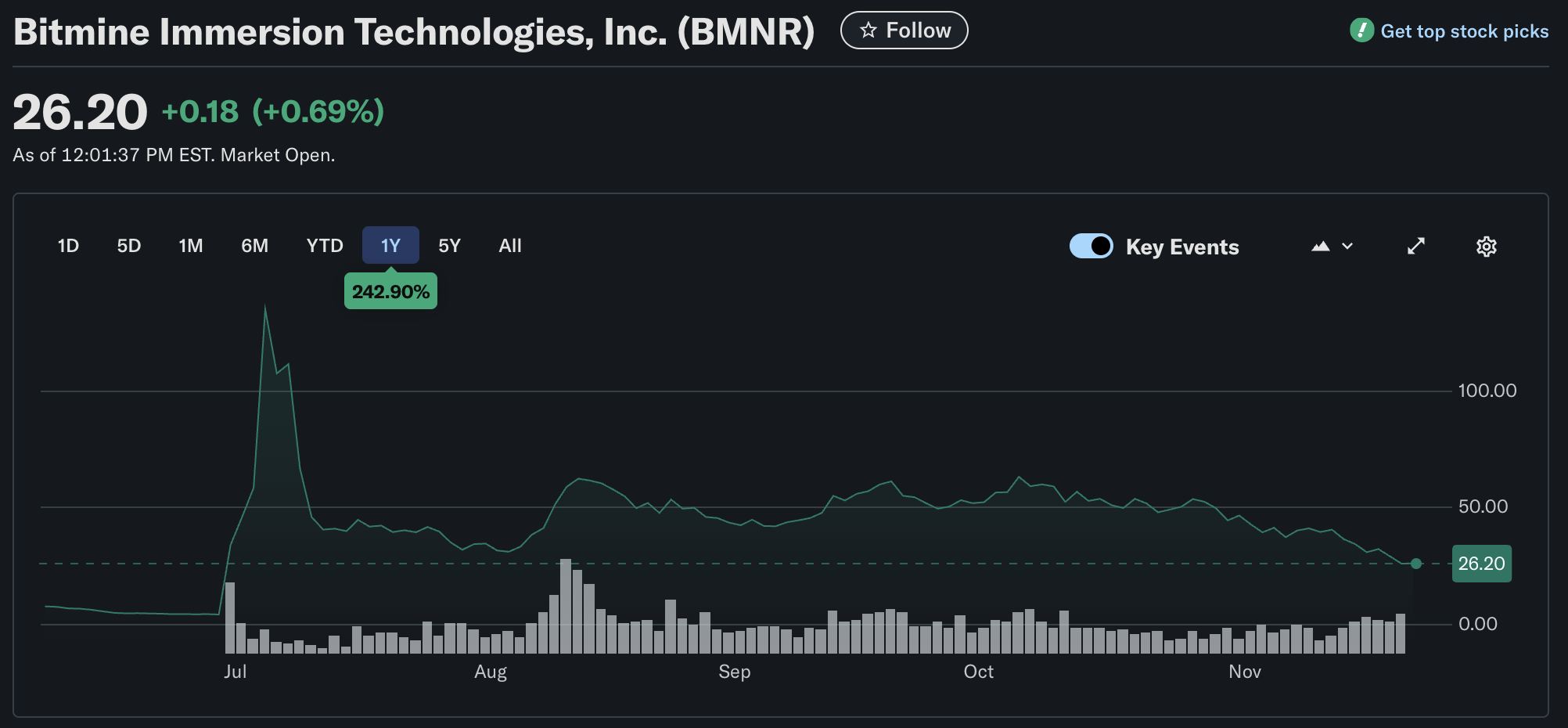
Акции BitMine рухнули вместе с бумагами других DAT-компаний. Источник: Yahoo Finance.

Акции казначейских криптокомпаний постепенно падают в 2025 году. По словам аналитиков, они столкнулись с обвалом своего мультипликатора чистой стоимости активов (mNAV) — критического показателя, отслеживающего ценовую премию, устанавливаемую на акции такой компании.

По теме: BitMine пополнила Ethereum-казначейство на 110 288 ETH

Согласно отчету исследовательской компании 10x Research, из-за резкого падения цены Ethereum нереализованные убытки BitMine сейчас составляют более $3,7 млрд.
Ethereum ETF, Companies
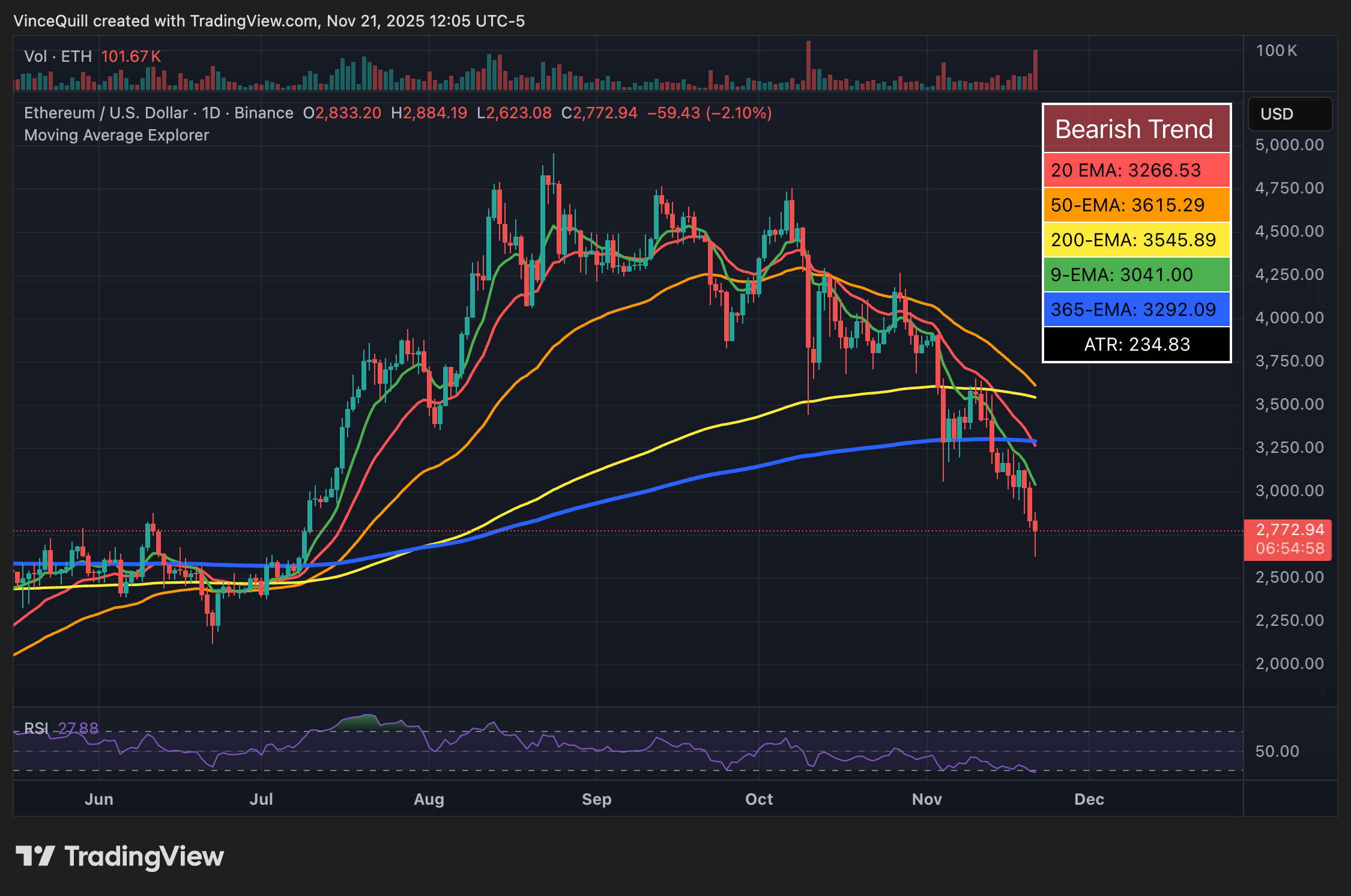
Падение цены эфира после исторического максимума выше $4900 в августе. Источник: TradingView.

Снижение цены означает, что компания «в минусе» более чем на $1000 по каждому токену, который держит. BitMine активно накапливала актив во время его ралли к историческим максимумам в июле и августе.

Обвал альткоина ниже $3000 обнулил годовые достижения казначейских криптокомпаний, удерживающих этот актив. Если цена продолжит падать, это может привести к еще большему финансовому стрессу для таких компаний.

По теме: Ethereum потерял весь рост 2025 года, дальше — $2200?

«Казначейские компании столкнутся с суровой реальностью: привлечь новых розничных инвесторов становится почти невозможно, когда существующие акционеры терпят миллиардные убытки», — написали аналитики 10x Research.

DAT-модель также сталкивается с растущей конкуренцией и размыванием доли рынка. Менеджеры активов, такие как BlackRock, и провайдеры биржевых фондов (ETF) могут предложить инвесторам более дешевый доступ к цифровым активам и вознаграждениям за стейкинг, согласно 10x Research.

Эта статья не содержит инвестиционных советов или рекомендаций. Каждое инвестиционное и торговое решение связано с риском, читатели должны самостоятельно проводить исследование перед принятием решений.


Trending Cryptos

Related Reads

CPU Makes a Comeback to the Table, A $170 Billion "Power Seizure" Drama Begins

A new era is dawning for the server CPU (Central Processing Unit), driven by the shift from AI model training to large-scale reasoning and the rise of Agentic AI. This article explores how the CPU is reclaiming a central role in the AI data center. For years, the focus has been on the GPU (Graphics Processing Unit) for AI training. However, as AI moves to the inference and Agent phase—where tasks involve complex, multi-step reasoning, tool calls, and data management—the workload balance is flipping. Studies show CPUs now handle over 70% of the workload in Agentic AI, up from 10-30% in training. This is because Agent tasks generate massive intermediate data (KV Cache) that exceeds GPU memory, forcing it to be offloaded to the CPU's larger, more scalable memory pools. This increased importance is translating into market changes. Major players are taking note: NVIDIA launched its first standalone CPU line, Vera, based on ARM architecture and optimized for Agent performance. AMD doubled its server CPU market forecast to over $1200 billion by 2030. Analyst reports project the total server CPU market could reach $1700 billion by 2030, with AI-driven demand being a primary driver. Furthermore, the classic ratio of CPUs to GPUs in AI servers is rapidly changing, converging from 1:8 toward 1:1 for Agent deployments. This surge in demand has led to a rare industry-wide price increase of 10-15% for server CPUs from Intel and AMD, breaking a decade-long trend of "more performance for the same price." Demand is bifurcating into high-core-count CPUs for in-rack GPU support and moderate-core CPUs for standalone Agent task orchestration. In China, this global trend presents an opportunity for domestic CPU manufacturers like Hygon (海光信息) and Huawei Kunpeng, who are bolstered by both growing AI infrastructure needs and national policies promoting technological self-reliance ("xin chuang"). The maturity of their software ecosystems is also accelerating, evidenced by faster adaptation to new AI models. In conclusion, the narrative is shifting from a GPU-centric view to one where CPU-GPU synergy is critical. The CPU is no longer a peripheral component but a performance-defining bottleneck and a key growth driver in the AI hardware stack, opening a massive new market estimated in the hundreds of billions of dollars.

marsbit9h ago

CPU Makes a Comeback to the Table, A $170 Billion "Power Seizure" Drama Begins

marsbit9h ago

TechFlow Intelligence: AMD AI Director Publicly Criticizes Claude Code for "Becoming Dumber and Lazier", Trump Claims Full Ceasefire in Hormuz But Strait Still Has 80 Unexploded Mines

TechFlow Intelligence Report: This daily digest covers key developments in AI, crypto, hardware, and geopolitics. In AI, SK Telecom faces US export control scrutiny over its partnership with Anthropic, while a Gemini user reports being misled in a scam scenario, sparking safety debates. China's Z.AI launches the GLM-5.2 model, rivaling Claude Opus without NVIDIA chips. In crypto, Bithumb lists ReProtocol, and Upbit delists KernelDAO. On the hardware front, MIT researchers build a custom OS to study chips, ASML denies US claims its advanced lithography machines are in China, and Amazon considers selling its in-house AI chips. Apple's future A21 Pro chip may use TSMC's latest N2P process. Major tech issues include 10,000 GitHub repositories distributing malware and Apple patching a critical eavesdropping flaw in Beats earbuds. US stocks rise, led by semiconductors, with Intel surging 10.6%, while SpaceX falls 3.5%. Geopolitically, despite a US-Iran deal, the Strait of Hormuz remains risky with ~80 uncleared mines, stalling 80M barrels of oil on standby tankers. Iran postpones Switzerland talks, and Trump calls the agreement an "unconditional surrender." The report highlights a contrast: temporary geopolitical calm versus the ongoing, fundamental restructuring of tech supply chains and chip independence.

marsbit9h ago

TechFlow Intelligence: AMD AI Director Publicly Criticizes Claude Code for "Becoming Dumber and Lazier", Trump Claims Full Ceasefire in Hormuz But Strait Still Has 80 Unexploded Mines

marsbit9h ago

Trading

Spot
Futures

Hot Articles

Discussions

Welcome to the HTX Community. Here, you can stay informed about the latest platform developments and gain access to professional market insights. Users' opinions on the price of ETH (ETH) are presented below.

活动图片