Visa Expands Stablecoin Network Across More Blockchains

TheCryptoTimesPubblicato 2025-10-29Pubblicato ultima volta 2025-10-29

Visa plans to widen its use of stablecoins after seeing a sharp rise in demand from banks, fintech firms, and users sending money across borders. The payments company said it will soon support four additional stablecoins across four different blockchains, although it has not yet disclosed which ones. 

The move comes as the company reported its fourth-quarter earnings for fiscal 2025 and noted higher usage of stablecoins for everyday and cross-border payments.

More usage across Visa’s network

Speaking on Visa’s fourth-quarter earnings call, CEO Ryan McInerney said stablecoins are becoming a more important part of the firm’s settlement network. He noted that Visa has already processed about $140 billion in crypto and stablecoin-related flows since 2020, including purchases made using Visa credentials.

McInerney told investors the company sees “particular momentum with stablecoins,” pointing to a sharp rise in usage across Visa-linked cards and payment services. 

Visa now has more than 130 stablecoin-linked card issuing programs operating in over 40 countries, and stablecoin-linked card spending in the fourth quarter was four times higher than the same period last year. Monthly stablecoin volume on Visa’s network has now reached a $2.5 billion annualized run rate.

The company did not name the four new stablecoins or which blockchains they will run on, but McInerney said, “We are adding support for four stablecoins, running on four unique blockchains, representing two currencies, that we can accept and convert to over 25 traditional fiat currencies.” 

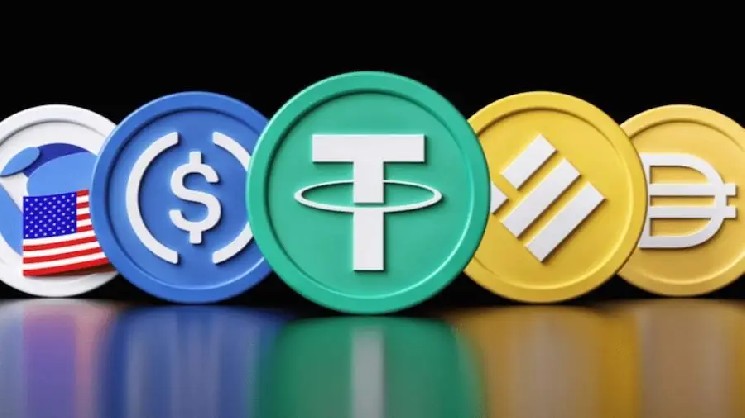
Visa currently supports USDC, Euro Coin, PayPal USD, and Global Dollar on networks including Ethereum, Solana, Stellar, and Avalanche. The new expansion would add more options for banks and financial institutions that use Visa to send and receive digital payments.

Focus on faster cross-border settlement

One area of focus for the company is cross-border transactions, where stablecoins can transfer funds more quickly than banking rails. Visa just introduced a pilot program that lets banks pre-fund cross-border transactions with tokens such as USDC and EURC.

McInerney said the next step is to allow banks and institutions to mint and burn stablecoins using Visa’s tokenized asset platform, effectively letting them issue and settle digital tokens directly rather than relying solely on external stablecoin issuers.

Visa’s stablecoin expansion follows a strong quarter financially. The company reported $10.7 billion in Q4 and $40 billion for the year, with payment volume at $14 trillion.

Also Read: Australia Expands Oversight to Stablecoins and Wrapped Tokens


Mobile Only ImageMobile Only Image

Letture associate

Panic Over $1.8 Trillion Deficit Heats Up, Bond Yield Surge Could Trigger 30% Bitcoin Volatility

The article discusses Bitcoin's current stagnation within a narrow trading range despite positive signals like BlackRock's ETF holdings and net inflows into U.S. spot Bitcoin ETFs. Market anxiety is growing due to conflicting macro forces. On one hand, the soaring U.S. budget deficit—projected at $1.8 trillion—fuels expectations of monetary expansion, which long-term proponents believe will benefit assets like Bitcoin. On the other hand, a sharp surge in global bond yields, with U.S. 30-year yields hitting multi-decade highs, poses a significant risk to high-valuation assets by raising real financing costs. Analysts note Bitcoin's 30-day realized volatility is at historic lows. Historical patterns suggest such periods are typically followed by a median absolute price swing of around 30% within 60 days, though the direction is uncertain. This could push Bitcoin to roughly $83,200 or down to about $44,800 from its current ~$64,000 level. The market's focus has shifted from Fed policy to the trajectory of long-term Treasury yields and geopolitical risks. While the fiscal deficit narrative supports long-term bullishness, the immediate threat of rising yields creates a precarious balance. Traders are warned to prepare for significant volatility and potential deep corrections, with some experts suggesting a washout of leveraged positions may be needed before a sustainable bottom forms.

marsbit5 min fa

Panic Over $1.8 Trillion Deficit Heats Up, Bond Yield Surge Could Trigger 30% Bitcoin Volatility

marsbit5 min fa

"AI Burning Books" Is Actually a Misunderstanding

"AI Book-Burning" Is Actually a Misunderstanding Recent reports about AI companies purchasing used books, scanning them, and then destroying the physical copies have sparked widespread outrage. Terms like "AI is devouring human knowledge" have become common, fueled by dramatic visuals of books being cut and shredded. However, the actual facts reveal a more nuanced story. While companies like Anthropic have indeed spent millions to buy and "destructively scan" several million books for AI training, this volume is a small fraction of the global second-hand book market. The core act—digitizing content and then discarding the physical object—is the opposite of historical book-burning, which aimed to erase knowledge. A key point of contention is the purchase of rare or out-of-print books. Yet, if these books were legally for sale on the open market, the buyer (whether an AI firm or an individual) has the right to do with them as they wish. The real question is whether society has adequate systems to protect books of genuine cultural heritage *before* they are sold. Expecting profit-driven companies to self-regulate on this is unreliable; the solution lies in establishing public rules, such as protected lists for rare editions or granting libraries priority purchase rights. Much of the intense public reaction stems not from the scale of actual harm, but from the powerful symbolism. The image of books being fed into machines taps into deeper anxieties about AI: fears of job displacement, mistrust of tech giants, and the unsettling feeling that humanity is feeding its own cultural past to the systems that might replace it. The outrage over "AI book-burning" is thus less about the physical books and more a proxy for broader societal tensions surrounding artificial intelligence.

marsbit15 min fa

"AI Burning Books" Is Actually a Misunderstanding

marsbit15 min fa

Robinhood CEO named three benefits of tokenized stocks for American investors

Robinhood CEO Vlad Tenev advocates for the U.S. to allow trading of tokenized stocks domestically. He argues this model could modernize the financial system through three key benefits: **faster, near real-time settlements** reducing counterparty risk and broker capital requirements; **24/7 trading** enabling reaction to market events anytime; and **greater asset portability**, allowing tokens to be moved between platforms and held in self-custody wallets, increasing competition among services. Tenev emphasized tokenization is about rebuilding asset ownership infrastructure for freer movement, similar to information online. He highlighted potential integration with DeFi, where tokenized stocks could be used for lending or as collateral. Currently, Robinhood's stock tokens are not direct ownership of the underlying securities but are backed by them and provide access to economic value like dividends; their structure may evolve with future regulations. Tenev identified outdated securities laws and market infrastructure, developed over a century, as the main U.S. obstacle, urging regulators to adapt rules for blockchain while preserving investor protections. He warned it would be strange if the rest of the world could build the future of ownership around U.S. assets while Americans are left behind, suggesting tokenization could later expand to private company shares and other illiquid assets.

cryptonews.ru36 min fa

Robinhood CEO named three benefits of tokenized stocks for American investors

cryptonews.ru36 min fa

Trading

Spot
活动图片