空投预热中,看看这份MetaMask第一赛季积分交互指南

marsbitPublished on 2025-10-28Last updated on 2025-10-29

10 月 28 日晚间,MetaMask 宣布开启「MetaMask Rewards」第一赛季积分奖励计划。

作为一个从 DeFi 时期开始活跃被广泛使用的老牌钱包应用,叠加此前 MetaMask 官方新闻稿中确认即将发行代币的信息,这次活动的消息迅速引起了市场的大量关注。

MetaMask

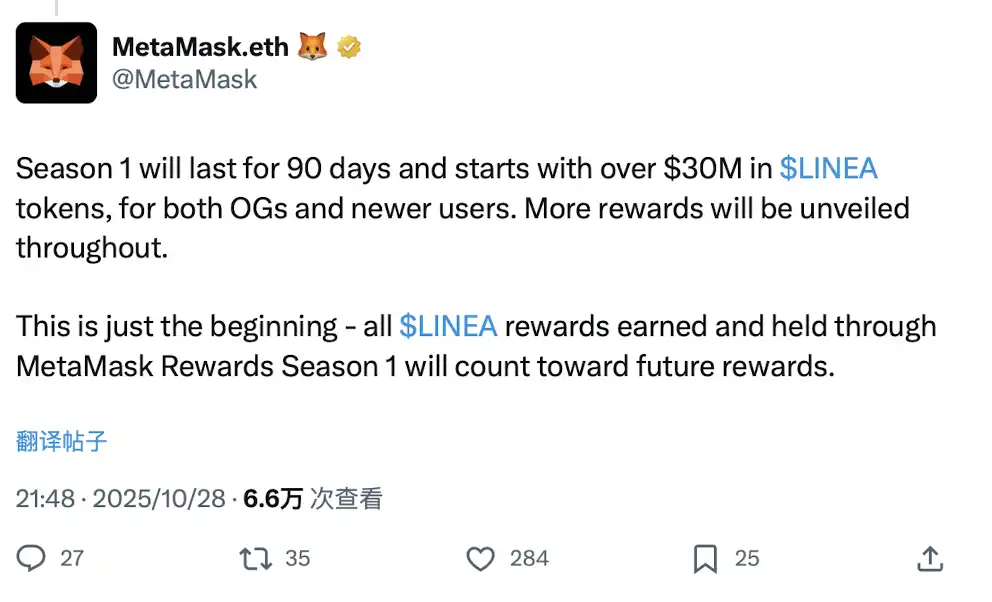
此次 MetaMask Rewards 活动为期 90 天,将会送出超过 3000 万美元的$Linea 代币奖励,并且此次活动的累计积分将极有可能影响后续 MetaMask 代币发行额度。
MetaMask

从钱包到加密金融中心

MetaMask 此次积分计划推出并非孤立事件,与之一起到来的还有 MetaMask 向加密金融中心转型的产品迭代。

作为老牌钱包应用,进入加密市场时间稍早的投资者或多或少都使用过 MetaMask,熟悉的小狐狸 Logo 已经几乎成为加密的代名词。

但是随着近几年越来越多的钱包应用登场,在层出不穷的新功能面前,这只狐狸逐渐被市场所抛弃。

错过了 NFT、铭文、MEME 市场的 MetaMask 此次选择拥抱 Perp DEX,带着全新的面貌重回大众视野。

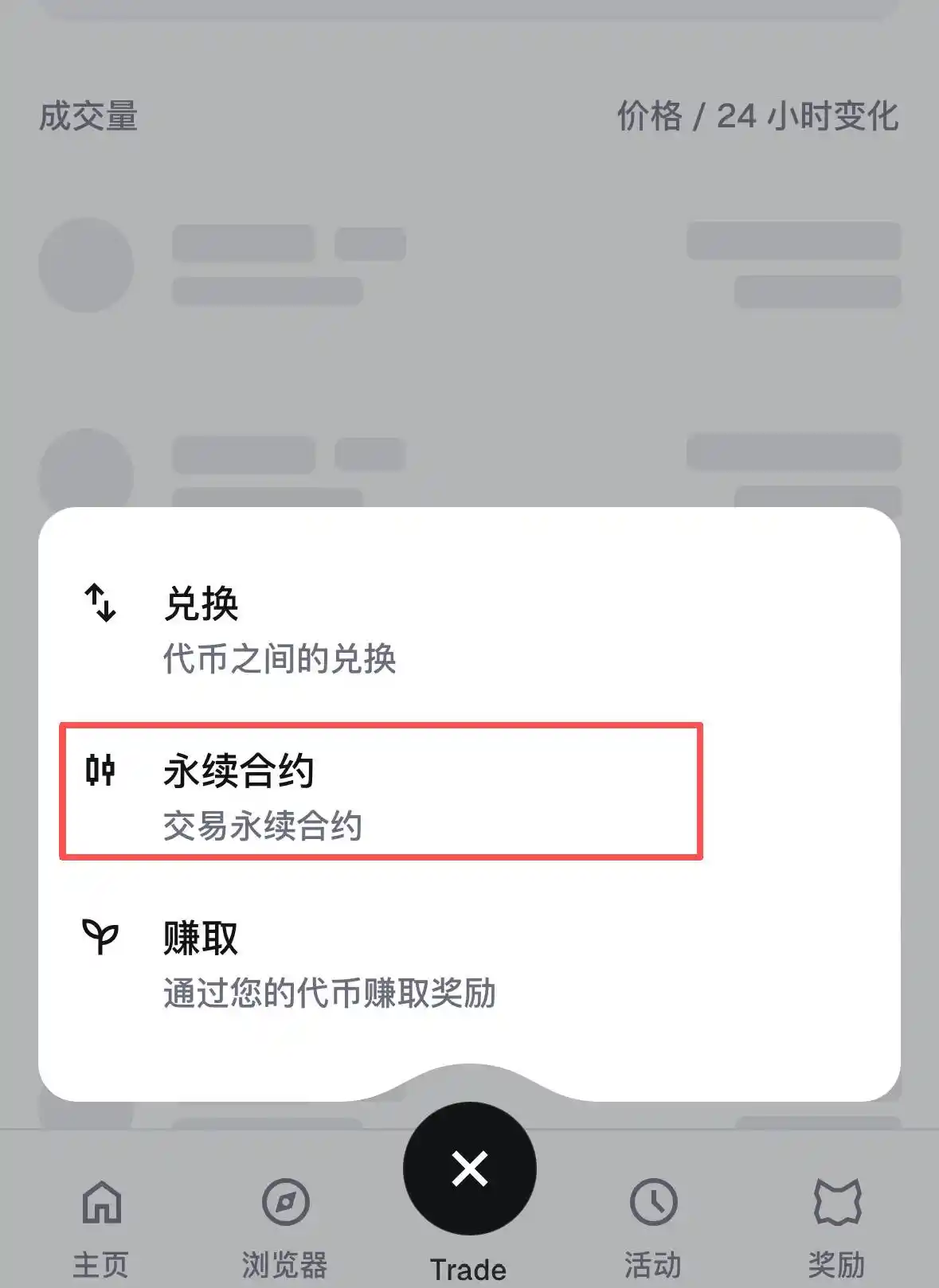
目前 IOS 更新 MetaMask 最新版本后,可以在中间「交易」一栏中找到永续合约选项,当前支持最高 40 倍杠杆交易,由 Hyperliquid 提供技术支持,这样的位置排列也不难看出 MetaMask 将 Perp DEX 作为此次更新的主推功能。
MetaMask

积分计划交互指南

MetaMask 此次积分奖励计划仅支持移动端参与,暂不支持网页端,目前 IOS 可以在 APP Store 内更新 MetaMask,安卓系统还需等待官方更新。

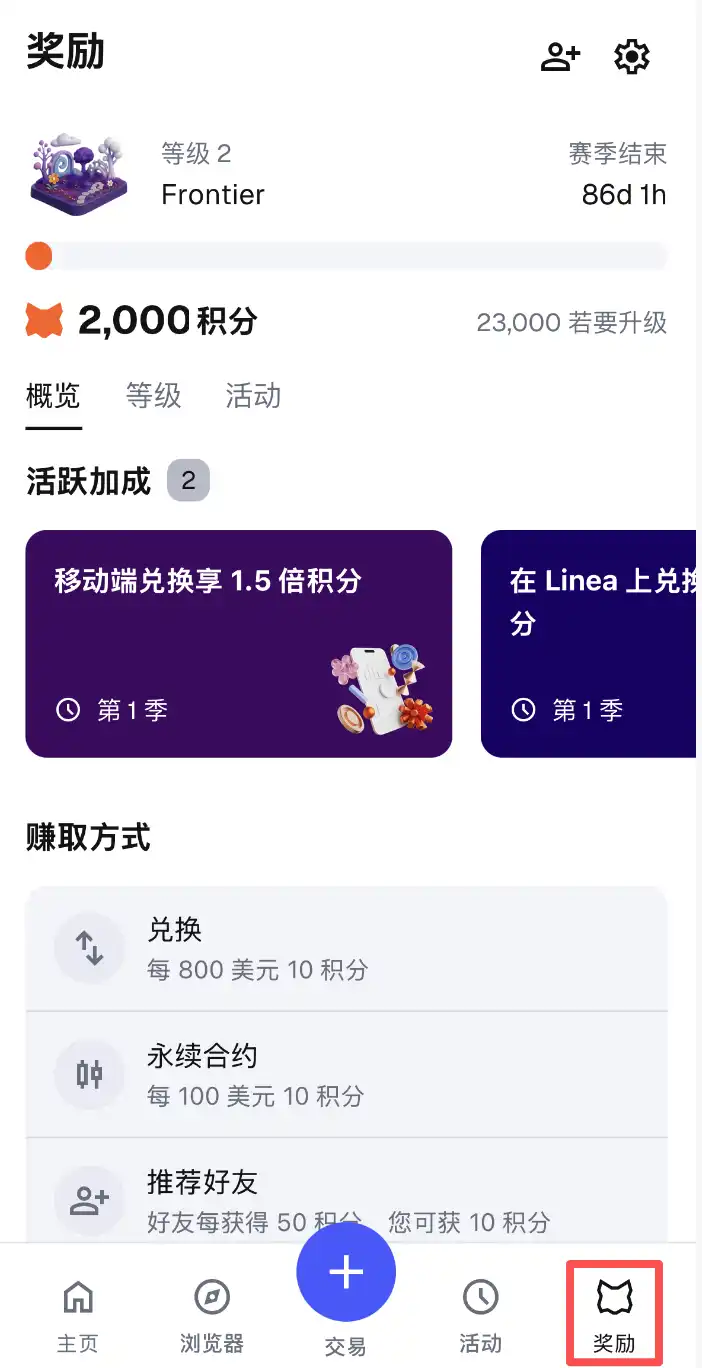
更新后的 MetaMask 内点击下方导航栏「奖励」并填写邀请码即可进入此次 MetaMask Rewards 活动界面。
MetaMask

用户进入活动界面后可以关联其他地址获得历史奖励,MetaMask 将为 10 月 15 日前的历史交易活动提供追溯奖励,每 1250 美元兑换或跨链活动可获得 250 积分,单个地址上限 50000 积分。拥有多个钱包的用户可通过关联地址快速积累大量积分。

除了关联地址获得基础积分以外,用户还可以通过下列活动获取积分:

1. 代币兑换:使用 MetaMask 进行代币兑换交易,每 800U 可获得 10 积分。并且使用 Linea 网络交易将获得双倍积分加成,结合移动端兑换 1.5 倍加成,最高可实现 3 倍积分获取。

2. 永续合约:用户使用 MetaMask 内永续合约交易,进行开仓、平仓等操作每 100U 可获得 10 积分。

3. 推荐好友:通过邀请链接邀请其他用户参与积分奖励计划,被邀请的用户可获得双倍注册积分奖励,并且通过交易获取每 50 积分,邀请人可获得 10 积分奖励。

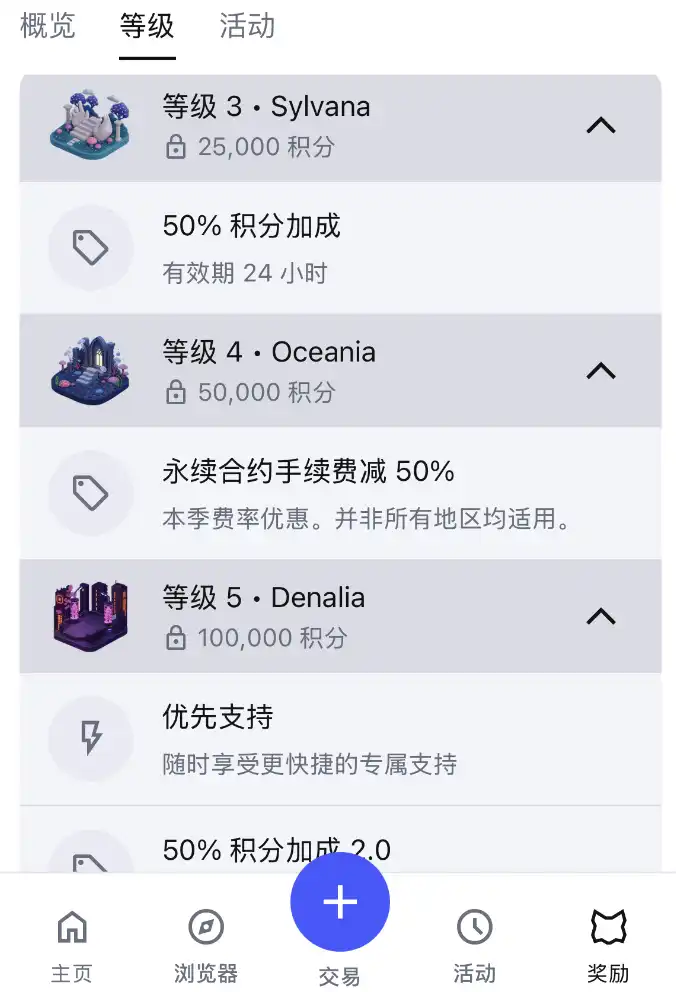
同时,此次活动还设置了用户等级机制,参与用户可以直观看到自己已解锁奖励与待解锁,通过获取积分提高等级后可逐步解锁限时积分额外加成、永续合约手续费减免等权益。
MetaMask

小狐狸的转型之路即将开启

作为使用最广泛的老牌钱包之一,MetaMask 在加密市场中的口碑一直处于上游,但错过了多次市场叙事也让 MetaMask 面临着被取缔淘汰的危机。

在更好用更流程之外,此次更新拥抱 Perp DEX 以及明确宣布代币发行更像是小狐狸转型之路的第一步,而此次积分奖励计划也极有可能带来加密市场又一大规模空投事件。
Related Reads

An Eight-Year Investment Takes a Sharp Turn: Why Did Ethereum Suddenly Abandon Poseidon?

On August 13, Ethereum researcher Justin Drake announced a significant shift in Ethereum's Layer-1 cryptographic roadmap: abandoning the SNARK-friendly hash function Poseidon in favor of traditional functions like SHA2 or BLAKE2. This decision ends eight years of research and investment, marking a major revision to the post-quantum security strategy. Poseidon, introduced in 2019, was highly efficient for zkRollups and zkVMs within SNARK circuits. However, its need for prolonged cryptanalysis and the pressing timeline for quantum resistance revealed limitations. Recent breakthroughs in SNARK design, specifically using binary fields, now enable traditional, battle-tested hash functions to perform as efficiently as Poseidon within SNARKs. Benchmarks show modern laptops can now verify over a million traditional hash calls per second. This change is partly driven by accelerated concerns over quantum computing threats. Reports warn that "Cryptographically Relevant Quantum Computers" could break current blockchain signatures like ECDSA by the early 2030s, risking trillions in assets. Ethereum's response focuses on hash-based post-quantum signature schemes, deemed more quantum-resistant than some lattice-based alternatives under pressure from AI cryptanalysis. Ethereum's updated post-quantum roadmap targets a production-ready "leanVM" for signature aggregation by 2027, with full deployment across consensus, execution, and data layers by 2028. The shift to mature hash functions like SHA2 reduces reliance on newer algorithms and aligns with the goal of using widely analyzed cryptographic primitives. Other major blockchains are also preparing. Solana's core teams have independently chosen the NIST-standardized Falcon signature scheme for its compact size. Starknet plans a phased migration, starting with replacing its Pedersen hash with BLAKE2. Ethereum's move signifies a strategic pivot towards proven security foundations for the quantum era.

marsbit41m ago

An Eight-Year Investment Takes a Sharp Turn: Why Did Ethereum Suddenly Abandon Poseidon?

marsbit41m ago

Programmers Worldwide Are Wasting Money on Anthropic! The Company Can't Stand It Anymore

Anthropic recently published guidelines to help developers using Claude Code reduce unnecessary token costs. The key recommendations include: 1) Clear (/clear) conversations after completing a task to avoid carrying irrelevant file reads and command outputs into the next task. 2) Set the model and reasoning effort level at the start of a session, as switching mid-session invalidates the prompt cache, requiring a full-price recalculation of the entire dialog history. 3) Attach files using @ references instead of typing paths manually to avoid extra tool calls and searches that bloat the context. 4) Add quiet flags to verbose commands (e.g., in CLAUDE.md) to minimize lengthy output in the dialog history. 5) Use /compact while the session cache is still warm (before breaks) to compress the dialog at one-tenth the cost. 6) Offload large-output tasks to a sub-agent, which runs in an isolated context and only returns conclusions, preventing intermediate outputs from polluting the main dialog. The article explains token pricing: input tokens (prefill) are processed in parallel, while output tokens (decode) are generated serially, making output tokens five times more expensive. Caching is crucial for savings—if a request's prefix (system prompt, CLAUDE.md, dialog history) matches the previous one byte-for-byte, reading it costs only 10% of the standard input price. However, cache invalidation occurs when changing models, effort levels, fast mode, compressing dialogs, after cache expiration, or when resuming old sessions. Dialog history also grows quadratically (O(n²)) as file contents and command outputs accumulate, increasing costs per round. Proactive context management—like isolating noisy tasks, using /rewind to trim unproductive turns, and task-based session clearing—is becoming an essential skill for cost-effective AI-assisted development.

marsbit2h ago

Programmers Worldwide Are Wasting Money on Anthropic! The Company Can't Stand It Anymore

marsbit2h ago

Pax Silica vs. WAICO: The US Wants to Prohibit Europe from Using Chinese Artificial Intelligence

The United States is preparing to demand that European and other partners abandon Chinese artificial intelligence initiatives, threatening exclusion from the American-led "Pax Silica" coalition, according to a leaked U.S. State Department document. This ultimatum forces signatories of the "AI Opportunity Statement" to choose between the Western technological ecosystem and alternative frameworks, with China not explicitly named but clearly targeted. Pax Silica is a U.S. strategy for AI and semiconductor hegemony, launched in late 2025. Its European presence expanded significantly in mid-2026. Concurrently, China, Russia, and 27 other nations established the World AI Cooperation Organization (WAICO) in July 2026 as an independent intergovernmental platform promoting AI governance based on UN principles. This situation creates a difficult choice, especially for European nations balancing strategic autonomy with dependence on U.S. tech and security. It also pressures Global South countries with pragmatic ties to both Washington and Beijing. The formation of competing blocks risks fragmenting the global tech landscape, forcing companies to split supply chains, increasing costs, and potentially leading to incompatible standards and protocols. The era of open globalization in AI may be ending, replaced by geopolitical confrontation where technological sovereignty trumps economic efficiency. The decisions made will shape the global digital economy for decades.

cryptonews.ru4h ago

Pax Silica vs. WAICO: The US Wants to Prohibit Europe from Using Chinese Artificial Intelligence

cryptonews.ru4h ago

Robert Kiyosaki Shares His Mentor's Predictions About the Emergence of Bitcoin and AI

American entrepreneur and author of "Rich Dad Poor Dad," Robert Kiyosaki, discussed the influence of futurist R. Buckminster Fuller on his worldview, linking Fuller's past technological predictions to the emergence of Bitcoin and the development of artificial intelligence. In an X post, Kiyosaki also reflected on personal purpose, sharing his journey from the music business—where he worked with bands like The Police and Iron Maiden—to creating the "Cashflow" board game and writing his famous book. He described feeling an inner emptiness despite his success, a turning point that came after meeting Fuller, whom he studied with for three summers. Kiyosaki described Fuller as a "friendly genius" who foresaw world-changing developments like Bitcoin and AI. However, the core of his post focused on Fuller's philosophical impact, particularly a quote about belonging to the universe and finding purpose by dedicating one's life to the maximum benefit of others. The entrepreneur remains a vocal advocate for cryptocurrencies. He regularly advises buying Bitcoin during market panics, viewing it and assets like Ethereum, gold, and silver as hedges against traditional financial system failures. Kiyosaki has predicted a major market crash by 2026, seeing it as an opportunity for prepared investors, with long-term price targets including $750,000 for Bitcoin and $95,000 for Ethereum.

cryptonews.ru6h ago

Robert Kiyosaki Shares His Mentor's Predictions About the Emergence of Bitcoin and AI

cryptonews.ru6h ago

Trading

Spot
活动图片