Три ведущих банка Японии анонсировали запуск собственного стейблкоина

cryptonews.ruPubblicato 2025-05-16Pubblicato ultima volta 2025-10-17

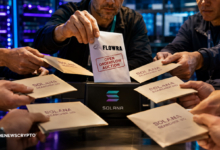
Три крупнейших японских банка — MUFG, Sumitomo Mitsui и Mizuho — объявили о совместном проекте по выпуску стейблкоина, привязанного к японской иене (JPY) и американскому доллару (USD). Новый цифровой актив будет использоваться для упрощения трансграничных расчетов и повышения эффективности корпоративных платежей.

Первым сценарием применения станет применения стейблкоина в инфраструктуре Mitsubishi Corporation. Инициатива рассматривается как шаг к цифровизации корпоративных финансовых процессов и снижению транзакционных издержек. По оценкам банков, использование токенизированных валют позволит ускорить операции между внутренними и зарубежными контрагентами.

Совокупная клиентская база MUFG, Sumitomo Mitsui и Mizuho превышает 300 тыс. крупных корпоративных партнеров, что создает потенциал для масштабного внедрения нового платежного инструмента. Банки рассчитывают: участие ведущих компаний страны сформирует доверие к проекту и ускорит распространение цифровой валюты на внутреннем рынке.

Стейблкоин будет обеспечен депозитами в JPY и USD, что гарантирует стабильность его стоимости. Регулирование проекта планируется осуществить в соответствии с обновленными нормами японского законодательства, которое в 2023 году установило правовую основу для выпуска банковских стабильных монет.

По данным Nikkei, инициатива направлена на создание инфраструктуры, которая позволит Японии конкурировать с международными платежными сетями и усилить позиции национальной финансовой системы в цифровой экономике. Эксперты отметили, что объединение 3-х крупнейших банков страны стало уникальным шагом, демонстрирующим стратегическое единство японского финансового сектора перед вызовами токенизации. В перспективе банки планируют расширить использование стейблкоина по Азиатско-Тихоокеанскому региону.

Letture associate

WeChat AI Card Hands-On Guide: Has the AI Shopping Era Arrived?

**"WeChat AI Card" Practical Test Guide: Has the Era of AI Shopping Arrived?** WeChat has officially launched the "AI Exclusive Card," a feature integrated into its Workbuddy AI assistant. This card is designed to handle payments for AI-initiated purchases. Our hands-on test reveals it's not yet a tool for fully autonomous AI shopping, but rather a controlled payment layer for AI agents. The AI Card functions as an isolated sub-wallet within WeChat Pay. Users must bind the card and transfer funds into it from their main wallet. Crucially, every transaction requires explicit user confirmation via smartphone scan; AI cannot spend autonomously. Currently accessible through the Workbuddy agent, the card targets specific digital consumption scenarios: purchasing paid content (reports, data), calling paid APIs/tools, and subscribing to services. Its design prioritizes security and control by separating funds and mandating approval for each payment. We tested a real-world scenario: ordering bubble tea via Workbuddy using a "Meituan Life Assistant" skill. The process encountered multiple hurdles: high "skill" usage costs (exceeding daily free credits), and most importantly, while a payment was successfully initiated, the AI purchased an incorrect product (a mismatched group-buy coupon instead of the desired drink). This highlights the current limitation: the **AI Card only solves the payment step**. The broader challenge lies in the **AI agent's execution chain**—accurately understanding intent, navigating third-party platforms, selecting the right product, and ensuring proper fulfillment. The payment succeeded, but the purchase failed to meet the user's need. In conclusion, the WeChat AI Exclusive Card is a cautious, early-step experiment in AI commerce. It provides a secure, user-controlled payment method for agent interactions but is not yet capable of reliable, end-to-end complex purchases. For now, it's best used for low-value, low-risk digital services with careful user verification at each step. The vision of AI handling complete shopping tasks remains a work in progress.

marsbit27 min fa

WeChat AI Card Hands-On Guide: Has the AI Shopping Era Arrived?

marsbit27 min fa

Deconstructing Notion's Growth: From a Note-taking Tool to 100 Million Users—How Notion Built a Triple Growth Flywheel Through Product, Templates, and Community

Notion's growth from a niche note-taking tool to a platform with 100 million users is powered by three interconnected flywheels: Product-Led Growth (PLG), a Template Economy, and Community-Driven Growth. First, Notion's PLG strategy relies on a highly flexible, "plastic" product that users can adapt to countless personal and team workflows. Its freemium model lowers the barrier to entry, while features like page sharing and collaboration drive organic, usage-based viral growth as users naturally invite others. Second, the Template Economy solves the "blank page" problem. Templates, created by both Notion and its community, transform abstract product capabilities into concrete, copyable solutions for specific scenarios (e.g., project management, content calendars). This dramatically lowers activation costs for new users and fuels SEO-driven discovery. Third, a vibrant Community acts as a distributed growth engine. Users and official Ambassadors create tutorials, share use cases, and host local events. This community not only educates users but also fosters a sense of identity around pursuing "better ways of working," strengthening loyalty and enabling global, low-cost expansion. Together, these flywheels create a self-reinforcing ecosystem: a great product attracts users who create templates and community content, which in turn attracts more users and deepens engagement. This system allowed Notion to scale from individuals to teams and enterprises through a bottom-up adoption path. Looking ahead, AI integration promises to accelerate these flywheels further by making templates smarter and the platform a potential AI-native work operating system. Ultimately, Notion's defensible advantage is not just its features, but this deeply entrenched network of user assets, creators, and community trust.

marsbit28 min fa

Deconstructing Notion's Growth: From a Note-taking Tool to 100 Million Users—How Notion Built a Triple Growth Flywheel Through Product, Templates, and Community

marsbit28 min fa

$10 Billion, Qualcomm to Acquire Chip Legend Jim Keller's Company

Global mobile chip giant Qualcomm is in advanced talks to acquire AI chip startup Tenstorrent in a deal valued between $8-10 billion, according to media reports. This potential acquisition would be one of the largest in the AI chip sector in recent years. Tenstorrent, led by legendary chip architect Jim Keller, has gained prominence for its RISC-V architecture and AI accelerator designs. The move highlights Qualcomm's strategic push to diversify beyond its core smartphone chip business. As the smartphone market matures, Qualcomm is aggressively targeting growth in automotive, data center, and cloud AI. Acquiring Tenstorrent would allow Qualcomm to rapidly enter the high-end AI computing market, bypassing lengthy in-house development cycles. Tenstorrent's cost-effective system architecture, which avoids expensive HBM memory and relies on standard Ethernet for clustering, offers a potential alternative to Nvidia's costly solutions. Furthermore, Tenstorrent's high-performance RISC-V CPU technology and its focus on the automotive and edge computing segments align with Qualcomm's strategic goals, including its "Snapdragon Digital Chassis" platform. Despite the strategic rationale, the high valuation has sparked some investor caution. The successful integration of Tenstorrent's open-source culture and independent team into Qualcomm's organization, along with the commercialization of its technology, remains a key challenge.

marsbit1 h fa

$10 Billion, Qualcomm to Acquire Chip Legend Jim Keller's Company

marsbit1 h fa

Trading

Spot
Futures
活动图片