Government Shutdown Delays SEC Decision on Canary Litecoin ETF

TheCryptoTimesPublished on 2025-10-03Last updated on 2025-10-03

The U.S. Securities and Exchange Commission (SEC) missed its October 2 deadline to decide on Canary Capital’s proposed spot Litecoin (LTC) exchange-traded fund (ETF), leaving investors and the crypto market uncertain. The agency has not issued any public comment explaining the delay.

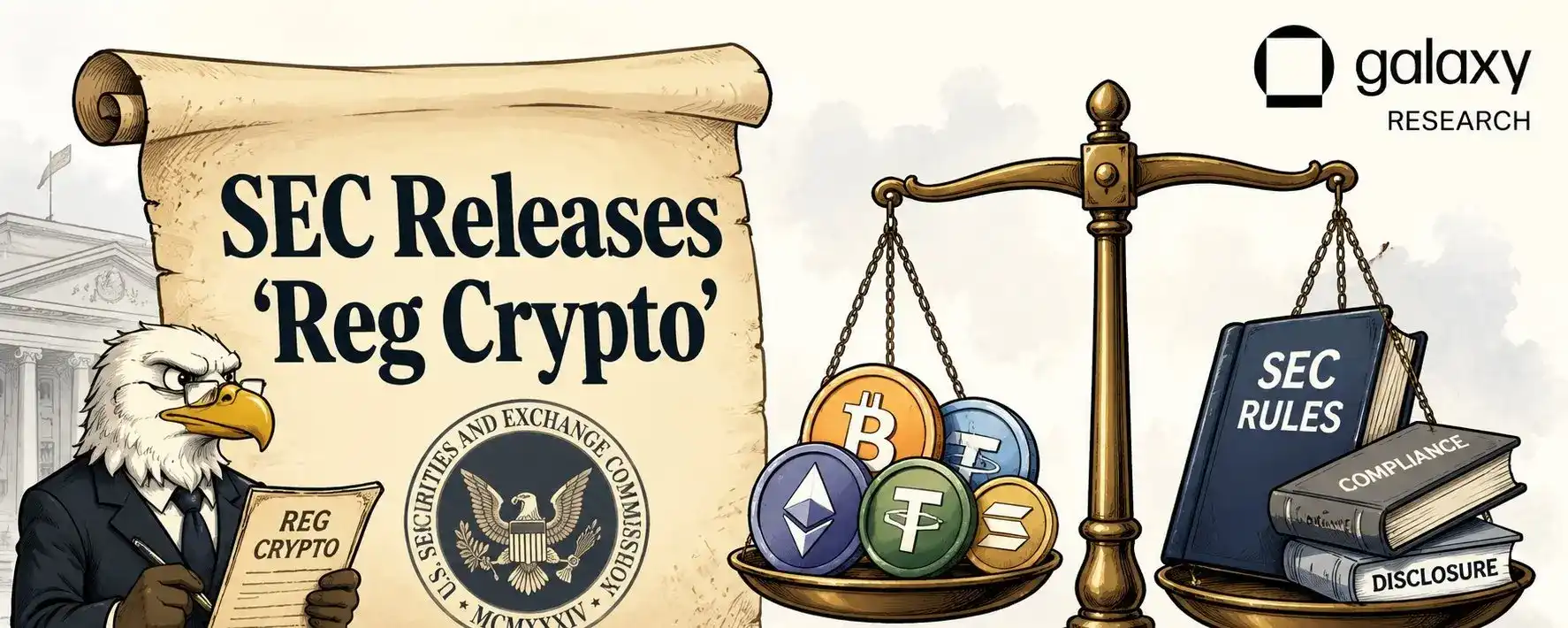
Earlier this year, the SEC asked firms to withdraw their 19b-4 filings, which had been used for exchange rule changes, in favor of S-1 registration statements for ETF approval. Canary withdrew its 19b-4 application on September 25, following the SEC’s instructions. 

FOX News reporter Eleanor Terrett noted, “Since the generic listing standard went into effect and the agency asked issuers and partner exchanges to withdraw their 19b-4s, I’m told the deadlines technically no longer matter.”

Analysts say this regulatory shift makes the old 19b-4 deadlines less relevant, but it adds uncertainty to the approval process for crypto ETFs, which are already under increased scrutiny.

Government shutdown complicates approval

The SEC outlined in August that during a federal government shutdown, it would “not review and approve applications for registration.” 

This includes new financial products, self-regulatory organization rule changes, and accelerated registration statements. While the SEC continues to operate with limited staff, this has slowed the review of new ETF applications, including Canary’s Litecoin proposal.

Litecoin market update

Litecoin is currently trading at $116.51, down 2.41% in the last 24 hours. It is ranked #19 by market capitalization, which stands at $8.89 billion, up 2.25% for the day. Its 24-hour trading volume is $1.15 billion, down 13.47%, as per CoinMarketCap data.

Broader crypto ETF landscape

Canary’s ETF is just one of several altcoin funds being reviewed in the U.S., with proposals for Solana, XRP, Avalanche, Cardano, Chainlink, and Dogecoin also in the works. Meanwhile, Bitcoin and Ethereum spot ETFs have already drawn over $74 billion, showing that institutional investors remain heavily interested in crypto.

Top asset managers like Fidelity, Franklin Templeton, and Bitwise have submitted updated S-1 filings for spot Solana ETFs, some featuring staking options. Analysts expect the SEC could give approval to some of these ETFs by mid-October.

The SEC’s delay highlights the challenges of crypto regulation in the U.S., where procedural changes and limited staffing during a government shutdown leave issuers and investors waiting for clarity.

Also Read: 21Shares SUI and Polkadot ETFs Near SEC Approval After DTCC Listing


Mobile Only Image

Related Reads

Ethereum Foundation Researcher: Quantum Day Is Approaching, Plans to Complete Quantum-Resistant Migration by 2029

Ethereum Foundation researcher Justin Drake discusses the implications of a recent quantum computing breakthrough by Google’s quantum AI team, which demonstrated a 10x efficiency improvement in Shor’s algorithm against the secp256k1 elliptic curve used in Bitcoin and Ethereum. Notably, Google kept key algorithmic details confidential, using zero-knowledge proofs to verify the result without disclosure—a first in academia. Shortly after, the core optimization was independently reproduced, and an open-source competition (ecdsa.fail) emerged, further improving the algorithm by 8.4%. Meanwhile, startup Oratomic published research suggesting that neutral-atom quantum architectures could break secp256k1 with only 10,000 physical qubits, accelerating the timeline for "Q-Day"—the day quantum computers can break widely used cryptography. Drake estimates a 50% probability of Q-Day by 2032 and a 10% chance by 2030, contrasting with the U.S. government’s more conservative 2035 forecast. He warns against panic but stresses timely migration to post-quantum cryptography. Ethereum plans to complete its migration by 2029, covering consensus, data, and execution layers with hash-based systems. The Foundation is also developing leanVM, a formally verifiable zkVM, and has launched two $1 million initiatives to advance SNARK-friendly cryptography.

foresightnews_api3m ago

Ethereum Foundation Researcher: Quantum Day Is Approaching, Plans to Complete Quantum-Resistant Migration by 2029

foresightnews_api3m ago

UBS: The Crowdedness of A-Share Tech Stocks Is Far From Reaching Historical Peaks

UBS: A-share tech stocks still far from peak crowding levels A-shares' technology sector has seen a strong rebound, with trading activity hitting record highs, raising concerns about market crowding. However, UBS Securities argues that a key indicator of institutional positioning suggests the current crowding level remains well below historical peaks. While the large-cap tech sector's share of total A-share trading volume and market capitalization have reached historical highs, the overweight ratio of domestic mutual funds in this sector stood at 9.9% in Q1 2026. This is down from 11.6% in Q3 2025 and significantly lower than the historical peak of 14.1% in Q4 2015. It also pales in comparison to the historical peak overweight of 18.7% for the consumer sector. UBS notes that typical cycles from a low to a peak in fund overweighting last about three years, and the current outperformance of the tech/growth style has lasted less than two years since the policy pivot in September 2024. UBS expects A-share earnings recovery to accelerate, providing fundamental support. It forecasts 2026 A-share profit growth to rise to 11% from 3.9% in 2025. Non-financial A-share profits grew 11.8% YoY in Q1 2026, with gross and net profit margins at their highest since 2023. Persistent fund inflows, the expansion of thematic ETFs, and a recovery in private fund issuance are supporting market liquidity. In tactical allocation, UBS favors growth and cyclical styles under its "slow bull" base case, with overweight ratings on six sectors: Electronics (benefiting from semiconductor inventory recovery and AI innovation), Communications (driven by AI computing demand), Machinery (aided by domestic capex recovery), Non-ferrous Metals (due to rising copper/aluminum prices), Chemicals (supported by anti-involution policies), and Electrical Equipment (driven by policy support and AI data center power demand).

marsbit1h ago

UBS: The Crowdedness of A-Share Tech Stocks Is Far From Reaching Historical Peaks

marsbit1h ago

Trading

Spot
Futures

Hot Articles

How to Buy LTC

Welcome to HTX.com! We've made purchasing Litecoin (LTC) simple and convenient. Follow our step-by-step guide to embark on your crypto journey.Step 1: Create Your HTX AccountUse your email or phone number to sign up for a free account on HTX. Experience a hassle-free registration journey and unlock all features.Get My AccountStep 2: Go to Buy Crypto and Choose Your Payment MethodCredit/Debit Card: Use your Visa or Mastercard to buy Litecoin (LTC) instantly.Balance: Use funds from your HTX account balance to trade seamlessly.Third Parties: We've added popular payment methods such as Google Pay and Apple Pay to enhance convenience.P2P: Trade directly with other users on HTX.Over-the-Counter (OTC): We offer tailor-made services and competitive exchange rates for traders.Step 3: Store Your Litecoin (LTC)After purchasing your Litecoin (LTC), store it in your HTX account. Alternatively, you can send it elsewhere via blockchain transfer or use it to trade other cryptocurrencies.Step 4: Trade Litecoin (LTC)Easily trade Litecoin (LTC) on HTX's spot market. Simply access your account, select your trading pair, execute your trades, and monitor in real-time. We offer a user-friendly experience for both beginners and seasoned traders.

8.8k Total ViewsPublished 2024.03.29Updated 2026.06.02

How to Buy LTC

Discussions

Welcome to the HTX Community. Here, you can stay informed about the latest platform developments and gain access to professional market insights. Users' opinions on the price of LTC (LTC) are presented below.

活动图片