永续合约为何必然属于通用区块链?

深潮Published on 2025-09-11Last updated on 2025-09-12

未来的趋势是:永续合约(以及所有「杀手级应用」)将让头部通用链变得更加强大。

撰文:World Capital Markets

编译:Saoirse,Foresight News

应用链(Appchains)与通用链(GP Chains)之间的争论从未停歇。这两种模式各有其优势,但当我们从历史与经济学角度审视便会发现,在通用链上搭建永续合约的合理性不言而喻。

事实上,认为应用程序应自建独立链条的想法,完全是本末倒置。真正优质的应用程序应当为通用链提供支持,而非分裂成一个个孤立的「信息孤岛」。

金融的本质是整合,而非分散

金融行业的发展规律从来不是分散化,而是不断整合。

1921 年,美国约有 3 万家银行;如今,这一数字仅剩下约 4300 家,降幅达 86%。为何会出现这种变化?答案在于共享基础设施、统一标准与高效结算机制。基础设施越少,流动性就越强,规模效应也越显著。

尽管每年都会涌现一批全新的区块链项目,但即便各类替代方案如「寒武纪生命大爆发」般层出不穷,以太坊这个速度慢、成本高的区块链,在锁仓总价值(TVL)排名中依旧稳居第一,且领先优势巨大:其规模几乎是 Solana 的 10 倍。

以下是截至 2025 年 8 月 31 日,锁仓总价值排名前五的区块链
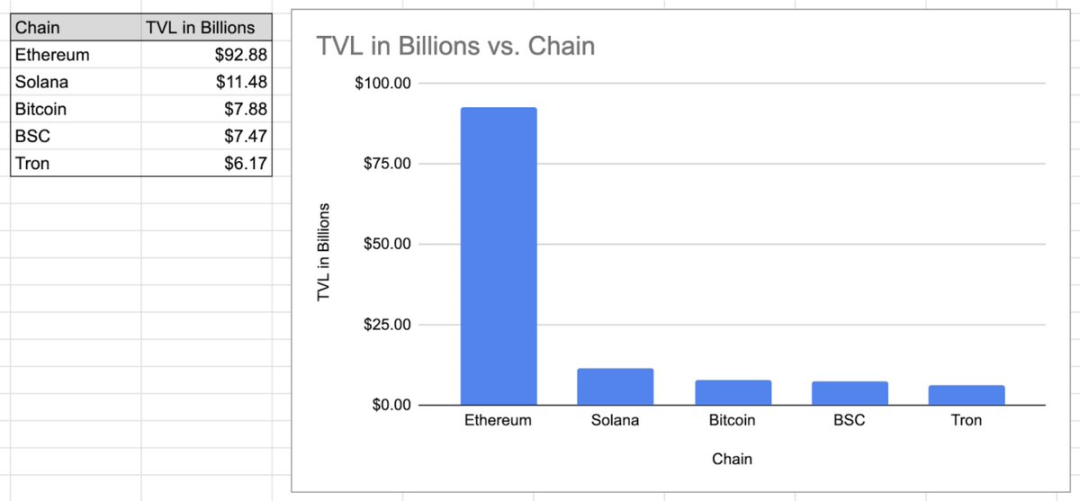
数据来源:https://defillama.com/chain/ethereum

在以太坊之后,排行榜中仍以通用链为主。最终你会看到 HyperEVM—— 另一条通用链,它承载着 Hyperliquid 的运行;而 Hyperliquid,也是迄今为止唯一真正成功的应用链。

由此可见,共享结算才是区块链金融的最终方向,而非分散的「特定应用孤岛」。

分销是核心:金融领域的「制胜关键」

有一种常见说法认为,「通用链只解决了分销问题」。「只」解决了?这种说法就好比说「一种药物只治愈了癌症」。在金融领域,分销本身就是核心竞争力。

你日常使用的金融产品,在不同服务商之间的差异究竟有多大?

从支票账户,到纽约证券交易所(NYSE)与纳斯达克(Nasdaq)的对比,除了「分销能力」和「已形成的网络效应」,我很难发现这些业务之间存在本质区别。要知道,服务器等硬件成本低廉,但分销能力却是无价的。

平台经济学:真正的启示

平台是极具影响力的分销载体。

回顾平台的发展历史 —— 从操作系统、应用商店(App Store)、Xbox 游戏主机,到互联网,再到近年的 Telegram—— 规律无比清晰:那些突破性的应用程序,无论主动选择还是被动适应,都会为平台提供支持,而非脱离平台独立发展。

不妨想想分销对平台的重要性:你的 iPhone 上,有多少应用是不通过 App Store 下载的?你又有多少次不使用浏览器就能访问网站?TikTok 没有打造更好的操作系统,Facebook 没有开发更好的浏览器,Halo 也没有制造更好的 Xbox 主机。

事实上,与当前一些观点相反:优质的应用程序反而有动力为平台的发展提供支持。

热门应用希望平台取得成功,这就形成了一个「飞轮效应」:应用带来流量,流量吸引更多应用入驻,进而带来更多流量。

而区块链通过去中心化治理,解决了传统平台的唯一核心弊端 ——「平台风险」(即平台方可能单方面变更规则、限制应用等)。在去中心化平台上,不会再出现类似《开心农场》(FarmVille)因平台规则变动而衰落的情况。你能享受平台的所有优势,却无需承担「被平台压榨」的风险。当然,需要说明的是,由于当前技术中「性能」与「去中心化」存在固有权衡,MegaETH 仍带有一定中心化属性;但重要的是最终目标,而非初始状态。

结论:网络效应驱动的「胜者通吃」

金融行业在持续整合,平台在分销中占据主导,分销能力比产品功能更重要。

而区块链与历史规律的唯一区别,在于它会进一步放大这些效应。

未来的趋势是:永续合约(以及所有「杀手级应用」)将让头部通用链变得更加强大。因为网络效应不会分散,只会层层叠加、不断强化。

Related Reads

Vitalik's Article Emphasizes Ethereum Must Be 'Amazing', But Foundation Is Not the Center

Vitalik Buterin has published a lengthy response to recent community criticism directed at the Ethereum Foundation (EF). Acknowledging a sense of "unease," he addresses concerns about the EF's strategic direction, its perceived disconnect from ETH's price performance, and calls for its reduced central role. Vitalik rejects the notion that the EF should be the central governing body of Ethereum, framing it instead as one "node with a clear mandate" among many within the ecosystem. He highlights the EF's limited ETH holdings (≈0.16% of supply) compared to other blockchain foundations and states it will no longer sell significant amounts of ETH. Its future focus will be on long-term, critical projects that align with Ethereum's core values of censorship-resistance and decentralization, which might not otherwise happen. A core argument is that Ethereum must be "amazing," but not by merely chasing higher transaction speeds at the cost of decentralization. He proposes focusing on the "CROPS" dimensions: creating a Cryptographically provable, Reliable, Open, Private, and Secure network. This includes pursuing goals like a formally verifiable, bug-free Ethereum client and minimizing protocol-level reliance on intermediaries. The article concludes by noting that while Vitalik clarifies the EF's refocused role, he does not directly address community suggestions for creating a new organization explicitly aligned with ETH's economic interests. This "alignment gap" is presented as a key challenge for Ethereum's future.

链捕手7m ago

Vitalik's Article Emphasizes Ethereum Must Be 'Amazing', But Foundation Is Not the Center

链捕手7m ago

Galxe: How a Quest Platform Evolved into Web3's Growth Infrastructure

Galxe, once perceived as a simple Web3 quest platform, has evolved into a core growth infrastructure within the Web3 ecosystem. It addresses a fundamental Web3 growth dilemma: the lack of a mature, systematic user acquisition and retention system akin to Web2's advertising and analytics platforms. While users complete quests (social tasks, on-chain interactions) for rewards, Galxe's true innovation lies in transforming these fragmented, one-off actions into lasting, verifiable identity credentials. This process of *behavioral assetization* creates a persistent record of a user's activities across projects and chains. For users, their wallet accumulates a valuable history that can unlock future access and rewards, fostering a "profile-building" mentality. For projects, Galxe provides a pre-screened user pool with rich behavioral data, enabling targeted outreach to users based on their specific on-chain history and community engagement. Galxe employs a gamefied growth path, guiding users from low-friction social tasks into deeper, valuable on-chain interactions through a structured progression of quests. This solves the incentive-behavior mismatch common in Web3, filtering users by their willingness to engage. Beyond quests, products like Passport (identity verification) and Starboard (community analytics) position Galxe as a comprehensive growth operating system. The platform's defensible advantage is its self-reinforcing data and network flywheel: more projects attract more users, enriching behavioral data; richer data enables better user targeting, attracting more projects. Ultimately, Galxe is shifting Web3's growth logic from short-term "reward-driven" traffic towards a long-term "identity-driven" relationship model, where a user's accumulated on-chain履历 becomes a core asset.

marsbit14m ago

Galxe: How a Quest Platform Evolved into Web3's Growth Infrastructure

marsbit14m ago

Top 5 Crypto Assets Still Below $0.05 With Proven Funding Strength — Ozak AI #1 at $7M

This article highlights five cryptocurrencies priced under $0.05 that analysts believe have strong growth potential due to proven funding strength. It notes that high-priced assets are slowing, shifting investor focus to low-cost alternatives with solid financial and technological backing. The top five assets are Ozak AI (OZK), BitTorrent (BTT), Siacoin (SC), VeChain (VET), and Kaspa (KAS). Ozak AI leads the list, currently priced at $0.01 in its seventh presale phase. It has raised over $7.3 million, sold over 1.2 billion tokens, and grown 1300% from its initial price. Its technology merges AI and blockchain for predictive analytics using a decentralized infrastructure (DePIN), offering personalized AI agents. Strategic partnerships with firms like Zeni and Spheron further strengthen its ecosystem. The other four assets are summarized as follows: BitTorrent (BTT: $0.00000039) is noted for its massive user base and established backing. Siacoin (SC: $0.00142) is a long-running decentralized storage project. VeChain (VET: $0.010) is recognized for corporate supply chain use cases and institutional partnerships. Kaspa (KAS: $0.046) is distinguished by its Proof-of-Work protocol with fast block times and strong community participation. The conclusion states that all five cryptos benefit from funding that supports long-term development and stability. Ozak AI, with its significant presale funding, advanced technology, and partnerships, sets a new benchmark for assets in this price range and could deliver substantial returns if its momentum continues.

TheNewsCrypto1h ago

Top 5 Crypto Assets Still Below $0.05 With Proven Funding Strength — Ozak AI #1 at $7M

TheNewsCrypto1h ago

Trading

Spot
Futures
活动图片