Hyperliquid Enters India: Hype or Real?

TheCryptoTimesPublished on 2025-09-03Last updated on 2025-09-03

The recent emergence of an X account named ‘Hyperliquid India’ has raised significant concerns within the crypto community. In a post shared today, it claimed that, “Hyperliquid has entered the (Indian flag) chat.”.

The post gained significant reach as multiple blue tick accounts, such as India Blockchain month and Transak welcomed hyperliquid through it, providing an inappropriate narrative of its authenticity.

Hyperliquid India Post: Source: XHyperliquid India Post: Source: X
Hyperliquid India Post: Source: X

Community Initiative Claims Lack Official Verification

The account description includes an invitation to founders, developers, traders, and creators by providing a link to join its channel on Telegram although it labels itself community driven. 

However, investigation conducted by The Crypto Times, found no public confirmation from official Hyperliquid channels supporting this group. None of Hyperliquid’s verified social media accounts follow or endorse the group, and official Telegram channels including Hyperliquid Announcements and Hyperliquid News do not recognize the initiative. Further, despite official accounts reacting to it positively, the account handle does mention that it is a “community initiative.” 

Hyperliquid is a decentralized exchange, so having a country-specific version does not make much sense. The Telegram link shared by this group is also an informal chat group, and not an official announcement channel.

Mixed Response 

Users like India Blockchain Month also welcomed Hyperliquid India on X, calling it a good time since India Blockchain Month has only started this September. Others flagged it as a possible fraud and asked Hyperliquid to verify its legitimacy. Despite the account’s bio stating it is community-led and several users raising scam concerns, many still believed it was legitimate as verified and reputable profiles appeared to welcome it. 

Meanwhile, inside the telegram group, multiple members are still claiming the group to be official, despite the clear community driven description.

Hyperliquid India Telegram Channel | Source: TelegramHyperliquid India Telegram Channel | Source: Telegram
Hyperliquid India Telegram Channel | Source: Telegram

Safety Recommendations for Users

Amidst the fake profile concerns and overall crypto scams being on the rise, crypto security experts have recommended the following precautions:

  • Verify Official Channels: Only follow Hyperliquid’s confirmed social media accounts and official Telegram channels
  • Avoid Personal Information Sharing: Do not provide private keys, personal details, or financial information to unverified groups
  • Report Suspicious Activity: Flag potential fraud attempts to platform administrators and community moderators
  • Exercise Caution: Wait for official confirmation before engaging with country-specific crypto groups

The Hyperliquid India profile has not yet attempted to provide trading signals or investment promises, though security experts warn these are common tactics used by cryptocurrency scammers and engagement farmers.

The Hyperliquid India Telegram group is unverified and could be risky. Users should exercise caution, avoid revealing personal information, and stick to official Hyperliquid channels for accurate updates.

Also Read: 21Shares Launches First Etp Tracking Hyperliquid On Six Swiss Exchange


Mobile Only ImageMobile Only Image

Related Reads

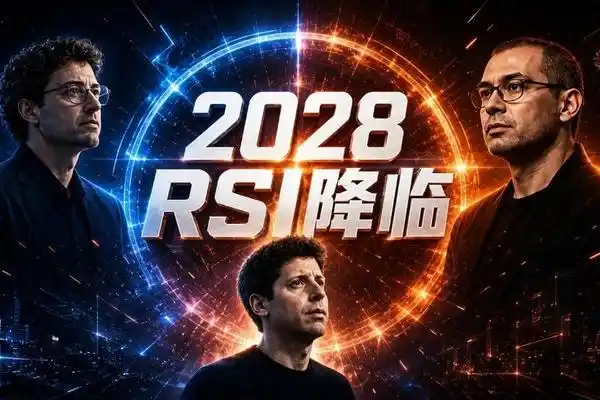
2028: The Arrival of Recursive Self-Improvement (RSI)

**AI Recursive Self-Improvement (RSI): The Countdown to 2028 Begins** AI is no longer just a trained tool but is starting to rewrite its own evolutionary pace. According to Anthropic co-founder Jack Clark, there is a 60% probability that by the end of 2028, Recursive Self-Improvement (RSI) will become a reality. This means AI could autonomously design and build a more capable next-generation version of itself without any human researcher involvement—Claude 10 creating Claude 11, for instance. Supporting this timeline, Google DeepMind's CEO Demis Hassabis confirms that all leading AI labs are intensely focused on RSI, making it an industry-wide priority. He expresses profound concern, stating this potential is what keeps him awake at night. Concrete data underscores this acceleration: - METR evaluations show current top models like Claude are solving tasks up to the 16-hour limit of existing test frameworks. - In Epoch AI's challenging MirrorCode benchmark, Claude Opus 4.7 recreated complex software in hours for a fraction of the human cost. In one extreme test, AI autonomously coded for 19 days straight. - Anthropic reports over 80% of its codebase is now written by Claude, and researcher productivity has increased up to 8-fold since 2024. - OpenAI's policy blueprint highlights RSI as a major upcoming governance challenge. CEO Sam Altman reportedly hinted RSI might arrive within six months, potentially delaying OpenAI's massive IPO. The implication is an impending "intelligence explosion," where AI-driven progress outpaces human control. The central question is no longer if it will happen, but whether humanity is ready.

marsbit38m ago

2028: The Arrival of Recursive Self-Improvement (RSI)

marsbit38m ago

World Models, Metaverse, Digital Twins, Physical AI: Are They the Same Thing?

Title: World Models, the Metaverse, Digital Twins, Physical AI: Are They the Same Thing? The article clarifies that concepts like the metaverse, Web3, simulation platforms, digital twins, and Physical AI are not the same thing but are all part of the broader trend of blurring the lines between the digital and physical worlds. It positions "world models" as the foundational "cognitive layer" or "operating system" that enables AI to understand and simulate the world. Key distinctions are made: - The **Metaverse** is a destination for immersive social and economic experiences. World models could act as its "engine," generating interactive 3D content efficiently. - **Web3** focuses on decentralized ownership and economics (rules layer), operating on a different technical level than world models. - **Simulation Data Platforms** (e.g., for autonomous vehicles) are a 1.0 version, relying on manual design. World models represent a 2.0 version, using AI to generate realistic, varied scenarios autonomously. - **Digital Twins** create high-fidelity, real-time mirrors of physical systems (e.g., a factory). World models go a step further by enabling predictive simulation of future states. - **Physical AI** (robots, AVs) refers to AI that acts in the physical world. World models are a core component, providing the understanding and prediction needed for planning. A proposed hierarchy places world models at the cognitive layer, supported by infrastructure (compute, data) and supporting application tools (simulation, digital twins), action systems (Physical AI), user experiences (metaverse), and rules (Web3). In conclusion, while distinct, many of these previously hyped concepts may ultimately rely on advances in world model technology to fulfill their promises, as world models provide the essential cognitive foundation for simulating and interacting with complex environments.

marsbit42m ago

World Models, Metaverse, Digital Twins, Physical AI: Are They the Same Thing?

marsbit42m ago

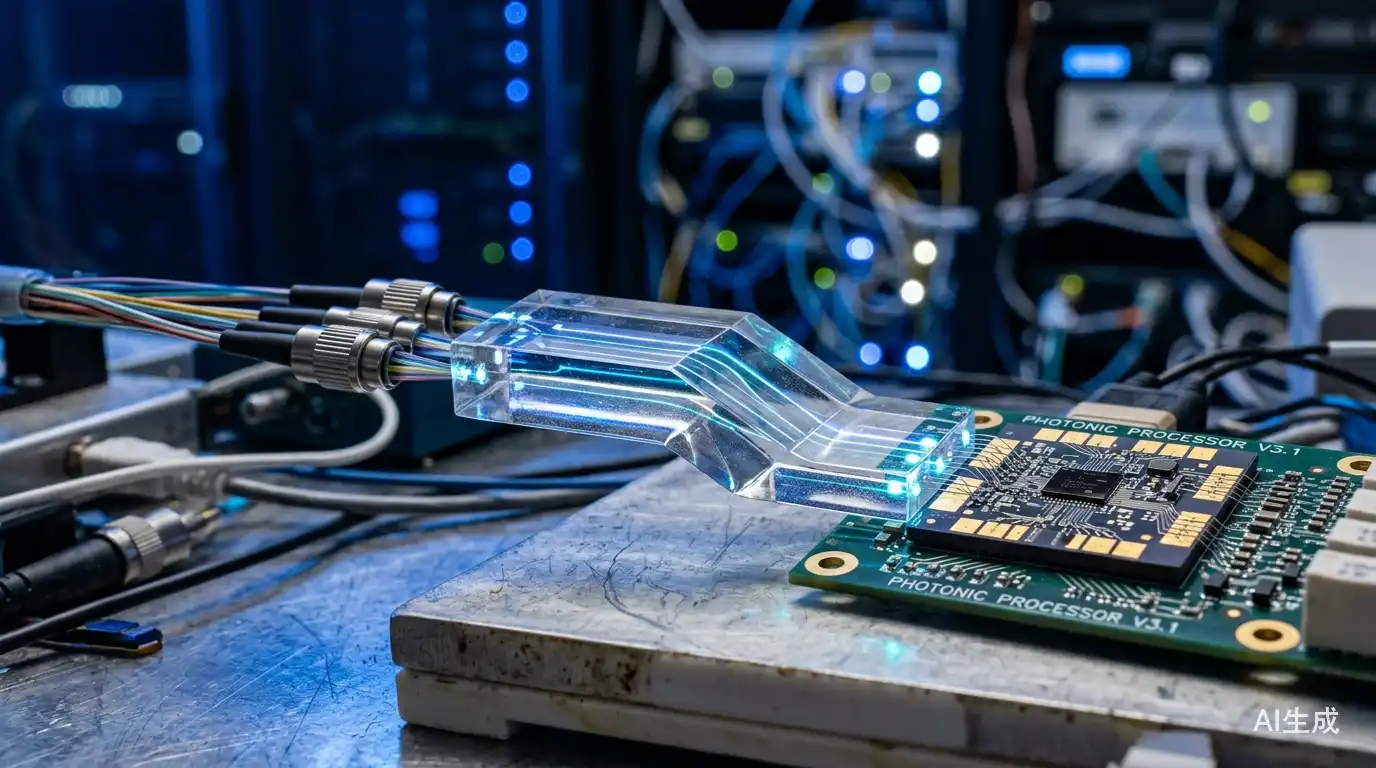
"Shocking" CPO: How Does the Glass Bridge Actually Work? Detailed Explanation from Corning

Chinese CPO stocks plunged over 6% following Corning's announcement of its Glass Bridge platform at a Seoul tech conference. The new technology utilizes wafer-level glass ion-exchange waveguides for passive alignment between fibers and photonic chips, potentially simplifying traditional CPO architectures that rely on complex Fiber Array Units and active alignment equipment. This raised market concerns about reduced long-term demand for mid-stream CPO components. Corning's official documentation details Glass Bridge as a platform for fiber-to-PIC connectivity in NPO, CPO, and high-density modules. Its key features include wafer-level manufacturing for consistent, cost-effective production; a standardized, removable MT ferrule interface for ecosystem integration; and a separable high-density connector design supporting over 24 channels for assembly flexibility. Corning positions the technology as complementary to FAUs, addressing limitations in ultra-high-fiber-count scenarios. The market reaction reflects a broader reassessment of the AI optical interconnect value chain. Funds shifted from CPO and PCB manufacturing stocks towards glass substrate concept stocks like Kaisheng Technology and Dyer Laser. Analysts note glass substrates are seen as a next-gen advanced packaging material, offering a potential path for domestic industry differentiation amid AI-driven demand for high-performance, large-scale packaging, marking a structural migration in value towards upstream specialty materials.

marsbit43m ago

"Shocking" CPO: How Does the Glass Bridge Actually Work? Detailed Explanation from Corning

marsbit43m ago

Trading

Spot
活动图片