暴跌99%的NFT凭啥翻10倍?老牌NFT Moonbirds的复仇

marsbitPublished on 2025-08-25Last updated on 2025-08-26

NFT 的世界从不缺起伏,但极少有项目能像 Moonbirds 一样,把跌宕演绎到极致。从辉煌的 38.5 ETH 高点到跌落至 0.22 ETH 的深渊,然后在短短三个月内,它完成了一次惊心动魄的逆转。

转折点出现在 Spencer 收购 Moonbirds 的那一刻。从巅峰到坠落,再到重生,它走过了数字藏品里最疯狂的一条曲线,而 Spencer 则站在舞台中央,把一个被遗忘的项目,重塑为加密圈最炙手可热的 NFT。

巅峰开局

2022 年 4 月 16 日,由 Digg 联合创始人 Kevin Rose 创建的 Moonbirds 正式亮相,铸造价 2.5 ETH。7,875 枚 NFT 通过白名单在 48 小时内一扫而空。持有者相信自己买到的不只是像素猫头鹰,而是 PROOF 生态的核心门票——一个仅限 1000 名顶级 NFT 收藏家与艺术家的私密社群。

项目铸造当天就发生了一件小插曲。COO Ryan Carson 被发现花了 58 万美元扫下稀有 Moonbirds,作为掌握稀有度数据的内部人员,精准“狙击”无异于赤裸裸的内幕交易。社区在Discord抨击内部交易,迫于舆论压力,Carson 在九天后宣布辞职,转身去创立自己的 NFT 基金 121G。

这件事情罕见的没有成为 Moonbirds 的滑铁卢,市场情绪依旧火热。地板价从 3 ETH 到 6 ETH,再到 13 ETH,最后冲上 38.5 ETH。不到一周,早期铸造者就迎来 15 倍回报,这是 NFT 史上最快的造富神话之一。

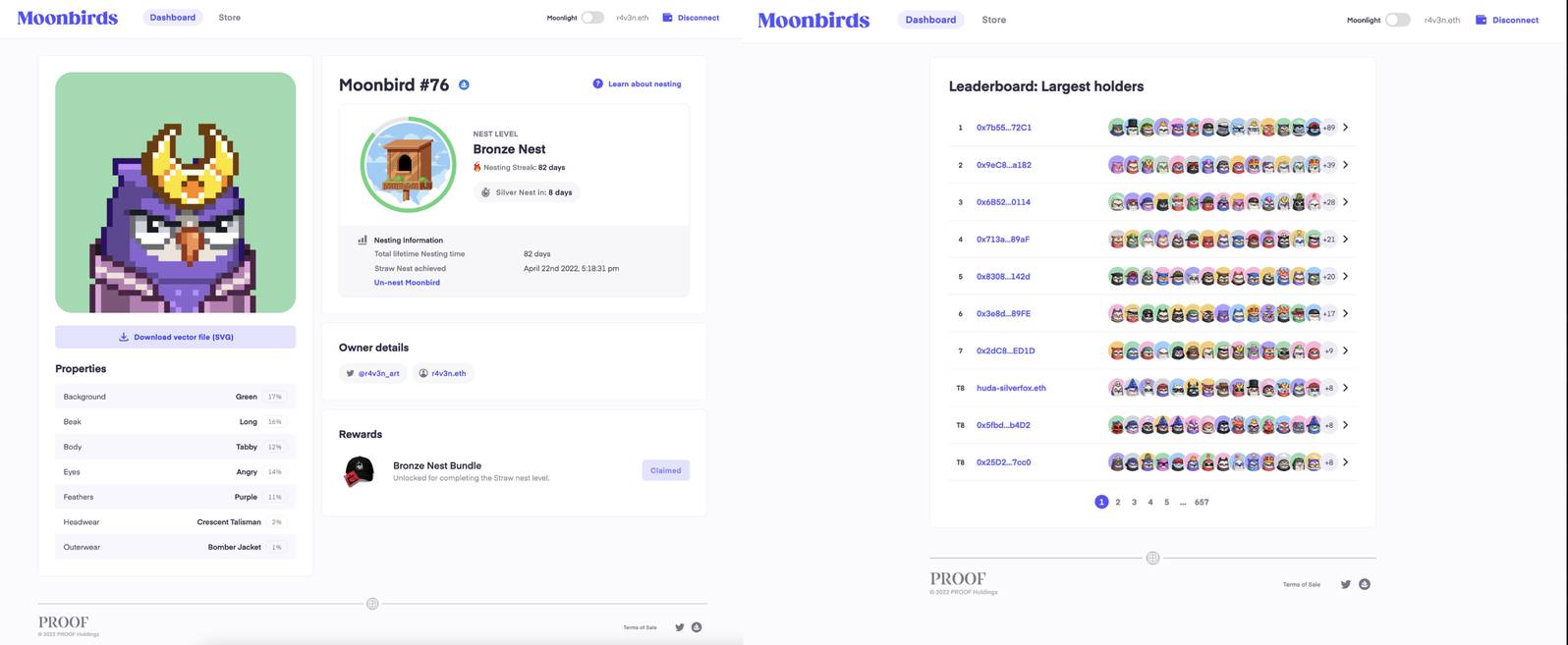
Fun Fact: Moonbirds 当时还引入了「Nesting」机制。简单来说,就是“软质押”:Moonbirds 会被锁在持有者的钱包里,不能交易,但能赚取额外奖励。这个设计让原本想短线套现的玩家变成了长线党。
 Orange Cap Games

信任崩塌

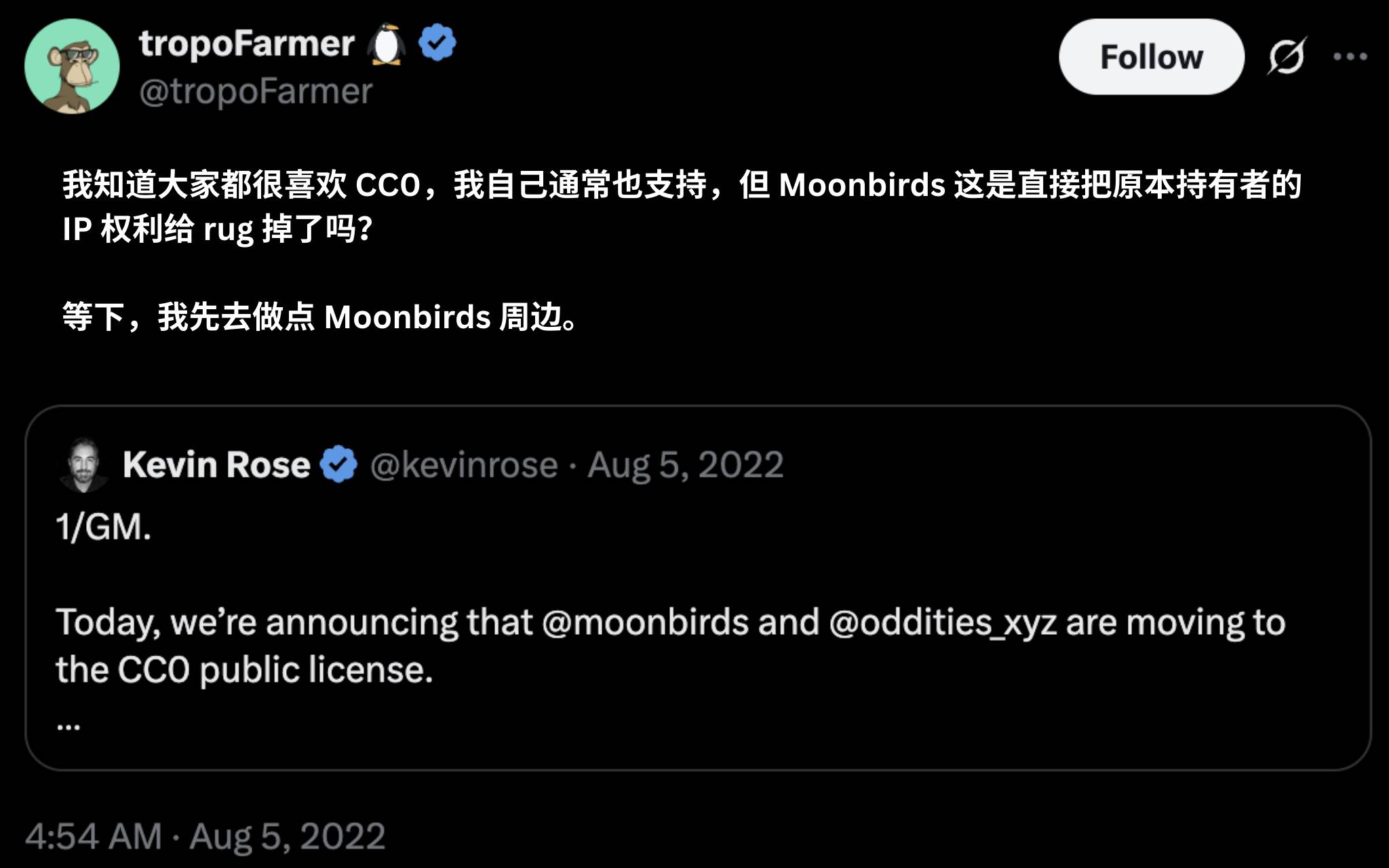
然而,转折点很快到来。同年8月5日,Rose 做出了一个让整个社区震惊的决定:未经社区讨论,单方面宣布 Moonbirds 将采用 CC0 协议。这意味着持有者失去了NFT的独家商业化权利,即任何人都可以使用Moonbirds图像进行商业活动。

对许多人而言,这是一次赤裸裸的背叛。这是领导层与社区之间第一次真正的裂痕,而阴影从此笼罩着 Moonbirds。

彼时,受 XCopy 加密艺术家的影响,CC0 在艺术领域蔚然成风。开放版权,意味着作品能更容易被二次创作、做成梗图、做成周边,从而扩大曝光度。对单件艺术品来说,这或许是放大影响力的捷径。可问题是,Moonbirds 并不是单件艺术品,而是一个 PFP 系列。PFP 的逻辑与 CC0 相违背,头像本身就是 IP 的入口,持有者正是因为其独占性才愿意投入时间与金钱去打造它。

反弹声浪极其猛烈。
 Orange Cap Games

时隔三年,推特KOL @waleswoosh 回顾此事时说,社区对CC0的恐慌现在看来其实有些夸大了,毕竟真正能成功把 PFP 授权商业化的持有者少之又少。

但在那个时刻,Rose 的一次失误与糟糕的沟通,点燃了整个社群的不满。

Moonbirds 的衰落也从此开始。

从 2022 年 8 月到 2023 年底,Moonbirds 的地板从 19 ETH 跌到不足 2 ETH。

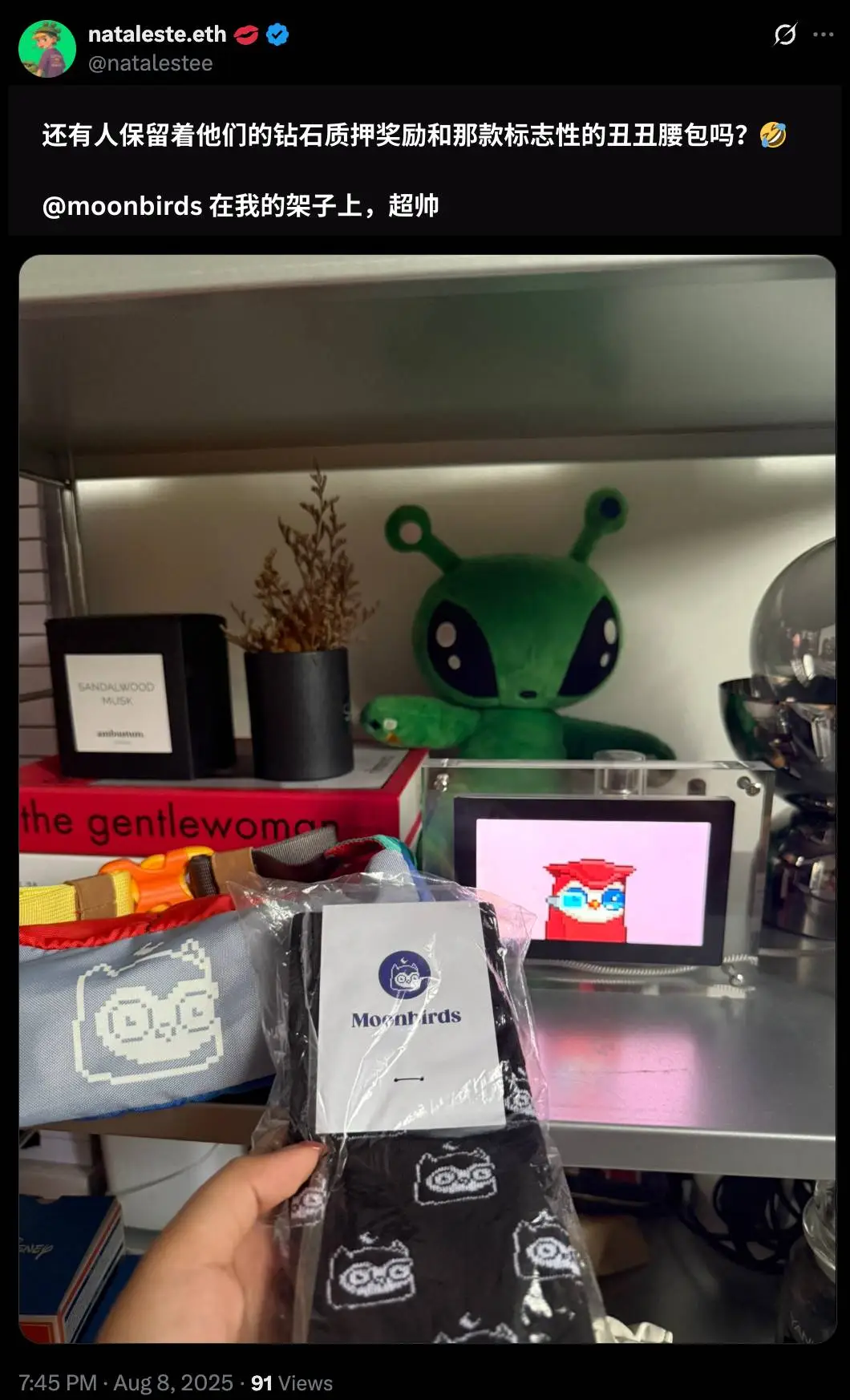
Fun Fact: 那时候几乎所有项目都在出周边,Moonbirds 也不例外。官方给参与 Nesting 的持有者空投了一波独家纪念品。作者本人也领过,说实话,对下面这句评论感同身受。
 Orange Cap Games

沉默时代

2024 年 2 月,Bored Ape Yacht Club 的母公司 Yuga Labs 收购了 Proof 及其旗下项目,其中包括 Moonbirds。消息一出,OpenSea CMO Adam Hollander 直言这是“一团糟”,更直言不讳地补刀:“Moonbirds 是 NFT 史上最差的运营案例之一。他们赚了接近一亿美元,却没有兑现承诺。”

收购带来了一丝短暂的希望。持有者被告知 Moonbirds 将整合进 Otherside 元宇宙。收购消息短暂刺激地板价从1.5 ETH反弹至2.5 ETH,但仅维持了两周。Yuga 试图修补裂痕,将版权模式从 CC0 改回持有者独占商业权利,并推出全新的 3D 头像,用于动画和 Otherside 的整合。

可惜,这些努力并没有打动社群。2024 年 8 月,地板价狂跌至 0.22 ETH,年底才缓慢回升到 0.8 ETH。

对绝大多数人而言,这个项目似乎早已名存实亡。

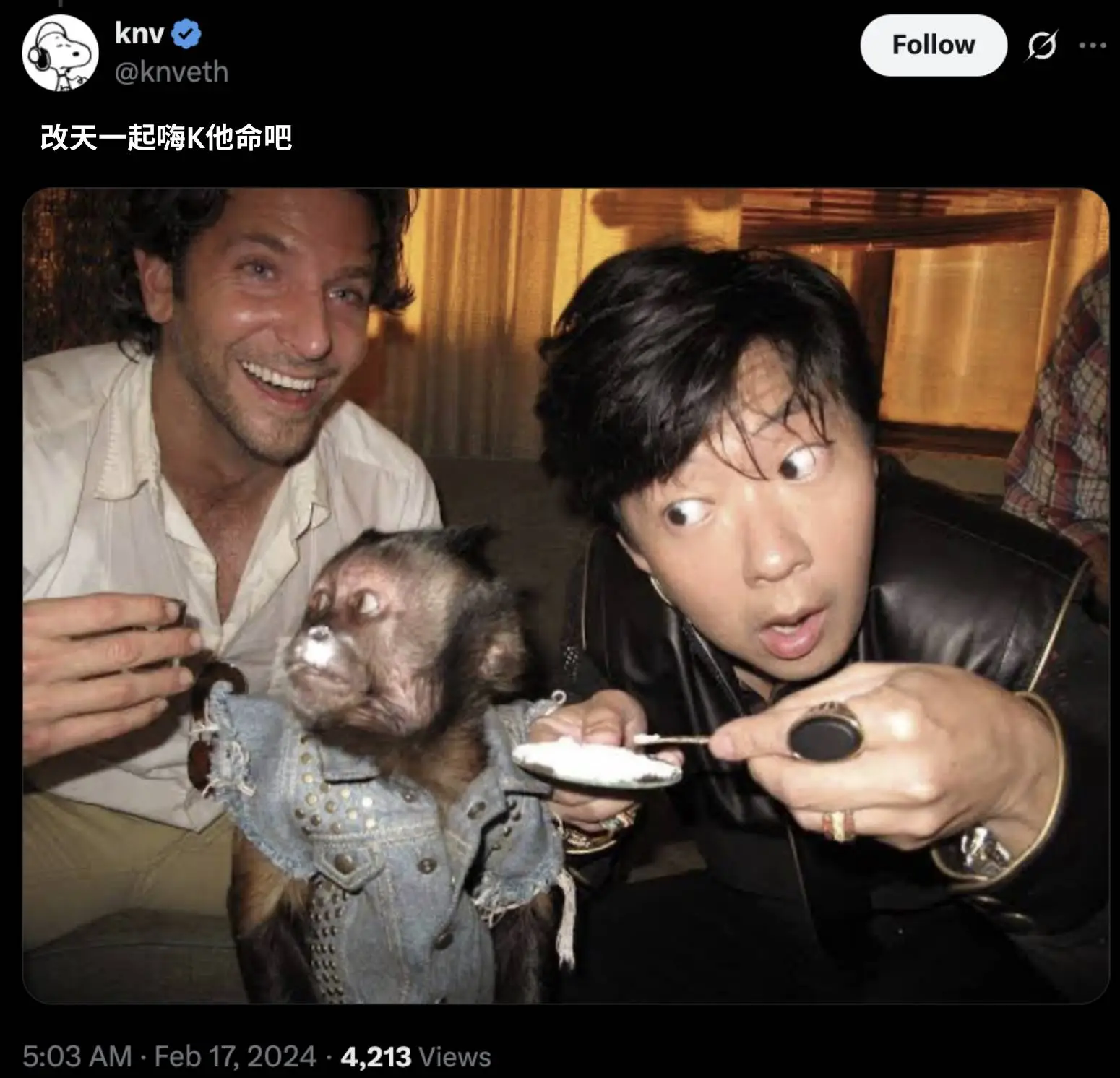
Fun Fact: Kevin Rose 曾公开承认,他靠 K 他命来缓解运营 Moonbirds 的压力。当 Proof 被 Yuga Labs 收购后,评论区出现了一些有趣的声音。
 Orange Cap Games

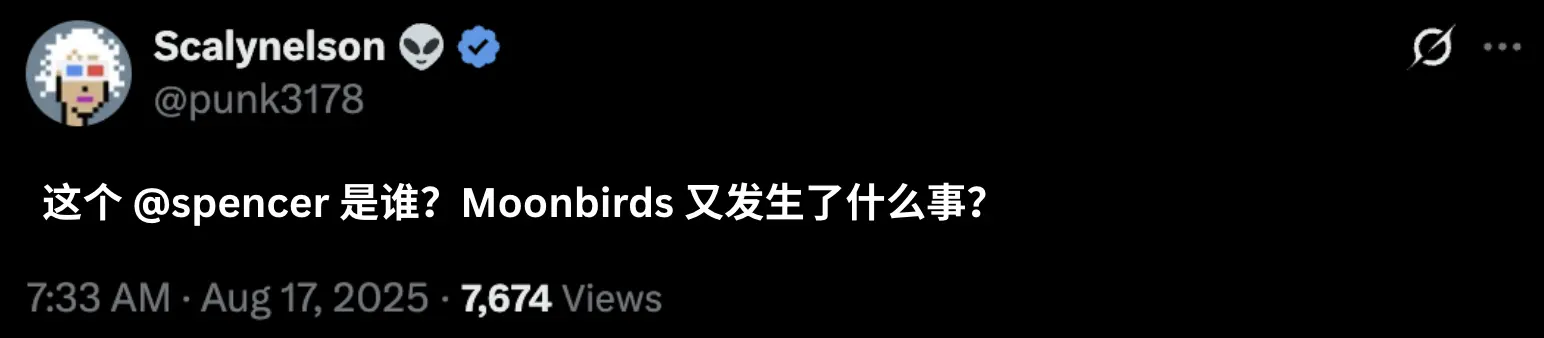
这个叫 Spencer 的人是谁?

如果你也有同样的疑问,那你来对地方了。
 Orange Cap Games

2025年5月31日,Moonbirds 被 Orange Cap Games 收购的消息在推特上公布。Yuga Labs 联合创始人在公告中表示:“Moonbirds 需要一个把月鸟视为中心的团队,而 Orange Cap Games 是带它们发挥潜能的不二之选。”

聚光灯下站着 Spencer,Orange Cap Games 的创始人。从这一刻起,Moonbirds 的命运开始逆转。

与过去那些“宏大叙事”不同,Spencer 上任后并没有抛出庞大的路线图。他甚至直接表态:“我们不会去完成 Moonbirds 的旧愿景,而是要打造自己的路线图。有些人不会喜欢这样,但没关系。”

这句话听起来朴素,但正是这种真实感让人重新燃起信心。经历过 CC0 的争议、领导层的动荡,Moonbirds 社区需要的不是空洞承诺,而是一个能持续沟通、能站出来带头的人。Spencer 用最原始的方式把信任一点点砌了回来:疯狂发帖挺 Moonbirds,不厌其烦地回答社区的问题,扛下所有质疑,成为持有者心中最坚实的中坚力量。

Moonbirds重获新生,社区凝聚力达到前所未有的高度。

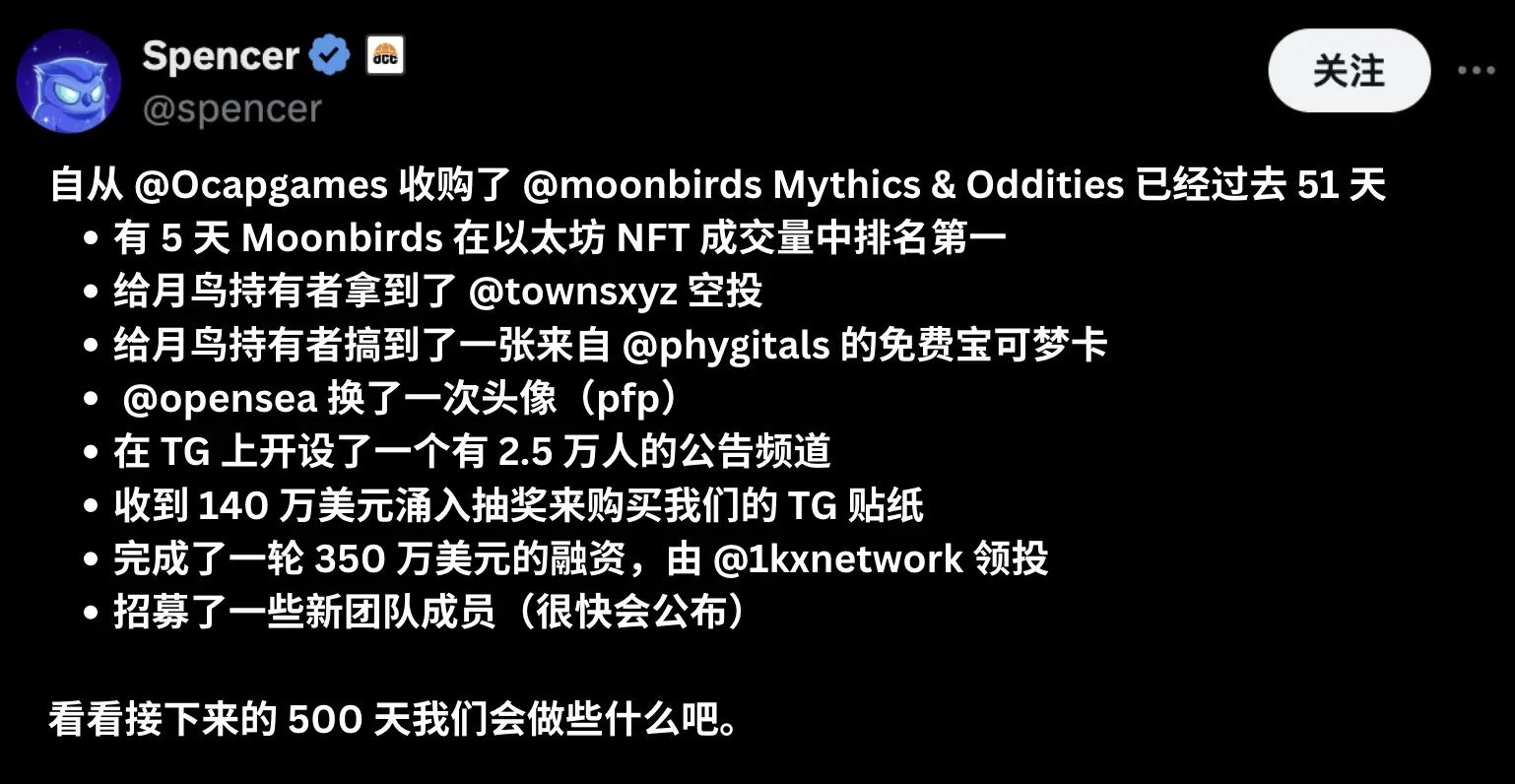
7月21日,Spencer在推特上总结了自 Orange Cap Games接手后的51天里程碑:OpenSea 直接换上了 Moonbird 作为官方头像;系列连续五天霸榜以太坊 NFTs 交易榜;Telegram 社群突破 2.5 万活跃成员;140万美元资金进入抽奖池里以用来购买贴纸。
 Orange Cap Games

号召 Birb Army

自 Spencer 接手时的 0.3 ETH 低点,到上周的 3.9 ETH,Moonbirds 的地板已经反弹超过 1000%。一个在 2025 年初看似走到尽头的系列,如今却再次振翅高飞。

这并不是偶然。早在 2023 年 NFT 市场最寒冷的冬天,Spencer 就做过一次看似疯狂的决定:他从 Three Arrows Capital 的破产清算中,以六位数的中等价格扫下了整整 144 只 Pudgy Penguins,还公开表示不打算出售。当时看似疯狂的举动,最后帮他赚了 1000 多万美元。

这种"钻石手"态度向市场传递了明确信号:Spencer 不是短期投机者,而是真正的长期建设者。

通过 Orange Cap Games,Spencer 把 Pudgy Penguins 的 IP 做成了卡牌游戏 Vibes TCG,创收超过 150 万美元,在线对局次数突破 35 万。这个活生生的例子证明了NFT不只是投机工具,而是可以"破圈"进入主流市场的真实IP。

 Orange Cap Games

当他宣布接手 Moonbirds 时,社群很自然地把希望投射在他身上,或许 Moonbirds 也能复制 Pudgy Penguins 的成功轨迹。 毕竟胖企鹅也曾跌入低谷,但在正确的运营下重新焕发了活力。

这种熟悉的剧情,让社区的心态发生了根本性转变:从“什么时候卖掉”变成了“为什么要留住”。Moonbirds 不再只是投机者的临时筹码,而逐渐被视为一个正在建设中的品牌资产。

而在推特上,这意味着重新夺回 CT 的注意力,最直接的方法就是获得足够高的讨论度。Birb Army 被他一点点号召起来,Moonbirds 也在推特上悄然立下了自己的一席之地。

但对月鸟社区来说,价格的反弹只是表层现象,真正反弹的,是信念。

Spencer 的方法论其实很简单:最好的营销,不是眼花缭乱的路线图,也不是动辄上亿的虚幻承诺,而是踏实做事,让社区感到自己正在共同参与一个有价值的建设。

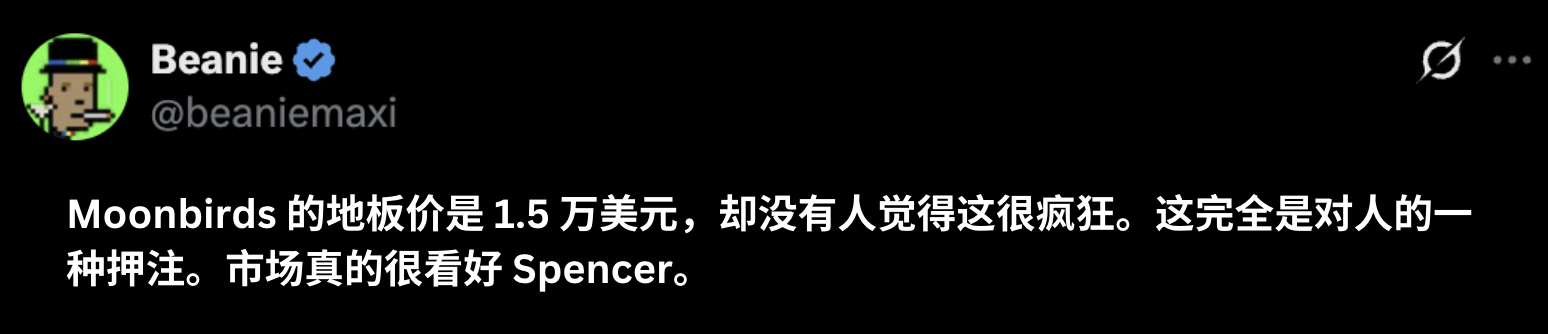
换句话说,这一切不过是一次对 Spencer 的押注,而从眼下的结果来看,市场显然选择相信他。
 Orange Cap Games

月鸟归来

对 Moonbirds 来说,故事才刚刚开始。

在最近的一次访谈中,Spencer 谈到他的分阶段计划:第 0 步是唤醒社区,第 1 步是把 Moonbirds 打造成一个 IP 平台,第 2 步则是交付产品与合作。

“在五年内,我希望Moonbirds成为一个无处不在的IP,成为每个家庭都能认识的东西,商店货架上有它的实体产品,并成为一个能吸引更多新人进入这个领域的数字化存在。”

如今,势头已经显现。2025 年 8 月 18 日,Moonbirds 成为第一个登上 Kaito 榜单的 NFT 项目,象征它的影响力正在突破核心圈层。与此同时,外界对潜在代币的猜测,以及 Spencer 与 Pudgy Penguins 创办人 Luca Netz 的关系,也让期待值不断升温。

月鸟归来,这一次他们或许不再只是过客。

Related Reads

A 10,000-Word Interpretation of the "Optical Interconnect" Industry Chain: The AI Infrastructure Bottleneck Obscured by GPU Glare

**Summary: The Rise of Optical Interconnect in AI Infrastructure** This analysis explores the critical, yet often overlooked, role of optical interconnects in large-scale AI data centers. While GPUs provide raw computational power, the efficiency of AI clusters depends heavily on high-speed data transfer between thousands of cooperating GPUs during both training and inference tasks. Copper-based electrical connections are hitting physical limits in bandwidth, distance, and power consumption. Fiber optics, using light signals, offer a superior solution with exponentially higher bandwidth and lower energy use over longer distances. This shift is driving rapid growth in the optical interconnect market. The core translation device is the pluggable optical transceiver (or module), which converts electrical signals from GPUs into optical signals for fiber transmission and vice versa. Its manufacturing involves two distinct semiconductor domains: indium phosphide (InP) for optical chips (lasers, modulators, detectors) and silicon for digital signal processing (DSP) chips. A transformative next-generation technology is Co-Packaged Optics (CPO). CPO moves the optical engine (a silicon photonic integrated circuit, or PIC) much closer to the GPU or switch inside the same chip package, drastically reducing power loss and latency. CPO necessitates an external laser source and relies on silicon photonics (using Silicon-on-Insulator/SOI wafers) for integration with silicon chips. The optical interconnect ecosystem is highly fragmented, unlike the concentrated GPU market. Key bottlenecks and players span the entire supply chain: InP substrates (e.g., AXT), epitaxial wafers (e.g., IQE), laser chips (e.g., Sivers, Lumentum, Coherent), silicon photonics foundries (e.g., Tower Semiconductor), SOI wafers (e.g., Soitec), DSP/switch chips (e.g., Broadcom, Marvell), and underlying fiber (e.g., Corning). The article posits that AI infrastructure competition is extending from "who has more GPUs" to "who can secure the scarce optical interconnect supply chain." CPO represents the largest potential growth variable, with projections suggesting it could become a market worth tens of billions of dollars by 2028. Investment opportunities vary from conservative (large, diversified players) to aggressive (small, high-beta companies focused on specific bottleneck technologies), but the sector carries significant volatility and execution risks.

marsbit15m ago

A 10,000-Word Interpretation of the "Optical Interconnect" Industry Chain: The AI Infrastructure Bottleneck Obscured by GPU Glare

marsbit15m ago

a16z: RWA Has Passed the Proof of Concept, but the Real Challenges Are Just Beginning

a16z highlights that the tokenized real-world asset (RWA) market, excluding stablecoins, has grown tenfold in under two years to roughly $340 billion. This surge is primarily driven by US Treasury bonds and gold, offering investors yield on idle stablecoins and providing institutions with more efficient settlement and collateral flows. However, the core insight is that most tokenized assets today are simply digital certificates for off-chain holdings—used for ownership and transfer but not deeply integrated into DeFi as composable financial building blocks. For instance, only about 5% of tokenized bonds ($8B) are actively used in DeFi protocols. Smaller categories like reinsurance tokens show much higher DeFi utilization (84%), indicating they were designed for on-chain composability from the start. The market remains concentrated, with US Treasuries and commodities comprising two-thirds of the total. Gold dominates the commodities segment. While Ethereum holds over half the market, activity is spreading across multiple chains like BNB Chain and Solana. Predictions for the market's future size vary widely (from $2 trillion to over $30 trillion by 2030/2034), reflecting different definitions of what constitutes tokenization. All agree on significant growth. The current market is minuscule compared to traditional finance (e.g., tokenized bonds are 0.01% of the global bond market). The key takeaway is that the initial "proof-of-concept" phase for moving familiar assets on-chain is proving successful. The next, harder challenge is moving more complex financial instruments onto blockchains and enabling true on-chain composability, where these assets become programmable components within a native digital financial system, rather than just digitized records.

marsbit53m ago

a16z: RWA Has Passed the Proof of Concept, but the Real Challenges Are Just Beginning

marsbit53m ago

The Wind of 'Proactive' AI Blows into Silicon Valley: Hark Secures $700 Million in Funding

Hark, an AI startup founded in late 2025, has raised $700 million in Series A funding at a $6 billion valuation. Led by Parkway Venture Capital with participation from NVIDIA, AMD Ventures, Intel Capital, Qualcomm Ventures, and Salesforce Ventures, the company aims to develop next-generation human-computer interfaces using a combination of proprietary foundational models and custom-built AI-native hardware. Founded by serial entrepreneur Brett Adcock, Hark envisions a system of multimodal devices equipped with agentic capabilities, end-to-end voice models, and personalized memory. This "active" AI approach seeks to move beyond passive chatbots, creating collaborative companions that anticipate needs and interact naturally within the real world. Adcock's experience with Figure, a humanoid robotics company, informs this hardware-focused venture. The article argues that while current AI is powerful, it remains confined to screens and traditional interfaces like chat. The next paradigm shift requires dedicated hardware that is always-on, possesses persistent memory, and enables intuitive interaction, potentially rivaling the impact of the iPhone. Hark is assembling a team with talent from Apple, Meta, Google, and Tesla to tackle this complex engineering challenge across models, hardware, and interaction design. Finally, the piece suggests Chinese startups may have an advantage in this "active" AI hardware space due to strong manufacturing ecosystems, a vast domestic market, and supportive government policies, framing the competition as one that requires integrated progress in models, operating systems, and devices.

marsbit57m ago

The Wind of 'Proactive' AI Blows into Silicon Valley: Hark Secures $700 Million in Funding

marsbit57m ago

Competitors Going Public, Kimi Can't Sit Still

Competitors Go Public, Kimi Feels the Pressure Yue Zhi An Mian (Moonshot AI), the company behind the AI assistant Kimi, has begun dismantling its VIE and red-chip structure, clearing a key obstacle for a potential Hong Kong IPO. This marks a significant shift from six months ago when founder Yang Zhilin stated the company was in "no hurry" to list. The move comes as rivals like Zhipu AI and MiniMax have successfully listed on the Hong Kong Stock Exchange in early 2026, experiencing massive surges in market value. This has reset valuation logic for AI companies, turning "going public" from an end goal into a competitive necessity. Analysts suggest Kimi is both seizing a favorable market window and responding to competitive pressure. Kimi's valuation has skyrocketed from around $3 billion at its 2023 founding to over $20 billion by May 2026. Capital is betting on its potential as a future AI platform and gateway, though some caution this "emotional valuation" depends on sustained technological leadership and successful commercialization. Traditionally focused on core model R&D over user growth, Kimi has recently pivoted strategy. While its monthly active users declined through 2025, it shifted focus to Agent development and reducing marketing spend. The release of its K2.5 model in early 2026 reportedly generated substantial revenue, with annual recurring revenue reaching $200 million by April, driven by subscriptions and API services. A $2 billion D-round financing in May signaled investor approval of this commercial shift. However, listing will bring new pressures. Experts predict a listed Kimi would face stricter scrutiny on financial controls, compliance, and R&D efficiency. The narrative must evolve from pure technological breakthroughs to demonstrating clear commercialization paths, sustainable income, and a defensible valuation, balancing model superiority with business performance.

marsbit1h ago

Competitors Going Public, Kimi Can't Sit Still

marsbit1h ago

Trading

Spot
Futures

Hot Articles

How to Buy NFT

Welcome to HTX.com! We've made purchasing AINFT (NFT) simple and convenient. Follow our step-by-step guide to embark on your crypto journey.Step 1: Create Your HTX AccountUse your email or phone number to sign up for a free account on HTX. Experience a hassle-free registration journey and unlock all features.Get My AccountStep 2: Go to Buy Crypto and Choose Your Payment MethodCredit/Debit Card: Use your Visa or Mastercard to buy AINFT (NFT) instantly.Balance: Use funds from your HTX account balance to trade seamlessly.Third Parties: We've added popular payment methods such as Google Pay and Apple Pay to enhance convenience.P2P: Trade directly with other users on HTX.Over-the-Counter (OTC): We offer tailor-made services and competitive exchange rates for traders.Step 3: Store Your AINFT (NFT)After purchasing your AINFT (NFT), store it in your HTX account. Alternatively, you can send it elsewhere via blockchain transfer or use it to trade other cryptocurrencies.Step 4: Trade AINFT (NFT)Easily trade AINFT (NFT) on HTX's spot market. Simply access your account, select your trading pair, execute your trades, and monitor in real-time. We offer a user-friendly experience for both beginners and seasoned traders.

6.7k Total ViewsPublished 2024.03.29Updated 2025.12.26

How to Buy NFT

What is Altura NFT?

Altura: Providing One-Stop NFT Solutions for Game Developers

55.9k Total ViewsPublished 2024.06.12Updated 2024.06.12

What is Altura NFT?

What is AINFT

EternaFi Agents and $AINFT: A Comprehensive Analysis of AI-Powered NFT Infrastructure in the Web3 Ecosystem The intersection of artificial intelligence (AI) and blockchain technology is rapidly evolving, establishing innovative platforms that redefine ownership models and economic participation. EternaFi Agents, along with its native token $AINFT, exemplifies a groundbreaking approach to the tokenization of AI infrastructures through the means of non-fungible tokens (NFTs). Launched in July 2025 by the development team at Nova Club, EternaFi merges the advancements of AI with the decentralized financial mechanisms of blockchain, presenting a unique investment opportunity for participants within the web3 ecosystem. This article aims to provide an in-depth assessment of EternaFi Agents, covering its core components, functionality, and significance within the crypto landscape. Introduction and Project Overview EternaFi Agents stands as a salient example of how blockchain technology can democratize access to advanced AI capabilities. The project endeavors to reshape the paradigm of AI ownership by diversifying economic participation, making sophisticated AI systems accessible to a larger pool of stakeholders. At its core, the project tokenizes a proprietary large language model (LLM) developed by Nova Club, allowing NFT holders to gain fractional exposure to the model's economic performance. By utilizing NFTs representing stakes in the LLM, EternaFi Agents fosters a model wherein stakeholders not only participate in AI service consumption but also enjoy sharing in the economic rewards generated by the platform. This transformative approach enables the development of sustainable revenue models for AI services, all the while promoting broad community engagement and facilitating transparent governance. What is EternaFi Agents? EternaFi Agents represents an AI-NFT infrastructure project that aims to blend the capabilities of AI with blockchain technology in a coherent ecosystem. The essential feature of this project is the creation of NFTs that serve as financial instruments, representing fractions of ownership in Nova Club's proprietary AI infrastructure. Each NFT symbolizes direct exposure to the economic performance of the underlying AI system, providing a lucrative opportunity for investors. The project operates on the Base blockchain, known for its scalability and efficiency, thus ensuring manageable transaction costs while facilitating a seamless operational experience. One of the notable features includes a revenue-sharing mechanism, wherein NFT holders can receive portions of subscription income generated by the AI services provided on the platform. This innovative approach establishes a connection between the success of the AI services and the economic dividends distributed among the holders, thus ensuring an alignment of interests across the community. Who is the Creator of EternaFi Agents? The creative force behind EternaFi Agents is Nova Club, a development team based in Singapore proficient in the amalgamation of AI and blockchain technology. Their prior experience in AI development and cryptocurrency analysis gives credence to the project, contributing a breadth of expertise to the creation of EternaFi Agents. Nova Club’s mission centers on democratizing access to cutting-edge AI technologies while building sustainable economic models that benefit users alongside developers. Their commitment to transparency, community governance, and innovation is reflected in the design and implementation of the EternaFi platform, aiming to establish a unique ecosystem that fosters positive engagement and long-term value creation. Who are the Investors of EternaFi Agents? The specific details concerning investors or investment organizations backing EternaFi Agents are not publicly available. However, EternaFi has adopted an inclusive approach to funding its development through the sale of NFTs to the public, allowing a wide array of participants to invest in the ecosystem. The project’s architecture ensures that core infrastructure is funded responsibly while allowing community members to partake in the ownership and economic returns generated from the AI services. This model emphasizes community engagement by aligning the interests of investors and project developers, creating a collaborative environment where long-term participation is incentivized. How Does EternaFi Agents Work? EternaFi Agents operates through a multifaceted ecosystem where NFTs serve as a primary means of ownership representation within the project. Each NFT holder is entitled to a share of the monthly subscription income produced by the underlying AI-powered platform, thereby positioning NFT ownership as a lucrative investment vehicle. Revenue Generation Mechanism The primary source of revenue generation for the EternaFi platform stems from subscription fees related to the AI services provided. Users can access various tiered services, ranging from basic market analysis tools to comprehensive AI-assisted trading solutions. These services are monetized and form the basis for the revenue-sharing framework, which distributes profits to NFT holders through automated smart contracts. An innovative feature of the EternaFi ecosystem is the revenue-sharing mechanism that operates transparently, ensuring that rewards are allocated based on verifiable metrics from the AI platform's operations. This creates a direct link between the performance of AI services and the returns available to community investors, establishing a sustainable economic model. Staking and Vesting Mechanisms Participants within EternaFi can engage in staking their NFTs to unlock additional economic benefits. The vesting schedule is designed to promote long-term commitment among participants, rewarding those who exhibit ongoing support for the project. This ensures a robust alignment of interests and fosters a sense of community engagement essential for achieving the project's long-term goals. Transparent Governance EternaFi Agents embraces decentralized governance, allowing NFT holders to play an active role in decision-making regarding the platform's development and future directions. The governing structure includes community voting mechanisms, providing NFT holders with the opportunity to influence significant decisions and contributing to a collaborative approach to project growth. Timeline of EternaFi Agents The development trajectory of EternaFi Agents showcases a systematic approach toward building a sustainable AI infrastructure while meeting the needs of community participants. Below is a timeline of important milestones in the project’s history: July 2025: Launch of EternaFi Agents, including the public sale of NFTs and deployment of the $AINFT token on the Base blockchain. Q4 2025: Establishment of market infrastructure including liquidity pools and launch of staking dashboards for NFT holders. 2026: Initiation of community engagement programs, expanding AI capabilities, and integration with cross-chain technologies. Q4 2026: Implementation of the dividend distribution system, allowing NFT holders to reap economic benefits from their investments. These milestones signify the focus on establishing a functional and participative ecosystem while ensuring continuous evolution to meet market demands. Technological Infrastructure and Blockchain Integration EternaFi Agents is anchored in an advanced technological framework combining AI systems with blockchain capabilities. Operating on the Base blockchain, the project leverages the advantages of scalability and low transaction costs. The underlying smart contract architecture governs the NFT ownership, revenue sharing, and community management features, ensuring efficiency and transparency. AI System Development The proprietary large language model underpinning EternaFi Agents has been independently developed and designed to cater to revenue-generating applications without reliance on proprietary external frameworks. This endeavor reflects a commitment to creating a versatile and adaptable AI infrastructure capable of delivering meaningful services to users, thus generating economic value for investors. Security Measures The robustness of EternaFi’s security infrastructure is paramount. Regular audits and stringent security measures ensure the integrity of the AI systems and blockchain mechanisms, safeguarding against potential vulnerabilities while fostering confidence among participants. Conclusion EternaFi Agents signifies a landmark innovation within the realm of artificial intelligence and blockchain technology, opening avenues for community ownership and economic participation in advanced AI capabilities. The project’s comprehensive strategy to tokenize AI infrastructure via NFTs establishes a precedent for future decentralized ecosystems. By harmonizing technical sophistication with user-centric economic models, EternaFi not only fosters engagement but also generates a sustainable revenue-sharing framework for community participants. The significance of EternaFi extends well beyond its operational success as it exemplifies how blockchain can democratize cutting-edge AI technologies, paving the way for future ventures in this intersectional space. The evolution of EternaFi Agents may herald a new era of AI development characterized by participant-driven governance, sustainable economic models, and transparent verification, ultimately contributing to the broader democratization of AI and technology accessibility across industries.

3.8k Total ViewsPublished 2025.08.14Updated 2025.08.14

What is AINFT

Discussions

Welcome to the HTX Community. Here, you can stay informed about the latest platform developments and gain access to professional market insights. Users' opinions on the price of NFT (NFT) are presented below.

活动图片