JPMorgan CEO Jamie Dimon Changes Tune as Banks Embrace Stablecoins

ccn.comPublished on 2025-07-16Last updated on 2025-07-17

Key Takeaways

  • Despite past criticism of crypto, JPMorgan CEO Jamie Dimon says the bank must engage with stablecoins to remain competitive.
  • Citigroup and Bank of America are also exploring stablecoin issuance and seeing potential in tokenized deposits, crypto custody, and faster cross-border payments.
  • Stablecoins are edging closer to institutional legitimacy and widespread use in the financial system.

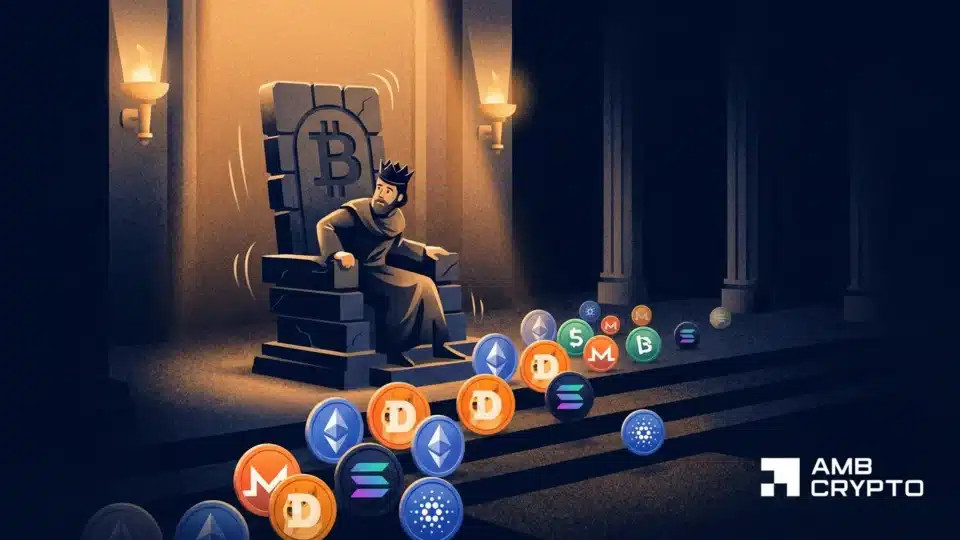
Once wary of crypto, Wall Street’s biggest names are now edging closer to a digital future built on stablecoins.

It’s not about belief anymore; it’s about strategy.

With payment rivals circling and Washington warming to regulation, banks like JPMorgan, Citigroup, and Bank of America are shifting from skeptics to stakeholders in one of finance’s most disruptive arenas.

Dimon Embraces Stablecoins as JPMorgan Tests Its Own

JPMorgan Chase CEO Jamie Dimon says he’s still not convinced about the utility of stablecoins—but that isn’t stopping him from jumping in.

Speaking during the bank’s earnings call , Dimon said JPMorgan plans to engage in both its internal JPMorgan deposit coin (JPMD) and broader stablecoin initiatives to better understand the technology and compete in the evolving payments space.

“I think they’re real,” Dimon said, “but I don’t know why you’d want to use a stablecoin instead of just payment.”

Still, he admitted the bank can’t ignore the technology, especially as competitors innovate quickly.

JPMorgan, which moves nearly $10 trillion daily, is piloting JPMD—a permissioned digital deposit token—with institutional clients for cross-border and on-chain settlements.

Wall Street Banks Join the Stablecoin Race, Eye Collaboration

JPMorgan isn’t alone. Citigroup CEO Jane Fraser said Tuesday the bank is “looking at the issuance of a Citi stablecoin,” while Bank of America is also exploring entry into the market.

Executives across top banks highlighted opportunities in tokenized deposits, custody services, and faster cross-border payments.

One potential path is collaboration. Banks could follow the Zelle model—jointly created by traditional institutions to compete with PayPal and Cash App—via Early Warning Services, their shared fintech infrastructure.

Pressed on whether JPMorgan would participate in such a joint stablecoin effort, Dimon remained cryptic: “That’s a great question, and we’ll leave it remaining as a question.”

Regulation Advances, But Politics Could Delay Crypto’s Next Big Leap

Meanwhile, a stablecoin regulatory framework has already passed the U.S. Senate, offering issuance, oversight, and reserve requirements guidelines.

It would allow companies to issue dollar-backed stablecoins—so long as they hold reserves in cash or Treasuries, are regularly audited, and don’t pay interest, unlike money market funds.

However, political tensions slowed progress in the House this week as Republicans debated whether to pass crypto-related bills separately or as a package.

Despite the stall, Wall Street is preparing for what appears to be inevitable regulation and broader stablecoin adoption.

Big Tech is also paying attention. Both Amazon and Walmart are reportedly exploring stablecoin applications, which could potentially reshape retail payments and pressurize traditional card networks like Visa and Mastercard.
Was this Article helpful? Yes No

Related Reads

After Close Observation of Wash, Morgan Stanley's Chief Economist Insists: The Fed Will Not Raise Rates This Year

After close observation of Federal Reserve Chair Wash, Seth Carpenter, Morgan Stanley's Chief Global Economist, asserts that the Fed will not raise interest rates this year. Following Wash's speech at the ECB's Sintra forum, Carpenter notes a marginal dovish shift: Wash now more clearly balances the Fed's dual mandate of price stability and maximum employment, rather than focusing nearly exclusively on inflation. Importantly, Wash highlighted that the latest policy meeting (coinciding with falling oil prices) has already lowered market inflation expectations and term premiums, signaling no urgency for a July rate hike. Carpenter's view is supported by data. Recent non-farm payroll figures provide room for the Fed to remain patient. Morgan Stanley's inflation forecasts are below the median FOMC projection, and methodological revisions to PCE inflation could further lower readings. These factors make Carpenter "comfortable" with the call for no hikes in 2024. Carpenter also pushes back against the simplistic narrative that AI will be deflationary and lead to rate cuts. He argues AI investment is currently boosting inflation marginally. More broadly, the business cycle will dictate policy; AI's productivity gains could boost demand and, crucially, raise the equilibrium interest rate (r*), weakening the case for cuts. In contrast, the ECB's path remains more hawkish. Carpenter interprets President Lagarde's Sintra comments as leaving the door open for another 25 basis point hike in September, though softer recent data and falling oil prices provide some flexibility. A July hike or more than one additional hike this year is seen as unlikely.

marsbit26m ago

After Close Observation of Wash, Morgan Stanley's Chief Economist Insists: The Fed Will Not Raise Rates This Year

marsbit26m ago

StarDynamics Secures 2.5 Billion in Two Months, State-Owned Capital Consortium Joins In

Star Era Raises 25 Billion Yuan in Two Months with State Capital Leading the Charge. Chinese humanoid robotics leader Star Era has secured a new 10-billion-yuan funding round led by state-owned capital, including funds like Chengtong Fund under the SASAC, marking 25 billion yuan raised within two months. The company, a spin-off from Tsinghua University, has built a comprehensive capital matrix combining state guidance, top-tier financial backers, and industrial partners. Founded in 2023 by Dr. Chen Jianyu, one of Tsinghua's youngest doctoral supervisors, Star Era stands out for its early and pioneering work on "world models" for embodied AI, notably releasing its PAD world action model ahead of major global players. The company follows an AI-native, full-stack R&D strategy from data and AI brain to control, dexterous hands (XHAND series), and robot bodies (bipedal L7, wheeled Q5). A core innovation is its fully direct-drive dexterous hands, which act as high-fidelity data collectors for training its AI models like the ERA-42 and VLAW, creating a virtuous cycle of data and intelligence. Star Era claims to possess one of the world's largest real-world dexterous hand datasets. Commercially, Star Era has achieved product-market fit, most notably in logistics, with robots operating 24/7 in distribution centers for partners like SF Express and China Post, handling over 1,200 parcels per hour. It is also expanding into high-end manufacturing (Samsung, Geely) and commercial services. Its hardware components are used by nine of the global top ten tech firms and leading research institutions. The article positions 2026 as an inflection point where success shifts from model capabilities to proven, scalable commercial deployment. Star Era's rapid funding and industrial traction highlight its position in this competitive race.

marsbit29m ago

StarDynamics Secures 2.5 Billion in Two Months, State-Owned Capital Consortium Joins In

marsbit29m ago

U.S. Stock Market Trend (July 6th): Gold and Crypto Lead Rebound Ahead of Stocks, Fed Minutes Set Weekly Direction

**U.S. Market Trends (July 6): Gold & Crypto Lead, Fed Minutes to Set Tone** Markets rebounded ahead of the U.S. Independence Day holiday, with Nasdaq 100 futures rising over 1% as AI sector concerns eased. Gold posted its best week in over a month, breaking a four-week losing streak despite ongoing Russia-Ukraine tensions, as Middle East risk premiums faded. Brent crude extended its decline for a fourth week. The week ahead is packed with key events. On Tuesday, SpaceX makes a record-fast entry into the Nasdaq 100 index, forcing passive fund flows, while U.S. tariff hearings and the Sun Valley Conference—notably missing NVIDIA's Jensen Huang and Tesla's Elon Musk—add complexity. OpenAI's scheduled GPT-5.6 release intensifies the AI model rollout race. The main focus is Thursday's release of the first Fed meeting minutes under Chair Wash. With half the FOMC already leaning toward a rate hike this year per the June dot plot, the minutes' tone will be critical for market direction. Hawkish confirmation could reverse recent risk-on sentiment, likely signaled first by a pullback in high-volatility assets like Bitcoin and Ethereum, which significantly outperformed last week. Other events include SK Hynix's large U.S. ADR listing and the start of the Q2 earnings season with reports from PepsiCo and Delta Air Lines. The market's path hinges on whether the liquidity and optimism built during the holiday can withstand the combined tests of Fed policy, trade tensions, and major corporate events.

marsbit30m ago

U.S. Stock Market Trend (July 6th): Gold and Crypto Lead Rebound Ahead of Stocks, Fed Minutes Set Weekly Direction

marsbit30m ago

Trading

Spot
活动图片