Объем торгов токенизированным золотом превысил $19 млрд в первой половине 2025 года

cryptonews.ruPublished on 2025-07-09Last updated on 2025-07-09

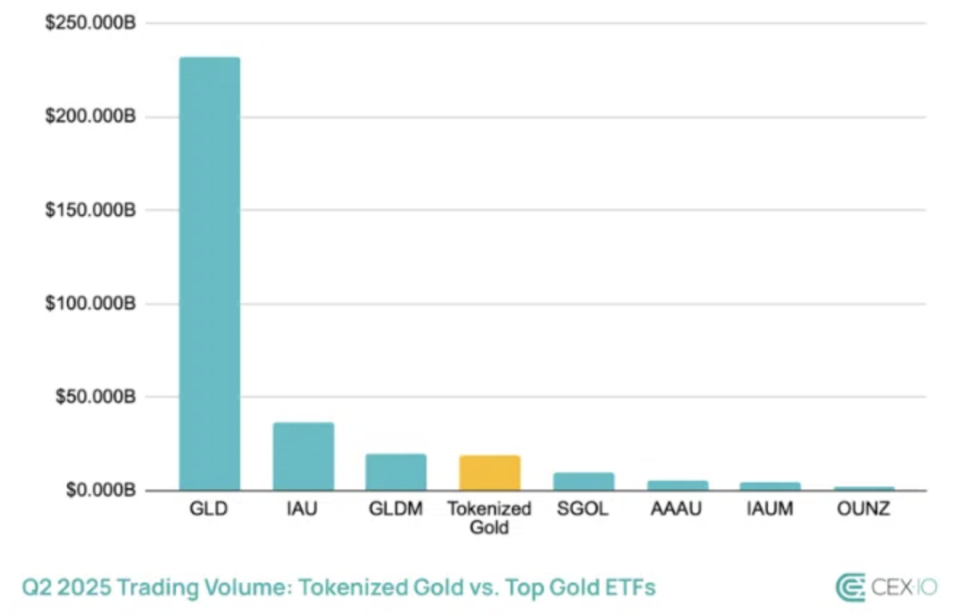
По данным платформы CEX.io, объем торгов токенизированным золотом в первом полугодии 2025 года превысил $19 млрд, обогнав многие традиционные биржевые фонды, оперирующие драгоценным металлом в натуральной форме.

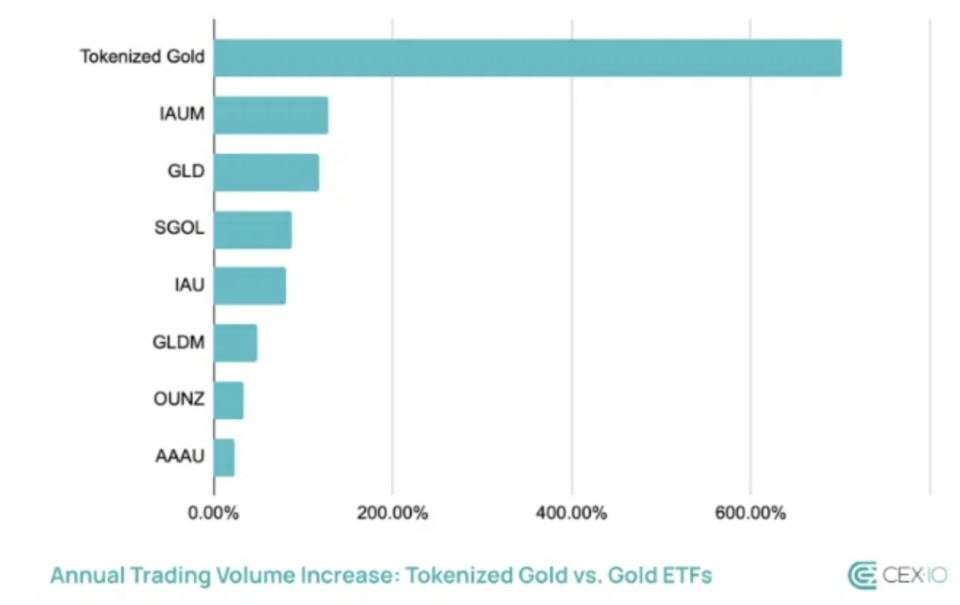
Аналитики CEX.io завили, что рынок обеспеченных золотом стейблкоинов, таких как Pax Gold (PAXG) и Tether Gold (Tether Gold, XAUT), переживает стадию взрывного роста, что позволило этим криптоактивам соперничать с золотыми ETF традиционного рынка, такими как SPDR Gold Shares (GLD). Во втором квартале 2025 года объем торгов в этом классе активов показал восьмикратный рост — с $2,4 млрд до $19,2 млрд. По данным CEX.io, токенизированное золото опережает по росту объема торгов традиционные золотые ETF уже четыре квартала подряд.
1004.png

Вице-президент по управлению продуктами CEX.io Александр Керя (Alexandr Kerya) отметил, что инвестиционная привлекательность «золотых» стейблкоинов может быть связана с последствиями глобальной нестабильности, вызванной торговыми войнами и галопирующей инфляцией, что усилило институциональный спрос на безопасные активы.

«Токенизированное золото постепенно становится ключевой стратегией диверсификации для криптоинвесторов наряду с биткоином. Для криптоотрасли этот тренд означает усиление позиций токенизированных активов реального мира (RWA), поскольку токенизация упрощает доступ к золоту для розничных инвесторов и снижает барьеры входа», — прокомментировал Керя.

Руководитель CEX.io добавил, что большая часть объема торгов токенизированным золотом приходится на розничных инвесторов. При этом за отчетный период количество держателей стейблкоинов PAXG выросло на 25%, а держателей XAUT — на 151%.
1005.png

Ранее аналитический портал CoinGecko привел данные, что с 2024 года капитализация рынка токенизированных активов реального мира увеличилась на $100 млрд.

Trending Cryptos

Related Reads

"AI Burning Books" Is Actually a Misunderstanding

"AI Book-Burning" Is Actually a Misunderstanding Recent reports about AI companies purchasing used books, scanning them, and then destroying the physical copies have sparked widespread outrage. Terms like "AI is devouring human knowledge" have become common, fueled by dramatic visuals of books being cut and shredded. However, the actual facts reveal a more nuanced story. While companies like Anthropic have indeed spent millions to buy and "destructively scan" several million books for AI training, this volume is a small fraction of the global second-hand book market. The core act—digitizing content and then discarding the physical object—is the opposite of historical book-burning, which aimed to erase knowledge. A key point of contention is the purchase of rare or out-of-print books. Yet, if these books were legally for sale on the open market, the buyer (whether an AI firm or an individual) has the right to do with them as they wish. The real question is whether society has adequate systems to protect books of genuine cultural heritage *before* they are sold. Expecting profit-driven companies to self-regulate on this is unreliable; the solution lies in establishing public rules, such as protected lists for rare editions or granting libraries priority purchase rights. Much of the intense public reaction stems not from the scale of actual harm, but from the powerful symbolism. The image of books being fed into machines taps into deeper anxieties about AI: fears of job displacement, mistrust of tech giants, and the unsettling feeling that humanity is feeding its own cultural past to the systems that might replace it. The outrage over "AI book-burning" is thus less about the physical books and more a proxy for broader societal tensions surrounding artificial intelligence.

marsbit3m ago

"AI Burning Books" Is Actually a Misunderstanding

marsbit3m ago

Robinhood CEO named three benefits of tokenized stocks for American investors

Robinhood CEO Vlad Tenev advocates for the U.S. to allow trading of tokenized stocks domestically. He argues this model could modernize the financial system through three key benefits: **faster, near real-time settlements** reducing counterparty risk and broker capital requirements; **24/7 trading** enabling reaction to market events anytime; and **greater asset portability**, allowing tokens to be moved between platforms and held in self-custody wallets, increasing competition among services. Tenev emphasized tokenization is about rebuilding asset ownership infrastructure for freer movement, similar to information online. He highlighted potential integration with DeFi, where tokenized stocks could be used for lending or as collateral. Currently, Robinhood's stock tokens are not direct ownership of the underlying securities but are backed by them and provide access to economic value like dividends; their structure may evolve with future regulations. Tenev identified outdated securities laws and market infrastructure, developed over a century, as the main U.S. obstacle, urging regulators to adapt rules for blockchain while preserving investor protections. He warned it would be strange if the rest of the world could build the future of ownership around U.S. assets while Americans are left behind, suggesting tokenization could later expand to private company shares and other illiquid assets.

cryptonews.ru23m ago

Robinhood CEO named three benefits of tokenized stocks for American investors

cryptonews.ru23m ago

Trading

Spot

Hot Articles

How to Buy IO

Welcome to HTX.com! We've made purchasing IO.NET (IO) simple and convenient. Follow our step-by-step guide to embark on your crypto journey.Step 1: Create Your HTX AccountUse your email or phone number to sign up for a free account on HTX. Experience a hassle-free registration journey and unlock all features.Get My AccountStep 2: Go to Buy Crypto and Choose Your Payment MethodCredit/Debit Card: Use your Visa or Mastercard to buy IO.NET (IO) instantly.Balance: Use funds from your HTX account balance to trade seamlessly.Third Parties: We've added popular payment methods such as Google Pay and Apple Pay to enhance convenience.P2P: Trade directly with other users on HTX.Over-the-Counter (OTC): We offer tailor-made services and competitive exchange rates for traders.Step 3: Store Your IO.NET (IO)After purchasing your IO.NET (IO), store it in your HTX account. Alternatively, you can send it elsewhere via blockchain transfer or use it to trade other cryptocurrencies.Step 4: Trade IO.NET (IO)Easily trade IO.NET (IO) on HTX's spot market. Simply access your account, select your trading pair, execute your trades, and monitor in real-time. We offer a user-friendly experience for both beginners and seasoned traders.

2.6k Total ViewsPublished 2024.06.07Updated 2026.06.02

How to Buy IO

Discussions

Welcome to the HTX Community. Here, you can stay informed about the latest platform developments and gain access to professional market insights. Users' opinions on the price of IO (IO) are presented below.

活动图片