В CoinShares назвали преимущества включения биткоина в стратегический резерв

cryptonews.ruPublished on 2025-02-25Last updated on 2025-06-25

  • Аналитик CoinShares заявил о преимуществах и рисках включения биткоина в стратегический резерв.
  • По словам Джеймса Баттерфилла, первая криптовалюта стала менее волатильная, чем золото.
  • Также он рассказал, что сеть биткоина работает непрерывно 99,98% времени с 2009 года.

Аналитик CoinShares Джеймс Баттерфилл заявил, что биткоин становится актуальным резервным активом на фоне инфляции, геополитической нестабильности и роста государственных долгов. По его словам, страны пересматривают подход к формированию резервов, и биткоин все чаще рассматривают как альтернативу золоту и валютам.

Аналитик выделил ряд ключевых характеристик, которые делают биткоин привлекательным для стратегических резервов:

  • ограниченное предложение, которое невозможно изменить. Общее предложение ограничено 21 млн монет, что делает актив защищенным от политического влияния;
  • инфляционная устойчивость. В период между 2020 и 2024 годами инфляция в США выросла примерно на 20%, тогда как стоимость биткоина увеличилась более чем на 1000%;
  • диверсификация портфеля. Добавление даже 4% ВТС улучшает риск/доходность резервных активов;
  • защита от санкций. Биткоин нельзя заморозить или конфисковать, что обеспечивает суверенитет;
  • устойчивость к кризисам. Цифровой актив не зависит от банков и демонстрирует рост во время финансовых потрясений.

Кроме того, Баттерфилл рассказал, что сеть биткоина работает непрерывно 99,98% времени с 2009 года, без успешных атак на основной протокол. Мощность хешрейта 900 EH/s 2025 году — это самый надежный блокчейн по показателям вычислительной мощности.

«Устойчивость к кибератакам и глобальное распределение узлов делают биткоин надежным хранилищем стоимости в долгосрочной перспективе по сравнению с централизованными системами, которые уязвимы к точечным сбоям», — говорится в сообщении.

Также эксперт рассказал о рисках, которые стоит учитывать. По его словам, биткоин до сих пор волатилен из-за относительно молодого возраста актива, но недавно золото опередило первую криптовалюту по этому фактору. Другими недостатками он считает:

  • ограниченное использование для расчетов. Хотя биткоин широко признан, он пока не широко используется для торговых расчетов;
  • регуляторная неопределенность. Не все юрисдикции имеют четкую позицию по биткоину, что может создавать сложности для менеджеров резервов, особенно в международных сделках;
  • негибкость в кризисах. Фиксированное предложение не позволяет увеличивать количество биткоинов в чрезвычайных ситуациях.

Ранее мы сообщали, что The Smarter Web Company увеличила свои биткоин-резервы до более 543 BTC.
Related Reads

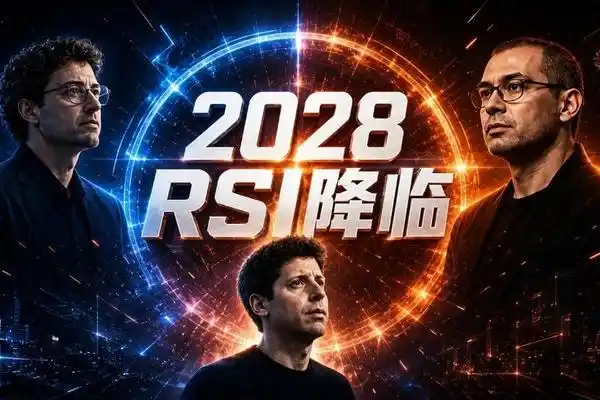
2028: The Arrival of Recursive Self-Improvement (RSI)

**AI Recursive Self-Improvement (RSI): The Countdown to 2028 Begins** AI is no longer just a trained tool but is starting to rewrite its own evolutionary pace. According to Anthropic co-founder Jack Clark, there is a 60% probability that by the end of 2028, Recursive Self-Improvement (RSI) will become a reality. This means AI could autonomously design and build a more capable next-generation version of itself without any human researcher involvement—Claude 10 creating Claude 11, for instance. Supporting this timeline, Google DeepMind's CEO Demis Hassabis confirms that all leading AI labs are intensely focused on RSI, making it an industry-wide priority. He expresses profound concern, stating this potential is what keeps him awake at night. Concrete data underscores this acceleration: - METR evaluations show current top models like Claude are solving tasks up to the 16-hour limit of existing test frameworks. - In Epoch AI's challenging MirrorCode benchmark, Claude Opus 4.7 recreated complex software in hours for a fraction of the human cost. In one extreme test, AI autonomously coded for 19 days straight. - Anthropic reports over 80% of its codebase is now written by Claude, and researcher productivity has increased up to 8-fold since 2024. - OpenAI's policy blueprint highlights RSI as a major upcoming governance challenge. CEO Sam Altman reportedly hinted RSI might arrive within six months, potentially delaying OpenAI's massive IPO. The implication is an impending "intelligence explosion," where AI-driven progress outpaces human control. The central question is no longer if it will happen, but whether humanity is ready.

marsbit4h ago

2028: The Arrival of Recursive Self-Improvement (RSI)

marsbit4h ago

World Models, Metaverse, Digital Twins, Physical AI: Are They the Same Thing?

Title: World Models, the Metaverse, Digital Twins, Physical AI: Are They the Same Thing? The article clarifies that concepts like the metaverse, Web3, simulation platforms, digital twins, and Physical AI are not the same thing but are all part of the broader trend of blurring the lines between the digital and physical worlds. It positions "world models" as the foundational "cognitive layer" or "operating system" that enables AI to understand and simulate the world. Key distinctions are made: - The **Metaverse** is a destination for immersive social and economic experiences. World models could act as its "engine," generating interactive 3D content efficiently. - **Web3** focuses on decentralized ownership and economics (rules layer), operating on a different technical level than world models. - **Simulation Data Platforms** (e.g., for autonomous vehicles) are a 1.0 version, relying on manual design. World models represent a 2.0 version, using AI to generate realistic, varied scenarios autonomously. - **Digital Twins** create high-fidelity, real-time mirrors of physical systems (e.g., a factory). World models go a step further by enabling predictive simulation of future states. - **Physical AI** (robots, AVs) refers to AI that acts in the physical world. World models are a core component, providing the understanding and prediction needed for planning. A proposed hierarchy places world models at the cognitive layer, supported by infrastructure (compute, data) and supporting application tools (simulation, digital twins), action systems (Physical AI), user experiences (metaverse), and rules (Web3). In conclusion, while distinct, many of these previously hyped concepts may ultimately rely on advances in world model technology to fulfill their promises, as world models provide the essential cognitive foundation for simulating and interacting with complex environments.

marsbit4h ago

World Models, Metaverse, Digital Twins, Physical AI: Are They the Same Thing?

marsbit4h ago

Trading

Spot
活动图片