BTC横盘蓄力 SOL领涨7% ZKJ与KOGE崩盘警示 JTO、WIF、EGL1哪些币将引爆下一波行情

金色财经Pubblicato 2025-06-16Pubblicato ultima volta 2025-06-16

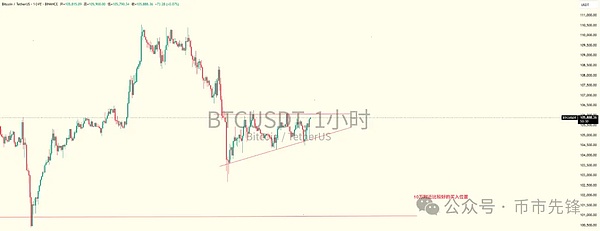
这几天 BTC 横盘走得挺稳当:周末两天试了试下边的低点都没跌破,而且底部价格还在慢慢涨,多头想往上冲的意思很明显。现在短期压力在 10.61 万这儿,要是能一口气突破 10.68 万,估计会有不少追涨的资金进来。
图片

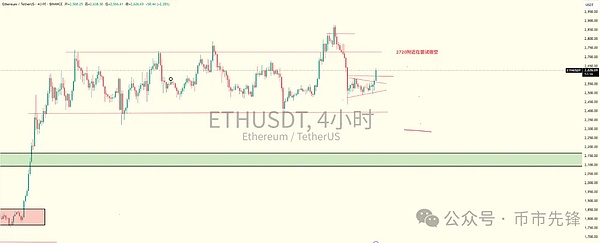
ETH这边之前在 2590 做空的人全被强制平仓血亏,现在价格都到 2620 了。想做空的宝子们别急,等价格到 2720 附近再说,那儿交易量大,是个比较强的压力位。
图片

SOL 7%领涨大市值代币,SOL现货ETF要通过了?

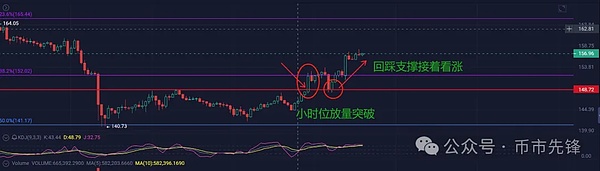
三大主流币里 SOL现在最强,成交量放大突破了关键价位,接下来目标能看到 165 。小时图走势特别猛,空头被打得很惨。不过现在市场变数多,得小心大饼跌了带动 SOL 一起跌,多单可以先拿着,现在一小时图又开始横盘了。 
图片

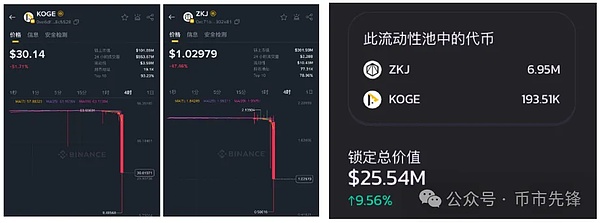
为啥 ZKJ 和 KOGE 一起崩了?

16 天前这俩项目在 PancakeSwap 搞了个联合池子(总共锁了 3000 万 U 的币),吸引了好多工作室来刷量。但 KOGE 单独的 BNB 和 USDT 池子没啥流动性,大户想跑路的时候没法直接卖,只能先把 KOGE 换成 ZKJ,再用 ZKJ 换 BNB 或者 USDT,结果就导致俩币一起跌了。

还有就是,这两个都是 Alpha 山寨币,一旦某个币价格崩盘,就会容易触发另外一个币抛售。  结果你崩我也崩,都浇了
图片

不过这事也给咱们提了个醒:刷交易量就只管刷,别想着长期持有赌涨跌。还有,刷量得挑交易量大、流动性好的币,滑点一定控制在 0.1% 以内,不然容易被反坑。

还有哪些币可以玩?

sol的etf大概是要通过。大的回调要打风利好落地,最先突破震荡箱体。

以下是Sol 系列涨的比较好的币种:

jto最大的质押协议,

Wif meme币龙头这一轮下跌回调上涨最猛的币种有Syrup、Virtual、fartcoin。

以上3个币种每次回调最应该买的,都是全流通,交易量大,狗庄强 

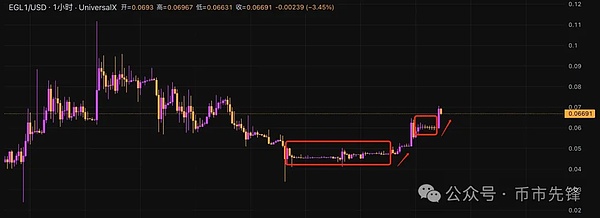
链上宝子们可以看看EGL1

大金狗的特征一般都是5000 万和 1 亿的时候都会大跌一次,而$EGL1 现在刚好符合这个规律。这币羡羡都推荐不止三回了,上次猛推的 siren 跟着买的至少赚了好几倍,这次 EGL1 我觉得也差不了。还有就是fourmeme交易大赛应该是7月4号才结束,到时候EGL1大概率拿第一,然后wlfi买入,再带来一波流量和买盘,个人的预期最低是翻倍,当然不排除更高的可能。
Image

最后特别要注意的是,6月19日的美联储议息会议,可能会成为行情方向转变的“关键节点

Letture associate

The Trillion-Yuan Market Cap 'Yi Zhong Tian': Who is the True Value King?

The article analyzes the three leading Chinese optical module companies, collectively nicknamed "Yi Zhong Tian": Xinyisheng, Zhongji Innolight, and TFC Optical Communication. It evaluates their "cost-performance" not by current stock price, but through three lenses: PEG ratio (growth vs. valuation), earnings quality, and premium/discount for certainty. Xinyisheng shows the most attractive PEG ratio and high profitability, but its valuation reflects discounts for risks like high customer concentration and reliance on overseas markets. Zhongji Innolight, the most expensive, commands a premium for its market leadership, dominant share in key products like 800G/1.6T modules, and higher earnings certainty, though it faces geopolitical risks. TFC Optical, as an upstream component supplier ("water seller"), has the highest gross margin and bets on the long-term CPO/NPO architecture trend, but trades at a high valuation with more stable, less explosive growth. The core argument is that while these companies dominate module assembly, the true profit pool and technological moat lie upstream in laser and switch chips, currently controlled by U.S. firms like Lumentum and Coherent. The long-term "cost-performance" for these Chinese leaders hinges on whether the domestic industry, exemplified by companies like Yuanjie Technology, can successfully move up the value chain into high-power laser chips. Otherwise, their high growth may remain confined to the lower-margin assembly segment.

marsbit9 min fa

The Trillion-Yuan Market Cap 'Yi Zhong Tian': Who is the True Value King?

marsbit9 min fa

Has the Crypto Market Bottomed? Here's What Institutions Think

The crypto market is in a period of significant debate, with leading institutions offering differing views on whether a bottom has been reached. Three prominent firms have published detailed analyses: * **Galaxy Digital** argues Bitcoin has **not yet bottomed**. Their analysis of 13 historical indicators across six dimensions (valuation, profit-taking, miner pressure, etc.) shows only four are fully met. They project a potential bottom range between $30k and $54k. * **NYDIG** states a bottom is **possible but not likely**. While metrics are close to historic bear market extremes, they note the absence of a classic panic-selling event. They also suggest increased institutional adoption may have structurally altered the market cycle, potentially leading to a shallower downturn. * **Standard Chartered Bank** asserts the **bottom has already occurred** at around $59k. They cite two key factors: potential US-Iran diplomatic progress and the anticipated SpaceX IPO, which they believe absorbed capital and caused ETF selling pressure that is now subsiding. They forecast a year-end price target of $100k. Despite the surface-level disagreement, the reports share critical common ground more valuable for long-term investors: 1. All three believe the market bottom will form **within this year**. 2. All agree the current price is **closer to the bottom than to previous highs**. 3. All maintain a **bullish long-term outlook** for Bitcoin and a new cycle. The core takeaway is that while the exact bottom price ($40k, $50k, or $60k) is debated, the consensus is that a bottom is imminent. For long-term holders, the primary focus should not be pinpointing the absolute low, but on the future potential for prices to reach $100k, $200k, or higher. The fundamental thesis for Bitcoin—sovereign debt accumulation, inflation, declining trust in centralized institutions, global digitization, and improved accessibility—remains intact and is arguably strengthening. The overall landscape is viewed as more favorable than in previous crypto winters.

marsbit20 min fa

Has the Crypto Market Bottomed? Here's What Institutions Think

marsbit20 min fa

The 'Chip' Challenge and Breakthroughs in China's Optical Industry Chain

China's Photonics Industry: Bottlenecks and Breakthroughs In the global AI race, computing chips dominate the narrative, but the underlying bottleneck increasingly defining the scale of AI clusters is light—or more specifically, optical connectivity. Optical modules, which translate electrical signals to light and vice versa, are crucial for connecting thousands of GPUs in AI data centers, preventing data congestion and ensuring efficient model training. High-speed modules (800G, 1.6T) are now standard, with performance hinging on advanced DSP (Digital Signal Processor) chips. This is where a critical dependency lies. Two US giants—Marvell and Broadcom—collectively dominate over 90% of the high-end DSP chip market. Chinese optical module leaders like Zhongji Innolight and Eoptolink rely on these chips to manufacture modules for overseas AI customers, primarily in North America. While this creates a supply chain vulnerability, complete decoupling is difficult. Marvell derives over half its revenue from Greater China, and the US firms depend on Chinese partners for chip packaging and optical components. The risk from laser chips (e.g., from Lumentum), another key component, is considered more manageable due to multiple global suppliers and faster progress in domestic alternatives from companies like YOFC and Accelink. To mitigate risks, China's industry is pursuing a multi-pronged strategy: diversifying supply chains and locking in long-term orders; fostering a domestic market ecosystem to adopt homegrown DSPs from firms like Huawei HiSilicon and CETC; accelerating R&D in high-speed DSPs and advanced packaging; and investing in next-gen technologies like silicon photonics and Co-Packaged Optics (CPO) to reduce reliance on discrete DSPs. The ultimate solution lies not in short-term博弈 but in persistent advancement of domestic high-end chip R&D and manufacturing. While challenges remain in performance, certification, and ecosystem building, China's vast domestic market and manufacturing base provide a crucial buffer, buying time for the industry to achieve greater technological independence.

marsbit33 min fa

The 'Chip' Challenge and Breakthroughs in China's Optical Industry Chain

marsbit33 min fa

Behind SpaceX's $2 Trillion Market Cap: Why Does Musk Always Have the Next Move Planned?

On June 12th, SpaceX debuted on the Nasdaq, reaching a valuation that briefly touched $2 trillion. This marked the culmination of a 24-year journey from its founding in 2002, driven by Elon Musk's frustration at the high cost of buying rockets. The company's path was defined by early failures, with its first three Falcon 1 launches ending in explosions before a successful 2008 flight opened the era of commercial spaceflight. Key to its model was a fixed-price NASA contract, incentivizing cost reduction. SpaceX mastered rocket reusability, first achieving a Falcon 9 landing in 2015, which drastically cut launch costs. This enabled its profitable Starlink satellite internet constellation, envisioned years before reusability was proven, to create an internal market for frequent launches. Similarly, the next-generation Starship rocket was in development long before its first flight, with its business case evolving from Mars colonization to supporting the emerging concept of in-orbit data centers for AI—a story now central to its valuation. The company's recent IPO, a reversal of its long-standing "no IPO" stance, is funding this ambitious "space-based compute" vision. While major tech players like Google, Blue Origin, and others are investing heavily, significant technical and cost hurdles remain. Ultimately, SpaceX's history is one of creating its own demand: first with Starlink and now with space-based AI compute, betting that its next rocket will enable its next giant market.

marsbit36 min fa

Behind SpaceX's $2 Trillion Market Cap: Why Does Musk Always Have the Next Move Planned?

marsbit36 min fa

Trading

Spot
Futures

Articoli Popolari

Come comprare JTO

Benvenuto in HTX.com! Abbiamo reso l'acquisto di Jito (JTO) semplice e conveniente. Segui la nostra guida passo passo per intraprendere il tuo viaggio nel mondo delle criptovalute.Step 1: Crea il tuo Account HTXUsa la tua email o numero di telefono per registrarti il tuo account gratuito su HTX. Vivi un'esperienza facile e sblocca tutte le funzionalità,Crea il mio accountStep 2: Vai in Acquista crypto e seleziona il tuo metodo di pagamentoCarta di credito/debito: utilizza la tua Visa o Mastercard per acquistare immediatamente JitoJTO.Bilancio: Usa i fondi dal bilancio del tuo account HTX per fare trading senza problemi.Terze parti: abbiamo aggiunto metodi di pagamento molto utilizzati come Google Pay e Apple Pay per maggiore comodità.P2P: Fai trading direttamente con altri utenti HTX.Over-the-Counter (OTC): Offriamo servizi su misura e tassi di cambio competitivi per i trader.Step 3: Conserva Jito (JTO)Dopo aver acquistato Jito (JTO), conserva nel tuo account HTX. In alternativa, puoi inviare tramite trasferimento blockchain o scambiare per altre criptovalute.Step 4: Scambia Jito (JTO)Scambia facilmente Jito (JTO) nel mercato spot di HTX. Accedi al tuo account, seleziona la tua coppia di trading, esegui le tue operazioni e monitora in tempo reale. Offriamo un'esperienza user-friendly sia per chi ha appena iniziato che per i trader più esperti.

134 Totale visualizzazioniPubblicato il 2024.12.11Aggiornato il 2026.06.02

Come comprare JTO

Discussioni

Benvenuto nella Community HTX. Qui puoi rimanere informato sugli ultimi sviluppi della piattaforma e accedere ad approfondimenti esperti sul mercato. Le opinioni degli utenti sul prezzo di JTO JTO sono presentate come di seguito.

活动图片