Сенат США вновь провалил голосование по закону GENIUS

cryptonews.ruPublished on 2023-07-08Last updated on 2025-05-08

Попытки Конгресса США принять ключевой закон о регулировании крипторынка снова зашли в тупик. Сенат не смог набрать нужное количество голосов для прохождения процедурного этапа по законопроекту GENIUS (Guiding Emerging Networks and Innovation for U.S. Strategy) Act. Документ должен был создать четкие правила для криптовалютной индустрии, но оказался заблокирован после того, как некоторые демократы, ранее поддерживавшие инициативу, проголосовали против.

Причиной стали разногласия по поводу новых положений о борьбе с отмыванием денег и вопросах национальной безопасности. Источники сообщают, что в последней редакции GENIUS Act усилились требования к контролю за цифровыми активами, включая обязательства для разработчиков и операторов DeFi-протоколов. Это вызвало тревогу среди части демократов, которые посчитали меры чрезмерными и потенциально вредными для технологических стартапов. В результате сенаторы от Республиканской партии, продвигавшие инициативу, не смогли обеспечить минимальную поддержку.

Еще в начале недели Крис Диксон, партнер венчурного фонда a16z crypto, заявлял, что законопроект будет принят в конструктивной двупартийной атмосфере. По его словам, отсутствие правовых рамок мешает развитию американской цифровой экономики и способствует росту мошенничества. Он призвал Сенат ускорить принятие GENIUS Act и сосредоточиться на создании долгосрочной модели регулирования рынка цифровых активов.

Однако надежды на быстрый прогресс не оправдались. Отказ Сената продвигать законопроект стал очередным ударом по криптоиндустрии, которая уже несколько лет находится в состоянии нормативной неопределенности. Участники рынка жалуются, что отсутствие ясных правил сдерживает инновации и выталкивает бизнесы в другие юрисдикции. Судьба GENIUS Act остается неопределенной. Источники в Конгрессе указывают, что переговоры продолжатся, но шансы на его скорое принятие снизились.

Ошибка в тексте? Выделите её мышкой и нажмите Ctrl + Enter

Related Reads

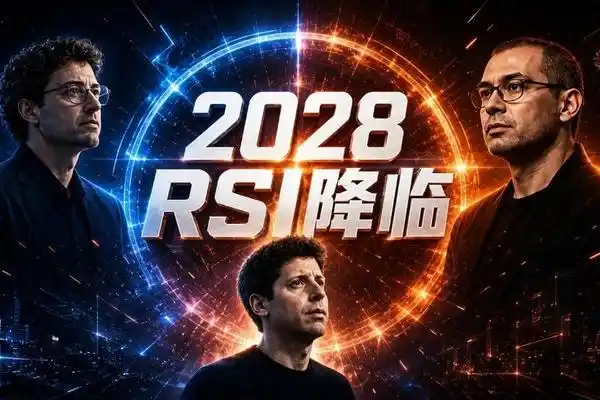
2028: The Arrival of Recursive Self-Improvement (RSI)

**AI Recursive Self-Improvement (RSI): The Countdown to 2028 Begins** AI is no longer just a trained tool but is starting to rewrite its own evolutionary pace. According to Anthropic co-founder Jack Clark, there is a 60% probability that by the end of 2028, Recursive Self-Improvement (RSI) will become a reality. This means AI could autonomously design and build a more capable next-generation version of itself without any human researcher involvement—Claude 10 creating Claude 11, for instance. Supporting this timeline, Google DeepMind's CEO Demis Hassabis confirms that all leading AI labs are intensely focused on RSI, making it an industry-wide priority. He expresses profound concern, stating this potential is what keeps him awake at night. Concrete data underscores this acceleration: - METR evaluations show current top models like Claude are solving tasks up to the 16-hour limit of existing test frameworks. - In Epoch AI's challenging MirrorCode benchmark, Claude Opus 4.7 recreated complex software in hours for a fraction of the human cost. In one extreme test, AI autonomously coded for 19 days straight. - Anthropic reports over 80% of its codebase is now written by Claude, and researcher productivity has increased up to 8-fold since 2024. - OpenAI's policy blueprint highlights RSI as a major upcoming governance challenge. CEO Sam Altman reportedly hinted RSI might arrive within six months, potentially delaying OpenAI's massive IPO. The implication is an impending "intelligence explosion," where AI-driven progress outpaces human control. The central question is no longer if it will happen, but whether humanity is ready.

marsbit4h ago

2028: The Arrival of Recursive Self-Improvement (RSI)

marsbit4h ago

World Models, Metaverse, Digital Twins, Physical AI: Are They the Same Thing?

Title: World Models, the Metaverse, Digital Twins, Physical AI: Are They the Same Thing? The article clarifies that concepts like the metaverse, Web3, simulation platforms, digital twins, and Physical AI are not the same thing but are all part of the broader trend of blurring the lines between the digital and physical worlds. It positions "world models" as the foundational "cognitive layer" or "operating system" that enables AI to understand and simulate the world. Key distinctions are made: - The **Metaverse** is a destination for immersive social and economic experiences. World models could act as its "engine," generating interactive 3D content efficiently. - **Web3** focuses on decentralized ownership and economics (rules layer), operating on a different technical level than world models. - **Simulation Data Platforms** (e.g., for autonomous vehicles) are a 1.0 version, relying on manual design. World models represent a 2.0 version, using AI to generate realistic, varied scenarios autonomously. - **Digital Twins** create high-fidelity, real-time mirrors of physical systems (e.g., a factory). World models go a step further by enabling predictive simulation of future states. - **Physical AI** (robots, AVs) refers to AI that acts in the physical world. World models are a core component, providing the understanding and prediction needed for planning. A proposed hierarchy places world models at the cognitive layer, supported by infrastructure (compute, data) and supporting application tools (simulation, digital twins), action systems (Physical AI), user experiences (metaverse), and rules (Web3). In conclusion, while distinct, many of these previously hyped concepts may ultimately rely on advances in world model technology to fulfill their promises, as world models provide the essential cognitive foundation for simulating and interacting with complex environments.

marsbit4h ago

World Models, Metaverse, Digital Twins, Physical AI: Are They the Same Thing?

marsbit4h ago

Trading

Spot
活动图片