‘Where’s The Scam?’ Cardano Founder Slams Critics

bitcoinist2025-03-21 tarihinde yayınlandı2025-03-21 tarihinde güncellendi

Özet

In an emotionally charged livestream, Cardano founder Charles Hoskinson responded to escalating accusations of academic misconduct and broader claims that...

Trusted Editorial content, reviewed by leading industry experts and seasoned editors. Ad Disclosure

In an emotionally charged livestream, Cardano founder Charles Hoskinson responded to escalating accusations of academic misconduct and broader claims that the project is a scam. The 36-minute stream, directly countered critics while providing a detailed defense of Cardano’s scientific foundation, its progress over the last decade, and his personal contributions to the blockchain industry.

The controversy started around Hoskinson’s co-authorship of a recent interdisciplinary academic paper involving a sea salvage expedition off Papua New Guinea. Critics have accused Hoskinson of improperly buying authorship on the paper—allegations he described as “unhinged” and rooted in personal vendettas rather than fact.

“I was involved in a sea salvage operation and contributed as much as I could. I’m not an expert in geology, especially astrogeology, nor ever professed to be one. But I did have a lot of fun reviewing the manuscript, had a lot of fun contributing to the actual salvage side,” Hoskinson said. “I’ll remind people, if we weren’t able to salvage, there would be nothing to analyze—which is why this is an interdisciplinary paper.”

Hoskinson emphasized that his role in the project was primarily logistical and technical on the salvage side, including funding the expedition, helping design recovery sleds, and participating in sample processing aboard the research vessel.

The paper, he clarified, does not present groundbreaking scientific conclusions but rather establishes a foundation for further research. “It was more of a sea salvage expedition than true deep hardcore science,” Hoskinson noted, stating the major academic contributions came from the Harvard-affiliated scientists leading the analysis.

A Decade Of Cardano Development Defended

Pivoting to Cardano, Hoskinson delivered one of his most direct defenses of the project’s legitimacy, progress, and technological achievements to date. He dismissed persistent online narratives branding Cardano a scam, pointing to a track record few blockchain projects can match.

“Cardano was started in Japan in 2015 off of about $70 million in funding. Cardano in 2025 is a $26 billion ecosystem,” Hoskinson stated. “It has delivered 240 papers to market, millions of lines of code to market, [and] massive protocol innovations.”

He cited milestones including the first provably secure proof-of-stake protocol, the extended UTXO model, the Plutus smart contract language, and upcoming advancements like Midnight, a privacy-focused partner chain.

Cardano, Hoskinson claimed, remains one of the most secure and reliable blockchains in the industry: “Cardano’s been running for almost eight years now—seven years, 24 hours a day, seven days a week. Cardano has never had a major hack. Cardano’s never gone down. Cardano runs, and it’s decentralized as measured by the EDI.”

In contrast, Hoskinson referenced industry collapses such as Celsius, Luna, FTX, and BitConnect, asking rhetorically why Cardano is often labeled a scam despite its longevity and absence of catastrophic failures.

Where is the scam? That entire arc of time I just gave you […] thousands of failed projects […] We’re still in the top 10. We’re still here. We’re still pushing forward. I don’t understand your grievance. I really don’t.”

Hoskinson warned of what he called “Charles Derangement Syndrome” (CDS), describing a growing online culture that seeks to destroy reputations with misinformation and personal attacks. He claimed that critics have formed dedicated Discord servers, parody accounts, and entire content channels devoted to discrediting him and Cardano.

“Now we have a permanent CDS marketplace within the Cardano ecosystem, and people will make money, they’ll enjoy their time with it, and they’ll invent all these narratives […] until they become so ingrained they just automatically believe they’re true.”

He compared the phenomenon to politically charged derangement syndromes surrounding figures like Elon Musk and Donald Trump, arguing that the crypto industry now faces similar polarization.

Hoskinson also raised concerns about persistent misinformation sticking to Cardano’s reputation, such as the long-debunked claim that the project only processes one transaction per block: “The lie gets sticky […] You see the problem? There becomes this cognitive cost to undo it and unwind it. And when you create these cargo cults of misinformation, they become cancerous and they grow and they distort and eventually, they derange people to a point where they create parallel realities.”

A Call To The Cardano Community

In closing, Hoskinson urged the Cardano community to consider the consequences of empowering individuals or entities driven by hate rather than constructive goals as the ecosystem moves into Voltaire, its on-chain governance era.

“We all drink the same water. And if you’re pouring lead in that water, you’re drinking just as much as I am. And understand there are consequences for that,” he warned, pointing to upcoming budget decisions and delegate representative (DRep) elections within Cardano’s governance system.

Despite the attacks, Hoskinson reaffirmed his commitment to the ecosystem and its roadmap:“Cardano is the most decentralized cryptocurrency on the planet. We have the best on-chain governance system. Leios is going to make us one of the fastest. Bitcoin DeFi is going to open up a $2 trillion opportunity. Midnight is going to add the next generation to the cryptocurrency space. We’re not out. We’re fighting. We’re still in the conversation. We’re in the reserve. We’re still doing groundbreaking research. I’m proud of that.”

At press time, ADA traded at $0.7171.

Cardano price
ADA faces key resistance zone, 1-week chart | Source: ADAUSDT on TradingView.com
Featured image from YouTube, chart from TradingView.com
Editorial Process for bitcoinist is centered on delivering thoroughly researched, accurate, and unbiased content. We uphold strict sourcing standards, and each page undergoes diligent review by our team of top technology experts and seasoned editors. This process ensures the integrity, relevance, and value of our content for our readers.

Jake Simmons has been a Bitcoin enthusiast since 2016. Ever since he heard about Bitcoin, he has been studying the topic every day and trying to share his knowledge with others. His goal is to contribute to Bitcoin's financial revolution, which will replace the fiat money system. Besides BTC and crypto, Jake studied Business Informatics at a university. After graduation in 2017, he has been working in the blockchain and crypto sector. You can follow Jake on Twitter at @realJakeSimmons.

Trend Kriptolar

İlgili Okumalar

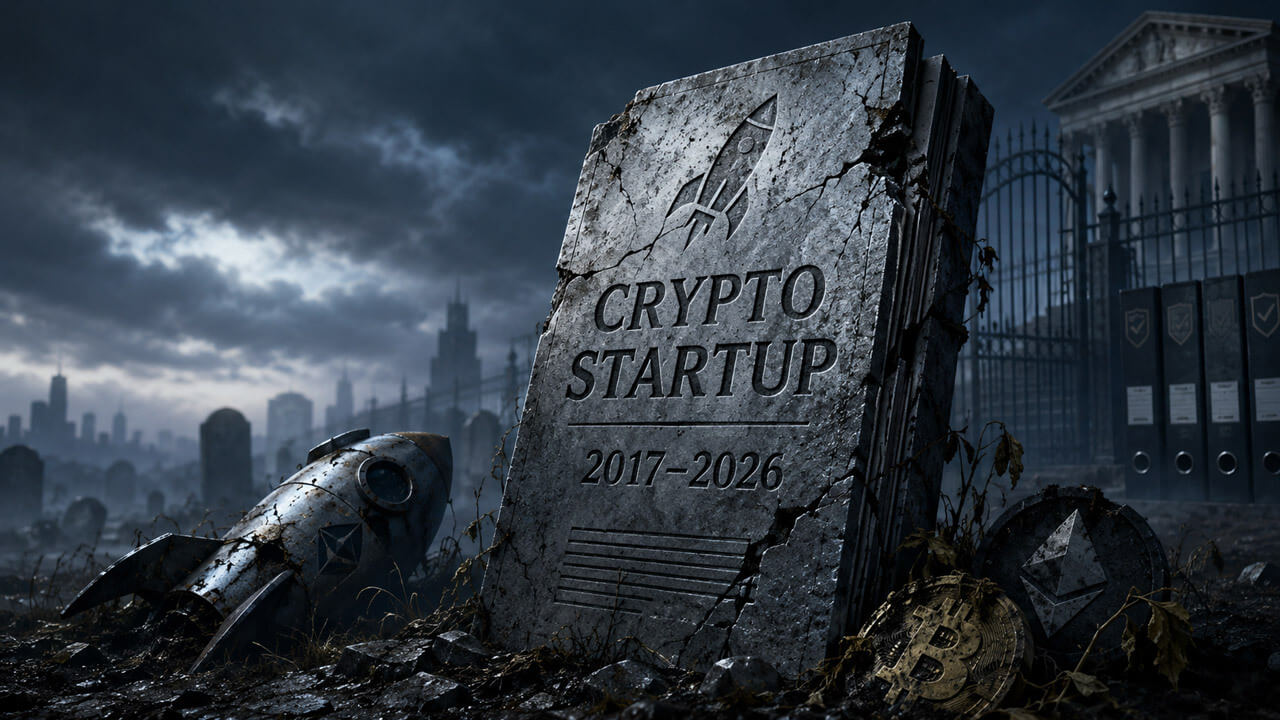
A Decade of Change: The Demise of Crypto Startups

"The Decade-Long Transformation: The Demise of Crypto Startups" The article traces the dramatic evolution of the cryptocurrency industry from its anarchic beginnings to its current highly regulated and institutionalized state. In the early days (circa 2017), launching a crypto startup was remarkably simple: a whitepaper, a GitHub repository, and a Telegram group could attract thousands of retail investors via an Initial Coin Offering (ICO). Founders operated anonymously with near-zero regulatory and financial barriers, enabling rapid, global innovation but also widespread fraud. By 2026, the landscape is fundamentally different. To operate in major markets like the US, EU, and Asia, crypto businesses must now navigate a complex web of regulations akin to traditional finance. Compliance costs are prohibitive: estimates for a US multi-state operation range from $750,000 to $1.2 million in the first three years, with annual costs exceeding $2 million thereafter. Regulations like MiCA in the EU and New York's BitLicense have created high capital and operational hurdles that act as barriers to entry. Simultaneously, venture capital investment has shifted dramatically. Following the collapses of Terra and FTX, funding has concentrated in later-stage, established companies, creating a "barbell market." Early-stage and seed funding has shrunk significantly, while mega-funds like Andreessen Horowitz's $15 billion pool dominate. Most capital now flows to trading platforms, lending infrastructure, and B2B services. This environment favors mergers and acquisitions as the primary path for growth. Companies like Coinbase and Ripple are acquiring firms like Deribit and Hidden Road not for their technology, but for their licenses, banking relationships, and institutional trust—assets far more valuable than code. Distribution channels, compliance, and brand reputation have become the new moats, overshadowing pure technical innovation. The industry's maturation brings benefits: reduced scams, increased institutional participation, and clearer regulatory frameworks. However, it comes at a cost. The low-barrier, experimental ethos that defined crypto's first decade is fading. Entrepreneurs without substantial capital, pre-existing licenses, or institutional connections face immense challenges. Funding for exploratory fields like decentralized social media or novel governance models is drying up. Ultimately, the crypto industry is replicating the consolidation pattern seen in banking and tech after the 2008 financial crisis. While this brings stability and legitimacy, it raises a critical question: in this new, resource-intensive reality, is there still room for the disruptive, from-scratch innovation that gave birth to the sector?

Foresight News55 dk önce

A Decade of Change: The Demise of Crypto Startups

Foresight News55 dk önce

İşlemler

Spot

Popüler Makaleler

ADA Nasıl Satın Alınır

HTX.com’a hoş geldiniz! Cardano (ADA) satın alma işlemlerini basit ve kullanışlı bir hâle getirdik. Adım adım açıkladığımız rehberimizi takip ederek kripto yolculuğunuza başlayın. 1. Adım: HTX Hesabınızı OluşturunHTX'te ücretsiz bir hesap açmak için e-posta adresinizi veya telefon numaranızı kullanın. Sorunsuzca kaydolun ve tüm özelliklerin kilidini açın. Hesabımı Aç2. Adım: Kripto Satın Al Bölümüne Gidin ve Ödeme Yönteminizi SeçinKredi/Banka Kartı: Visa veya Mastercard'ınızı kullanarak anında Cardano (ADA) satın alın.Bakiye: Sorunsuz bir şekilde işlem yapmak için HTX hesap bakiyenizdeki fonları kullanın.Üçüncü Taraflar: Kullanımı kolaylaştırmak için Google Pay ve Apple Pay gibi popüler ödeme yöntemlerini ekledik.P2P: HTX'teki diğer kullanıcılarla doğrudan işlem yapın.Borsa Dışı (OTC): Yatırımcılar için kişiye özel hizmetler ve rekabetçi döviz kurları sunuyoruz.3. Adım: Cardano (ADA) Varlıklarınızı SaklayınCardano (ADA) satın aldıktan sonra HTX hesabınızda saklayın. Alternatif olarak, blok zinciri transferi yoluyla başka bir yere gönderebilir veya diğer kripto para birimlerini takas etmek için kullanabilirsiniz.4. Adım: Cardano (ADA) Varlıklarınızla İşlem YapınHTX'in spot piyasasında Cardano (ADA) ile kolayca işlemler yapın.Hesabınıza erişin, işlem çiftinizi seçin, işlemlerinizi gerçekleştirin ve gerçek zamanlı olarak izleyin. Hem yeni başlayanlar hem de deneyimli yatırımcılar için kullanıcı dostu bir deneyim sunuyoruz.

1.4k Toplam GörüntülenmeYayınlanma 2024.12.10Güncellenme 2026.06.02

ADA Nasıl Satın Alınır

Tartışmalar

HTX Topluluğuna hoş geldiniz. Burada, en son platform gelişmeleri hakkında bilgi sahibi olabilir ve profesyonel piyasa görüşlerine erişebilirsiniz. Kullanıcıların ADA (ADA) fiyatı hakkındaki görüşleri aşağıda sunulmaktadır.

活动图片