Биржевые фонды Криптo побудили Bitwise пересмотреть свою линейку фондов

cryptonews.ruPublished on 2023-07-04Last updated on 2024-10-04

  • Bitwise конвертирует три своих фьючерсных биржевых продукта в единый фонд.
  • Фонд, получивший название Bitwise Trendwise Bitcoin and Treasuries Rotation Strategy ETF, будет чередовать 100% вложений в фьючерсные контракты на Криптo и 100% вложений в казначейские облигации США.
  • По словам управляющего активами, конвертация состоится 3 декабря.

Bitwise был ONE из управляющих активами, присоединившихся к революции спотовых Bitcoin ETF в начале этого года, представив фонд, который в настоящее время хранит Криптовалюта на сумму 2 миллиарда долларов.

Но это плюс последующее введение биржевых фондов для эфира Ethereum (ETH) снизило интерес к трем старым продуктам Bitwise, которые давали инвесторам Bitcoin (BTC) и эфир, что теперь считается менее привлекательным. Это побудило компанию объединить эти три фонда, которые держали фьючерсные контракты, привязанные к криптовалютам, в один продукт, который использует несколько иной подход в отношении казначейств США.

В пятницу Bitwise анонсировала Bitwise Trendwise Bitcoin and Treasuries Rotation Strategy ETF (BITC), фонд, который объединяет Bitwise Bitcoin Strategy Optm Roll ETF (BITC), Bitwise Ethereum Strategy ETF (AETH) и Bitwise Bitcoin and ETH Eq Wgh Str ETF (BTOP).

В своем заявлении Bitwise сообщила, что запуск спотовых ETF на Bitcoin и Ethereum в начале этого года сделал фьючерсные Криптo менее привлекательными для инвесторов, ищущих долгосрочного прироста капитала.

Благодаря новому фонду управляющий активами может лучше контролировать волатильность рынка Криптo , чередуя 100% вложений в фьючерсные контракты на Криптo и 100% вложений в казначейские облигации США в зависимости от рыночных тенденций.

«Bitwise, скорее всего, просто удовлетворяет то, что они слышат от клиентов и потенциальных клиентов», — сказал Джеймс Сейфарт, аналитик ETF в Bloomberg Intelligence. «У них есть активно управляемое подразделение в Bitwise, так что имеет смысл попробовать. Мы знаем, что есть инвесторы, желающие инвестировать в Bitcoin , но желающие ограничить волатильность и особенно падение волатильности/просадки. Я думаю, что это будет сделано с целью. Будет ли это успешным или нет, мы Словарь в ближайшие годы, но определить время на рынке крайне сложно».

Конвертация, скорее всего, состоится 3 декабря, сказал управляющий активами. Новый фонд будет взимать с инвесторов коэффициент расходов 0,85%.


Related Reads

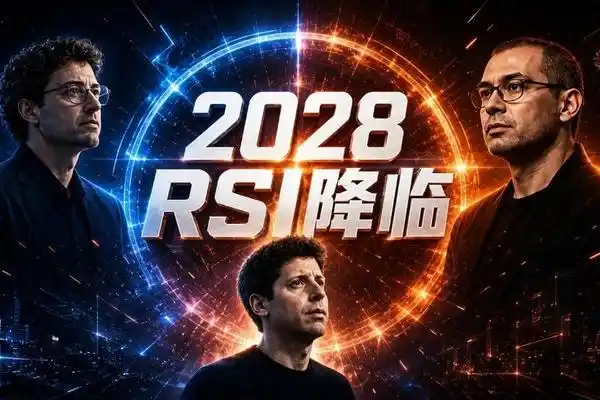
2028: The Arrival of Recursive Self-Improvement (RSI)

**AI Recursive Self-Improvement (RSI): The Countdown to 2028 Begins** AI is no longer just a trained tool but is starting to rewrite its own evolutionary pace. According to Anthropic co-founder Jack Clark, there is a 60% probability that by the end of 2028, Recursive Self-Improvement (RSI) will become a reality. This means AI could autonomously design and build a more capable next-generation version of itself without any human researcher involvement—Claude 10 creating Claude 11, for instance. Supporting this timeline, Google DeepMind's CEO Demis Hassabis confirms that all leading AI labs are intensely focused on RSI, making it an industry-wide priority. He expresses profound concern, stating this potential is what keeps him awake at night. Concrete data underscores this acceleration: - METR evaluations show current top models like Claude are solving tasks up to the 16-hour limit of existing test frameworks. - In Epoch AI's challenging MirrorCode benchmark, Claude Opus 4.7 recreated complex software in hours for a fraction of the human cost. In one extreme test, AI autonomously coded for 19 days straight. - Anthropic reports over 80% of its codebase is now written by Claude, and researcher productivity has increased up to 8-fold since 2024. - OpenAI's policy blueprint highlights RSI as a major upcoming governance challenge. CEO Sam Altman reportedly hinted RSI might arrive within six months, potentially delaying OpenAI's massive IPO. The implication is an impending "intelligence explosion," where AI-driven progress outpaces human control. The central question is no longer if it will happen, but whether humanity is ready.

marsbit1h ago

2028: The Arrival of Recursive Self-Improvement (RSI)

marsbit1h ago

World Models, Metaverse, Digital Twins, Physical AI: Are They the Same Thing?

Title: World Models, the Metaverse, Digital Twins, Physical AI: Are They the Same Thing? The article clarifies that concepts like the metaverse, Web3, simulation platforms, digital twins, and Physical AI are not the same thing but are all part of the broader trend of blurring the lines between the digital and physical worlds. It positions "world models" as the foundational "cognitive layer" or "operating system" that enables AI to understand and simulate the world. Key distinctions are made: - The **Metaverse** is a destination for immersive social and economic experiences. World models could act as its "engine," generating interactive 3D content efficiently. - **Web3** focuses on decentralized ownership and economics (rules layer), operating on a different technical level than world models. - **Simulation Data Platforms** (e.g., for autonomous vehicles) are a 1.0 version, relying on manual design. World models represent a 2.0 version, using AI to generate realistic, varied scenarios autonomously. - **Digital Twins** create high-fidelity, real-time mirrors of physical systems (e.g., a factory). World models go a step further by enabling predictive simulation of future states. - **Physical AI** (robots, AVs) refers to AI that acts in the physical world. World models are a core component, providing the understanding and prediction needed for planning. A proposed hierarchy places world models at the cognitive layer, supported by infrastructure (compute, data) and supporting application tools (simulation, digital twins), action systems (Physical AI), user experiences (metaverse), and rules (Web3). In conclusion, while distinct, many of these previously hyped concepts may ultimately rely on advances in world model technology to fulfill their promises, as world models provide the essential cognitive foundation for simulating and interacting with complex environments.

marsbit1h ago

World Models, Metaverse, Digital Twins, Physical AI: Are They the Same Thing?

marsbit1h ago

"Shocking" CPO: How Does the Glass Bridge Actually Work? Detailed Explanation from Corning

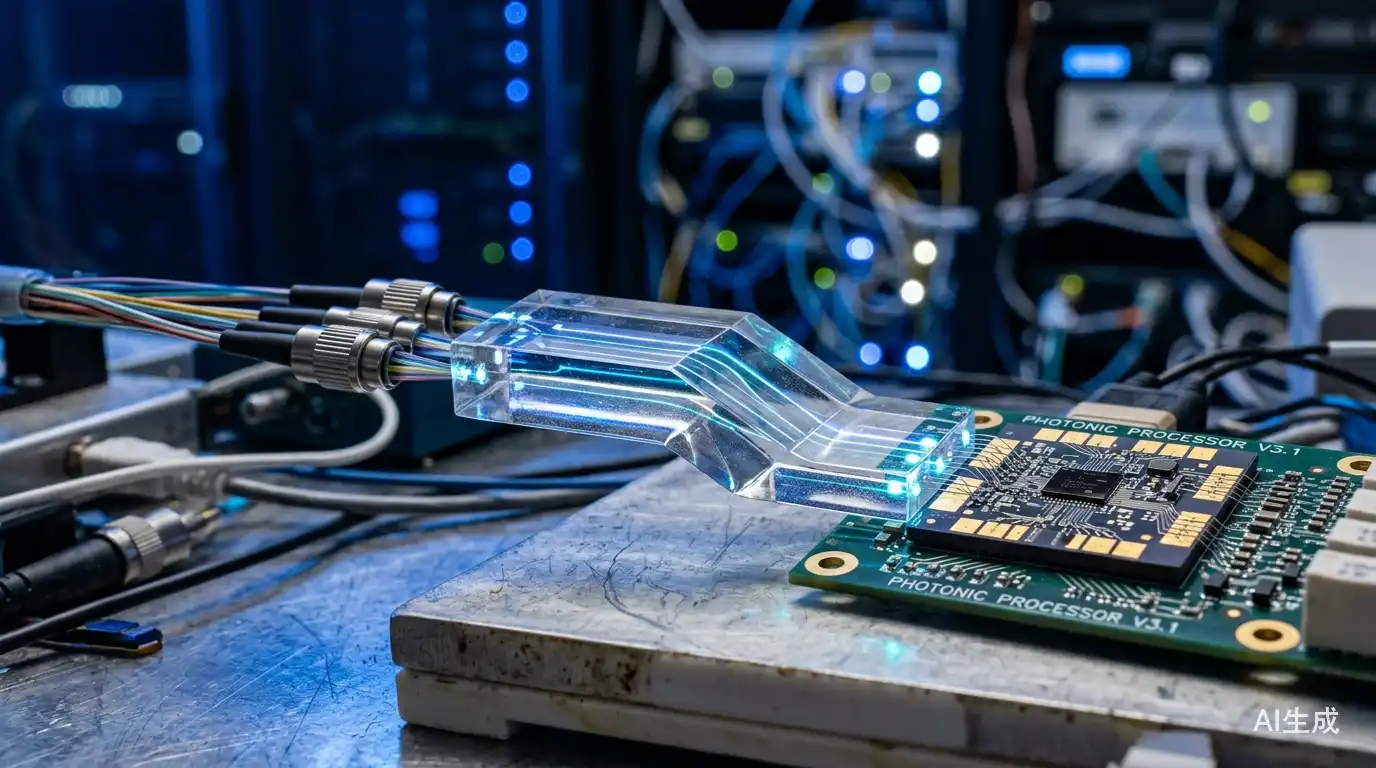
Chinese CPO stocks plunged over 6% following Corning's announcement of its Glass Bridge platform at a Seoul tech conference. The new technology utilizes wafer-level glass ion-exchange waveguides for passive alignment between fibers and photonic chips, potentially simplifying traditional CPO architectures that rely on complex Fiber Array Units and active alignment equipment. This raised market concerns about reduced long-term demand for mid-stream CPO components. Corning's official documentation details Glass Bridge as a platform for fiber-to-PIC connectivity in NPO, CPO, and high-density modules. Its key features include wafer-level manufacturing for consistent, cost-effective production; a standardized, removable MT ferrule interface for ecosystem integration; and a separable high-density connector design supporting over 24 channels for assembly flexibility. Corning positions the technology as complementary to FAUs, addressing limitations in ultra-high-fiber-count scenarios. The market reaction reflects a broader reassessment of the AI optical interconnect value chain. Funds shifted from CPO and PCB manufacturing stocks towards glass substrate concept stocks like Kaisheng Technology and Dyer Laser. Analysts note glass substrates are seen as a next-gen advanced packaging material, offering a potential path for domestic industry differentiation amid AI-driven demand for high-performance, large-scale packaging, marking a structural migration in value towards upstream specialty materials.

marsbit1h ago

"Shocking" CPO: How Does the Glass Bridge Actually Work? Detailed Explanation from Corning

marsbit1h ago

Trading

Spot
活动图片