Запуск основной сети Arbitrum Stylus открывает Web3 для традиционных программистов

cryptonews.ruPublished on 2024-01-04Last updated on 2024-09-04

Offchain Labs, первоначальный разработчик блокчейна Arbitrum и Stylus, объявила о запуске в основной сети Arbitrum Stylus, виртуальной машины с обратной совместимостью, предназначенной для устранения распространенных барьеров на пути разработки децентрализованных приложений (DApp) для Web3.

Stylus позволяет разработчикам с различными навыками программирования использовать Arbitrum, используя знакомые языки, совместимые с WebAssembly (WASM)-). Ожидается, что конвергенция будет стимулировать запуск мощных приложений Web3 и вариантов использования с низкой комиссией за газ.

Выступая на конференции Korea Blockchain Week 3 сентября, соучредитель и главный научный сотрудник Offchain Labs Эд Фельтен объяснил, что Stylus объединяет два основных способа написания смарт-контрактов на блокчейнах: виртуальную машину Ethereum (EVM) и традиционные языки программирования, такие как как Rust, C и C++.
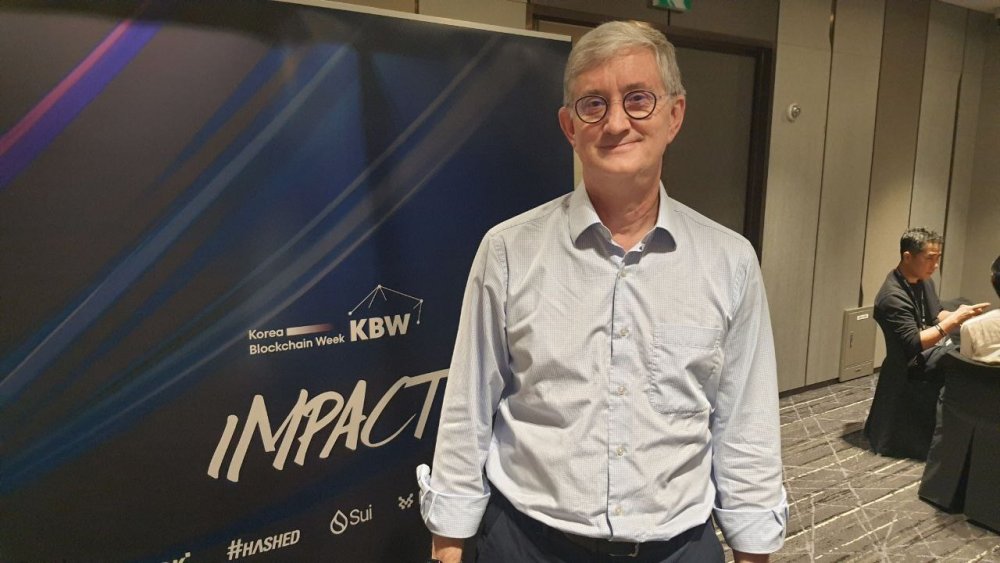
Соучредитель и главный научный сотрудник Offchain Labs Эд Фельтен на Корейской неделе блокчейна. Источник: Cointelegraph.

Фельтен объяснил, как решения масштабирования уровня 2 начинают отходить от сигнализации и ограничений EVM, внедряя дополнительные возможности новых языков:

«Теперь у разработчиков есть возможность разрабатывать свои контракты в любом стиле, и все они будут работать вместе в одной цепочке таким образом, чтобы они были полностью совместимы и полностью компонуемы».

Он добавил, что многоязычная поддержка Stylus побуждает разработчиков использовать Arbitrum с «любым инструментом, который им больше всего подходит».

Тестовые программы Stylus работают в 70 раз быстрее, чем EVM

Стивен Голдфедер, генеральный директор и соучредитель Offchain Labs, добавил, что разработчики могут использовать Stylus для расширения своих текущих рыночных предложений.

Фельтен также утверждает, что некоторые программы Stylus превзошли программы, созданные на EVM, особенно те, которые требуют высокой вычислительной мощности:

«Мы видели приложения, в которых он работает до 70 раз быстрее, а это означает, что вы можете делать в 70 раз больше в пределах лимита газа. И это открывает некоторые возможности, которые в EVM были либо слишком дорогими, либо даже невозможными».

В результате Stylus DApps может выполнять больше транзакций в пределах лимита газа и, как следствие, снижать общую стоимость, удовлетворяя тем самым потребность в производительных и безопасных языках смарт-контрактов, одновременно расширяя пространство для разработки ончейн-приложений.

Будущие усилия по объединению сообщества разработчиков

Offchain Labs в дальнейшем планирует интегрировать другие популярные протоколы, такие как ZK-proofs, в Arbitrum, который в настоящее время требует больших затрат и вычислений. Делясь своей версией будущего Web3, Фельтен добавил:

«Я думаю, что будущее — это гибридный протокол, который включает в себя некоторые элементы Optimism и некоторые элементы ZK, что на самом деле лучше, чем чистый Optimism или чистый ZK».

Он считает, что гибридный протокол будет наиболее экономически выгоден в неспециализированной среде. Поэтому Фельтен ожидает, что снижение затрат Stylus позволит разрабатывать более сложные приложения децентрализованного финансирования (DeFi).
Related Reads

Karpathy's Genius Strikes Again, Challenging RAG, Turning Your Notes into a Second Brain

Andrej Karpathy has proposed a revolutionary concept for managing personal knowledge: treating notes as immutable "source code" and using LLMs as "compilers" to build a structured, interlinked wiki. This approach fundamentally shifts the cognitive workflow away from the limitations of RAG (Retrieval-Augmented Generation), which merely retrieves and pieces together fragments, leading to contradictions and "digital mummies"—unused, decaying notes. The LLM-Wiki framework introduces a three-layer architecture: the **Raw Layer** for original, immutable notes; the **Schema Layer** defining rules for structuring knowledge; and the **Wiki Layer**, where the LLM continuously compiles and maintains a coherent, cross-referenced knowledge base. Key operations are **Ingest** (adding new material, which triggers updates across related pages), **Query** (asking the compiled wiki, with answers that can become new pages), and **Lint** (periodic AI audits to find contradictions, outdated claims, or gaps). This system automates the tedious maintenance—updating links, resolving conflicts, keeping summaries fresh—that has historically made large-scale personal knowledge management unsustainable. It realizes Vannevar Bush's 1945 "Memex" vision by finally solving the maintenance problem. Karpathy's proposal represents a third piece in human-AI collaboration, following "Vibe Coding" and "Agentic Engineering." It liberates human attention from organizational drudgery, refocusing it on what matters: deciding what to read and deriving meaning.

marsbit6m ago

Karpathy's Genius Strikes Again, Challenging RAG, Turning Your Notes into a Second Brain

marsbit6m ago

Claude Science Completes Two Years' Work in a Few Weeks, Is 10x Research Acceleration Really Here?

Claude Science, a new AI workbench from Anthropic, is being tested by scientists, reportedly accelerating specific research workflows by up to 10x. A neuro-scientist at the Allen Institute completed a lengthy literature review in weeks instead of nearly two years using the tool, which automates tasks like citation verification. The platform is an integrated environment for macOS and Linux, connecting to local or remote computing resources. It streamlines the fragmented research process—literature analysis, computation, visualization, and drafting—into a single, auditable workflow. A key feature is its emphasis on reproducibility: every chart generated includes the exact code, environment, and history used to create it. Claude Science uses a multi-agent system. A coordinator manages over 60 pre-configured skills for life sciences (genomics, proteomics, etc.) and can spawn specialized agents. A dedicated reviewer agent checks citations and calculations for accuracy, creating a form of internal AI peer review. The system operates with a human-in-the-loop, requiring user approval for major steps. Initial applications are in life sciences. Examples include target identification for biotech company Manifold Bio and germline variant analysis for glioma research at UCSF, completing analyses in roughly one-tenth the previous time. The approach contrasts with competitors: Google focuses on proprietary models like AlphaFold, while OpenAI is advancing models' scientific reasoning with benchmarks like GeneBench-Pro. Claude Science differentiates by automating and integrating the practical research pipeline, not just the model's intelligence, aiming to make AI-aided science more reproducible and integrated into daily lab work.

marsbit10m ago

Claude Science Completes Two Years' Work in a Few Weeks, Is 10x Research Acceleration Really Here?

marsbit10m ago

The Invisible Force in Bitcoin's Bear Market: Accelerating On-Chain Payments and Institutional Adoption

Amidst ongoing Bitcoin price volatility, the quiet acceleration of on-chain payments and tokenized trading holds significant importance for investors and policymakers, especially with legislation like the CLARITY Act on the horizon. Major traditional financial institutions adopting these technologies are driving crucial discussions on compliance, security, and transparency, which are vital for broader market adoption. Key developments are shaping this evolution. First, blockchain traceability is moving beyond a simple "public vs. private" debate. New frameworks aim to standardize how financial data from immutable ledgers is analyzed and interpreted, making it as crucial as standardized financial reporting for building institutional trust. Second, while traditional finance supports clear digital asset regulation, they emphasize that an asset's economic function should dictate its regulatory treatment, advocating for robust consumer protections over broad exemptions. Furthermore, the growth of on-chain deposits at regulated institutions signals a shift. Major banks are leveraging blockchain not to replace but to upgrade existing services—like deposits and cross-border settlements—with benefits like 24/7 operations and programmable treasury management. This trend focuses more on modernizing financial infrastructure than creating speculative assets. Despite market turbulence, these underlying advancements in on-chain infrastructure point toward a more robust foundation for the industry's future.

Foresight News58m ago

The Invisible Force in Bitcoin's Bear Market: Accelerating On-Chain Payments and Institutional Adoption

Foresight News58m ago

Trading

Spot
活动图片