Учёные определили, что криптовалютные инвесторы нередко сталкиваются с психическими расстройствами. Почему?

cryptonews.ruPublished on 2023-08-29Last updated on 2024-08-29

«Тёмные черты» личности в спектре от нарциссизма до психопатии чаще всего встречаются у людей, которые владеют криптовалютами. Об этом идёт речь в свежем исследовании учёных из Университета Торонто и Университета Майами. В ходе исследования был опрошен 2001 взрослый американец для изучения взаимосвязи между наличием крипты и различными политическими, психологическими и социальными характеристиками. В выборку вошли 900 мужчин и 1101 женщина, средний возраст которых составил 48 лет.

Криптовалюты действительно сопряжены со стрессом. Это в первую очередь объясняется тем, что торговля монетами происходит в круглосуточном режиме, а не в определённый промежуток времени, что актуально для фондовых бирж. Из-за этого трейдеры могут проводить сделки постоянно — равно как и ловить ликвидации или что-то подобное.

Вдобавок проблемы могут возникнуть при независимом хранении цифровых активов за пределами централизованных платформ, когда пользователь сам отвечает за их безопасность.

Аппаратный криптовалютный кошелёк Ledger Flex

В таком случае возможная потеря аппаратного кошелька и сид-фразы в состоянии привести к потере всех монет без возможности их восстановления.

К тому же нельзя забыть об активности хакеров и мошенников, желающих заполучить монеты своих жертв любыми способами. Причём их действия действительно приводят к результату.

Чем отличаются криптовалютные инвесторы

Постоянное изучение крипторынка, инвестиции в рисковые активы и работа с блокчейном сказываются на психике человека. По крайней мере такая зависимость была замечена исследователями в масштабе статистики их опроса.

Вот соответствующая реплика по данному поводу, которую приводит Decrypt.

Мы обнаружили, что владение криптовалютами связано с верой в теории заговора и «тёмными» личностными характеристиками. Например, «тёмной триадой» нарциссизма, макиавеллизма, психопатии и садизма. Также тут существует связь с более частым использованием альтернативных социальных медиа-платформ.

Покупка криптовалют инвесторами

В целом криптовалюты привлекают больше всего внимания среди мужчин, которым присущи вышеупомянутые характеристики. Эксперты продолжают.

При рассмотрении более полной многомерной модели переменные, которые наиболее сильно предсказывают владение криптовалютой – это принадлежность к мужскому полу, использование альтернативных социальных сетей в качестве основного источника новостей, аргументированность и неприятие авторитаризма.

Криптовалютные инвесторы во время буллрана

В исследовании участников попросили предоставить демографические данные, включая возраст, пол, доход, образование, религиозные и политические взгляды, психологические черты и использование средств массовой информации. Всё это понадобилось для создания подробного профиля владельцев криптовалют.

Хотя большинство любителей цифровых активов известны своими либертарианскими взглядами, опрос показал, что респонденты более либеральны в своих политических взглядах и чаще идентифицируют себя как демократы.

При этом авторы исследования предупредили, что корреляции здесь оказались небольшими и не могут указывать на сильную или последовательную политическую модель среди владельцев криптовалют.

Среди комментаторов в Твиттере результаты исследования в том числе столкнулись с критикой. Пользователи отметили, что финансистам и банкирам в куда более выраженной форме присущи психопатия и нарциссизм.

Тем не менее, автор исследования Стив Литтрелл из Университета Торонто заявил, что его труд просто неправильно поняли. Вот комментарий эксперта.

Этот человек утверждает, что он учёный, но агрессивно искажает результаты нашей работы своим более чем 700 тысячам подписчиков. Печально видеть, как предполагаемый учёный распространяет яростную дезинформацию о законных научных исследованиях.
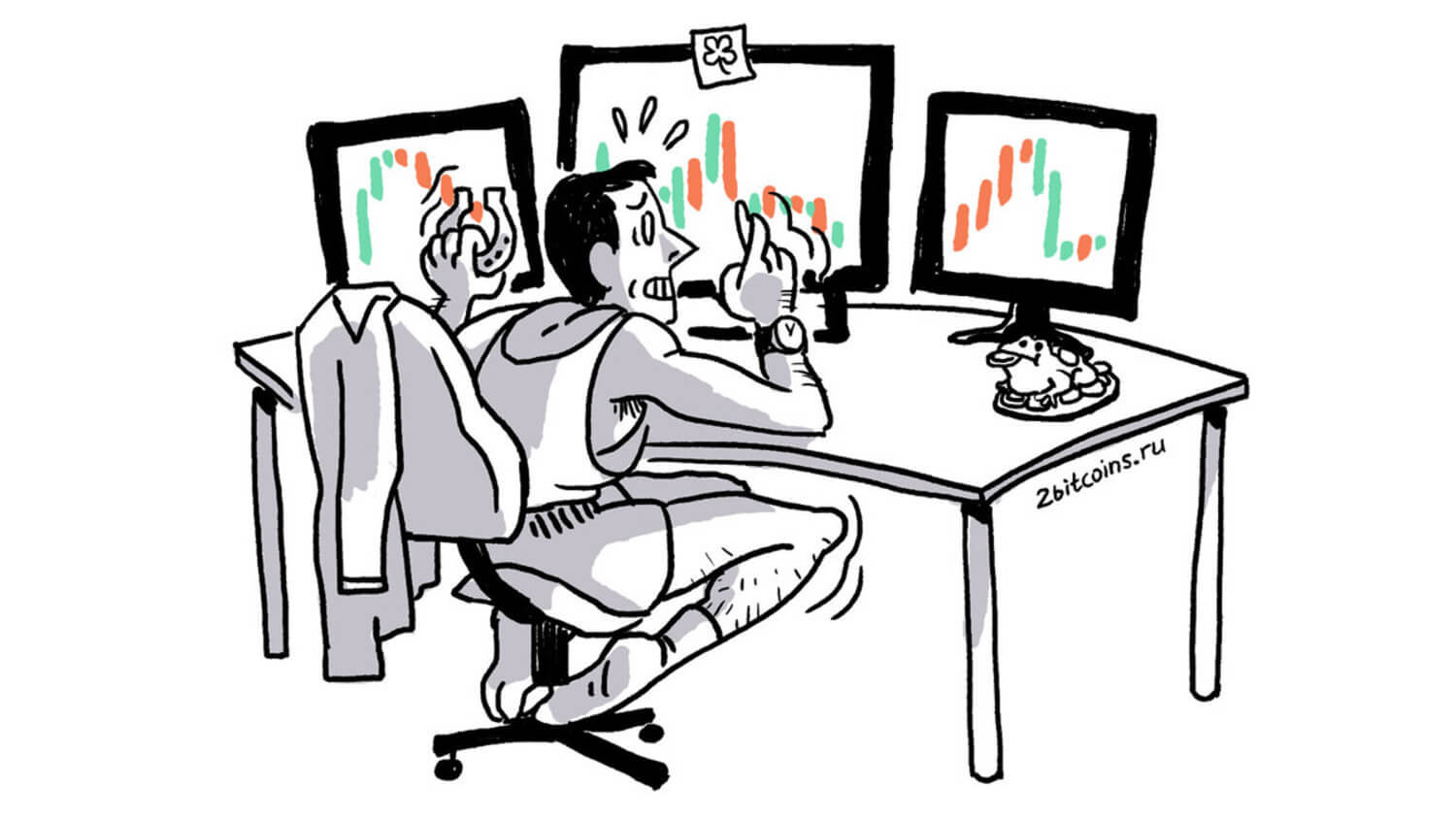
Трейдинг криптой точно бьёт по морали

В криптовалютном пространстве нет недостатка в колоритных персонажах, однако финансовые эксперты говорят, что направленное на один инвестиционный класс исследование само по себе необычно.

Таким мнением поделился профессор Бирмингемского университета Эндрю Уркхарт, не имеющий отношения к исследованию.

Я бы не сказал, что люди, которые держат золото или серебро, являются психопатами.

Уркхарт добавил, что на базовом курсе о финансах в университете студенты учатся диверсифицировать свои портфели. Вот реплика.

Мы все знаем, что когда дела идут плохо, вы идёте в золото, потому что оно очень хорошо себя ведёт в плохие времена. Так что криптовалюты рассматривались как убежище для капитала в 2018, 2019 и 2020 годах.

По словам Уркхарта, сейчас криптовалюты не могут восприниматься в качестве инструмента для хеджирования или снижения рисков, поскольку они всё больше коррелируют с традиционными рынками. К тому же владение цифровыми активами не должно определять психическое состояние инвесторов.

Рост рынка криптовалют

Вместе с этим профессор признал, что криптоинвесторы как правило являются молодыми мужчинами с не лучшим образованием. По его словам, во время пандемии COVID-19 немало людей в Соединённых Штатах после получения 1200 долларов в виде чеков от правительства использовало деньги именно для торговли криптой.

Впрочем, по состоянию на сегодня данная сумма, вложенная в Биткоин сразу после получения в апреле 2020 года, оценивалась бы в 10 740 долларов. Это на 795 процентов больше первоначального вложения, то есть данное вложение можно смело назвать успешным. Поэтому с таким аргументом исследователей тоже можно поспорить.

Актуальная стоимость биткоинов, купленных на 1200 долларов от государства в апреле 2020 года

Вдобавок 11 января 2024 года в США стартовали торги спотовыми Биткоин-ETF, которые сейчас доступны на крупнейших американских биржах. С тех пор чистый приток средств в такие инструменты составил 17.85 миллиарда долларов по состоянию на сегодняшний день, причём в числе покупателей акций биржевых фондов оказались гиганты по типу Morgan Stanley и Goldman Sachs.


Криптовалюты и инструменты на их основе завоёвывают всё больше поклонников, а также становятся признанным инструментом для вложения капитала. Поэтому говорить о склонности к психопатии у покупателей цифровых активов сейчас уже вряд ли актуально. Впрочем, полноценная связь с монетами действительно может сказываться на состоянии человека.
Related Reads

AI Sweeps the Globe, So Why Is Crypto + AI Facing Gloom?

The article "AI Sweeps the Globe, But Why Is Crypto + AI So Bleak?" analyzes the disconnect between the booming AI industry and the struggling crypto+AI sector. It argues the issue is not flawed logic but severe demand-supply mismatch across four key sub-sectors. Decentralized compute and storage projects offer theoretical benefits like cost savings and data sovereignty but lack a decisive technical edge over entrenched cloud providers (AWS, GCP). Enterprises are unwilling to risk migration for unproven infrastructure that can't guarantee the performance and reliability needed for critical AI workloads. ZKML and privacy solutions address important issues like model verification but solve non-urgent, long-term concerns for most businesses currently focused on core performance and ROI. Demand here is likely to be regulation-driven (e.g., EU AI Act) rather than organic. AI agent infrastructure is developing foundational tech for a future multi-agent economy. However, the current market phase is dominated by internal process automation within single companies, making this technology premature. AI agent payments is highlighted as the only sub-sector where blockchain competes on a level playing field with traditional finance, as neither has adequately solved the challenges of machine-to-machine micropayments and real-time settlement. Overall, crypto+AI projects are building for future needs (data ownership, decentralization, transparency) that don't align with the industry's immediate priorities (performance, cost, stability). The absence of a flagship, large-scale use case further hinders mainstream adoption and capital inflow. The path forward requires either adapting to current market demands or patiently building the foundational infrastructure for the next phase of AI.

marsbit8m ago

AI Sweeps the Globe, So Why Is Crypto + AI Facing Gloom?

marsbit8m ago

"King of Pump Calls" Arthur Hayes Strikes Again, This Time Targeting Deribit

On June 29, BitMEX co-founder Arthur Hayes purchased approximately 6.16 million SYN tokens via OTC platform Flowdesk for around $2.2 million. Hayes subsequently declared on X that SYN represents one of the most asymmetric investments he has seen since HYPE, stating it's time for an options DEX to challenge the dominant platform Deribit, and identifying Hypercall as that challenger. SYN's price surged over 40% following his comments, with a tenfold increase in June 2026 alone, bringing its FDV to roughly $110 million. The article details Synapse Protocol's evolution from a cross-chain messaging and liquidity network into the chain-based options trading protocol Hypercall. Hypercall, built on the Hyperliquid ecosystem's HyperEVM, aims to be a universal options exchange supporting any asset size with capped loss (limited to premium paid) and no forced liquidations. Deribit, established in 2016, remains the centralized leader in crypto options with an estimated 85% market share in BTC and ETH options and $3.588 billion in assets. Its strengths include deep liquidity and professional tools, but it faces criticisms over custody risk, KYC requirements, and regulatory uncertainty. The analysis positions Hypercall not as an immediate replacement for Deribit's entrenched network effects, but as a potential complementary and differentiated competitor, particularly for DeFi-native assets and new asset classes like RWA. The article concludes by noting Hayes's recent mixed "call" record, including fully exiting and later re-buying HYPE, and the controversial price target for CARDS from his family office Maelstrom, which was followed by a significant price drop.

marsbit28m ago

"King of Pump Calls" Arthur Hayes Strikes Again, This Time Targeting Deribit

marsbit28m ago

AI is Sweeping the Globe, So Why is Crypto + AI in a Slump?

AI Booms, But Crypto + AI Remains Sluggish: A Demand-Side Analysis Despite the AI industry's explosive growth and massive investment, the convergence of blockchain and AI (Crypto + AI) has seen limited traction. The core issue is a severe supply-demand mismatch, not a flawed premise. Analyzing four key sub-sectors reveals specific gaps: 1. **Decentralized Compute/Storage:** Offer logical benefits like data sovereignty and cost savings but lack a decisive technical advantage over entrenched cloud giants (AWS, GCP). Enterprises prioritize performance and stability and are unwilling to bear the switching risk and uncertainty of decentralized networks. 2. **Model Verification/Privacy (e.g., ZKML):** Address important long-term issues like auditability and data privacy, but these are not urgent operational pain points for most businesses today. Widespread demand will likely follow regulatory mandates (like the EU AI Act), not precede them. 3. **AI Agent Infrastructure:** Projects are building infrastructure for a future of autonomous, interacting agents. However, the current market focus is on internal process automation within corporate firewalls. The technology is ahead of market readiness. 4. **AI Agent Payments:** This is the only sub-sector where blockchain is on a level playing field with traditional finance. Both are trying to solve the unsolved problem of real-time, micro-transactions for machines, making it the most immediately competitive area. The overarching problem is that the AI industry invests heavily in solutions that solve immediate bottlenecks (e.g., faster memory, more power). Most Crypto + AI solutions target secondary, longer-term concerns (decentralization, transparency) and often come with performance trade-offs. The lack of a flagship, large-scale commercial success case further hinders mainstream capital inflow. The path forward requires either aligning more closely with the current industry's performance demands or patiently building the foundational infrastructure for the next phase of AI.

Foresight News38m ago

AI is Sweeping the Globe, So Why is Crypto + AI in a Slump?

Foresight News38m ago

Continuous Net Outflows from ETFs, Are Institutions Exiting?

US spot Bitcoin ETFs have experienced approximately $6 billion in net outflows over the past six weeks, marking the longest consecutive weekly withdrawal streak since their launch in 2024. The iShares Bitcoin Trust (IBIT) from BlackRock has been particularly affected, accounting for over 70% of recent outflows. On-chain analysis indicates that long-term Bitcoin holders (holding for over 155 days), who control about 83% of the circulating supply, remain steadfast. The selling pressure is primarily coming from allocators who entered through ETF brokerage accounts. This represents the first major collective capitulation since Bitcoin gained mainstream Wall Street recognition, driven more by risk-off portfolio adjustments than a fundamental rejection of the asset. Factors such as rising inflation, a hawkish shift in Federal Reserve policy, massive capital inflows into AI infrastructure, and attractive IPO opportunities have redirected speculative funds. Bitcoin, treated as a high-beta risk asset, was among the first to be sold. While the pace of outflows has slowed significantly—from $1.72 billion in early June to $226.8 million mid-month—the structural issue remains. IBIT's large size means its outflows alone exert substantial market pressure. With spot market volume thin, new capital inflows absent, and ETF buying muted, the market lacks sufficient buying support to absorb this selling. The coming sessions are critical. If IBIT outflows decelerate and Bitcoin reclaims $60,000, this phase could be seen as a healthy reset. However, if heavy IBIT redemptions resume and the price falls below $58,000, it would signal a more sustained institutional exit, requiring non-ETF buyers to shoulder the entire selling pressure alone. The ETF, while lowering entry barriers, has not removed Bitcoin's inherent volatility.

marsbit1h ago

Continuous Net Outflows from ETFs, Are Institutions Exiting?

marsbit1h ago

Introduction to the Concept of World Models: A Story from Psychology to the Main Battlefield of AI

**World Models: From Psychology to AI's Core Concept** "World model" is a trending but often confusing term in AI, describing a system that allows machines to internally simulate, predict, and rehearse potential outcomes before taking real-world action—like a mental "sandbox." While definitions vary—Yann LeCun emphasizes physical understanding, OpenAI's Sora is a video-based "world simulator," Google DeepMind's Genie 3 creates interactive 3D environments, and companies like Alibaba and Tesla focus on practical applications—the core goal is consistent: reduce reliance on vast real-world data by creating an internal, predictive model for safer and more efficient AI. The concept has deep roots, tracing back to psychologist Kenneth Craik (1943). In AI, it was revitalized by researchers like David Ha and Jürgen Schmidhuber (2018). Major technical approaches include: 1) generative video models (e.g., Sora) for visual realism; 2) abstract predictive models (e.g., LeCun's JEPA) for efficiency and physical reasoning; and 3) explicit 3D simulators (e.g., NVIDIA Omniverse) for precision. Fei-Fei Li proposes a classification based on the AI action loop: renderers (output observations), simulators (output world states), and planners (output actions). The emerging "World Action Model" (WAM) paradigm aims to unify future prediction and action generation. An industry framework is forming: upstream (data, compute, sensors), midstream (general and vertical platforms), and downstream applications (autonomous driving, robotics, gaming, etc.). Autonomous driving is currently the most mature use case. The current lack of a unified definition reflects the field's early, dynamic stage, similar to past tech revolutions. Different approaches—focusing on pixels, physics, or behavior—represent parallel explorations of how best to compress and understand the world. This diversity, while seemingly chaotic, signals that world models have moved from an academic idea to a critical industrial battleground, ultimately aiming to give machines the ability to understand, imagine, and reason about the world.

marsbit1h ago

Introduction to the Concept of World Models: A Story from Psychology to the Main Battlefield of AI

marsbit1h ago

Trading

Spot
活动图片