Отчет Nvidia превзошел ожидания, но акции упали

cryptonews.ruPublished on 2024-02-29Last updated on 2024-08-29

Nvidia сообщила о выручке $30,04 млрд за второй квартал против ожидаемых $28,7 млрд, однако акции компании упали на 7% на постмаркете.
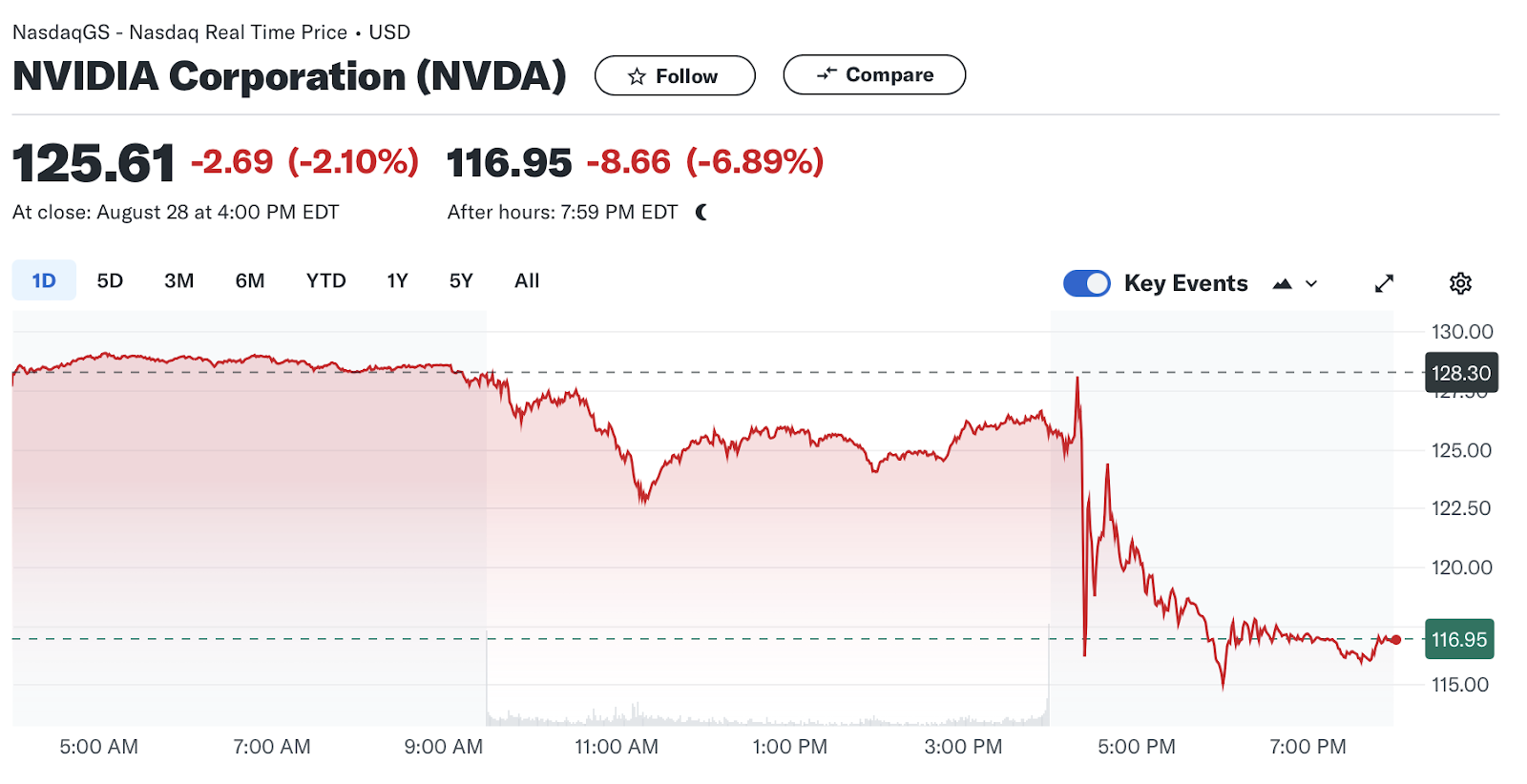
Динамика акций Nvidia после публикации квартального отчета. Данные: Yahoo Finance.

«Лучше, чем ожидалось, не подходит для Nvidia. Очевидно, инвесторы ждут, что эта компания превзойдет ожидания», — отметила комментатор рынка Лиза Абрамович.

Выручка производителя чипов увеличилась на 122% во втором квартале в годовом исчислении. Ранее фиксировался рост более чем на 200% в течение трех аналогичных периодов подряд.

Компания планирует получить доход в размере $32,5 млрд в текущем квартале по сравнению с $31,7 млрд, ожидаемых аналитиками. Это будет на 80% выше цифр прошлого года.
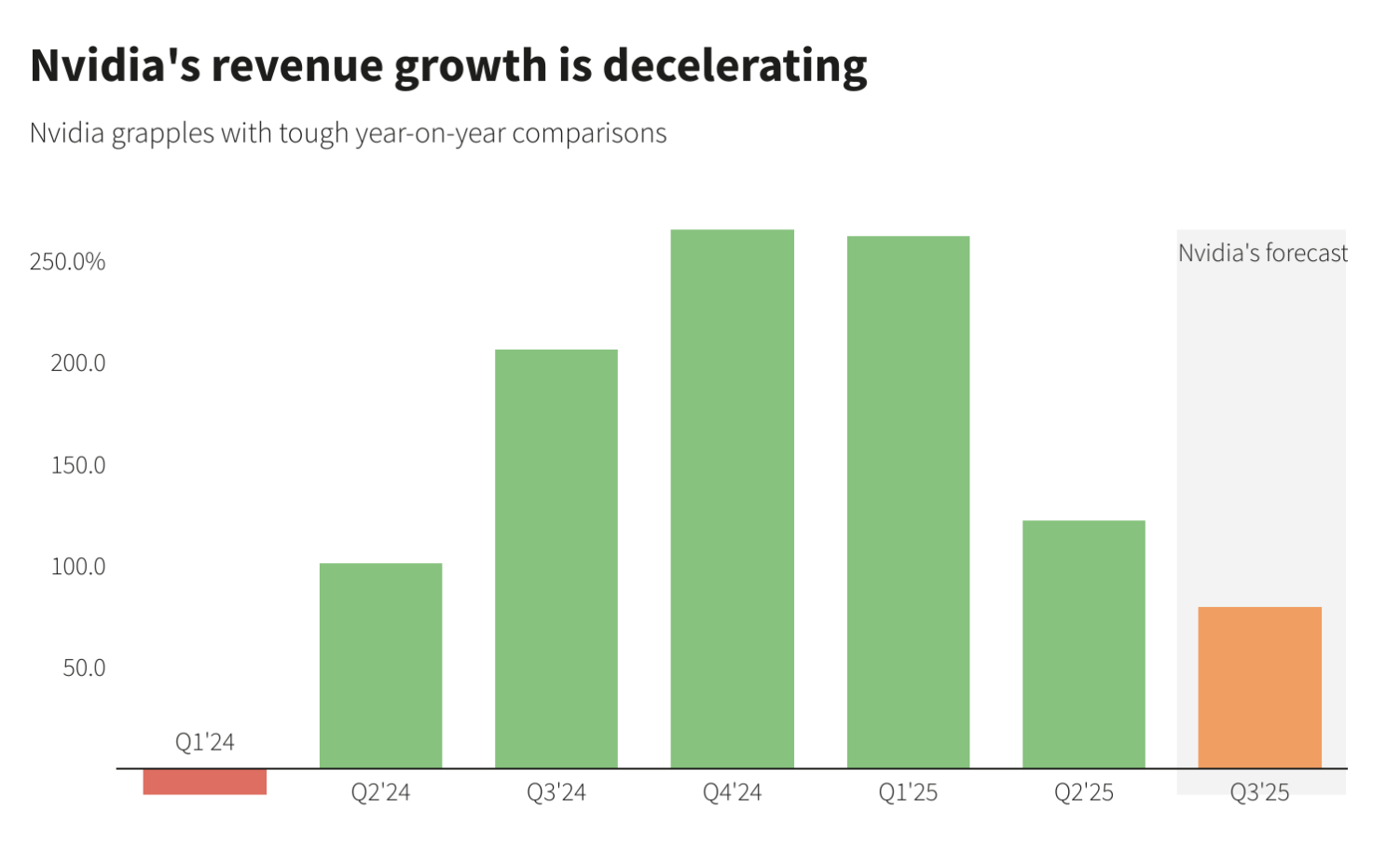
Динамика роста выручки Nvidia в процентах. Данные: Reuters.

Чистая прибыль возросла до $16,6 млрд с $6,18 млрд годом ранее — рост составил 168%.

Nvidia стала основным бенефициаром бума искусственного интеллекта из-за высокого спроса на ее микросхемы, которые используются для обучения и поддержки нейросетей. В июне компания впервые стала крупнейшей в мире с капитализацией $3,34 трлн. Сейчас она уступает Apple.

Наиболее востребованными являются чипы H100 и H200. Так, в июле Маск рассказал о скором запуске системы обучения ИИ с 100 000 процессорами H100 от Nvidia. Компания уже готовит к выпуску новое поколение микросхем Blackwell.

«В четвертом квартале мы ожидаем получить выручку от Blackwell в размере нескольких миллиардов долларов», — заявила финансовый директор фирмы Колетт Кресс.

Совет директоров компании одобрил выкуп акций на $50 млрд.

Напомним, хедж-фонд Elliott Management заявил, что Nvidia находится «в пузыре», а технология ИИ, определяющая цену акций компании, «переоценена».


Related Reads

Aave V4 to Move Wall Street Securities Financing On-Chain: Composability Layer Transforms from Risk Point to Backbone

Aave V4 aims to bring Wall Street securities financing on-chain, targeting the massive traditional markets for repo, securities lending, and margin financing. It proposes three core products: securities-backed loans, atomic repo settlements, and securities lending. This shifts the narrative from "RWA as collateral" to building foundational "on-chain securities finance infrastructure." The key innovation lies in its third-layer approach: composability. V4 doesn't alter underlying asset credit but systematically connects all on-chain assets to leverage and liquidation mechanisms, making composability the system's backbone instead of just a risk point. Aave's dominant market share and its relatively prudent engineering for its Horizon institutional RWA lending market support this ambition. However, a critical design choice introduces a new risk dimension. The "centralized liquidity Hub + multiple Spoke" architecture and Horizon's shared liquidity pools prioritize capital efficiency by allowing new assets instant access to deep liquidity. The trade-off is the loss of risk isolation: a problem with one collateral type in a stress period can draw from the same stablecoin pool backing all others, spreading risk across the entire market. This risk is not theoretical, as demonstrated by a 2026 incident where compromised collateral from a bridge attack created bad debt on Aave. As the system scales—with Horizon targeting over $1B—it remains untested in a genuine credit or liquidity crisis. The first significant bad debt or forced liquidation in RWA markets will likely be triggered by a price/net asset value dislocation of a tokenized asset during stress, not by an underlying default. The implications are clear: institutions providing collateral must account for potential NAV-price gaps; liquidity providers must understand they are exposed to all collateral in a shared pool; and protocols must explicitly choose between risk isolation and capital efficiency. The market still focuses primarily on credit risk, while tokenization continues to concentrate new risks in the liquidity and composability layers.

marsbit4m ago

Aave V4 to Move Wall Street Securities Financing On-Chain: Composability Layer Transforms from Risk Point to Backbone

marsbit4m ago

Ethereum Forms Three Major Power Centers, Commercial Lifeline Held in the Hands of Major ETH Holders

Ethereon has established a new tripartite power structure to separate its core protocol development from commercialization efforts. The Ethereum Foundation, having lost several executives, now focuses solely on maintaining protocol principles like neutrality and censorship resistance. To handle business outreach and technical advancement, two new independent entities have been formed: Ethereum Institutional, which is dedicated to promoting Ethereum's tokenization and stablecoin use to major banks and asset managers, and Ethlabs, a research group focused on improving on-chain settlement and strengthening ETH's monetary narrative. Both organizations are funded by major ETH holders Bitmine and Sharplink, who collectively control over 5.4% of ETH's circulating supply. This structure aims to resolve the conflict between the Foundation's neutral stance and the need for aggressive commercialization. The success of this model is tied directly to ETH's price performance. Bullish prospects rely on Ethereum's dominant position in stablecoins, DeFi, and tokenized assets, with potential growth fueled by institutional adoption facilitated by the new entities. Bearish risks highlight ETH's price volatility and the dependency of the new organizations on their funders' financial health, which is itself linked to ETH's value. The future trajectory of this institutional framework will be largely determined by which of these market trends prevails.

Foresight News5m ago

Ethereum Forms Three Major Power Centers, Commercial Lifeline Held in the Hands of Major ETH Holders

Foresight News5m ago

Trading

Spot
活动图片