Web3 游戏周报(8.04 - 8.10)

币界网Pubblicato 2024-08-12Pubblicato ultima volta 2024-08-12

币界网报道:

区块链游戏热度不减,你是否掌握了上周的重要动态?

回顾上周区块链游戏动态,查看 Footprint Analytics 与 ABGA 的最新数据报告。

【8.04 - 8.10】Web3 游戏行业动态:

  • 链游基础设施提供商 Cartridge 完成 750 万美元 A 轮融资.

  • 游戏区块链 Ronin 的跨链桥遭遇黑客攻击,涉及金额近千万美金,为白帽黑客所为,随后经过沟通,相关资金已归还。

  • Hamster Kombat 正在构建一个结合 Web2 和 Web3 的游戏平台,将增加新游戏以扩展生态系统。

  • Arbitrum 基金会和 Sequence 正在与 Ubisoft Labs(育碧)合作开发 Web3 游戏《Captain Laserhawk:the G.A.M.E》。

【8.04 - 8.10】Web3 游戏排行榜:

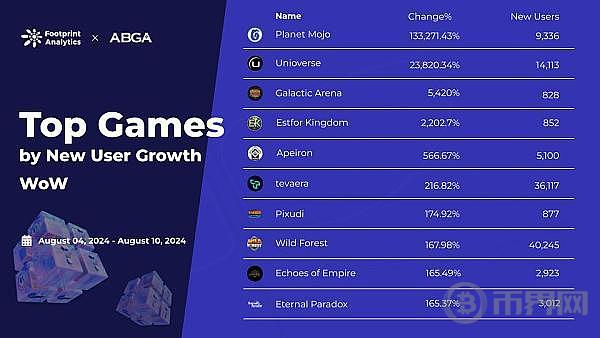
新玩家增长周榜 Top 10

  1. Planet Mojo

  2. Unioverse

  3. Galactic Arena

  4. Estfor Kingdom

  5. Apeiron

  6. tevaera

  7. Pixudi

  8. Wild Forest

  9. Echoes of Empire

  10. Eternal Paradox

01hOTXTciSbMqDehXOKEyfB1FjmHg9bnyEOezNya.jpeg

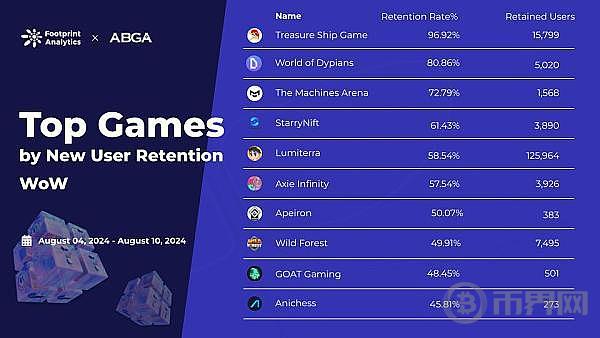
新玩家留存率周榜 Top 10

  1. Treasure Ship Game

  2. World of Dypians

  3. The Machines Arena

  4. StarryNift

  5. Lumiterra

  6. Axie Infinity

  7. Apeiron

  8. Wild Forest

  9. GOAT Gaming

  10. Anichess

kbHH2SVeLiIhRHWz4j8yska9AeLYHYloaoAIuflX.jpeg

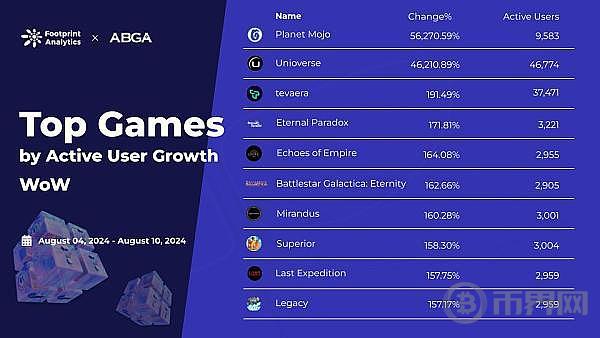
活跃玩家增长周榜 Top 10

  1. Planet Mojo

  2. Unioverse

  3. tevaera

  4. Eternal Paradox

  5. Echoes of Empire

  6. Battlestar Galactica: Eternity

  7. Mirandus

  8. Superior

  9. Last Expedition

  10. Legacy

mjC9S2386DuOY5L9BOFDnbqganCThB0eQ4BiGUh0.jpeg

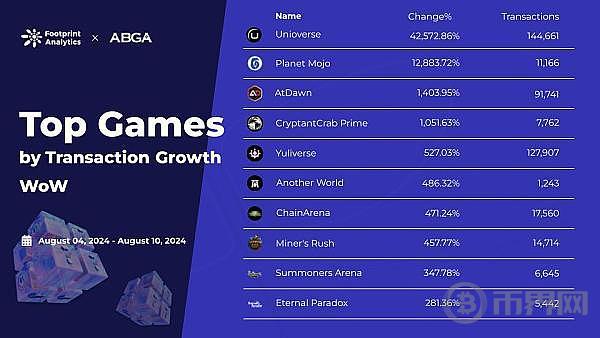
交易笔数增长周榜 Top 10

  1. Unioverse

  2. Planet Mojo

  3. AtDawn

  4. CryptantCrab Prime

  5. Yuliverse

  6. Another World

  7. ChainArena

  8. Miner's Rush

  9. Summoners Arena

  10. Eternal Paradox

X5agrUsJa0Wwep7acdaY39HfoVHzc3HpGC90ofxI.jpeg

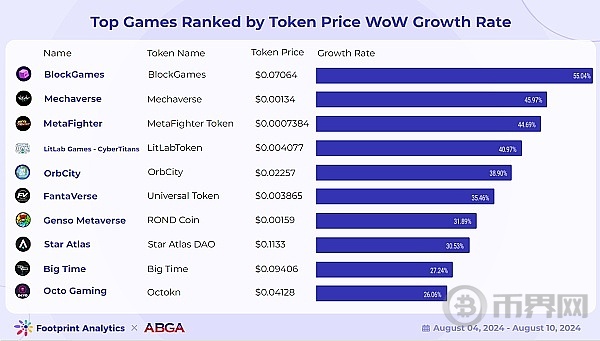
代币增长周榜 Top 10

  1. BlockGames

  2. Mechaverse

  3. MetaFighter

  4. LitLab Games - CyberTitans

  5. OrbCity

  6. FantaVerse

  7. Genso Metaverse

  8. Star Atlas

  9. Big Time

  10. Octo Gaming

P6ojUGqXGh05IWLoTjPtLA1vPlFdw7Z8FbxiaVlS.png

更多 Web 3 游戏数据:

浏览区块链游戏周报专属 Dashboard,获得更多区块链游戏数据。

____________________

本文内容仅作行业研究和交流使用,不构成任何投资建议。市场有风险,投资需谨慎。

Footprint Analytics 是一家区块链数据解决方案提供商。借助尖端的人工智能技术,Footprint Analytics 提供 Crypto 领域首家支持无代码数据分析平台以及统一的数据 API,让用户可以快速检索超过 30 条公链生态的 NFT、Game 以及钱包地址资金流追踪数据。

Letture associate

Summary of Kevin Warsh's Past Remarks: How Will This Prospective 'New Head' Upend the Fed?

Kevin Warsh, nominated by President Trump to replace Fed Chair Powell, is poised to introduce sweeping reforms at the Federal Reserve. His agenda includes structural changes, advocating for lower policy rates, a fundamentally new approach to inflation, a significantly smaller balance sheet, safeguarding Fed independence, narrowing the Fed’s mandate, improving coordination with the Treasury, and reducing communication “noise” from policymakers. Warsh has criticized current monetary policy as “broken” and called for “fundamental regime change,” arguing that continuity is meaningless when the Fed has lost credibility. He believes interest rates should be lower and that a smaller balance sheet would help achieve that, describing the current one as “multiple trillions of dollars larger than necessary.” On inflation, he attributes its rise to cognitive errors at the Fed—including overreliance on flawed models, neglect of money supply, and blaming external factors rather than excessive government spending. He also suggests AI could lead to a structural decline in prices. He strongly defends Fed independence as its “most important asset” and warns against mission creep, which he says risks its core objectives and increases political vulnerability. He proposes closer coordination with the Treasury to align balance sheet and debt issuance plans, clarifying expectations for markets. Regarding communication, Warsh supports transparency but criticizes the current “cacophony of voices” and “forward guidance” that creates ambiguity. He has urged Fed officials to speak less frequently to avoid market confusion.

marsbit17 min fa

Summary of Kevin Warsh's Past Remarks: How Will This Prospective 'New Head' Upend the Fed?

marsbit17 min fa

Arbitrum Pretends to Be the Hacker, 'Steals' Back the Money Lost by KelpDAO

Title: Arbitrum Poses as Hacker to Recover Stolen Funds from KelpDAO Last week, KelpDAO suffered a hack resulting in nearly $300 million in losses, marking the largest DeFi security incident this year. Approximately 30,765 ETH (worth over $70 million) remained on an Arbitrum address controlled by the attacker. In an unprecedented move, Arbitrum’s Security Council utilized its emergency authority to upgrade the Inbox bridge contract, adding a function that allowed them to impersonate the hacker’s address and initiate a transfer without access to its private key. The council’s action, approved by 9 of its 12 members, moved the stolen ETH to a frozen address in a single transaction before reverting the contract to its original state. The operation was coordinated with law enforcement, which attributed the attack to North Korea’s Lazarus Group. Community reactions are divided: some praise the recovery of funds, while others question the centralization of power, as the council can upgrade core contracts without governance votes. However, such emergency mechanisms are common among major L2s. Despite the partial recovery, over $292 million was stolen in total, with more than $100 million in bad debt on Aave and remaining funds scattered across other chains. The incident highlights escalating security challenges in DeFi, with state-sponsored hackers employing advanced tactics and L2s responding with elevated countermeasures.

marsbit27 min fa

Arbitrum Pretends to Be the Hacker, 'Steals' Back the Money Lost by KelpDAO

marsbit27 min fa

iQiyi Is Too Impatient

The article "iQiyi Is Too Impatient" discusses the controversy surrounding the Chinese streaming platform IQiyi's recent announcement of an "AI Actor Library" during its 2026 World Conference. IQiyi claimed over 100 actors, including well-known names like Zhang Ruoyun and Yu Hewei, had joined the initiative. CEO Gong Yu suggested AI could enable actors to "star in 14 dramas a year instead of 4" and that "live-action filming might become a world cultural heritage." The announcement quickly sparked backlash. Multiple actors named in the list issued urgent statements denying they had signed any AI-related authorization agreements. This forced IQiyi to clarify that inclusion in the library only indicated a willingness to *consider* AI projects, with separate negotiations required for any specific role. The incident, which trended on social media with hashtags like "IQiyi is crazy," is presented as a sign of the company's growing desperation. Facing intense competition from short-video platforms like Douyin and Kuaishou, as well as Bilibili and Xiaohongshu, IQiyi's financial performance has weakened, with revenues declining for two consecutive years. The author argues that IQiyi is "too impatient" to tell a compelling AI story to reassure the market, especially as it pursues a listing on the Hong Kong stock exchange. The piece concludes by outlining three key "AI questions" IQiyi must answer: defining its role as a tool provider versus a content creator, balancing the "coldness" of AI with the human element audiences desire, and properly managing the interests of platforms, actors, and viewers. The core dilemma is that while AI can reduce costs and increase efficiency, it risks creating homogenized, formulaic content and devaluing human performers.

marsbit1 h fa

iQiyi Is Too Impatient

marsbit1 h fa

Trading

Spot
Futures
活动图片