NFT真的彻底凉凉?盘点近期值得关注的7个NFT项目

币界网Published on 2024-07-26Last updated on 2024-07-26

币界网报道:

撰文:Cookie

Ephemera

NFT真的彻底凉凉?盘点近期值得关注的7个NFT项目

Erin Redwing(@realizingerin),比特币播客「Hell Money」的主持人,该播客的另一名主持人正是 Ordinals 协议创始人 Casey Rodarmor,所以 Erin 也被开玩笑地称为「Ordinals Mommy」。

Ephemera 正是 Erin Redwing 的新系列。从艺术的图像呈现上看,这是一个动态的、可交互的 3D 时间记录仪器。Ephemera 以一个全新的角度来看待比特币——去中心化的时钟。将这个世代的新货币作为记时方式(比特币的区块链所记录的完整日志,想象一下几千几万年之后到访地球的外星文明挖掘出了一个比特币全节点?)与中心化的公历计时方式脱钩,结合自然界的去中心化计时方式——天文计时。

在 Ephemera 计时仪器的屏幕上将根据其所刻录的聪的开采日期显示对应的行星星历表数据、日相和月相。每次比特币区块难度调整开始时(大约两周一次)都会有 16 个显示不同日期的 Ephemera 可供竞标,出价人可以选择自己喜欢的日期进行竞标,最后在该次比特币区块难度调整结束时获得最高出价的 16 个日期对应的 Ephemera 仪器将发送给竞标成功者。

我们无法想象我们将如何崛起、衰落甚至消亡,但我们相信比特币的永恒,并希望能够借此为我们的曾经存在留下一丝线索。

Airhead

NFT真的彻底凉凉?盘点近期值得关注的7个NFT项目

BitMEX 联合创始人,同时也是 Crypto 圈大 V 之一的 Arthur Hayes 直接发推文宣传了该项目 (@AirheadFun)。

NFT真的彻底凉凉?盘点近期值得关注的7个NFT项目

那么为什么呢?因为这个项目的背后还有比特币钱包 Oyl Wallet,而 Arthur Hayes 也投资了 Oyl Wallet。

该项目是一个总供应量为 10000 的 3D PFP 系列,官推的运营风格也是走的容易引发圈内 degen 讨论和喜爱的神经质风格。从其中一条推文来看,这很大概率不会是一个 Free Mint 系列。所以,尽管来头挺大的,但是依然要观察最终的铸造定价是否合理。

honzomomo

NFT真的彻底凉凉?盘点近期值得关注的7个NFT项目

尽管 UniSat 的比特币原生扩容方案 Fractal 大概要到 9 月份才能正式上线,但测试网在声称没有测试奖励的情况下已经吸引了非常多中外用户的参与。

honzomomo(@honzomomo) 作为第一个 Fractal 上的 NFT 系列将于 9 月推出,目前其官推已经开始运营。考虑到 Fractal 的热度,我们应该对该项目保持关注。

Terpolly

NFT真的彻底凉凉?盘点近期值得关注的7个NFT项目

TerpLayer 是一个比特币基建类型的项目,做的东西比较杂,稳定币、预言机、跨链都有。

Terpolly(@TerpollyBTC) 是该项目自己推出的一个 NFT 系列,总供应量为 3333。和我们之前介绍过的 Scribbles by 0xVM 相比,这个的赋能目前完全没透露,暂时先归类为 PFP 比较合适。但若是之后有代币空投相关的赋能,也可以算是意料之中,因为其官推的简介上写着「有赋能的鸟」。

OctoGlyphs

NFT真的彻底凉凉?盘点近期值得关注的7个NFT项目

这些可爱的像素章鱼 (@OctoGlyphs) 不但都刻在 Block 9 聪上,而且是「符文铭文」。他们在 400 个区块上以平均每个区块蚀刻 25 个符文的速度总计蚀刻了 10000 个符文,这些符文包含了可爱的像素章鱼图像,还拥有相同的单一父铭文使整个系列保持指向的对齐和整洁。

在未来,每个 OctoGlyphs 的持有者还可以领取 88888 个他们发行的符文代币。

尽管在艺术风格上很容易让人联想到节点猴,并且在符文上线之后不久也出现过玩家们自发把一张图片占一个符文 ticker 然后打成一个图片系列的玩法,但是 OctoGlyphs 目前做的整体叙事是最完整的,一个合理的定价能够让这个项目有机会取得较好的表现。

Inscribed Fakes

NFT真的彻底凉凉?盘点近期值得关注的7个NFT项目

Ordinals Pepe 主题 PFP 项目 Inscribed Pepes 与 Fake Rares 联合推出的艺术作品集,有 20 多位艺术家参与了该作品集的创作。有传言称 Jack Butcher 和「BOME 之父」@Darkfarms1也会加入,考虑到 Fake Rares 创始人@ScrillaVentura也是一位 OG 级别的 Rare Pepe 创作者,如果这个传言最后确定是真的,我也不会太过于惊讶。

该系列 (@inscribedfakes) 目前还没有确切的铸造日期,但是从上面的图中我们可以看到,他们提到了将在纳什维尔举行的 Ordinals 活动(和川普出席的那个不是一场,是 Ordinals 圈子自己组织的活动),更多的细节想必将在那时披露。

Moon Zero

NFT真的彻底凉凉?盘点近期值得关注的7个NFT项目

乍一看是一个日漫风格的 PFP 项目 (@MoonZeroHQ),但实质上其声称要构建一个 Web3 IP、动漫及游戏的加速器。以之前的经验来看,其赋能会偏向那种为持有者提供合作项目白单的大社区生态。

背后是 The Parallax,一家由 Patrick Dang 创立的 Web3 媒体公司。Patrick Dang 在甲骨文公司开启了自己的销售生涯,并且在之后变成了教别人如何销售的老师,培训超 50000 名学生。

如他所说,很多 Web3 项目在如何把自己更好地推销出去这一点上是迷茫的。鉴于他是一个成功的销售,我把该项目列了进来。哥们,你能不能用一个合理的价格和 Luca Netz 过过招?

Trending Cryptos

Related Reads

Glue Finance Founder: ETH Has Entered a Phase of Non-Consensus, an Inflection Point Is Approaching

Glue Finance founder argues that Ethereum's current price underperformance, despite high on-chain activity, stems from its incomplete state and lingering dependency on central stewards like the Ethereum Foundation. The core thesis is that the market is discounting ETH not for lack of use, but because the protocol remains a "machine under construction." Key unresolved issues include centralized L2 sequencers with limited escape hatches, state bloat, vulnerable public mempools, and the looming quantum computing threat. This perpetual "work-in-progress" status forces reliance on a small group of maintainers, undermining the network's promise of credible neutrality and immutability. The author, a self-described Ethereum maximalist, rejects two flawed paths: a "wartime mode" of centralizing for speed (surrendering Ethereum's unique value) or merely replacing the Foundation with another governing entity. The only solution is to complete and then "freeze" the protocol's neutral core through a focused "Manhattan Project" dubbed "Lean Ethereum." This project aims to bundle critical upgrades—consensus layer overhaul, massive scaling via ZK-proofs, quantum resistance, and statelessness—into a decisive push to finalize the base layer. Once the core rules are cryptographically solidified and beyond anyone's control (passing the "walk-away test"), Ethereum would shed its dependency discount and earn a "rigidity premium" for its credible neutrality and programmability, potentially surpassing Bitcoin's valuation. The race is between completing this hardening and the risks of protocol capture or stagnation.

链捕手1m ago

Glue Finance Founder: ETH Has Entered a Phase of Non-Consensus, an Inflection Point Is Approaching

链捕手1m ago

Hackers Steal Nearly $17 Million in 40 Days as 'Zombie Contracts' Become Their ATMs

According to an analysis published by ZeroDrift on June 22, 2026, attackers have stolen approximately $16.9 million over 40 days from five deprecated but still operational smart contracts across various blockchains. The primary issue is not a specific vulnerability but the incomplete decommissioning of legacy contracts. These "zombie contracts" often retain economic value, operational permissions, and callable functions, making them prime targets long after teams cease active development. The most significant loss occurred at DxSale, where an old locker contract lost about $7.3 million due to a forgotten control path becoming accessible again. Other affected projects include TrustedVolumes (~$5.87M), Raydium's legacy AMM pool (~$1.34M), Aztec Connect (~$2.28M), and Huma Finance V1 pool (~$101k). These incidents involved diverse systems—RFQ settlement, credit pools, liquidity lockers, AMMs—demonstrating the widespread nature of the risk. The analysis highlights that automated tools are lowering the cost for attackers to systematically scan for these long-tail targets, which have public code and weaker monitoring. In contrast, defensive practices for contract retirement remain underdeveloped. While the DeFi industry has mature audit processes for new deployments, it lacks strict protocols for securely sunsetting old contracts, which only become truly "retired" after all funds, permissions, authorizations, and trust assumptions are removed.

marsbit58m ago

Hackers Steal Nearly $17 Million in 40 Days as 'Zombie Contracts' Become Their ATMs

marsbit58m ago

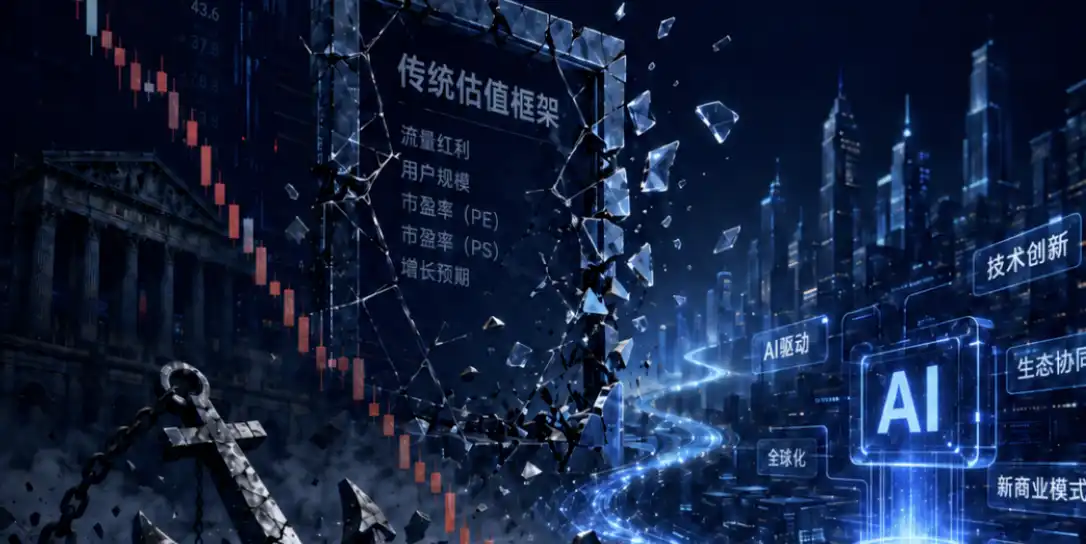
Valuation Rout of Old Titans: The Demise of a Generation's Asset Valuation Framework

"The Old Titans' Valuation Collapse: The Death of an Era's Valuation Framework" Between Alibaba's 2014 NYSE debut at $93.89 and its 2026 price of ~$95, twelve years have passed with zero price appreciation. This stagnation symbolizes a wholesale valuation reset for an entire generation of Chinese internet assets. Companies like Tencent, Pinduoduo, Meituan, Bilibili, and Kuaishou have seen catastrophic declines of 80-98% from their peaks. The core question arises: what framework now prices these companies, or has the framework itself expired? The valuation logic for Chinese internet stocks followed a clear "anchor-setting and anchor-removing" process. From 2014-2017, the dominant narrative was "US comparable discounting" – applying a growth premium and governance discount to US peers' multiples. This anchor loosened with the 2018 US-China trade war and the VIE structure risk, then was violently uprooted by the 2020-2021 regulatory crackdowns (Ant Group, Didi, anti-monopoly fines). The 2022 delisting panic and subsequent 2025-2026 geopolitical shocks (US military lists, AI espionage accusations) completed the demolition. The old "US对标打折" model is dead. However, this is not solely a China story. A structural mirror exists in US "old titan" stocks ("老登股"). In 2026, even Microsoft – with robust fundamentals – saw its PE compress from a 34x median to 22x, its worst performer status among the "Magnificent Seven" driven by a $190 billion annual AI capex crushing free cash flow. The core dilemma is universal: legacy platform giants, whether Alibaba or Microsoft, are spending colossal sums to chase an AI paradigm that may颠覆 their own high-margin, user/subscription-based business models. They have shifted from "companies defining the future" to "companies needing to prove they won't be淘汰ed by the future." This phenomenon of a dying valuation坐标系 has a historical precedent: post-1989 Japan. After its bubble burst, the "Japan premium" narrative ("most efficient manufacturing + perpetual growth") collapsed. A 25-year valuation vacuum ensued until Warren Buffett provided a new language in the 2010s: "low valuation + high dividend + governance reform." China's internet sector is now in a similar vacuum six years into its reset. While different from Japan's deflationary context, the parallel is clear: the old macro assumption of "deep integration with global capital" is falsified, but a new pricing framework is absent. Potential "new languages" for Chinese internet valuations are contradictory. AI transformation requires gutting profitable core businesses (e.g., Alibaba's ad-driven e-commerce) for an unproven consumption-based model, risking a Microsoft-like cash flow crunch. Alternatively, shareholder returns (buybacks/dividends) could build a floor, following Buffett's Japanese playbook, but current scales are insufficient to form a standalone anchor. The current state mirrors mid-1990s Japan: the old framework is dead, the new one unborn. The market waits in a vacuum for a重新定义ing force – a person, event, or proven business model shift – to answer "why buy." This may only be the middle phase of a prolonged re-rating.

marsbit1h ago

Valuation Rout of Old Titans: The Demise of a Generation's Asset Valuation Framework

marsbit1h ago

STRC Trading at Significant Discount, mNAV Falls Below Break-Even, Strategy's Valuation Logic Has Been Rewritten

Title: STRC Deeply Discounted, mNAV Falls Below Break-even, Strategy's Valuation Logic Redefined The recent volatility in MSTR and STRC highlights the need to reassess the core business model of Bitcoin reserve companies. These entities function more like leveraged, single-asset banks rather than software/tech firms. Consequently, they should be valued using banking metrics, not based on their total Bitcoin holdings. The key valuation metric is mNAV (market net asset value), akin to a price-to-book ratio. It compares the company's market capitalization to the equity value of its Bitcoin holdings after deducting all senior debt and preferred equity (like STRC). As of June 24, Strategy's mNAV was 1.10x. The focus should be on "net Bitcoin per share" (the Bitcoin claim per share after senior claims) and its growth rate, equivalent to a bank's book value and return on assets. Given STRC's 19% discount to its $100 par value (yielding 14.2%), issuing new MSTR equity at the current price to buy more Bitcoin is inefficient. It slightly dilutes the widely watched "total Bitcoin per share" metric while providing minimal improvement to the more critical "net Bitcoin per share." The article analyzes four potential uses for $1 billion in new equity: 1. **Buy Bitcoin:** Least effective. Improves net Bitcoin per share only marginally while diluting total Bitcoin per share. 2. **Repurchase STRC:** Most effective for balance sheet repair. The discount creates immediate value, increasing net Bitcoin per share by 1.0%, reducing debt burden, and lowering future dividend obligations. 3. **Boost Cash Reserves:** Dramatically improves the "cash coverage ratio" for STRC dividends from 9.8 months to 16.8 months, a crucial liquidity metric in a tightening funding environment. 4. **50/50 Split (STRC buyback & cash):** A balanced approach improving all key metrics. Strategy's own Q1 report indicates its internal break-even mNAV for profitable equity issuance to buy Bitcoin is 1.22x. With the current mNAV at 1.10x, such a move would be value-destructive. The core assumptions of its previous expansion model—issuing STRC at par and maintaining ample dividend coverage—have broken down. The recommended path is to use new capital to optimize core financial health: repurchasing discounted STRC and/or bolstering cash reserves. This would repair the balance sheet, signal liquidity strength, support STRC's price, lower its yield, and potentially reopen the par-value issuance channel. The current STRC discount represents a low-cost capital opportunity to restart this positive cycle. Bitcoin reserve companies must be evaluated as banks, focusing on book value, leverage, and liquidity resilience.

Foresight News1h ago

STRC Trading at Significant Discount, mNAV Falls Below Break-Even, Strategy's Valuation Logic Has Been Rewritten

Foresight News1h ago

Trading

Spot

Hot Articles

How to Buy NFT

Welcome to HTX.com! We've made purchasing AINFT (NFT) simple and convenient. Follow our step-by-step guide to embark on your crypto journey.Step 1: Create Your HTX AccountUse your email or phone number to sign up for a free account on HTX. Experience a hassle-free registration journey and unlock all features.Get My AccountStep 2: Go to Buy Crypto and Choose Your Payment MethodCredit/Debit Card: Use your Visa or Mastercard to buy AINFT (NFT) instantly.Balance: Use funds from your HTX account balance to trade seamlessly.Third Parties: We've added popular payment methods such as Google Pay and Apple Pay to enhance convenience.P2P: Trade directly with other users on HTX.Over-the-Counter (OTC): We offer tailor-made services and competitive exchange rates for traders.Step 3: Store Your AINFT (NFT)After purchasing your AINFT (NFT), store it in your HTX account. Alternatively, you can send it elsewhere via blockchain transfer or use it to trade other cryptocurrencies.Step 4: Trade AINFT (NFT)Easily trade AINFT (NFT) on HTX's spot market. Simply access your account, select your trading pair, execute your trades, and monitor in real-time. We offer a user-friendly experience for both beginners and seasoned traders.

7.2k Total ViewsPublished 2024.03.29Updated 2026.06.02

How to Buy NFT

What is Altura NFT?

Altura: Providing One-Stop NFT Solutions for Game Developers

56.0k Total ViewsPublished 2024.06.12Updated 2024.06.12

What is Altura NFT?

What is AINFT

EternaFi Agents and $AINFT: A Comprehensive Analysis of AI-Powered NFT Infrastructure in the Web3 Ecosystem The intersection of artificial intelligence (AI) and blockchain technology is rapidly evolving, establishing innovative platforms that redefine ownership models and economic participation. EternaFi Agents, along with its native token $AINFT, exemplifies a groundbreaking approach to the tokenization of AI infrastructures through the means of non-fungible tokens (NFTs). Launched in July 2025 by the development team at Nova Club, EternaFi merges the advancements of AI with the decentralized financial mechanisms of blockchain, presenting a unique investment opportunity for participants within the web3 ecosystem. This article aims to provide an in-depth assessment of EternaFi Agents, covering its core components, functionality, and significance within the crypto landscape. Introduction and Project Overview EternaFi Agents stands as a salient example of how blockchain technology can democratize access to advanced AI capabilities. The project endeavors to reshape the paradigm of AI ownership by diversifying economic participation, making sophisticated AI systems accessible to a larger pool of stakeholders. At its core, the project tokenizes a proprietary large language model (LLM) developed by Nova Club, allowing NFT holders to gain fractional exposure to the model's economic performance. By utilizing NFTs representing stakes in the LLM, EternaFi Agents fosters a model wherein stakeholders not only participate in AI service consumption but also enjoy sharing in the economic rewards generated by the platform. This transformative approach enables the development of sustainable revenue models for AI services, all the while promoting broad community engagement and facilitating transparent governance. What is EternaFi Agents? EternaFi Agents represents an AI-NFT infrastructure project that aims to blend the capabilities of AI with blockchain technology in a coherent ecosystem. The essential feature of this project is the creation of NFTs that serve as financial instruments, representing fractions of ownership in Nova Club's proprietary AI infrastructure. Each NFT symbolizes direct exposure to the economic performance of the underlying AI system, providing a lucrative opportunity for investors. The project operates on the Base blockchain, known for its scalability and efficiency, thus ensuring manageable transaction costs while facilitating a seamless operational experience. One of the notable features includes a revenue-sharing mechanism, wherein NFT holders can receive portions of subscription income generated by the AI services provided on the platform. This innovative approach establishes a connection between the success of the AI services and the economic dividends distributed among the holders, thus ensuring an alignment of interests across the community. Who is the Creator of EternaFi Agents? The creative force behind EternaFi Agents is Nova Club, a development team based in Singapore proficient in the amalgamation of AI and blockchain technology. Their prior experience in AI development and cryptocurrency analysis gives credence to the project, contributing a breadth of expertise to the creation of EternaFi Agents. Nova Club’s mission centers on democratizing access to cutting-edge AI technologies while building sustainable economic models that benefit users alongside developers. Their commitment to transparency, community governance, and innovation is reflected in the design and implementation of the EternaFi platform, aiming to establish a unique ecosystem that fosters positive engagement and long-term value creation. Who are the Investors of EternaFi Agents? The specific details concerning investors or investment organizations backing EternaFi Agents are not publicly available. However, EternaFi has adopted an inclusive approach to funding its development through the sale of NFTs to the public, allowing a wide array of participants to invest in the ecosystem. The project’s architecture ensures that core infrastructure is funded responsibly while allowing community members to partake in the ownership and economic returns generated from the AI services. This model emphasizes community engagement by aligning the interests of investors and project developers, creating a collaborative environment where long-term participation is incentivized. How Does EternaFi Agents Work? EternaFi Agents operates through a multifaceted ecosystem where NFTs serve as a primary means of ownership representation within the project. Each NFT holder is entitled to a share of the monthly subscription income produced by the underlying AI-powered platform, thereby positioning NFT ownership as a lucrative investment vehicle. Revenue Generation Mechanism The primary source of revenue generation for the EternaFi platform stems from subscription fees related to the AI services provided. Users can access various tiered services, ranging from basic market analysis tools to comprehensive AI-assisted trading solutions. These services are monetized and form the basis for the revenue-sharing framework, which distributes profits to NFT holders through automated smart contracts. An innovative feature of the EternaFi ecosystem is the revenue-sharing mechanism that operates transparently, ensuring that rewards are allocated based on verifiable metrics from the AI platform's operations. This creates a direct link between the performance of AI services and the returns available to community investors, establishing a sustainable economic model. Staking and Vesting Mechanisms Participants within EternaFi can engage in staking their NFTs to unlock additional economic benefits. The vesting schedule is designed to promote long-term commitment among participants, rewarding those who exhibit ongoing support for the project. This ensures a robust alignment of interests and fosters a sense of community engagement essential for achieving the project's long-term goals. Transparent Governance EternaFi Agents embraces decentralized governance, allowing NFT holders to play an active role in decision-making regarding the platform's development and future directions. The governing structure includes community voting mechanisms, providing NFT holders with the opportunity to influence significant decisions and contributing to a collaborative approach to project growth. Timeline of EternaFi Agents The development trajectory of EternaFi Agents showcases a systematic approach toward building a sustainable AI infrastructure while meeting the needs of community participants. Below is a timeline of important milestones in the project’s history: July 2025: Launch of EternaFi Agents, including the public sale of NFTs and deployment of the $AINFT token on the Base blockchain. Q4 2025: Establishment of market infrastructure including liquidity pools and launch of staking dashboards for NFT holders. 2026: Initiation of community engagement programs, expanding AI capabilities, and integration with cross-chain technologies. Q4 2026: Implementation of the dividend distribution system, allowing NFT holders to reap economic benefits from their investments. These milestones signify the focus on establishing a functional and participative ecosystem while ensuring continuous evolution to meet market demands. Technological Infrastructure and Blockchain Integration EternaFi Agents is anchored in an advanced technological framework combining AI systems with blockchain capabilities. Operating on the Base blockchain, the project leverages the advantages of scalability and low transaction costs. The underlying smart contract architecture governs the NFT ownership, revenue sharing, and community management features, ensuring efficiency and transparency. AI System Development The proprietary large language model underpinning EternaFi Agents has been independently developed and designed to cater to revenue-generating applications without reliance on proprietary external frameworks. This endeavor reflects a commitment to creating a versatile and adaptable AI infrastructure capable of delivering meaningful services to users, thus generating economic value for investors. Security Measures The robustness of EternaFi’s security infrastructure is paramount. Regular audits and stringent security measures ensure the integrity of the AI systems and blockchain mechanisms, safeguarding against potential vulnerabilities while fostering confidence among participants. Conclusion EternaFi Agents signifies a landmark innovation within the realm of artificial intelligence and blockchain technology, opening avenues for community ownership and economic participation in advanced AI capabilities. The project’s comprehensive strategy to tokenize AI infrastructure via NFTs establishes a precedent for future decentralized ecosystems. By harmonizing technical sophistication with user-centric economic models, EternaFi not only fosters engagement but also generates a sustainable revenue-sharing framework for community participants. The significance of EternaFi extends well beyond its operational success as it exemplifies how blockchain can democratize cutting-edge AI technologies, paving the way for future ventures in this intersectional space. The evolution of EternaFi Agents may herald a new era of AI development characterized by participant-driven governance, sustainable economic models, and transparent verification, ultimately contributing to the broader democratization of AI and technology accessibility across industries.

4.1k Total ViewsPublished 2025.08.14Updated 2025.08.14

What is AINFT

Discussions

Welcome to the HTX Community. Here, you can stay informed about the latest platform developments and gain access to professional market insights. Users' opinions on the price of NFT (NFT) are presented below.

活动图片