TON生态最新爆款:DOGS上线两日用户超180万,场外积分价格近2美分

Odaily星球日报Published on 2024-07-11Last updated on 2024-07-11

Abstract

DOGS的黑白狗形象通过Telegram的病毒式传播,有望成为TON生态Meme板块龙头。

原创 | Odaily星球日报(@OdailyChina

作者 | Asher(@Asher_ 0210 

TON生态最新爆款:DOGS上线两日用户超180万,场外积分价格近2美分

继 Notcoin 破圈之后,TON 生态持续升温。尽管出现了诸如 Hamster Kombat(仓鼠)和猫猫(Catizen)等多个爆款项目,但由于这些项目尚未明确代币空投的时间,讨论热度逐渐减退。同时,伴随“门头沟”事件和“德国政府”出售比特币的影响,整个加密市场一片死寂。

就在这样的市场环境下,昨日一只黑白狗的 Telegram 邀请链接在社交媒体、各大社区疯狂刷屏,大家纷纷晒自己领到的积分。那么,这只黑白狗项目 DOGS 如何在极短时间内吸粉近 200 万呢?下面,Odaily星球日报带大家了解这款 TON 生态突然爆火、病毒式传播的“零撸”项目 DOGS。

将 Spotty 的传统带入加密世界

DOGS 项目的黑白狗形象灵感来自于 Telegram 的创始人 Pavel Durov。他在一次支持孤儿院的慈善拍卖会上画了这只标志性的狗 Spotty。根据官方 Telegram 信息,DOGS 并非普通的纪念币。它是最具 Telegram 特色的纪念币,体现了充满活力的社区精神和文化。团队将 Spotty 的传统带入加密货币世界,创造出有趣、以社区为导向、独一无二的加密货币。

TON生态最新爆款:DOGS上线两日用户超180万,场外积分价格近2美分

黑白狗形象

Pavel Durov 的推特早在两年前就停更了,从过往发的推文内容来看,Pavel Durov 似乎对“狗”影响有所钟爱。

TON生态最新爆款:DOGS上线两日用户超180万,场外积分价格近2美分

图源:Pavel Durov 早年推文

在蓬勃发展的 TON 生态的推动下,DOGS 项目迎合了当前生态中缺乏代表性 Meme 形象的需求。通过向 Telegram 用户空投代币,仅在短短一天内便吸引了超过 100 万订阅用户,且每天内容阅读量超百万,其增长速度惊人。

TON生态最新爆款:DOGS上线两日用户超180万,场外积分价格近2美分

DOGS 在不足一天的时间获得百万订阅用户

阳光普照、人人有份

DOGS 昨日在各大社交媒体中刷屏的原因是因为其参与并领取代币积分的方式非常简单:用户只需进入 Telegram 中的 DOGS BOT 频道,系统会根据用户的 Telegram 账号注册时间和活跃度进行评级,并据此分发积分。此外,开通了 Telegram Premium 账号的用户还能获得额外的积分奖励。目前仍为领取 DOGS 代币积分的用户可点击此处跳转

TON生态最新爆款:DOGS上线两日用户超180万,场外积分价格近2美分

某开通 Telegram Premium 4 年账号所获代币积分

此外,DOGS 还开启了邀请获取更多代币积分的活动方式,因此各大社交媒体上开始疯狂刷屏……

尽管代币总量、空投比例、积分兑换比例等细节尚未公布,而且所获得的代币积分目前也无法交易。但由于其简单易懂的规则和操作方式,以及“零门槛”特性,DOGS 项目成功吸引了大量用户,其黑白狗的 Meme 形象也迅速传播开来。

热度火爆,场外市场吸引大量用户

尽管当前用户领取的 DOGS 代币积分无法在二级市场直接出售,但由于热度爆棚,场外交易市场上已经出现了不少买家。根据多个场外交易群调研发现,许多散户愿意以每积分 0.016 至 0.02 美元的价格进行交易。
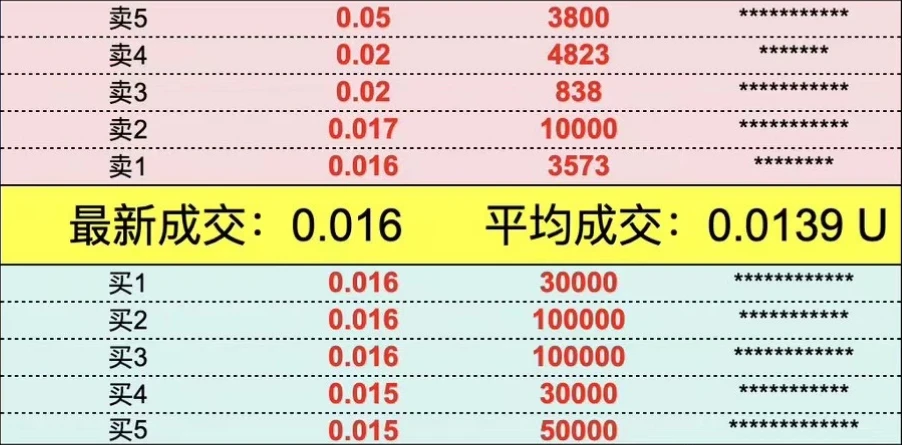
TON生态最新爆款:DOGS上线两日用户超180万,场外积分价格近2美分

某 DOGS 场外交易挂单情况

TON 生态+Meme 赛道为爆火创造有利条件

在本轮牛市中,表现最突出的板块是 Meme 板块,而公链中热度最高的是 TON 公链。DOGS 项目结合了“Meme”和“TON”这两大热门标签,展现出无限潜力。如果“黑白狗”的形象能够得到当前散户的广泛认可,DOGS 或许能继 Notcoin 之后成为下一个破圈项目。

此外,DOGS 项目的成功不仅依赖于其有趣的 Meme 形象和 TON 生态的支持,还得益于其巧妙的用户参与机制。通过简单的操作和诱人的积分奖励制度,DOGS 吸引了大量用户的参与和关注。再加上社交媒体上的病毒式传播,DOGS 项目的热度持续攀升,甚至引发了场外交易的活跃。

随着市场对 Meme 文化的接受度越来越高,以及 TON 公链生态的不断壮大,DOGS 项目有望在未来取得更大的成功。

Related Reads

Hackers Steal Nearly $17 Million in 40 Days as 'Zombie Contracts' Become Their ATMs

According to an analysis published by ZeroDrift on June 22, 2026, attackers have stolen approximately $16.9 million over 40 days from five deprecated but still operational smart contracts across various blockchains. The primary issue is not a specific vulnerability but the incomplete decommissioning of legacy contracts. These "zombie contracts" often retain economic value, operational permissions, and callable functions, making them prime targets long after teams cease active development. The most significant loss occurred at DxSale, where an old locker contract lost about $7.3 million due to a forgotten control path becoming accessible again. Other affected projects include TrustedVolumes (~$5.87M), Raydium's legacy AMM pool (~$1.34M), Aztec Connect (~$2.28M), and Huma Finance V1 pool (~$101k). These incidents involved diverse systems—RFQ settlement, credit pools, liquidity lockers, AMMs—demonstrating the widespread nature of the risk. The analysis highlights that automated tools are lowering the cost for attackers to systematically scan for these long-tail targets, which have public code and weaker monitoring. In contrast, defensive practices for contract retirement remain underdeveloped. While the DeFi industry has mature audit processes for new deployments, it lacks strict protocols for securely sunsetting old contracts, which only become truly "retired" after all funds, permissions, authorizations, and trust assumptions are removed.

marsbit6m ago

Hackers Steal Nearly $17 Million in 40 Days as 'Zombie Contracts' Become Their ATMs

marsbit6m ago

Valuation Rout of Old Titans: The Demise of a Generation's Asset Valuation Framework

"The Old Titans' Valuation Collapse: The Death of an Era's Valuation Framework" Between Alibaba's 2014 NYSE debut at $93.89 and its 2026 price of ~$95, twelve years have passed with zero price appreciation. This stagnation symbolizes a wholesale valuation reset for an entire generation of Chinese internet assets. Companies like Tencent, Pinduoduo, Meituan, Bilibili, and Kuaishou have seen catastrophic declines of 80-98% from their peaks. The core question arises: what framework now prices these companies, or has the framework itself expired? The valuation logic for Chinese internet stocks followed a clear "anchor-setting and anchor-removing" process. From 2014-2017, the dominant narrative was "US comparable discounting" – applying a growth premium and governance discount to US peers' multiples. This anchor loosened with the 2018 US-China trade war and the VIE structure risk, then was violently uprooted by the 2020-2021 regulatory crackdowns (Ant Group, Didi, anti-monopoly fines). The 2022 delisting panic and subsequent 2025-2026 geopolitical shocks (US military lists, AI espionage accusations) completed the demolition. The old "US对标打折" model is dead. However, this is not solely a China story. A structural mirror exists in US "old titan" stocks ("老登股"). In 2026, even Microsoft – with robust fundamentals – saw its PE compress from a 34x median to 22x, its worst performer status among the "Magnificent Seven" driven by a $190 billion annual AI capex crushing free cash flow. The core dilemma is universal: legacy platform giants, whether Alibaba or Microsoft, are spending colossal sums to chase an AI paradigm that may颠覆 their own high-margin, user/subscription-based business models. They have shifted from "companies defining the future" to "companies needing to prove they won't be淘汰ed by the future." This phenomenon of a dying valuation坐标系 has a historical precedent: post-1989 Japan. After its bubble burst, the "Japan premium" narrative ("most efficient manufacturing + perpetual growth") collapsed. A 25-year valuation vacuum ensued until Warren Buffett provided a new language in the 2010s: "low valuation + high dividend + governance reform." China's internet sector is now in a similar vacuum six years into its reset. While different from Japan's deflationary context, the parallel is clear: the old macro assumption of "deep integration with global capital" is falsified, but a new pricing framework is absent. Potential "new languages" for Chinese internet valuations are contradictory. AI transformation requires gutting profitable core businesses (e.g., Alibaba's ad-driven e-commerce) for an unproven consumption-based model, risking a Microsoft-like cash flow crunch. Alternatively, shareholder returns (buybacks/dividends) could build a floor, following Buffett's Japanese playbook, but current scales are insufficient to form a standalone anchor. The current state mirrors mid-1990s Japan: the old framework is dead, the new one unborn. The market waits in a vacuum for a重新定义ing force – a person, event, or proven business model shift – to answer "why buy." This may only be the middle phase of a prolonged re-rating.

marsbit14m ago

Valuation Rout of Old Titans: The Demise of a Generation's Asset Valuation Framework

marsbit14m ago

STRC Trading at Significant Discount, mNAV Falls Below Break-Even, Strategy's Valuation Logic Has Been Rewritten

Title: STRC Deeply Discounted, mNAV Falls Below Break-even, Strategy's Valuation Logic Redefined The recent volatility in MSTR and STRC highlights the need to reassess the core business model of Bitcoin reserve companies. These entities function more like leveraged, single-asset banks rather than software/tech firms. Consequently, they should be valued using banking metrics, not based on their total Bitcoin holdings. The key valuation metric is mNAV (market net asset value), akin to a price-to-book ratio. It compares the company's market capitalization to the equity value of its Bitcoin holdings after deducting all senior debt and preferred equity (like STRC). As of June 24, Strategy's mNAV was 1.10x. The focus should be on "net Bitcoin per share" (the Bitcoin claim per share after senior claims) and its growth rate, equivalent to a bank's book value and return on assets. Given STRC's 19% discount to its $100 par value (yielding 14.2%), issuing new MSTR equity at the current price to buy more Bitcoin is inefficient. It slightly dilutes the widely watched "total Bitcoin per share" metric while providing minimal improvement to the more critical "net Bitcoin per share." The article analyzes four potential uses for $1 billion in new equity: 1. **Buy Bitcoin:** Least effective. Improves net Bitcoin per share only marginally while diluting total Bitcoin per share. 2. **Repurchase STRC:** Most effective for balance sheet repair. The discount creates immediate value, increasing net Bitcoin per share by 1.0%, reducing debt burden, and lowering future dividend obligations. 3. **Boost Cash Reserves:** Dramatically improves the "cash coverage ratio" for STRC dividends from 9.8 months to 16.8 months, a crucial liquidity metric in a tightening funding environment. 4. **50/50 Split (STRC buyback & cash):** A balanced approach improving all key metrics. Strategy's own Q1 report indicates its internal break-even mNAV for profitable equity issuance to buy Bitcoin is 1.22x. With the current mNAV at 1.10x, such a move would be value-destructive. The core assumptions of its previous expansion model—issuing STRC at par and maintaining ample dividend coverage—have broken down. The recommended path is to use new capital to optimize core financial health: repurchasing discounted STRC and/or bolstering cash reserves. This would repair the balance sheet, signal liquidity strength, support STRC's price, lower its yield, and potentially reopen the par-value issuance channel. The current STRC discount represents a low-cost capital opportunity to restart this positive cycle. Bitcoin reserve companies must be evaluated as banks, focusing on book value, leverage, and liquidity resilience.

Foresight News15m ago

STRC Trading at Significant Discount, mNAV Falls Below Break-Even, Strategy's Valuation Logic Has Been Rewritten

Foresight News15m ago

Trading

Spot
活动图片