悦盈:SOL势如破竹继续向上测试高点 BCH筑底完成将迎来爆发关键看500

金色财经Pubblicato 2024-07-08Pubblicato ultima volta 2024-07-08

一个人的自律中,藏着无限的可能性,你自律的程度,决定着你人生的高度。

人生没有近路可走,但你走的每一步,都算数。

越勤奋,越努力;越自律,越优秀。我是周悦盈,专注主流币的走势分析,以自身技术对盘面之见解给出思路。

且看今日分享!!

171603913639139.jpg

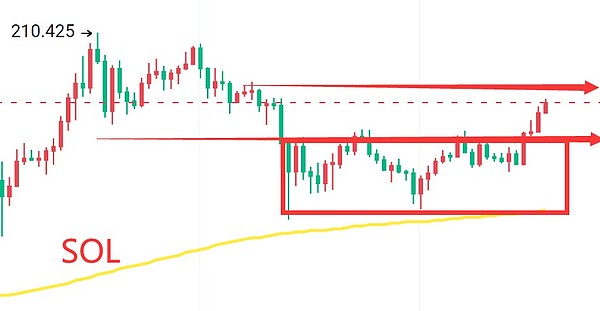
SOL 日线看三连阳突破60日均线,同时也突破了大箱体的上沿,布林带喇叭开口短期均线向上拐头macd快慢线交叉向上突破0轴量柱再次放量运行kdj交叉向上延伸注意100值附近的阻力vr指标在100值附近盘整。4小时看行情在175.9小幅回撤调整,布林带向上运行短期均线多头排列macd快慢线向上运行量柱缩量kdj在80值附近钝化vr指标在180值附近盘整。整体来看还是处于多头区域,突破了之前说过的关键位置159,之前文章说过只要突破159行情会继续向上。目前短期关注第一阻力177,第二阻力189,下方第一支撑168,第二支撑160。短线可以参考这些价格。

171603914314917.jpg

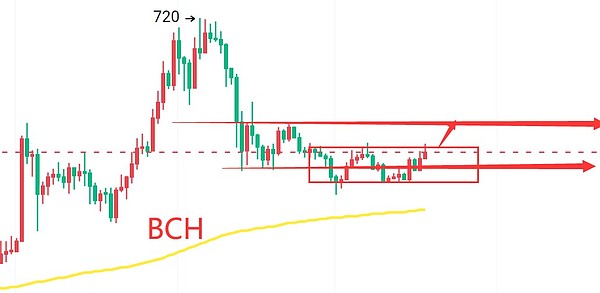
BCH 太子日线两连阳受阻上轨,重点在60日均线一带,布林带暂时处于窄幅走平短期均线和中轨重合macd快慢线交叉向上运行量柱保持放量kdj交叉向上延伸注意100值附近的阻力vr指标在80值附近盘整。4小时突破ema200,整体k线来看有完成筑底等待发力上冲的迹象,所以短期还是偏多,目前测试了491,这里也是前高阻力,如果能突破那么下一个关键阻力区在500-520,一旦这个区域走突破后,那么多头延续可以看577-630。下方短期第一支撑在460,第二支撑在441。短期可以参考上方思路和价格去介入,山寨有时波动大参与的时候多去观察思考。

——我是周悦盈,一个专注于技术分析的老师。有任何操作或者趋势上有问题的朋友,都可以和我一起交流学习操作!共同交流,共同获利!

文章发布审核有延时性,行情瞬息万变,以上建议仅供参考风险自担!每天行情变化万千,我所能做的就是用我多年的实战经验,给大家一些微弱的帮助,让各位的投.资决策和经营管理走在一条正确的航向上。相遇便是缘分,我是一个相信缘分的人,如果你在币圈有什么疑惑不解的地方,可以多多关注周悦盈,相信会对你有所帮助。

Letture associate

Hubei State-Owned Assets Achieve the Largest Return in History

After years of anticipation, Yangtze Memory Holdings Co., Ltd. (YMTC) has filed for an IPO on Shanghai's STAR Market, seeking to raise 33 billion yuan—the largest offering in the board's history. This move follows the recent listing of its peer, ChangXin Memory Technologies (CXMT), which reached a market valuation exceeding 4 trillion yuan. Dubbed the "twin stars of domestic memory," both companies, founded in 2016 in Hefei and Wuhan respectively, symbolize China's push for semiconductor self-sufficiency. YMTC's journey began with its predecessor, Wuhan Xinxin, established in 2006. Backed by substantial state investment from Hubei and Wuhan, it evolved into a national memory base. The company achieved key technological breakthroughs, and now ranks as the world's third-largest and China's top NAND Flash manufacturer by sales. Its recent financials are strong, with Q1 2026 revenue of 47.04 billion yuan and net profit of 33.38 billion yuan. Post-IPO, its market value is widely expected to surpass 1 trillion yuan. The potential windfall highlights the success of long-term, patient capital from Hubei's state-owned entities. Key shareholders like Hubei Changsheng, Xintech, and government-backed funds have supported YMTC through years of development. Their collective stake could be worth hundreds of billions after the listing. This model mirrors other successes in Wuhan, such as Huagong Tech, where local state investment during a low point later yielded massive returns. The story reflects a broader national trend of regional transformation through strategic, high-tech investments. Hefei's bet on CXMT, now worth over 3.7 trillion yuan, propelled the city's A-share market cap to 4th nationally, showcasing how a major firm can reshape an entire local industry ecosystem. Similarly, Wuhan's photoelectronics cluster, now worth over 850 billion yuan, aims to become a world-class hub. The takeaway is clear: in the reshuffling of Chinese cities, patient, courageous state investment in core technologies—from memory chips to advanced manufacturing—is proving to be a decisive factor, turning long-term visions into economic reality.

marsbit13 min fa
Hubei State-Owned Assets Achieve the Largest Return in History

marsbit13 min fa

The Myth of AI Investment Collapses

"The AI Investment Myth Bursts: The Swift Collapse of a $45 Billion Fund The high-flying hedge fund Situational Awareness (SA), founded by 24-year-old former OpenAI researcher Leopold Aschenbrenner, neared total collapse in late July. Once a Wall Street darling, the fund saw its assets under management rocket from $1.5 billion to $45 billion in under a year, driven by a massively leveraged bet on the AI boom. Its core strategy was a 'Texas hedge'—simultaneously buying stocks seen as AI beneficiaries (like chipmakers) and shorting those deemed AI victims (like certain software firms). In reality, both sides of this trade were dependent on unbroken market confidence in AI. This strategy generated staggering returns, peaking at 439% year-to-date. However, it concealed extreme concentration, high leverage (reportedly 3-to-1), and liquidity risks from illiquid private holdings like Anthropic. When semiconductor stocks corrected sharply in late July, SA's long positions plummeted. Simultaneously, its short bets failed as 'AI victim' stocks rose, causing losses on both sides. The fund faced immediate, massive margin calls. With minutes to spare before a forced liquidation by its prime brokers, SA sold its entire public market portfolio at a discount to Citadel on July 30, narrowly avoiding a market-wide cascade. The fund's value crashed from $45 billion to roughly $10 billion (excluding its remaining Anthropic stake). The episode exposes the systemic risks embedded in the frenzied, highly leveraged chase for AI returns. It serves as a stark reminder of the old Wall Street adage: markets can stay irrational longer than investors can stay solvent. The crisis shifts focus from Aschenbrenner's AI predictions to whether capital markets will continue ignoring such dangerous concentration and leverage in pursuit of the next 'sure thing' narrative."

marsbit14 min fa

The Myth of AI Investment Collapses

marsbit14 min fa

Trading

Spot
活动图片