模块化「乐高」叙事之外,Dymension 还有哪些催化剂值得关注?

foresightnewsPubblicato 2024-02-14Pubblicato ultima volta 2024-02-15

Introduzione

空投引发围绕 Dymension 的大量炒作,然而抛开短期噪音,即将到来的催化剂亦值得关注。

空投引发围绕 Dymension 的大量炒作,然而抛开短期噪音,即将到来的催化剂亦值得关注。


撰文:Jake Pahor

编译:Frank,Foresight News


Dymension 不仅仅是一场空投盛宴,它是模块化区块链的乐高组件,可能是今年最值得关注的项目之一。


本文就是加密研究员 Jake Pahor 关于 DYM 的最新报告,对 Dymension 做了详细的研究,并从使用案例、大规模采用、项目收入、代币经济学等多个角度对 Dymension 进行了深入的探究,Foresight News 对全文进行了编译。


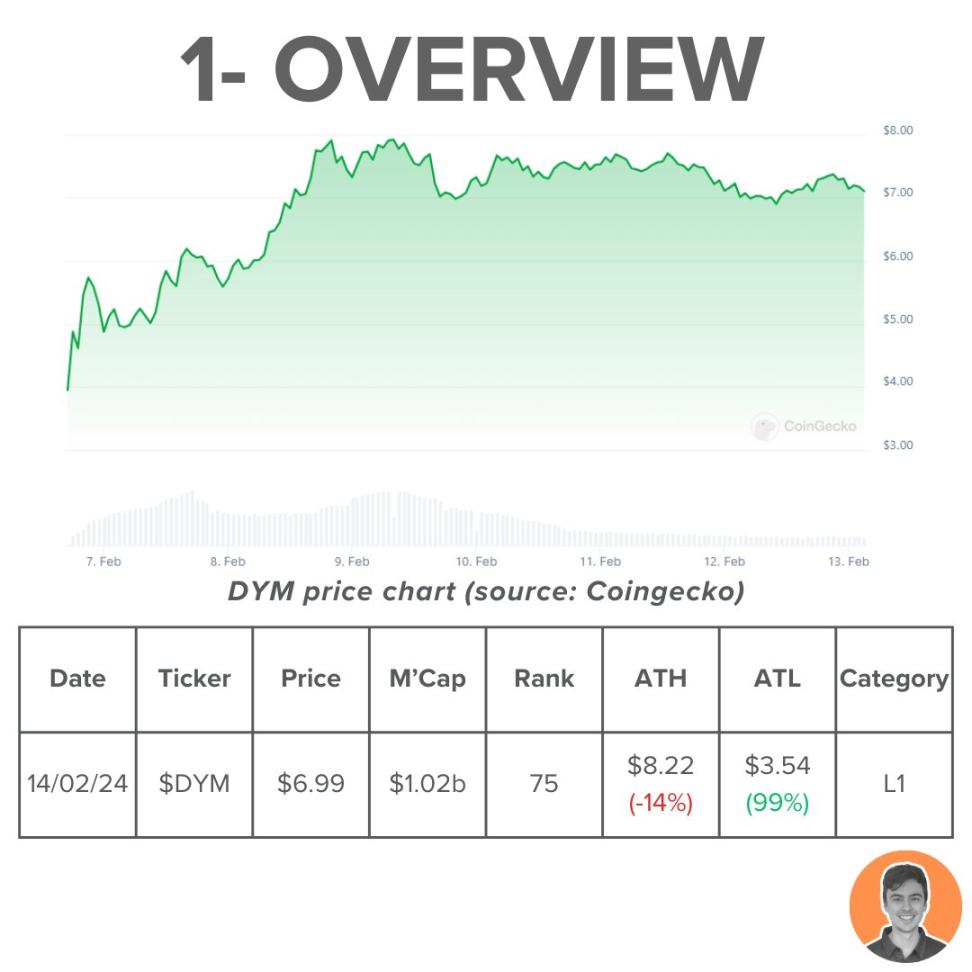
概述


Dymension 是一个由 DYM 代币保护的 DPoS L1 区块链,它作为定制模块,可为 RollApps 提供:


  • 安全性(由验证者保证);
  • 互操作性(通过单个 IBC 连接与 Dymension 进行交互);
  • 流动性(嵌入式 AMM);


使用案例


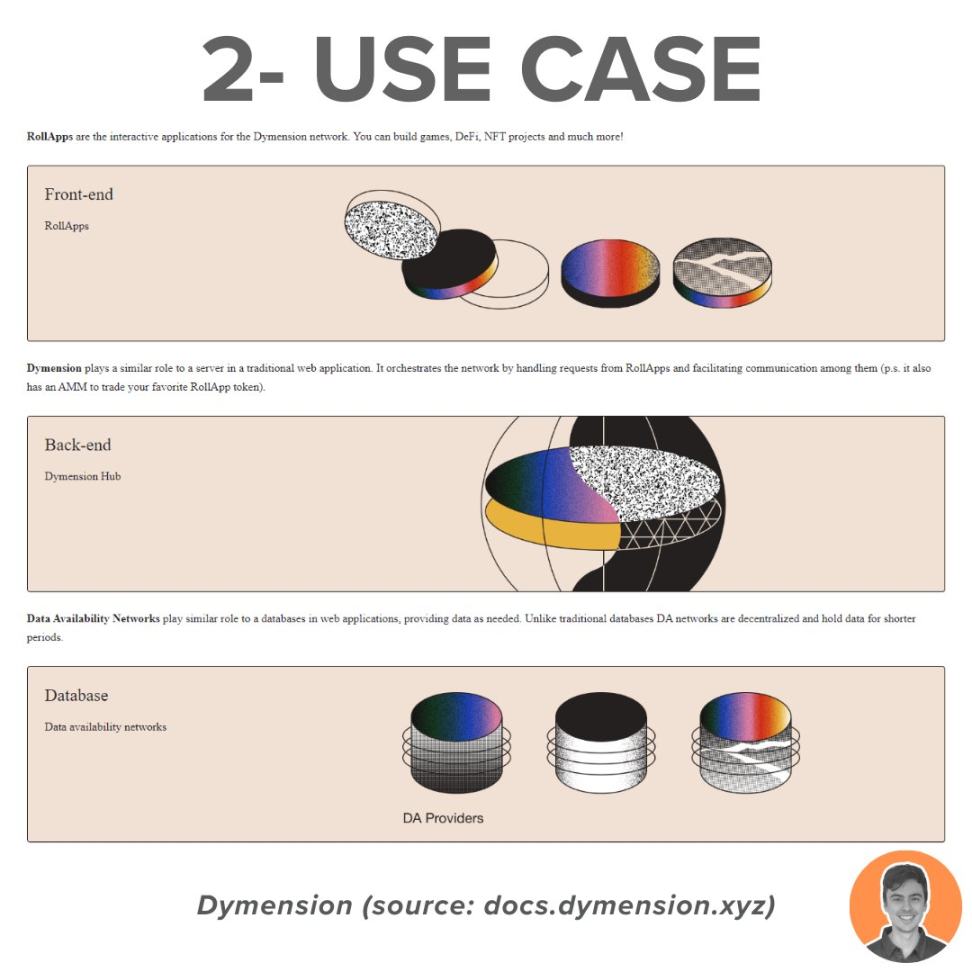
Dymension 就像一个互联网服务提供商,将 RollApps 连接到加密经济,它可以在几分钟内快速部署模块化区块链:


  • 前端→RollApps;
  • 后端→Dymension Hub;
  • 数据库→数据可用性网络;


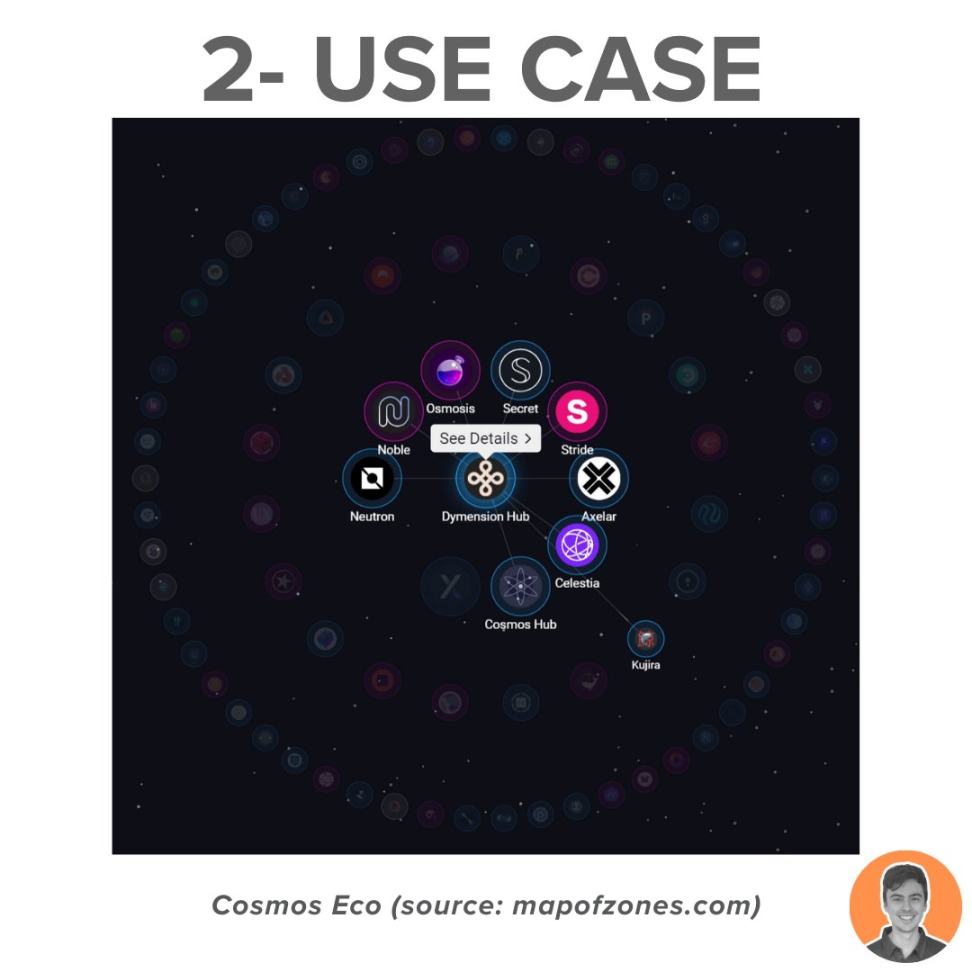
Dymension Hub 使用 Cosmos SDK 构建,作为结算层,它利用 IBC 在 Dymension RollApp 之间进行安全消息传输。


我看好整个 Cosmos 生态系统,并且我认为 Dymension 能够利用这个生态系统的优势。


大规模采用


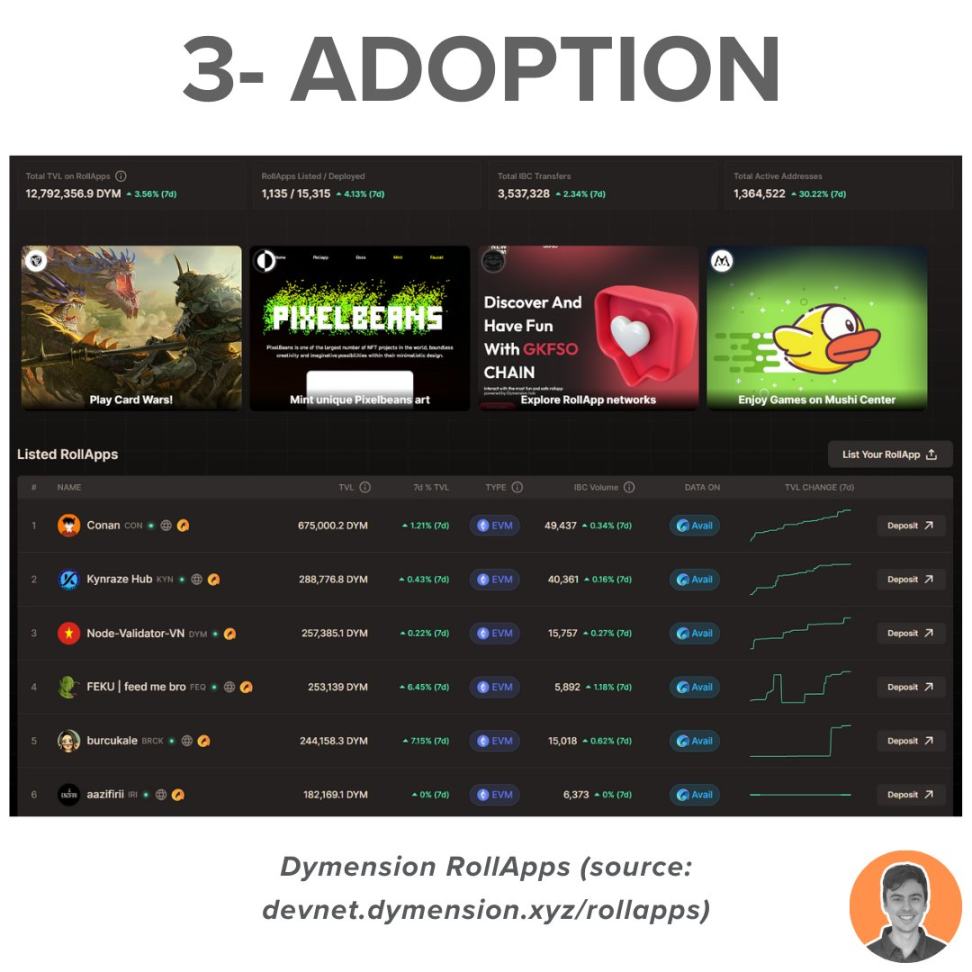
Dymension 主网于 2024 年 2 月 7 日上线,以下是 Froopyland 测试网的一些统计数据:


  • 1280 万枚 DYM——RollApps 上的总 TVL;
  • 列出 1,135 个 RollApp;
  • 部署了 15,315 个 RollApp;
  • 350 万笔 IBC 转账总量;
  • 136 万个总活跃地址;


项目收入


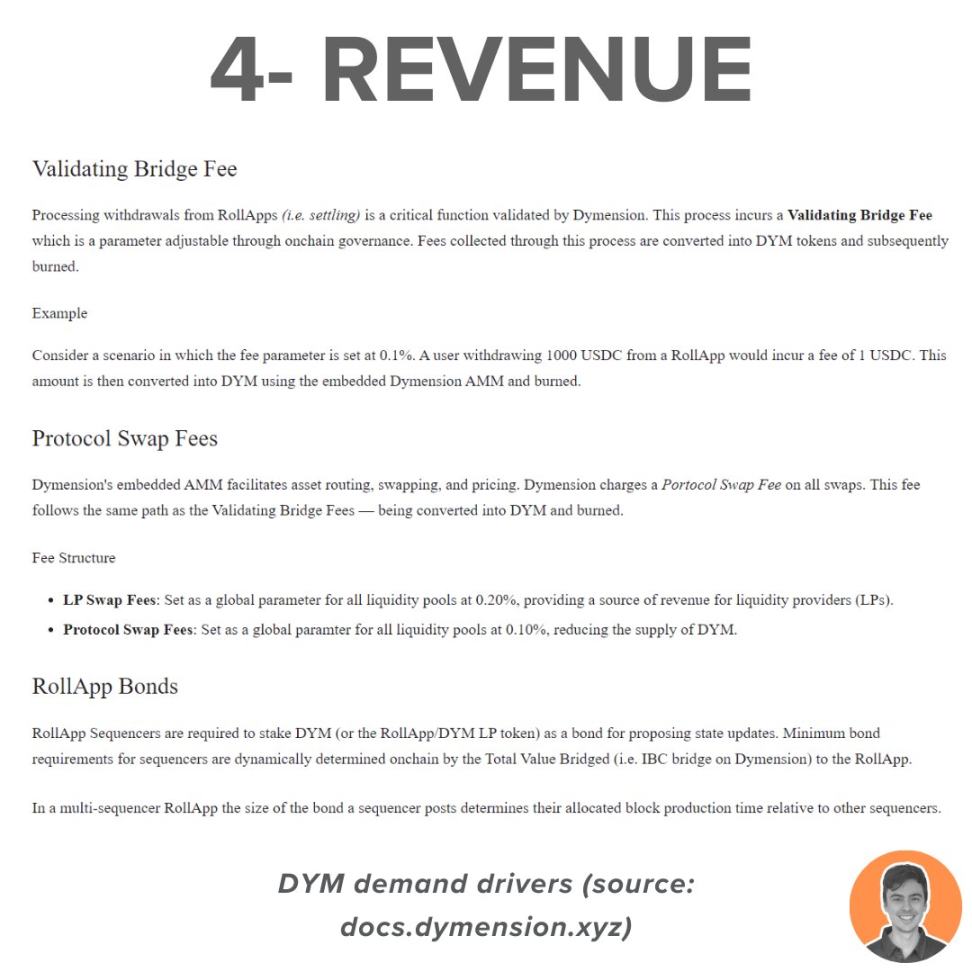
DYM 需求由 3 个主要机制驱动:


1. 销毁:销毁 DYM 代币以验证跨链费和兑换费;

2. 交易费用:费用在 DYM 验证者和质押者之间分配;

3.供应锁仓:RollApp 质押减少流通供应量,增强安全性和稳定性;


代币经济学


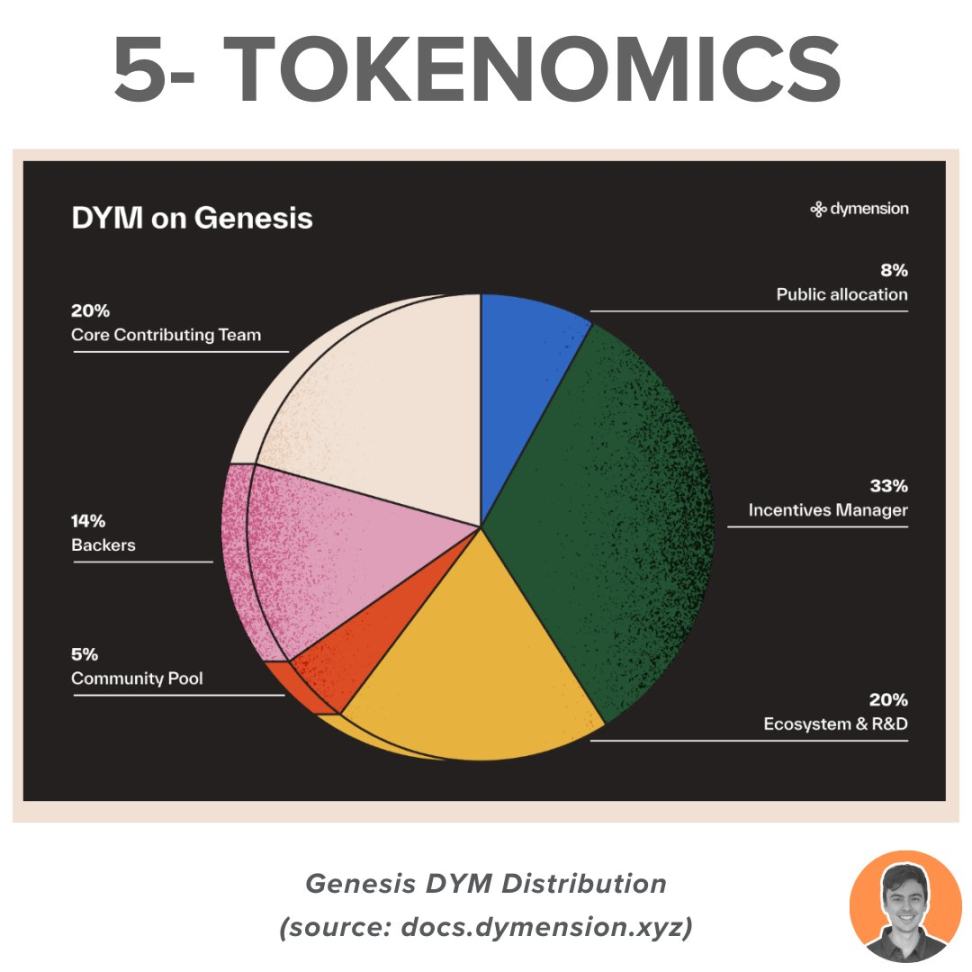
DYM 是 Dymension 的原生代币,其用于治理、费用和网络安全。


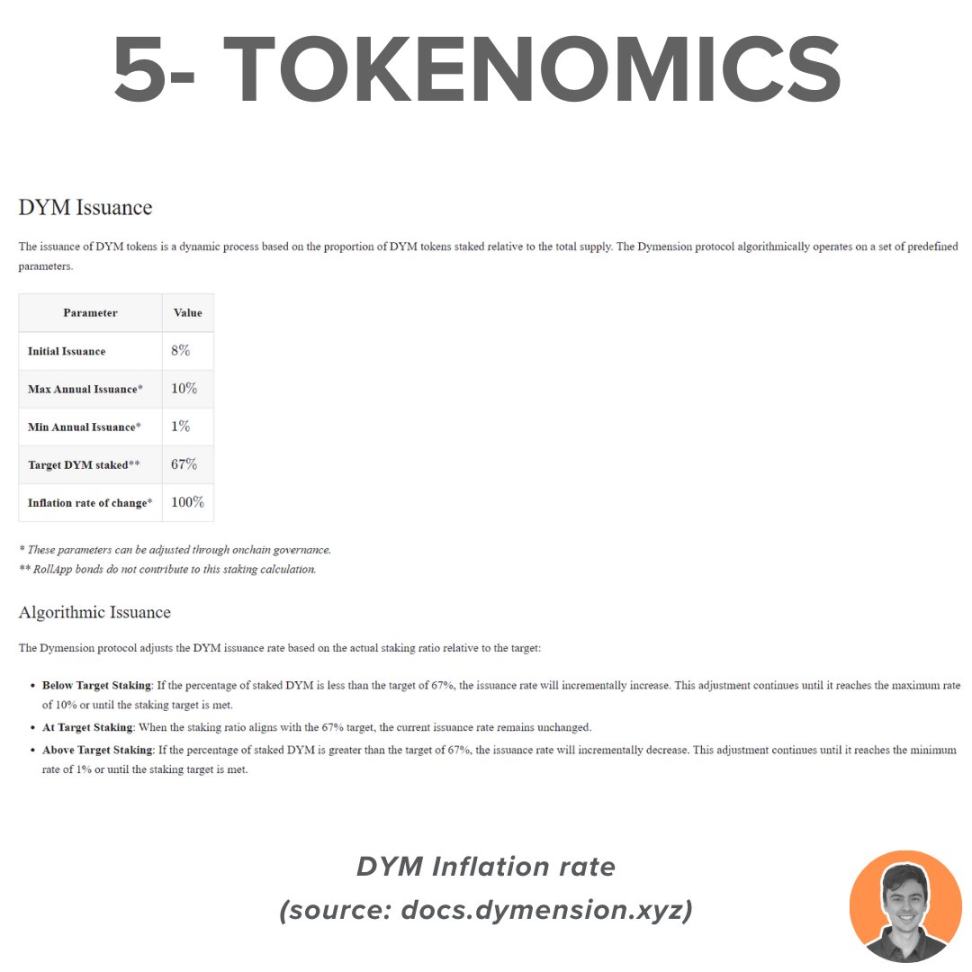
发行量基于抵押的 DYM 代币与总供应量的比较:


  • 每年最低发行量:1%;
  • 年度最高发行量:10%;
  • 目标质押比例:67%;


代币通胀率基于质押比率:


  • 低于目标:发行率增加直至达到 10% 或达到目标;
  • 达到目标质押:发行率没有变化;
  • 高于目标:发行率下降直至达到 1% 或达到目标;


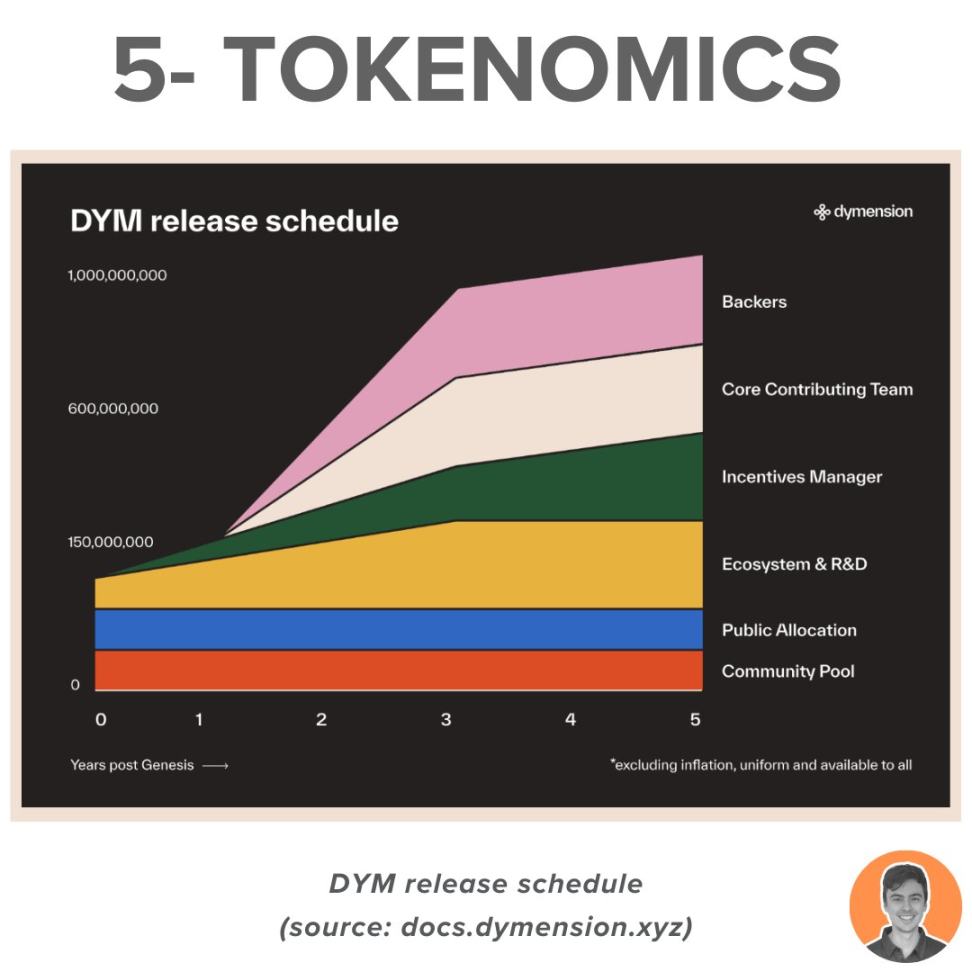
最近,7% 的 DYM 供应量被空投给 Celestia、ETH L2s、Cosmos、Solana 和精选 NFT 持有者(Pudgy、Mad Lads 等)的用户或质押者,当前供应统计:


  • 循环供应量:1.46 亿枚;
  • 最大供应量:10 亿枚;
  • 市值:10.2 亿美元;
  • FDV:70 亿美元;
  • 市值 /FDV:15%;


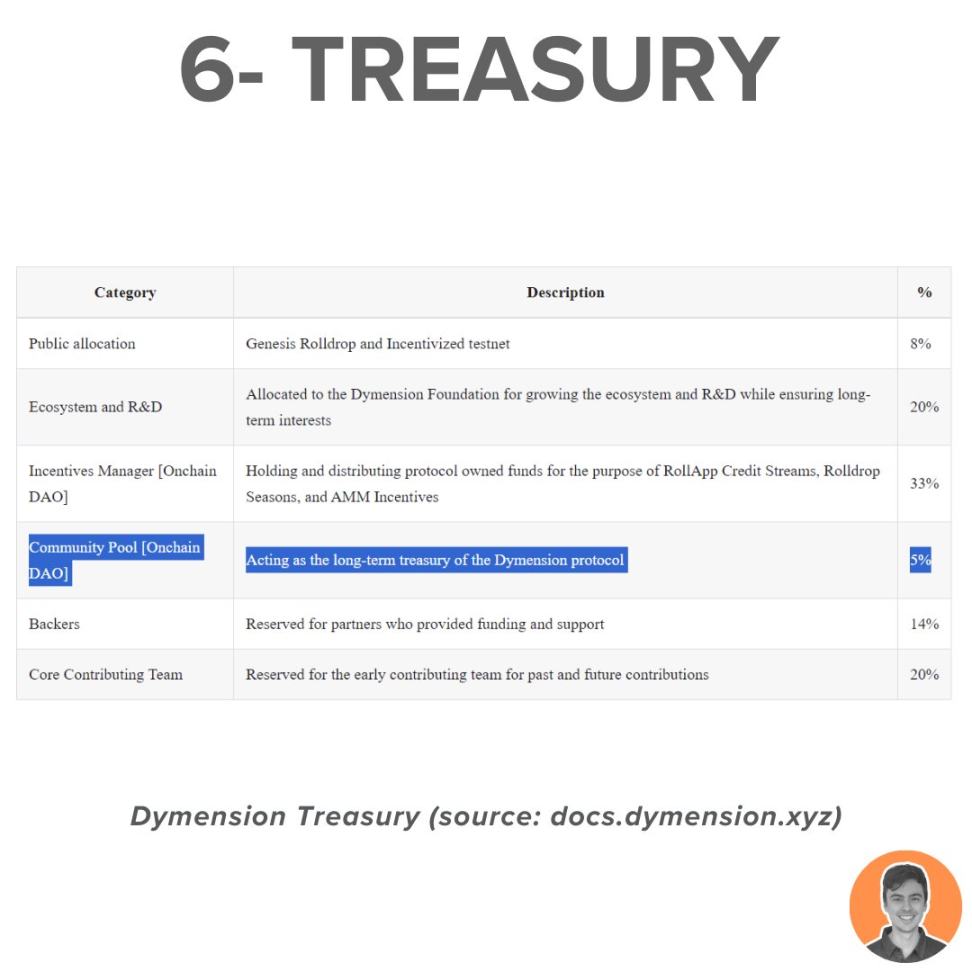
金库


根据目前的估值,Dymension 金库持有:5000 万枚 DYM = 3.5 亿美元


这些代币在创世时就已解锁,可供 DAO 访问,但它们被视为非流通供应。


治理


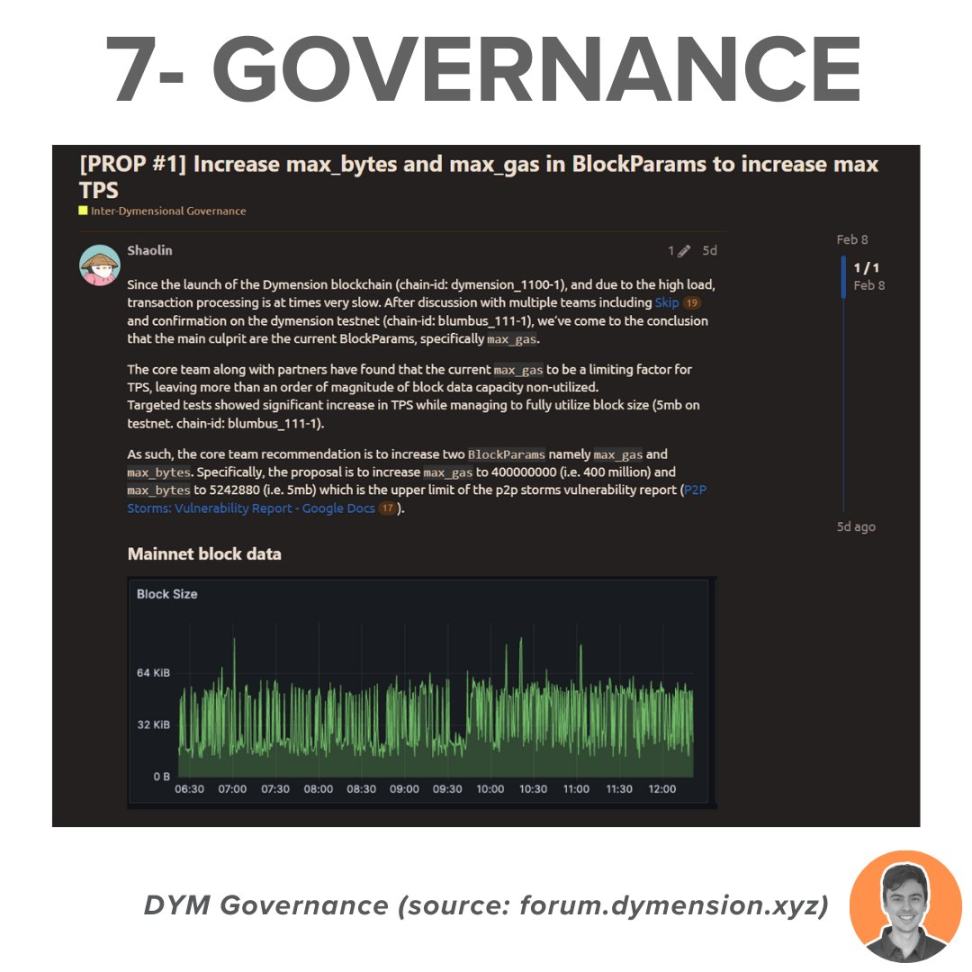
第一个治理提案刚刚通过,涉及解决由于高需求而导致的链上的一些吞吐量和交易问题。


有传言称,对这些链上提案进行投票将是未来向 DYM 质押者空投的先决条件。


团队及投资者


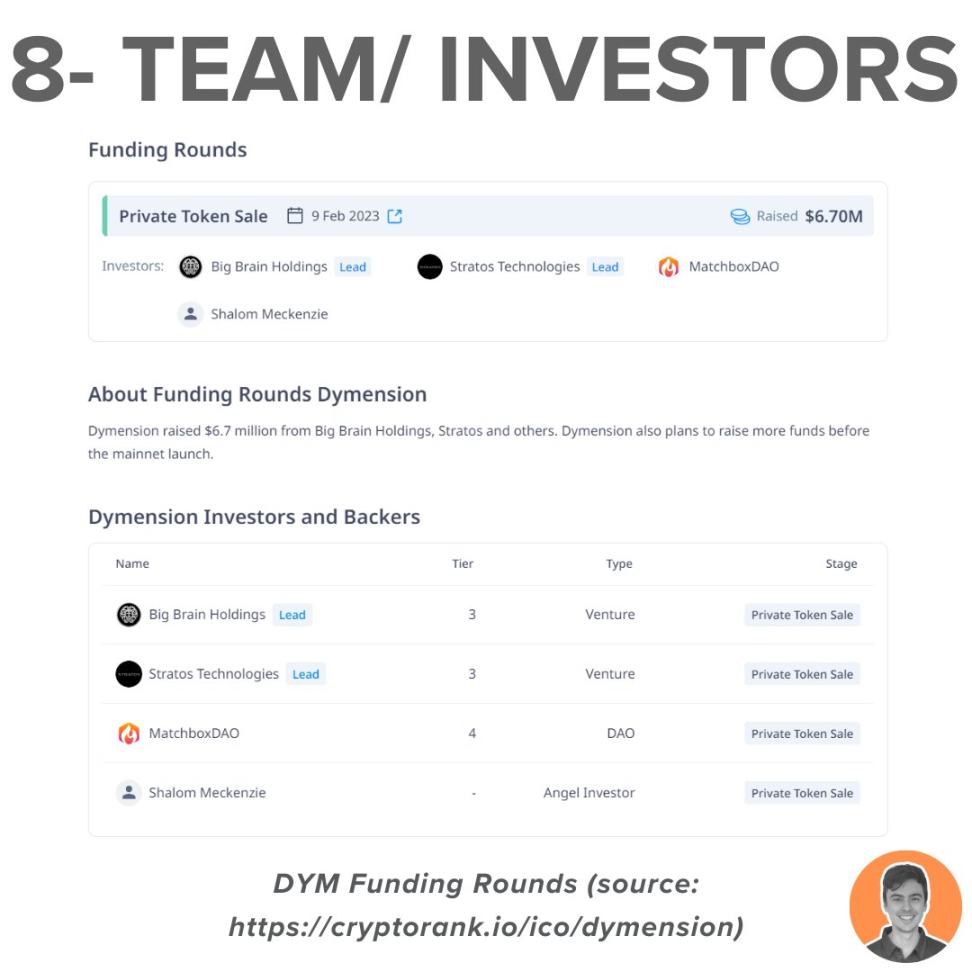
Dymension 由 Yishay Harel、Omri Dagan 和 Lior Zilpa 于 2022 年创立,2023 年 2 月,Dymension 通过私募代币销售筹集了 670 万美元,投资者包括 Big Brain Holdings、Stratos、Matchbox DAO 和 Shalom Meckenzie。


竞争对手


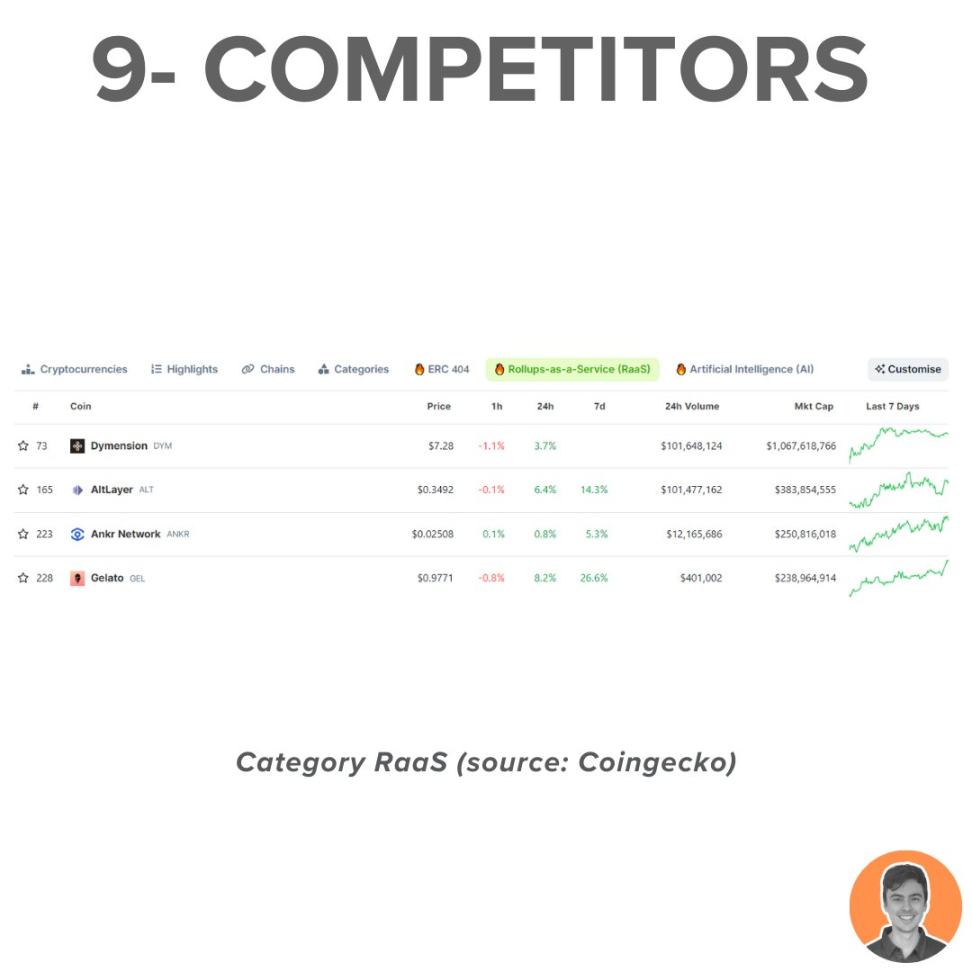
Dymension 是新一波模块化区块链应用程序的一部分,该应用程序正在迅速流行,有些人将其称为「Rollups-as-a-Service」。


虽然 Celestia 通过其模块化 DA 网络铺平了道路,但这两个项目并没有真正相互竞争。


风险与审计


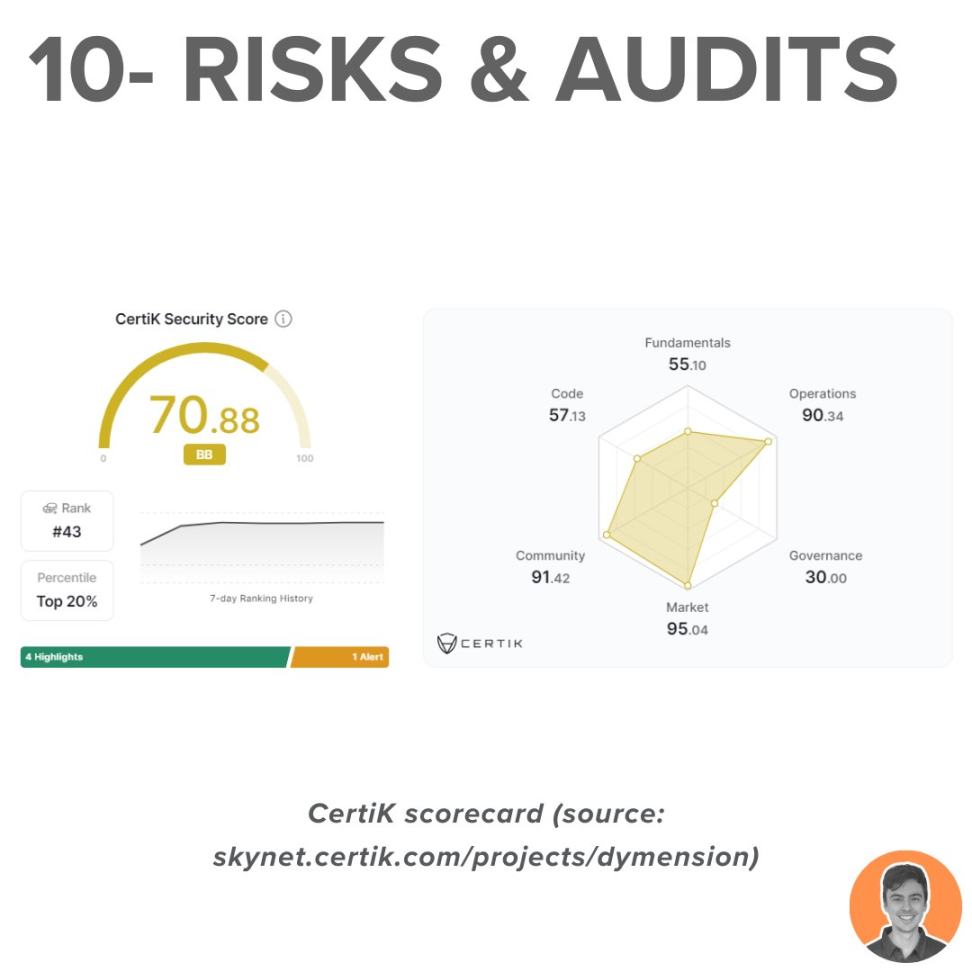
CertiK 安全评分:70.88,项目排名前 20%。 


主要问题是:还没有公开的代码审计或漏洞赏金,尽管此项目相对较新,但其在社区参与、市场潜力和运营方面表现出色。

总结


最近的空投引发了围绕 Dymension 的大量炒作,然而抛开短期噪音,基本面和潜力都很强劲,即将到来的催化剂包括:


  • 向质押者空投;
  • 主网上的 RollApps;
  • Cosmos 生态增长;


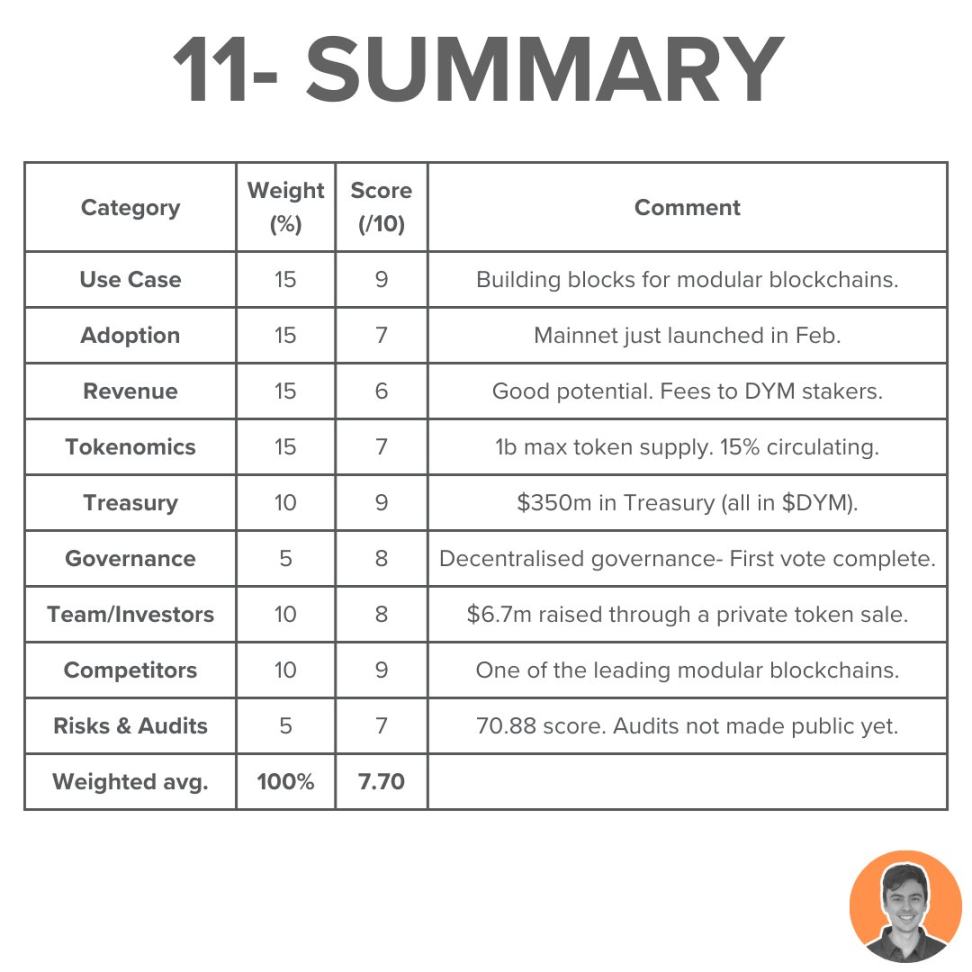
总加权分数 = 7.70


Letture associate

Latin America's Payments Landscape Is Not What You Think It Is

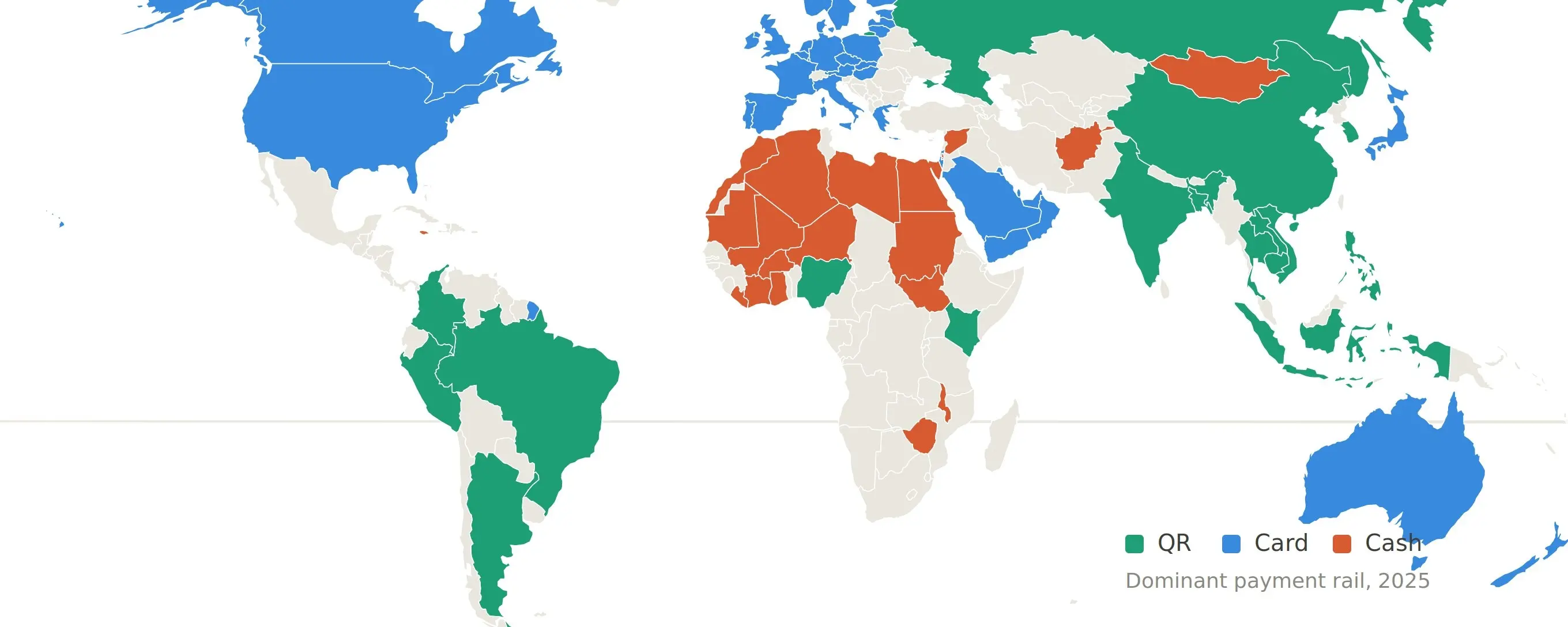
This report challenges common misconceptions about Latin America's payment landscape, based on over 500 hours of firsthand research. Key findings include: 1) Crypto card transaction volume primarily comes from high-net-worth individuals receiving USDT salaries, not retail spending. 2) QR code payments (e.g., Brazil's Pix, Argentina's Mercado Pago) are the dominant payment method across most emerging markets, not cards. 3) A major untapped opportunity lies in enabling cross-border interoperability between domestic instant payment systems. 4) Payment competition is shifting from customer acquisition to owning the settlement layer (e.g., acquiring banks). 5) Latin America is not a single market; Brazil, Mexico, Argentina, and smaller "forgotten five" countries (e.g., Guatemala, Honduras) have vastly different dynamics. 6) Stablecoin-to-fiat conversion margins are collapsing toward zero, pushing companies to build value-added services on top. 7) Future payment winners will be multi-country brands, not single-corridor specialists. 8) Marketing must target specific user segments (e.g., digital nomads, unbanked immigrants) with tailored messaging, not a generic "Brazilian" audience. 9) Contrary to perception, Latin American regulators are often ahead of the US in creating frameworks for digital assets and instant payments, with clear licensing deadlines. The core takeaway is that the region's payment rules are being rewritten, moving beyond cards and stablecoin arbitrage towards integrated, cross-border QR-based solutions.

链捕手13 min fa

Latin America's Payments Landscape Is Not What You Think It Is

链捕手13 min fa

Vitalik's Algorithmic Stablecoin Vision: Interpreting the Mechanism and Challenges from an Options Perspective

Vitalik Buterin's recent algorithmic stablecoin proposal envisions using an option-like mechanism to create a stablecoin without the liquidation risks inherent in traditional collateralized debt position (CDP) models. The design splits one unit of ETH into two components: a 'stable' leg (P) that maintains value up to a certain strike price, and an 'upside' leg (N) that captures any appreciation above that price. Together, they always sum to one ETH, eliminating the need for debt or liquidation mechanisms. From an options perspective, the stable leg essentially functions as a synthetic, covered call position. However, significant challenges exist. For the stable asset to maintain its peg, it must continuously roll deep in-the-money call options, leading to potential rollover slippage, predictable trading paths vulnerable to front-running, and liquidity issues. Crucially, the system's scalability depends on a constant demand for the upside leg—a form of leveraged ETH long position without funding rates or liquidation risk. It's unclear if such persistent, specific demand will materialize from speculators or market makers who have simpler alternatives like perpetual swaps. The author, drawing from experience with Rysk, argues that DeFi options have struggled as standalone trading products due to complexity and fragmented liquidity. Their potential lies instead as foundational infrastructure underpinning more complex financial primitives like stablecoins, structured yields, or index products—transforming from a direct product into a core pricing and risk distribution engine for the next generation of on-chain finance.

marsbit1 h fa

Vitalik's Algorithmic Stablecoin Vision: Interpreting the Mechanism and Challenges from an Options Perspective

marsbit1 h fa

Trading

Spot
Futures
活动图片